A seemingly trivial nuisance can quickly turn a peaceful evening at home into a minor household emergency. Faced with it, many people reach for the most aggressive drain cleaner available, hoping it will work without understanding what is clogging the pipework.
Why harsh drain cleaners rarely provide a lasting fix
In the UK and US alike, a blocked bathroom sink tends to develop in the same way. Water begins to drain slowly, a quiet gurgling starts, and an unpleasant musty odour follows. Once the basin resembles a shallow pool, many households have already tipped at least one bottle of chemical cleaner down the plughole.
Professional plumbers rarely reach for a bottle first. Their favourite fix is almost always 100% mechanical.
The sink warning signs you may miss
A slow-draining sink does not usually become blocked all at once. At first, water takes slightly longer to clear after you wash your face. Next comes the hollow glug-glug sound of air forcing its way through the pipe. In many properties, this is followed by:
- lingering odours, even after the bathroom has been cleaned
- water remaining around the plughole after each use
- a light brown or grey mark appearing where the water stops
Hair, soap residue and skin oils gradually combine into a dense blockage. Warm conditions indoors encourage bacteria to multiply within it, which is why the smell can be similar to rotten eggs or a damp changing room.
What chemical unblockers can do to pipework
Most widely sold drain unblockers use powerful acids or alkalis. They react with organic waste and generate heat. Where the build-up is fresh and soft, they can sometimes make a narrow passage through the obstruction. The basin then empties again, making the product appear “effective”.
Plumbers commonly find a different outcome. The blockage seldom clears completely. Some of it dissolves into a tacky paste that sticks farther along the pipe. Over the following weeks, fresh hair and soap cling to this uneven surface, and the blockage returns, often more severely than before.
Repeated chemical treatments can slowly thin plastic pipes, dry out rubber seals and damage metal finishes around the plug.
In older houses with delicate plumbing, this quick solution may even cause leaks. Once the environmental effect of sending caustic chemicals into the wastewater system is considered, the professional preference for manual cleaning becomes easier to understand.
The “secret” method plumbers use first for bathroom sinks
Although it is hidden behind tiles and chrome fittings, a bathroom sink is a straightforward system: a basin, waste outlet, curved trap and discharge pipe. The most important component is underneath the sink, usually concealed by cupboard doors.
The modest trap and its major job
Under most sinks, there is a U-shaped, S-shaped or bottle-shaped section of pipe. This is the trap. It retains a small amount of water, preventing sewer gases from travelling back into the bathroom. Gravity also makes it a natural point for debris to gather.
| Trap function | What actually happens |
|---|---|
| Block odours | A continuous water seal prevents air from the drainage system entering the bathroom. |
| Catch objects | Rings, hair grips and other small belongings often end up here rather than disappearing permanently. |
| Trap build-up | Hair, toothpaste, soap and limescale collect in the bend, gradually creating a plug. |
For a slow bathroom sink, this is normally the first part a plumber handles. Not a drain snake, chemical bottle or inspection camera: simply the trap.
Why manual cleaning is better than a chemical “attack”
Taking off the trap and washing it by hand achieves something chemical products seldom can: it returns the pipe to its original internal width. Water can flow as it did when the sink was first fitted.
Instead of burning through the clog, you physically remove it and leave almost nothing behind for new debris to stick to.
There is no additional heat putting strain on plastic pipework, and no fumes irritating the eyes or lungs in a small, humid bathroom. You can also see precisely where any misplaced jewellery has gone.
The no-splash approach plumbers often rely on
Many people avoid plumbing work because they expect a mess. However, one simple sequence greatly reduces that risk. It is much like the routine experienced tradespeople use for minor domestic call-outs.
The bucket step that protects your floor
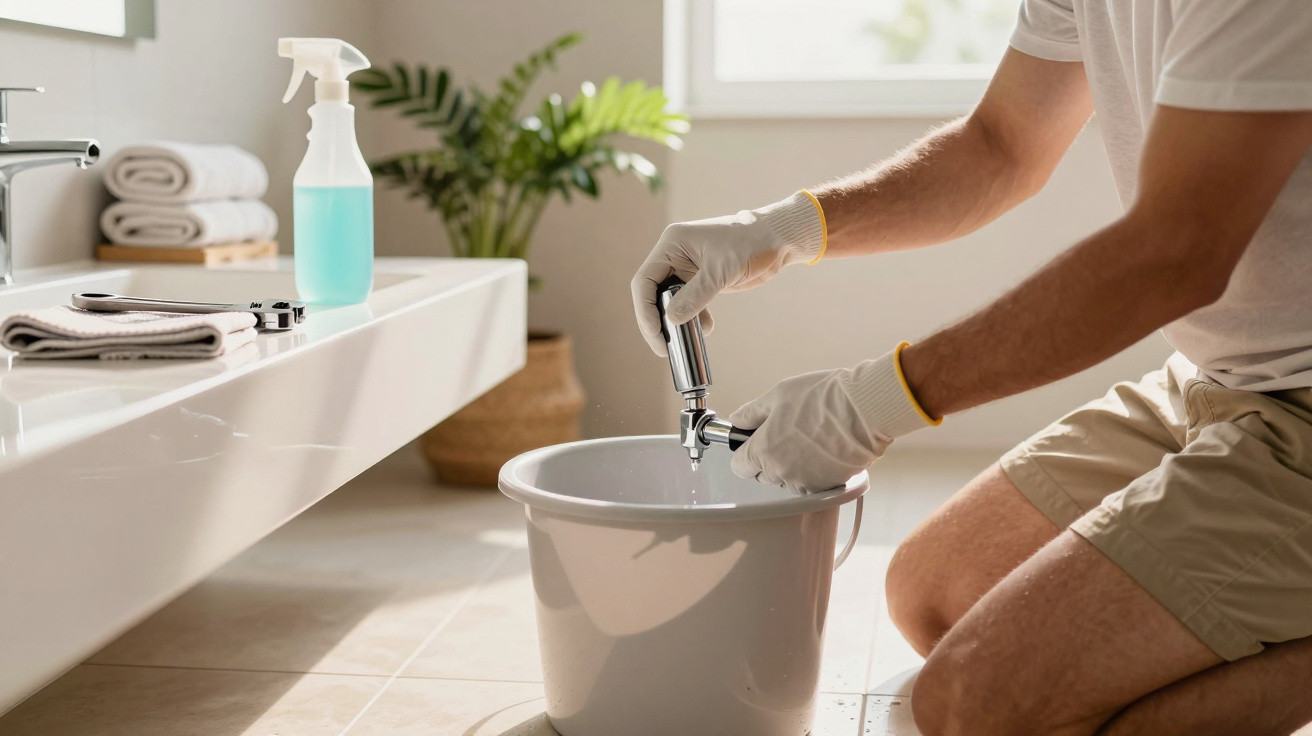
Before loosening any fitting, empty the cupboard beneath the sink. Put a shallow bucket, washing-up bowl or storage tub directly below the trap, with an old towel nearby to catch any stray drips. This provides a simple safety net.
Most newer traps can be unscrewed by hand. The lower bend or bottom “cup” will generally come away with a firm twist. If it is tight, use a cloth or rubber glove for extra grip. Adjustable pliers may help with a gentle squeeze, although plumbers normally wrap the jaws in a rag to prevent scratches on plastic or chrome.
As the thread comes loose, the water held in the trap falls into the container rather than onto the bathroom floor mat. That one small precaution stops the task becoming chaotic.
The unpleasant but highly effective clean-out
After the lower section of the trap is removed, the source of the problem is usually obvious: a dark, tangled mass with an even worse smell than appearance. At this stage, plumbers generally:
- remove hair and other debris by hand or using a small hook
- scrub inside the trap with an old toothbrush or bottle brush
- rinse all parts using very hot tap water or boiled kettle water left to cool for one minute
The goal is not just to dislodge the main plug, but to remove the slimy film that lines the pipe walls.
Known as biofilm, this coating acts as an adhesive for fresh particles. Removing it makes a rapid repeat blockage less likely. Some professionals also feed a small flexible brush or a short piece of cable slightly farther into the waste pipe, breaking up any early build-up beyond the trap.
Reassembly: where leaks either begin or are avoided
Before refitting anything, inspect the rubber seals closely. These O-rings and conical washers create the watertight join between the trap sections. If they appear cracked, flattened or sticky, they are inexpensive to replace and doing so can prevent drips later.
When the trap is put back, plumbers use two basic principles: engage the threads carefully and tighten them by hand. Cross-threading lightweight plastic fittings can cause damage that is not immediately visible but leaks later. Once everything is secure, they run the tap while placing a hand around every connection to detect even the smallest bead of water.
From a swampy basin to a healthier bathroom routine
Homeowners who use this method once often view small plumbing jobs differently. A task that initially seemed “technical” proves to be surprisingly manageable, with immediate results.
A sink that drains like new and smells neutral again
With a clean trap in place, water returns to its natural swirl through the plughole. Rather than lingering in the basin, it runs away in a steady, assured stream. The persistent odour disappears not because it has been disguised, but because the bacterial breeding ground has been removed with the sludge.
That ten-minute intervention often improves both hygiene and comfort more than another round of scented cleaning sprays.
For households with children or pets, avoiding corrosive cleaners also eliminates another chemical risk from the cupboard below the sink. This can matter particularly in compact bathrooms, where storage is easily accessible to small hands.
Straightforward habits to stop a monthly repeat
Plumbers who are not repeatedly called back to the same sink usually recommend two simple practices rather than miracle products:
- fit a drain strainer over the plughole to collect hair and larger debris
- flush the drain with hot water each week to soften early soap deposits before they set hard
In hard-water areas, limescale creates an additional issue by making the pipe interior rougher. A strainer combined with regular hot-water flushing reduces the amount of scale that can attach to organic material. Together, these measures slow the full blockage cycle.
When DIY cleaning is sufficient and when to call a professional
This straightforward mechanical clean is appropriate for most ordinary bathroom sinks where the trap is easily accessible. It is especially effective in newer flats and houses with relatively short pipe runs.
Sometimes, however, the blockage lies farther along the pipework, or the pipes are installed in confined, difficult-to-reach areas. Ongoing slow drainage from several fittings at the same time, a toilet gurgling as the basin empties, or water backing up into the bath may indicate a more significant obstruction or a venting issue. In these cases, professionals use inspection cameras and longer drain snakes and, in older properties, understand the unusual layouts that may be concealed behind walls.
For many everyday blockages, though, the simple “bucket, twist, clean, reassemble” process is exactly the work a plumber would carry out for a call-out charge. Knowing how it works turns a frustrating winter blockage into a small, controlled task that leaves the bathroom cleaner, safer and more comfortable to use.






Comments
No comments yet. Be the first to comment!
Leave a Comment