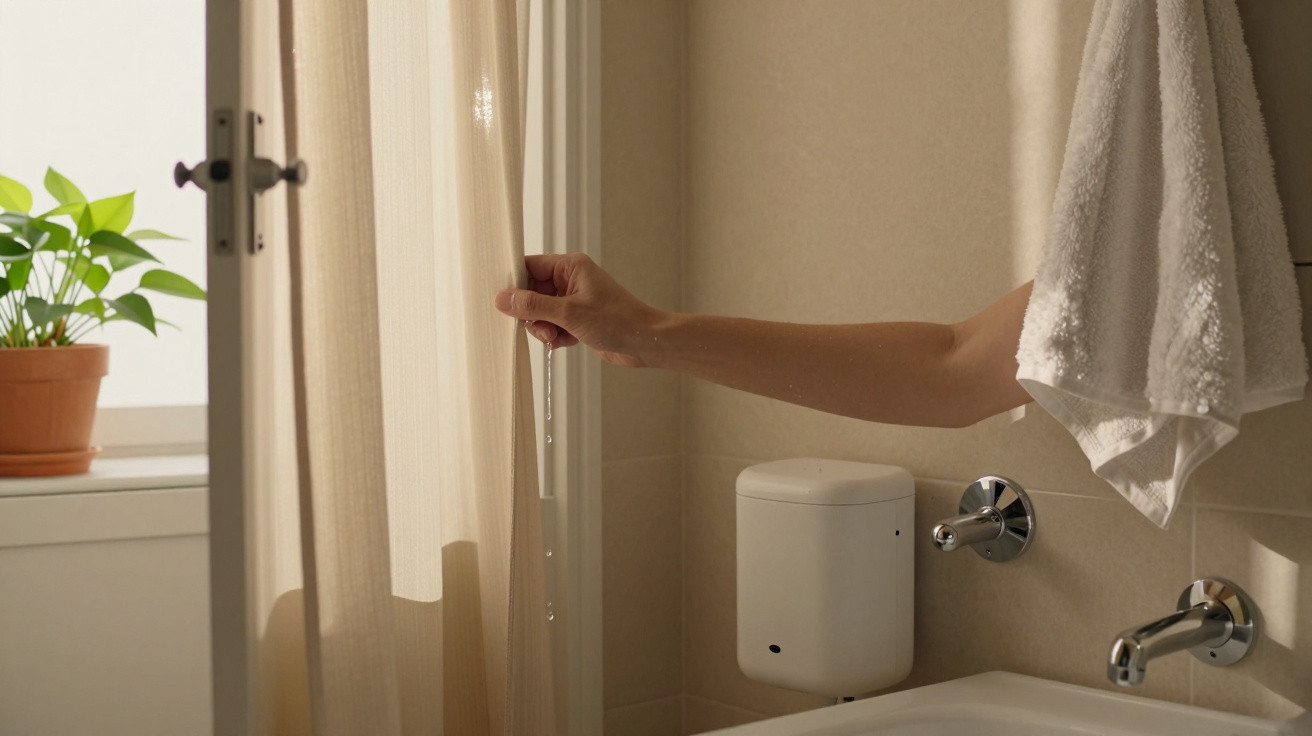
The shower is still warm, the tiles are misted over and the mirror is a grey wash of steam. You take the towel from its hook, clear a circle on the glass to look at your face, pick up your phone… then leave, switch off the light and almost close the door. The bathroom retains its damp, heavy smell, barely noticed.
Hours later, you return and that slight sour odour has taken hold. The grout seems a touch darker than before, while a faint grey shadow is spreading along the rubber seal by the shower tray. You scrunch up your nose and put it down to an “old bathroom syndrome”.
The actual cause is much less exciting - and much harder to shift.
This one small habit is feeding your bathroom mildew
The everyday habit that quietly speeds up mildew growth is not particularly dramatic. It is simply taking a hot shower and then trapping the room in its own steam: closing the door, keeping the window shut and leaving the extractor fan off.
That enclosed vapour remains in the air, settles on every surface and, as it cools, becomes a layer of moisture in corners, grout and silicone seals. Mildew thrives on precisely these conditions: stagnant air, persistent damp and very little light.
It is invisible on the first day, and you may hardly notice it after a week. Then one morning, black specks show up on the walls like small bruises.
During a recent visit to a compact city flat, the bathroom revealed the problem before anyone said a word. The tiles had been newly fitted, the matte-black fittings were fashionable… yet soft black fuzz ran along the ceiling line above the shower.
The tenant said that she showered twice daily, often late in the evening, and then shut the door to prevent steam reaching the hallway. There was no window, the fan was set to run for five minutes, and she turned off the light as she left. As the following day began early, the bathroom then stayed shut for hours.
A building inspector subsequently measured the humidity. Following a 10-minute hot shower, it rose above 80% and remained at that level for over an hour in the closed room. That is not merely “a bit damp”; it is a feast for mildew spores.
Biologically, the process is almost a textbook example. Mildew spores are constantly present in the air, carried indoors on clothing, shoes and even pets. On dry tiles, they cannot achieve much. Give them a film of lukewarm condensation in a closed room with little air movement, however, and they become active.
A sealed bathroom behaves like a miniature greenhouse. The warm, damp air cools against the ceiling and walls, depositing microscopic droplets. Those droplets remain in corners and porous materials much longer than you can sense them in the air.
Every shower taken with the door closed and fan off extends the period in which your bathroom remains in the high-humidity “danger zone”. Mildew does not require a flood; it only needs a regular, dependable spell of comfortable dampness each day.
Simple changes that break the bathroom mildew cycle
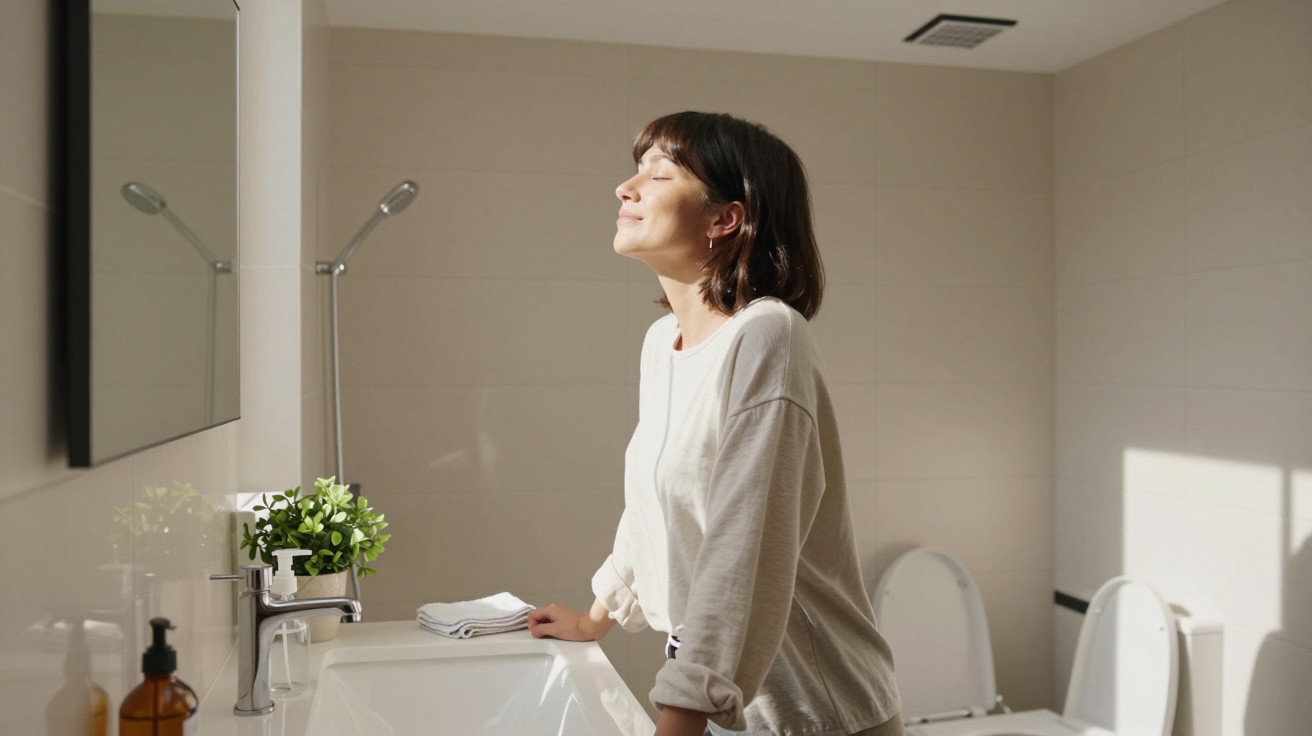
The strongest anti-mildew measure is almost absurdly straightforward: after every hot shower, let the bathroom air properly. Open the door fully, run the fan and, if there is a window, leave it slightly open for at least 15–20 minutes.
Treat shower steam as you would cooking smoke. You would not fry fish, shut everything afterwards and keep the odour in the kitchen. You would open up the room, get the air moving and perhaps even hold the door open with a laundry basket.
This approach changes the bathroom from a sealed terrarium into a short-lived cloud. Rather than soaking into every joint, the moisture can leave the room.
For an extra step, make the fan part of your normal routine instead of viewing it as optional. Turn it on before entering the shower and keep it running well after you get out. Many people turn it off with the light, which is exactly when it is needed most.
Let’s be honest: nobody manages this every day with military precision. You will forget, be pressed for time or miss it altogether. That is fine. The important thing is changing the general pattern from “always sealed” to “usually aired out”.
Even on a difficult day, leaving the door ajar and opening the shower curtain will help surfaces dry more quickly.
There is also a layer of small habits that build up. Drying damp towels over doors or radiators in a small, closed bathroom keeps humidity elevated for hours. Leaving a soaked bath mat crumpled in a corner has the same effect.
One mildew expert I spoke to put it in a single sentence:
“Bathrooms don’t get moldy because of one big leak; they get moldy because of a hundred little damp moments that never fully dry.”
A straightforward checklist can help replace the idea of an occasional deep clean with daily drying habits:
- Open the door completely after every shower, rather than leaving only a gap.
- Keep the fan running for 20 minutes, particularly after hot showers.
- Hang towels out in a bedroom or hallway instead of the small bathroom.
How to spot, stop and reverse mildew before it wins
Mildew seldom begins with a striking stain on the first day. It starts as small grey flecks in grout, a darkening shadow in the silicone around the bath, or a mild musty smell that appears to vanish once the window is opened.
When those early warning signs become noticeable, time matters. There is no need to panic, but acting sooner makes the task much easier. Fresh mildew can be removed with a quick wipe, whereas deep marks in silicone may require the sealant to be completely replaced.
If the closed-bathroom routine that encouraged it remains unchanged, any cleaning you do will feel futile.
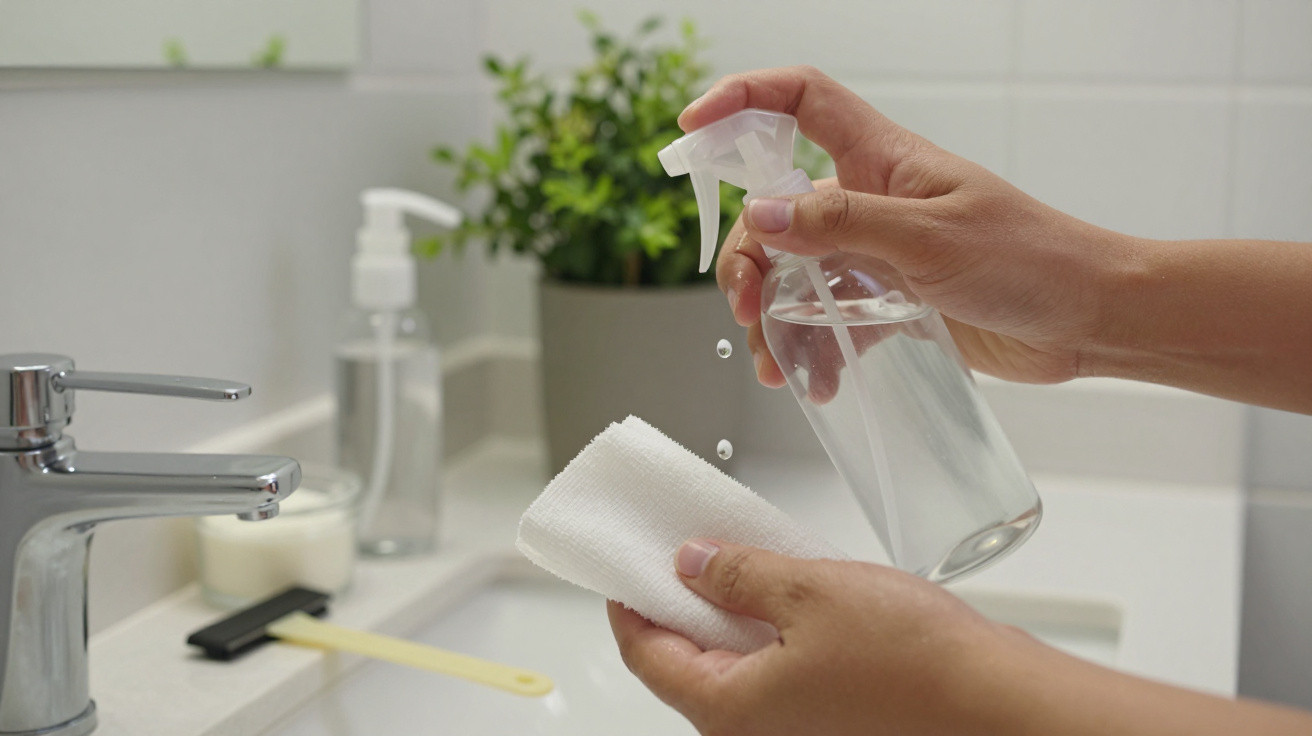
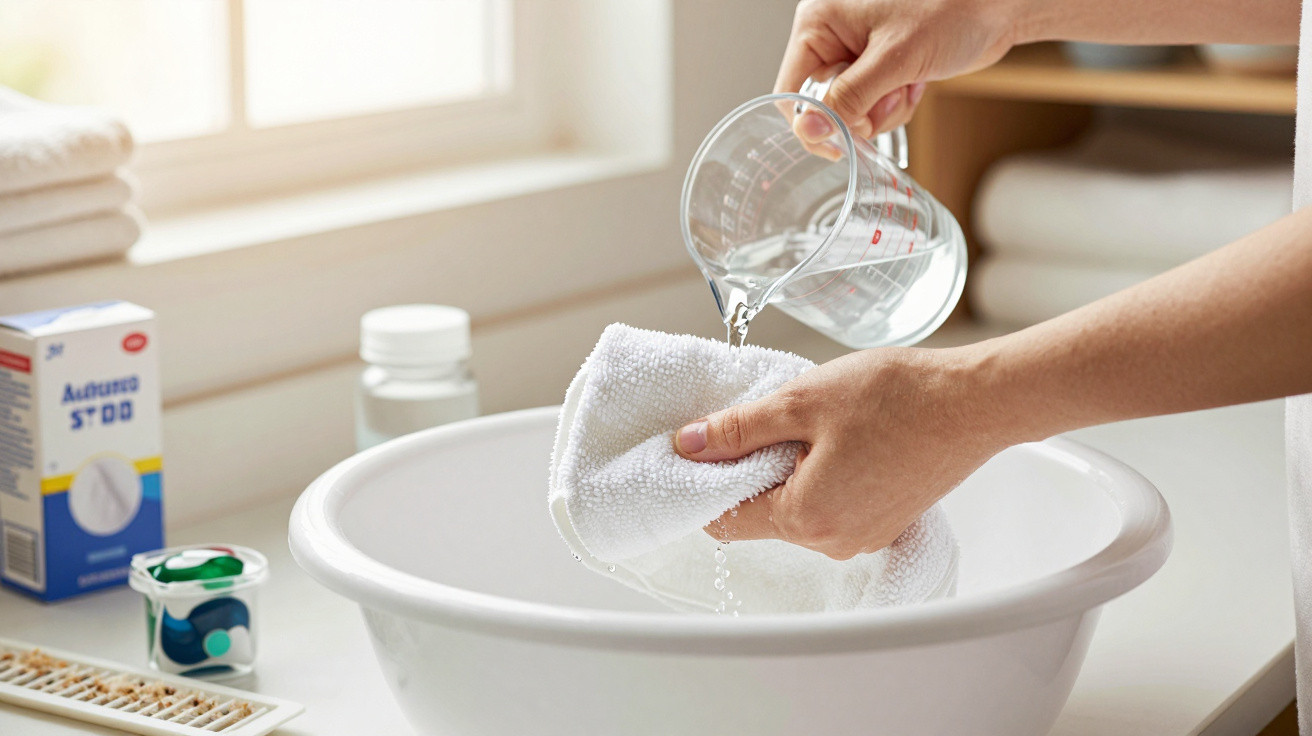
The first line of defence is practical: air the bathroom immediately after using it, then clean its usual hiding places once or twice weekly rather than once a season. Used regularly, a gentle solution of white vinegar and warm water on a cloth can be more effective than many expensive sprays.
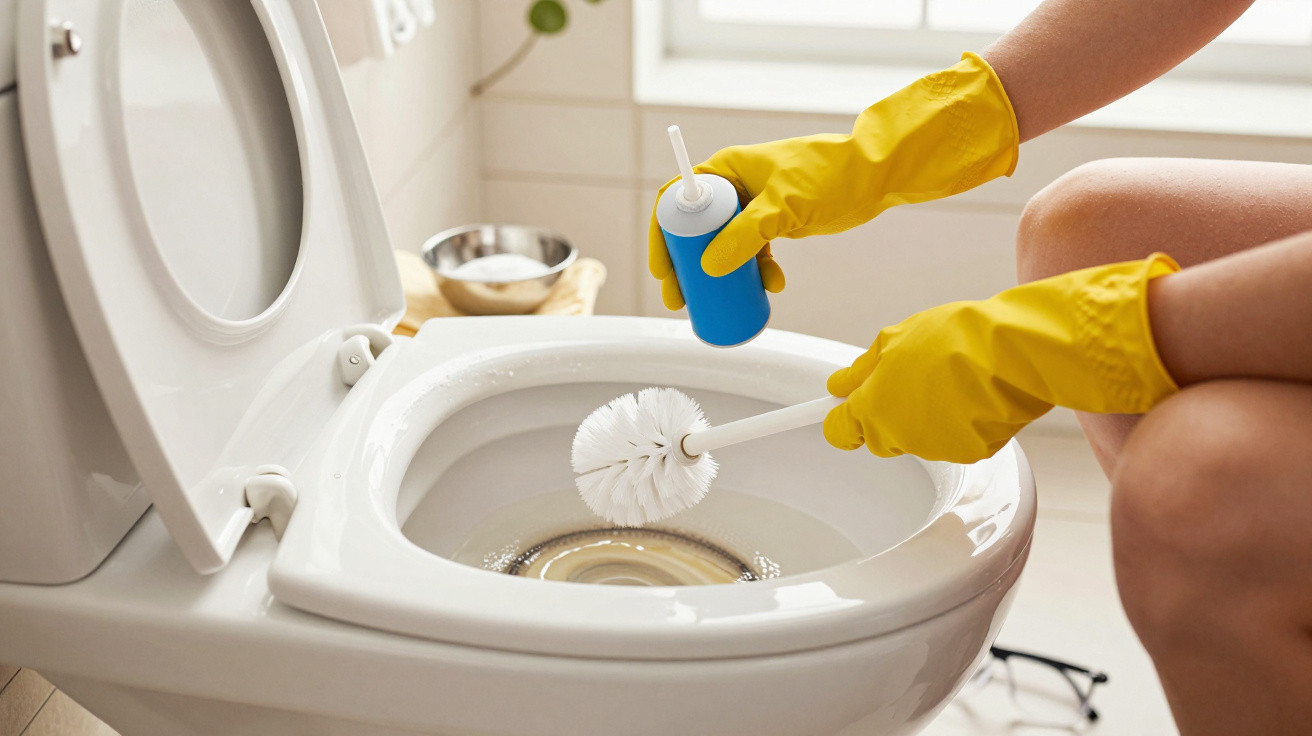
Where a wall already has stubborn marks, a dedicated mildew-removal product, applied with gloves and a little patience, can save grout before it becomes fully colonised. Better drying habits must go alongside it, or the marks will return with a quiet sort of revenge.
At a purely sensory level, many people spot an early clue when the fresh scent of their usual bathroom products fades quickly and is replaced within hours by a faint damp smell.
There is also the issue of what to do if you rent and cannot renovate the whole room. In winter, a small, quiet dehumidifier run for an hour a day can reduce humidity substantially in a windowless bathroom.
If the fan is ageing or weak, discussing an upgrade with the landlord is about more than appearance. Effective extraction is a health and building concern, not simply a matter of comfort. Black mildew on the ceiling is not “just ugly”; it is a warning sign that the room is repeatedly reaching unhealthy humidity levels.
Here is a brief view of how these factors connect in everyday life:
| Key point | Details | Why it matters to readers |
|---|---|---|
| Leaving the bathroom sealed after hot showers | Closed doors, shut windows and an off fan keep steam on walls, ceilings and grout for 1–2 hours. | This habit creates daily “damp windows” in which mildew can grow faster, even when you clean every week. |
| Running the fan longer than the shower | Allowing the extractor to operate for 15–20 minutes after finishing can reduce humidity peaks by up to half. | Lower peaks mean fewer black marks on grout, less musty odour and a bathroom that feels fresher. |
| Drying textiles outside the bathroom | Taking towels and mats to an aired room prevents them acting as sponges in a small, enclosed space. | Surfaces dry sooner, mildew has less opportunity to settle and you do not wake up to a stale, heavy smell. |
On a more personal level, bathroom mildew alters how a room feels. The place where you wake up, wash your face and brush your teeth can gradually change from a “clean start” into somewhere you avoid inspecting too closely.
We have all had that moment when we spot a blackened section of sealant and close our eyes, telling ourselves: “I’ll deal with it this weekend.” Weekends pass, the stain spreads, and that minor embarrassment becomes a constant background irritation.
Breaking the pattern is not about becoming a cleaning robot. It is about recognising how one small habit - sealing in the steam after you leave - influences the entire situation.


Comments
No comments yet. Be the first to comment!
Leave a Comment