It ought to look lovely: gentle light bringing the room to life. But instead, it makes your glass shower door resemble a crime scene, covered in chalky marks and pale, ghost-like spots. You rub at one corner with your sleeve, yet nothing shifts. The glass is smooth to the touch but appears grimy, as though somebody has drawn on it permanently in invisible ink.
You search online for products, flick past miracle sprays, and add “deep clean shower” to a to-do list that already feels absurdly long. You clean it and the marks return. You clean it once more, and they seem to reappear even sooner. Before long, you wonder whether the issue is the glass, the water, or you.
There is a reason these stains seem to be getting the upper hand.
Why hard water stains feel truly permanent
The first surprise is discovering that this is not soap scum. Hard water stains are different: minerals effectively bonded to the glass through heat, steam and time. As you leave the shower and tiny droplets dry on the door, they do not simply vanish. They leave calcium and magnesium behind, creating layer upon layer of dull, cloudy residue.
Initially, you notice it only when the light falls at the “wrong” angle. Then, seemingly overnight, the entire panel can look frosted, rather like a cheap office divider. An ordinary cleaner does not make a dent in it, literally. That is when people begin asking, “Is this just what my shower looks like now?”
A survey from a UK home services platform found that glass shower doors rank among the three items people believe they can “never get really clean”. There is a very physical explanation for that irritation. Hard water ranges from slightly mineralised to almost rock-like, and in certain areas of the country limescale accumulates so quickly that fresh haze can appear within days of a deep clean. One homeowner in Kent told me that she had her bathroom refurbished, adored it for two weeks, and then quietly began to resent the first faint rings on the glass.
The science makes it less mysterious, although arguably more irritating. Hard water contains dissolved minerals. Once the water evaporates, those minerals remain in place. They crystallise inside microscopic pits on the surface of the glass. Eventually, this becomes more than a layer sitting on top: deposits begin etching into the glass itself. This is why certain doors remain cloudy whatever amount of scrubbing you do. The stain is not merely on the glass; it has partially become part of it.
What actually removes hard water stains from glass shower doors
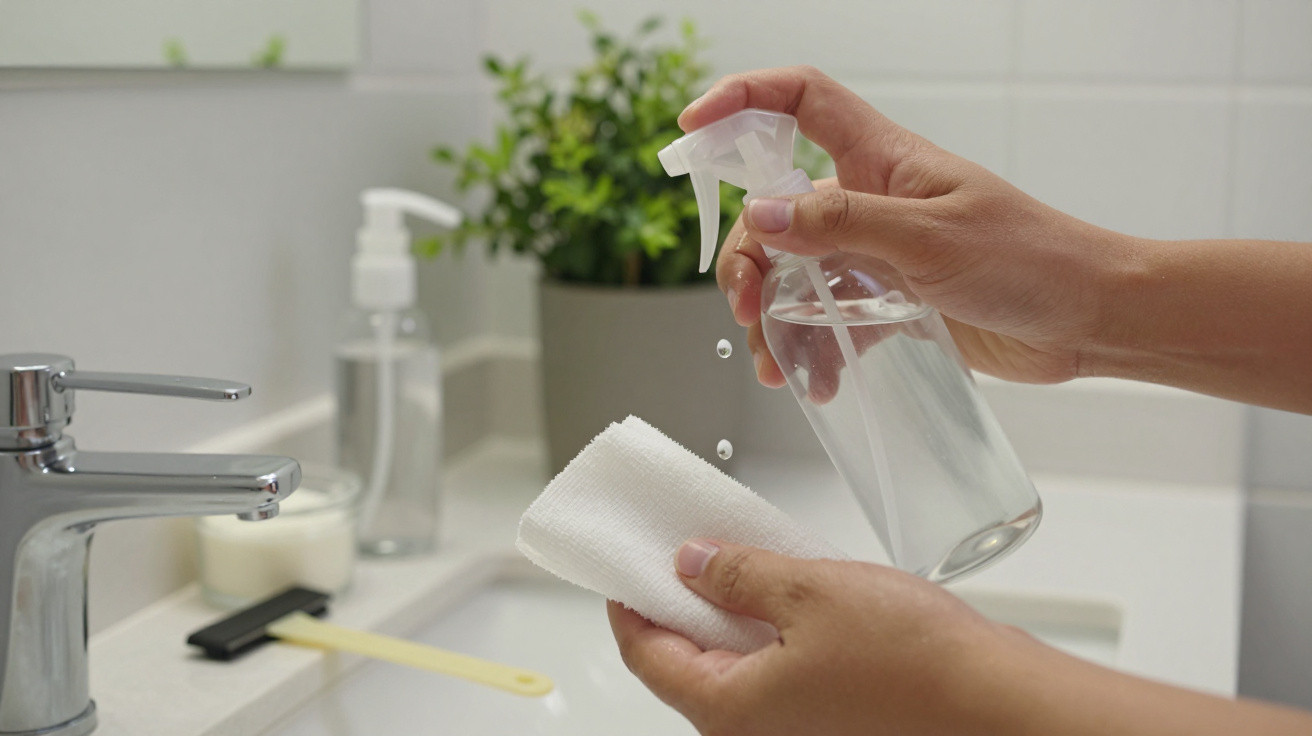
Acid is needed to tackle minerals: that is the fundamental rule. White vinegar is the safest household starting point. Warm it slightly, then spray or wipe it generously onto the glass and leave it for at least 15–20 minutes. Waiting is the tedious stage, but it is also when the chemistry does its work.
Afterwards, take a non-scratch sponge or microfibre cloth and clean in small circular motions. At first, you may notice resistance, followed by an odd slippery feeling as the upper layer of limescale releases. Rinse the door with warm water. Where stains are older and more concentrated, repeat the full process or reinforce it with a vinegar and bicarbonate of soda paste. The fizz is not only pleasing; it also gives the scrubbing action a slight lift without damaging the glass.
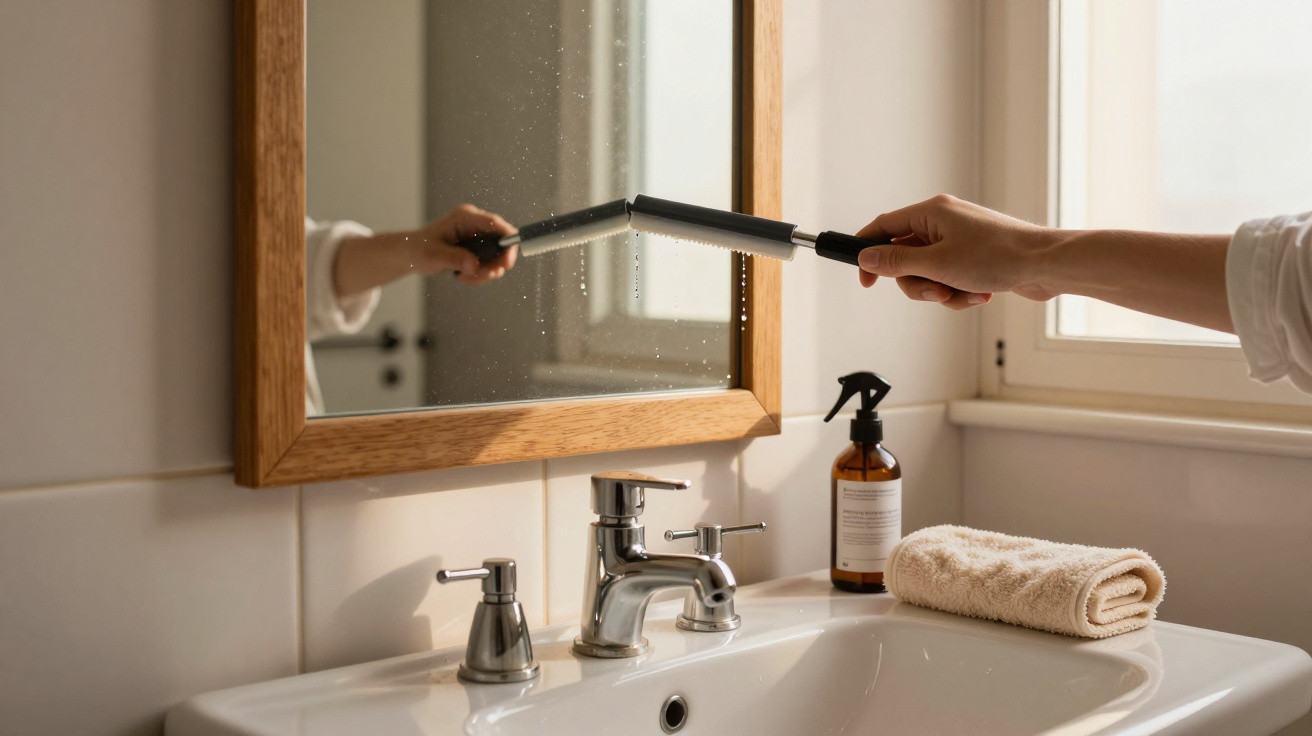
The everyday answer sounds straightforward: use a squeegee after every shower and dry the door. Real life, though, is not usually lived as though hotel housekeeping is monitoring you. You get out, feel cold, hear children calling, and your phone is buzzing in the bedroom. The squeegee hangs there reproachfully while the droplets are already drying. If you are not someone who wipes down the glass every time, plan weekly resets instead. Give it one thorough vinegar treatment on Sunday and a quick spray with a mild shower cleaner midway through the week, and the build-up should stay soft enough that it never turns geological.
Some errors are so widespread that they seem almost universal. Many people immediately reach for abrasive powders or aggressive scouring pads, convinced that enough elbow grease will solve it. In fact, these can scratch the glass just enough to make later stains adhere more readily. Other people combine every cleaning product beneath the sink into a homemade chemical mixture, which can be dangerous for both your lungs and your surfaces.
There is a quieter element of embarrassment, too. During a video call, a woman in Manchester told me that she had begun showering with the door half open so visitors would not see the white film. That background embarrassment can trigger frantic, last-minute scrubbing before guests arrive, along with the feeling that your home is “less than” regardless of how much effort you put in. You are not lazy; your water is simply stubborn. Accepting that makes the task feel practical rather than personal.
Professionals can sound almost philosophical on the subject.
“Glass isn’t really dirty,” one cleaner told me. “It’s just honest. It shows you exactly what your water is made of.”
For stains that are genuinely baked on, they may move up to slightly more powerful acids, including citric acid, specialist limescale removers or products containing sulfamic acid. When used properly, these break down heavy deposits without eating into the glass. Patience is crucial: soak rather than scrape.
- Begin gently: use a warm vinegar spray and soak for 20 minutes.
- Increase strength carefully: try a vinegar and bicarbonate paste on stubborn areas.
- Keep strong limescale removers for older, etched stains, and follow the label instructions.
- Do not use razor blades on glass unless you know exactly what you are doing.
- Complete the process with a glass sealant to delay the next build-up.
How to make the results last (almost) permanently
To keep those doors clear, imagine giving the glass a raincoat. After putting in the work to remove the stains, apply a glass sealant or a product intended for car windscreens to create a water-repellent layer. Instead of drying flat and leaving a mineral trace, water forms beads and runs away.
An industrial treatment is unnecessary. Plenty of people rely on straightforward, readily available options, such as a bathroom glass protector or even a hydrophobic car product carefully repurposed for the shower. Put it on fully clean, dry glass, spread it evenly and then buff it. The result generally lasts for weeks or even months, particularly if you make time for a fast weekly wipe-down.
Let’s be honest: nobody really does this every day. The image of a perfect homeowner spraying and squeegeeing after every shower does not reflect the way most of us live. Instead, choose routines that still work on difficult days. Use a mild no-rinse shower spray that you can mist around while the water is still running. Choose a squeegee that feels good to hold rather than like a punishment. Set a weekly phone reminder for a “glass reset” that takes ten minutes at most.
One homeowner I spoke with made it a shared ritual: whoever uses the shower last on Sunday carries out the quick vinegar treatment and wipe-down. There is no blame and no perfectionism, just one small task that stops the door returning to its chalky, defeated state.
There is a subtle pleasure in being able to see through clear glass again, as though your bathroom has suddenly become larger. Once you recognise that chemistry, rather than your cleaning ability, is the enemy, you feel far less defeated. You stop fixating on the stains and begin noticing the wider system behind them: the water supply, your routine and your tools.
In some respects, hard water stains are simply a visible record of everyday life: showers, hurried mornings, late-night washes and the chaos of children’s bath time. Working out how to remove them is rarely about finding a single miracle product. It is about a collection of small, slightly mundane habits built around one effective deep clean and some protection.
On a grey Tuesday, when the bathroom light catches the room perfectly and your glass remains clear, it can alter the feeling of the day. You are no longer looking at an endless job. You are seeing something you quietly resolved. It is the kind of small domestic success people do not boast about on social media, yet they remember it and discreetly share it with others.
| Key point | Detail | Benefit for the reader |
|---|---|---|
| Dissolve, do not scrape | Use mild acids such as vinegar to break down minerals | Reduce physical effort and protect the glass |
| Protect the glass | Apply a sealant or hydrophobic treatment after cleaning | Space out major cleans and keep glass clear for longer |
| Realistic routines | Establish a small weekly ritual rather than chasing a daily ideal | Achieve lasting results without unnecessary mental load |




Comments
No comments yet. Be the first to comment!
Leave a Comment