My bathroom would stay neat for roughly seven minutes after I cleaned it, before turning into an avalanche of toothpaste caps. I tested baskets, jars and even coordinated labels. None of them stood up to the morning scramble or a humid room with nowhere to set anything down.
Barefoot and about to miss a train, I was muttering words that would have made my nan blush. As I wiped foam from the door, I thought: this was not a bathroom; it was a tiny tiled battleground.
I am a fully grown adult. I can pay council tax and parallel park, but finding a razor without toppling five other items was beyond me. The under-sink cupboard had become a bog of spare loo roll and half-finished lotions. Every shelf had a ring of hairpins around it.
I went out to buy milk and returned with something that cost £1. After that, everything shifted.
When a tiny room turns into a daily battle
Bathrooms are compact, so every item competes loudly for room. Put one bottle down and it sends another over like a domino. The floor becomes a waiting area for towels that have no hooks to hang from.
It is not only about untidiness: it affects your time and your mood. Starting the day by stepping round pools of product makes the room feel like proof that you have not got your life together. We have all seen the mirror clear after a shower and revealed the chaos behind us rather than just our reflection.
That morning, I noticed the unused space in my cupboard. There was empty height above everything, simply going to waste. Bottles were lying on their sides, labels were wearing away and lids were becoming sticky. I had been planning storage in terms of floors and shelves rather than layers. The overlooked problem was vertical space.
What caught me off guard was that most of the clutter was not caused by having “too much stuff”. It was caused by things having nowhere to live. The hairdryer had no hook. Razors had no resting place. Cleaning spray was sharing space with bath salts. The wrong items were stored horizontally.
For a week, I timed my routine. The average search for toothpaste took 43 seconds. Looking for tweezers could take five minutes, or end with me never finding them at all. And tidying always got delayed until Sunday evening because I did not want to play product Tetris. Honestly, nobody wants to do that every day.
Everything I had already tried created extra surfaces instead of a smoother system. Attractive caddies gathered water. Jars meant decanting products, then forgetting what I had decanted. Labels looked smart until steam loosened the glue. My bathroom did not need prettier styling. It needed a different route.
So I began observing my own movements. Where did my hands stop? Where did I put things down, even momentarily? It was never on a shelf. I held items around mid-height, then dropped them into the first available gap. That gave me the answer: create storage at mid-height.
Storage goes wrong when it works against muscle memory. The solution was to give things a home where my hands naturally paused - not five centimetres lower, and not behind a door I rarely opened. No habits to build, only new anchors.
The £1 mini tension rod trick: no drilling, no fuss
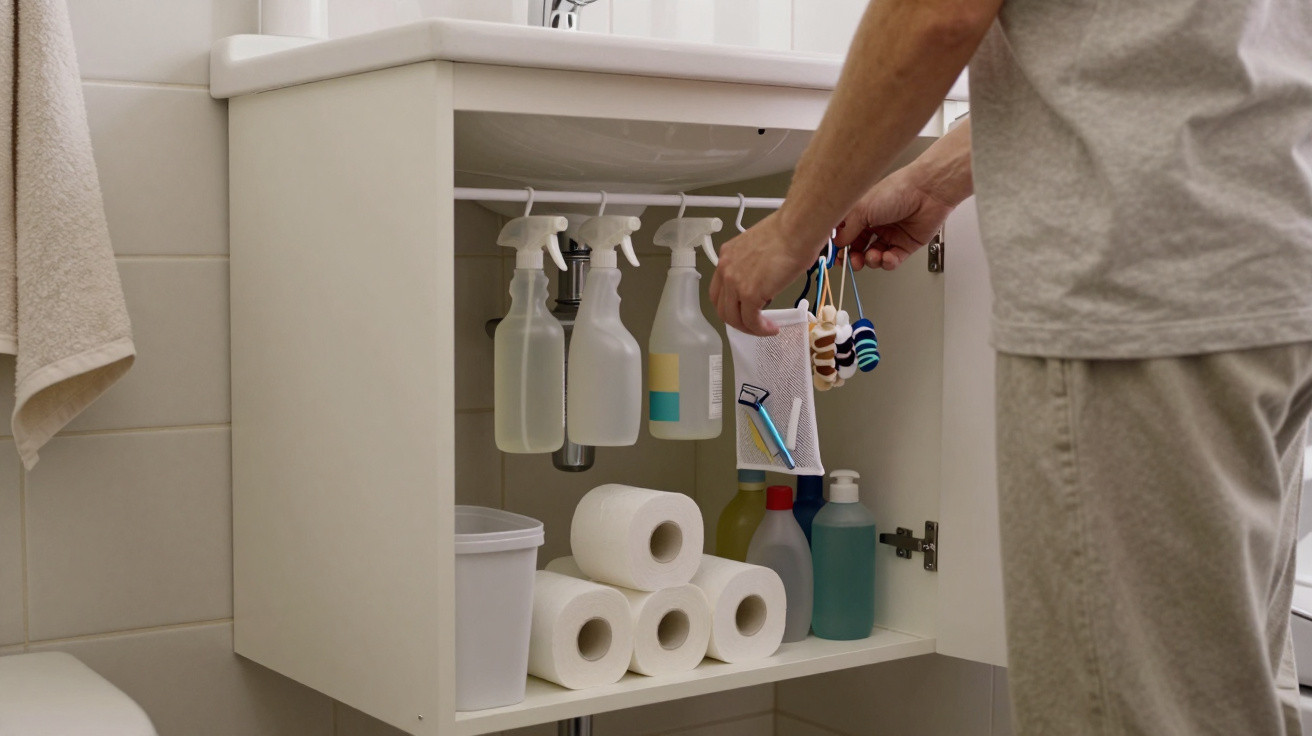
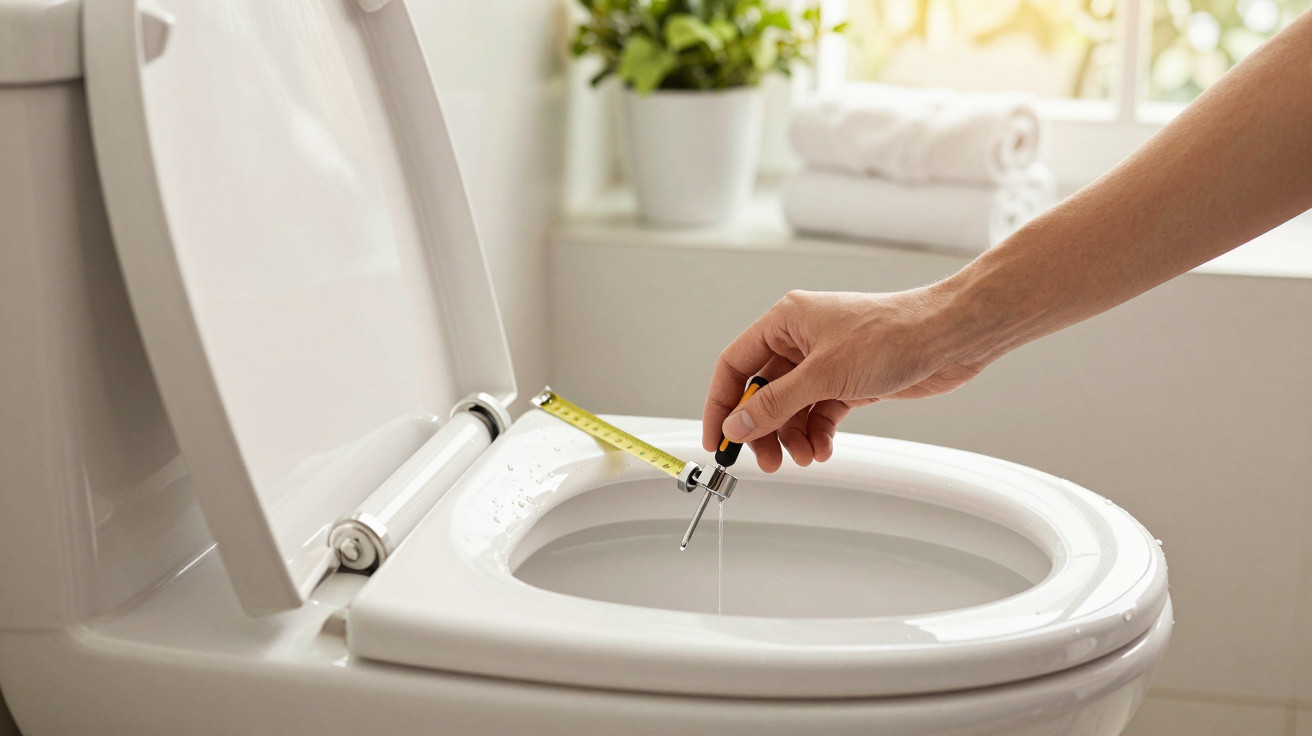
I picked up a mini tension rod from a pound shop. It needed no screws or drill. It was the slim style designed for café curtains. I placed it inside the under-sink cupboard, wedged it firmly between the side walls and twisted it until it held in place.
I used the rod to clip spray bottles by their triggers, leaving them hanging like miniature hammocks. Hair bobbles went onto an inexpensive carabiner, which I hung from it too. Travel pouches with zip pulls slipped onto the rod using spare curtain rings. It took seven minutes.
The swamp turned into a rail. That cleared the cupboard base for loo roll and a small bin. Daily essentials were suspended at hand height: dry, visible and ready to use. It cost £1.
I made one further adjustment. I fixed two adhesive hooks from my spare drawer stash to the inside of the cupboard door, then hung a soft pouch for razors and floss. Each category received an obvious section on the rod. Cleaning went on the left; grooming sat in the middle; guests’ mini items went on the right.
There were no labels and no pressure to make it perfect. I simply let gravity help. Steam stopped turning cardboard boxes into mush, while blades no longer sat in puddles. I no longer had to knock everything over to reach a single item.
There are a few ways to get it wrong. Do not load the rod with weighty bottles: it is a mini rail, not a mantelpiece. Reserve it for light items you use often. If you have a wider cupboard, fit two rods at separate depths and stagger them to prevent bottles from hitting each other.
Be mindful of drips from damp items. Store razors in a pouch with mesh or tiny holes. If you have no curtain rings, several keyrings will do the job. Carabiners work brilliantly for hair ties and scrunchies. The floor stayed clear for a month.
One unexpected benefit was the sound. Instead of bottles clattering and rolling around, there was only the quiet click of hooks. It made the whole room feel more peaceful and less… jangly. A small detail, but a major difference.
“Vertical storage is a cheat code in small rooms. Put items where your hands pause, and the habit sticks without effort,” said Karin, a professional organiser who helped me reality-check the setup.
- Ideal rod length: a close fit with slight tension, without bending.
- Best categories to hang: cleaning sprays, travel pouches and hair-tool cords.
- Moisture tip: breathable pouches are better than plastic for anything that becomes damp.
- Use what you have: keyrings, spare shower-curtain hooks or even ribbon loops.
- Weekly sweep: remove the rod in seconds and wipe the shelf underneath.
What changed - and why this small fix lasts
My morning routine moved at a different pace the very next day. Toothpaste was right at the front. Tweezers sat in a zipped pocket that opened with one pull. The cupboard resembled a train carriage, with every item parked in its own place.
It improved my routine without requiring a whole new personality. I did not need to become “the kind of person who labels things”. The arrangement remembered things for me. When guests visited, they could genuinely locate a spare toothbrush without shouting along the hallway.
I have tested countless storage hacks, but this was the only one that altered how my hands moved. That is the genuine advantage. Storage that changes movement keeps a room orderly, even on difficult days. On hurried mornings. On Sundays when eating toast is more appealing than alphabetising shampoo.
There is a quiet pleasure in no longer seeing clutter around your ankles. The bathroom seems taller. Air can move around, towels dry, and I no longer do that sideways shuffle around a mound of bottles.
Because the solution cost less than a coffee, it never seemed too precious to use. Had it failed, I would only have lost a pound. But it did not fail. It created room for the part of everyday life that matters: get in, get clean, get out - with no foam grenades and no fuss.
Try it this evening. Install a little rail where your hands already pause. Put the day back up, one bottle at a time.
That is the odd thing about homes. They do not require more possessions to work properly; they need a clearer route. Sometimes that route is a £1 line you can reposition with two fingers.
My bathroom now feels like a story I actually want to inhabit. Less noise. Fewer choices. A cupboard that shuts without a shoulder shove. Friends have copied the idea in flats, student halls and rented homes where drilling is not an option.
Yes, I still own too many lotions. I am not magically cured. But the chaos is contained, and my day no longer begins with a scavenger hunt on wet tiles. I will take that win every morning.
If you give it a go, tell me what you hung first. I am guessing it will be the cleaning spray you hated seeing on the floor, or the travel pouch that finally has a purpose when you are not away.
| Key point | Detail | Benefit for the reader |
|---|---|---|
| Use a £1 mini tension rod | Fit it inside a bathroom cupboard to make a hanging rail | Turns unused vertical space into storage without drilling or tools |
| Hang light, frequently used items | Suspend spray bottles by the trigger, pouches with rings and hair ties on a carabiner | Speeds up routines, reduces clutter on surfaces and keeps storage drier |
| Keep it breathable and adjustable | Use mesh pouches, spare hooks and quick wipe-downs | Low-maintenance, renter-friendly and simple to reset |



Comments
No comments yet. Be the first to comment!
Leave a Comment