“A towel is basically a forest of tiny loops.”
It creeps up on you so gradually that you barely notice. One morning, you climb out of the shower, reach for your favourite soft towel and… it merely moves the water about. You scrub harder, turn it over, blame your moisturiser or perhaps your shower gel. A towel that once soaked up water now simply shifts it from one arm to the other.
You smell it. It seems “clean enough”. You launder it as usual: the same detergent, programme and tumble dryer. So what has changed?
A week later, every towel seems to do the same thing. The newer ones still work, while the older ones slide over your skin like a T-shirt across glass. The cloth appears undamaged, with no obvious holes, only flatter and more worn-out. You begin to question whether it is your imagination, your washing routine or the water supply.
Then you read something that makes your washing machine look rather suspicious.
Why your towels suddenly stop absorbing
You can usually identify the point at which a towel “dies”. To begin with, it is only slightly less absorbent. You need another pass across your back or an extra rub through your hair. Then, seemingly overnight, it passes an unseen threshold and turns into a pointless damp cape.
The fibres have not disappeared. What is hidden from view is a fine but persistent layer coating them.
Each wash leaves behind a microscopic residue: detergent, fabric softener, body oils that did not wash away completely, and minerals from hard water. One cycle makes little difference; forty cycles certainly do. Eventually, this build-up blocks the minute gaps between the threads, much like plaque collecting between teeth.
Rather than acting like a sponge, the towel begins to behave like plastic. Water sits on its surface instead of being drawn in.
At first, it simply feels “less fluffy”. Under a microscope, however, the loops that once stood upright like tiny hooks have been compressed and stuck together. This is why even costly, hotel-style towels can suddenly seem far older than they really are.
There is no mystery or bad luck behind the loss of absorbency. It comes down to chemistry, routine… and several washing shortcuts almost everyone makes.
The hidden enemies in your laundry room
Fabric softener is the chief culprit. That blue liquid which gives towels a “marine breeze” scent works by depositing a waxy, oily layer over the fibres. You may scarcely notice it on T-shirts. With towels, though, it obstructs their one essential function: absorbing water.
Keep using it every week and, in effect, you are waterproofing your towels.
Using too much detergent is another problem. Most people pour it in by eye rather than measuring with the cap. A bigger load or extra mess often means adding a little more. Yet the machine cannot always rinse away the excess, particularly on eco programmes. Some remains behind, covering the cotton in an invisible varnish.
We are talking about grams, not kilos. But those grams build into a genuine problem.
Hard water adds another element to the case. Calcium and magnesium cling readily to fibres, where they combine with soap to create a thin, chalky coating called “soap scum”. You can see it in the shower, but it is much less noticeable on towels.
What feels like “tired fabric” is often minerals, softener and detergent lodged in places a standard rinse cannot reach.
How to reset a “dead” towel and make it drink again
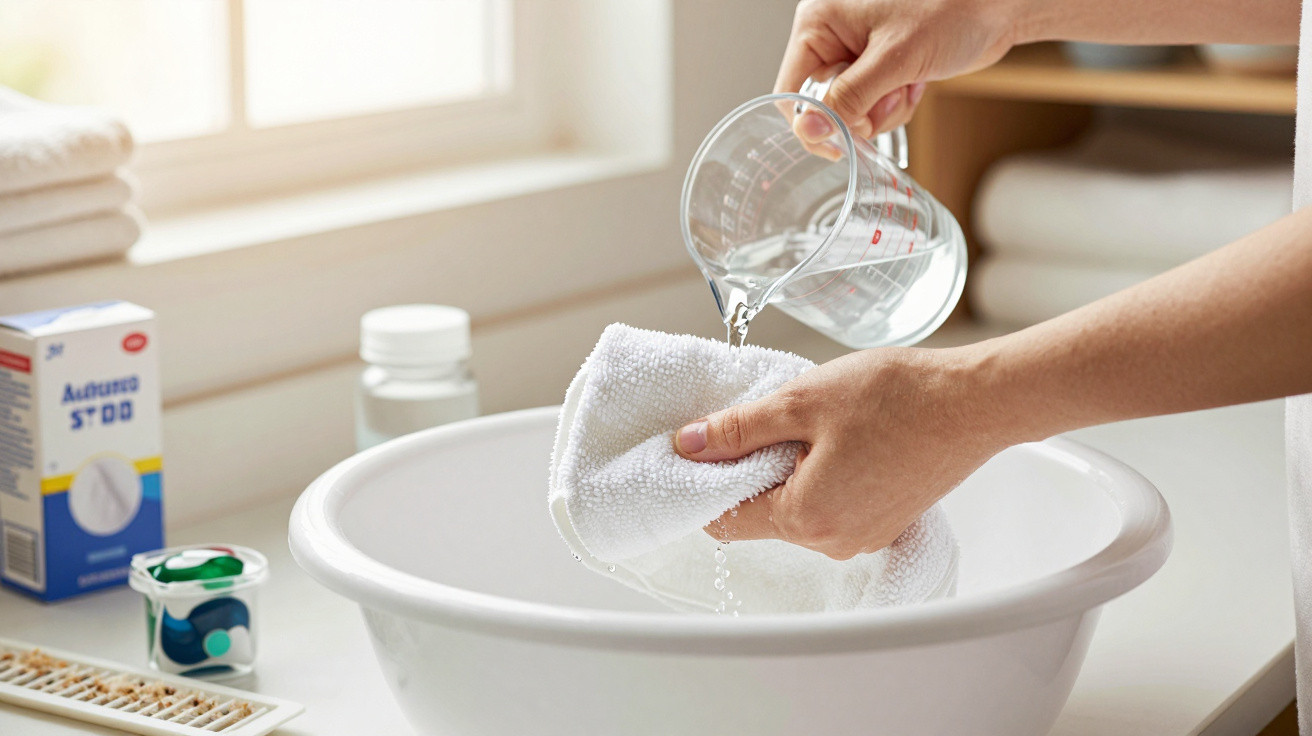
There is a route back. Treat it as a deep clean rather than an ordinary wash. Begin by stripping the towels: run a hot wash with a cup of white vinegar, using no detergent or fabric softener. Vinegar can dissolve mineral deposits and help break down the waxy layer.
After that, run a second hot cycle with a small amount of detergent, ensuring the towels are rinsed thoroughly.
For especially hard water or heavy, older build-up, take it a step further. Fill the bath with hot water, add half a cup of washing soda - or bicarbonate of soda if necessary - and stir until it dissolves. Leave the towels to soak for several hours.
The water may turn cloudy or grey. That is not dirt appearing from nowhere; it is the residue that had been sitting within the fibres.
Tumble-dry them on a high heat setting, but do not dry them until they become crisp. Heat helps the loops rise again, while too long in the dryer can flatten and damage them. Aim for dry but still slightly soft, not the crunch of “burnt toast”.
Many people are surprised when one or two reset washes make their “dead” towels feel useful again. There is a small satisfaction in watching them absorb water as they did when they were new.
Simple habits that keep towels absorbent for years
What happens after you revive them is the real difference-maker. The first rule is simple: do not use fabric softener on towels. Ever. Your nose may object for a few days, but your skin and towels will benefit for years. If you miss the soft finish, add a dryer ball or clean tennis ball to the tumble dryer, which fluffs the fibres mechanically.
That is quieter than battling a towel that fails to do its job.
Use less detergent than you think you need. The marked line on the cap is already generous. When towels are not visibly dirty, the minimum dose is enough. Modern washing machines and detergents are designed to work with low quantities.
Let us be honest: nobody really reads the dosage instructions on the bottle before every wash.
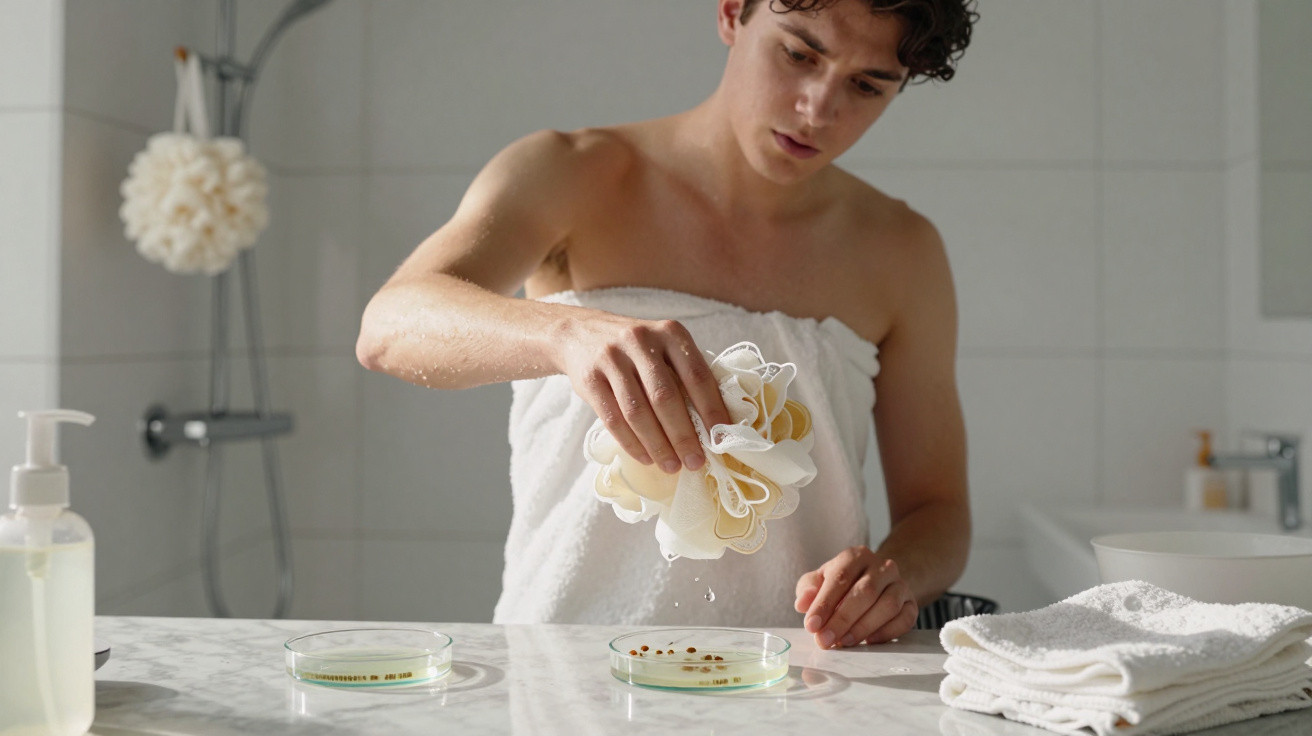
There is also a more subtle enemy: leaving damp towels in a heap. Tossing them on the floor or bunching them up on a hook gives bacteria and mildew the chance to develop. They produce by-products that attach to the fibres, trapping odours and residues.
Spread towels out after every use and allow them to dry completely. Wash them after three or four uses rather than ten. If possible, dry them on a radiator, not rolled into a ball at the end of the bed.
What experts wish we knew about towels
Laundry professionals make the same point repeatedly: towels are practical tools, not decorative items. Their purpose is not to smell perfumed, but to remove water from your skin. Every scented coating added to them works against that purpose.
As one textile engineer quietly put it:
“The more you coat that forest with wax, oils and minerals, the more it turns from a sponge into a raincoat.”
The quote may sound technical, but it accounts for plenty of everyday irritation. It also explains why some households save their “good towels” for visitors: they are the ones not yet damaged by regular habits.
To keep every towel in the “good” category, small and consistent changes are more effective than one heroic deep clean each year.
Here are some useful reminders:
- Wash towels separately from heavily soiled clothes and synthetic fabrics.
- Use hot wash cycles regularly rather than relying only on lukewarm eco programmes.
- Avoid fabric softener and strong fragrance products for every towel.
- Measure detergent and begin with less rather than more.
- Strip and reset towels every few months if you have hard water.
The emotional side of a “simple” towel
On a hectic weekday morning, chemistry is not on your mind. You are thinking about the meeting you are late for, the child who needs breakfast and the coffee you have not yet had. A good towel is one small, quiet comfort that says you are allowed one soft thing today.
When it stops working, it becomes a tiny, silly annoyance… yet somehow it can set the mood for the entire day.
Towels also age in front of us. There is the one you took to university, the set somebody gave you when you moved in together, and the little hooded towels that once wrapped a baby. Each carries a story, so their wear can feel unexpectedly personal.
From a practical perspective, knowing why they “die” gives you a little control over that gradual decline.
We have all experienced the moment when a new towel feels wonderful, only for it to become another damp rectangle on the rail six months later. Realising that the culprit is in the washing machine rather than your own bad luck changes the situation.
Perhaps tonight, when you pick up that half-useless towel, you will see it a little differently… and give it one final chance before assigning it to the dog basket.
| Key point | Detail | Why it matters to the reader |
|---|---|---|
| Invisible residues | A mix of detergent, fabric softener, body oils and limescale coats the fibres | Understand why even expensive towels stop absorbing |
| Poor habits | Too much detergent, routine fabric softener, lukewarm cycles and compressed laundry | Identify everyday actions that damage towels without you noticing |
| A possible reset | Vinegar cycles, hot water, washing soda soaking and careful drying | Learn how to “resurrect” towels and extend their lifespan |



Comments
No comments yet. Be the first to comment!
Leave a Comment