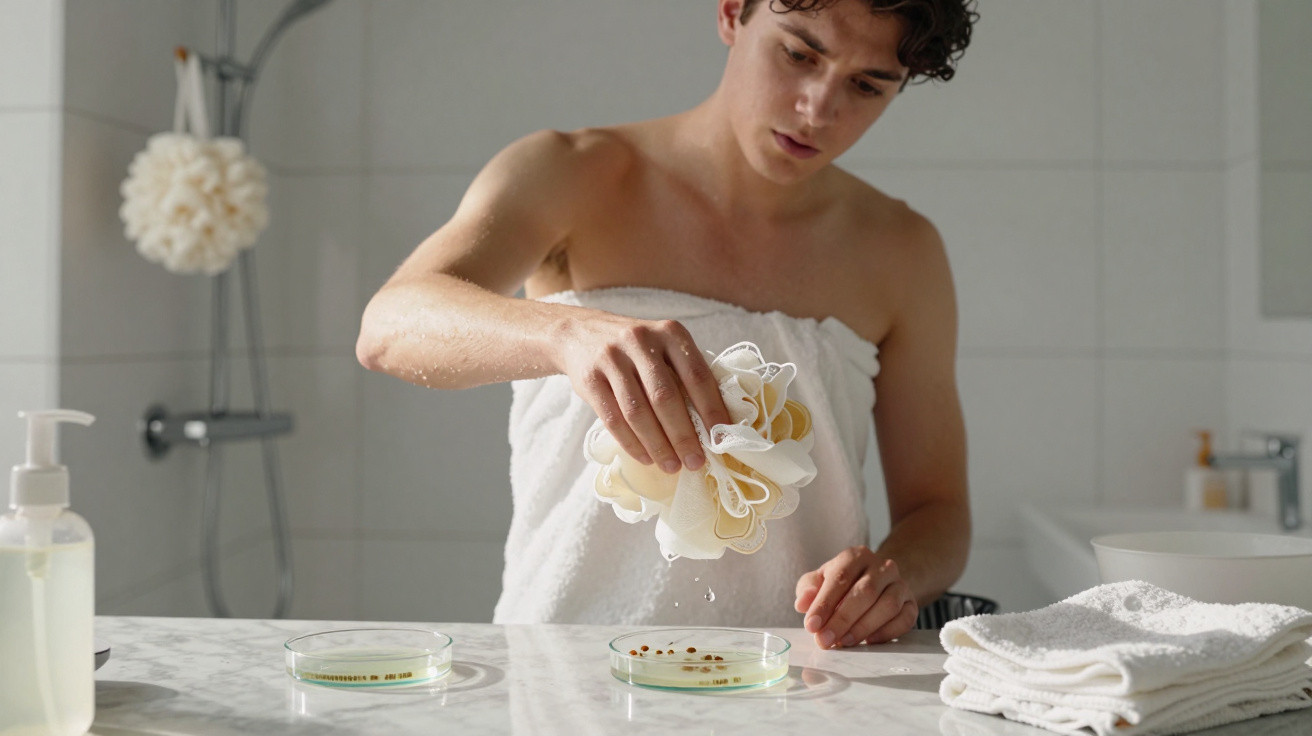
The point when I began to suspect that my loofah was working against me was completely unremarkable.
Half asleep in the shower, I was rubbing myself down with the same familiar scratchy sponge when a headline I had seen somewhere popped into my head: “Dermatologists say loofahs are crawling with bacteria.” Looking at the pale-pink, slightly ragged mesh loop in my hand, I abruptly stopped seeing it as hygienic. It seemed… questionable. Like the sort of object that might have an unpleasant smell if you leaned in close enough.
We put our faith in little mesh poufs and natural sponges to leave us clean. Nearly every bathroom has one hanging up like a colourful flower, gathering steam, soap and shed skin. What no one really tells you is that it may be gathering staph bacteria as well. Once that idea occurs to you, it is difficult to shake.
Our cosy attachment to loofahs
A loofah adds a small sense of luxury to an ordinary wash. The generous foam, the light scratch across your skin and the sense that you are “really” removing the day all feel quietly satisfying. We place them beside fragranced shower gel and expensive shampoo, treating them as part of a miniature self-care shrine. They appear harmless, even rather charming.
Most people cannot recall buying the one they own. Perhaps it came home with the supermarket shopping, arrived in a Christmas gift set or was picked up in a sale and then forgotten about. It waits, damp and uncomplaining, in the shower corner until the next wash. We might squeeze some water out before leaving, then walk away feeling fresh and responsible.
Everyone has thought, “I should probably replace this soon,” only to… not do it. The mesh starts coming apart, its colour loses brightness and it develops a slight musty scent of stale water and soap. Yet it is familiar. Ignoring an uneasy feeling about hygiene is simpler than binning an item that technically still functions. That is when the problem starts.
A perfect habitat for the wrong sort of life
To us, a loofah is simply a sponge. To bacteria, it resembles a warm, damp block of flats with endless room. Each use dislodges dead skin cells, which settle far down in its fibres and folds. Exfoliating, lifting and scrubbing away old skin is exactly what the loofah is designed to do. However, those minute fragments of your body do not wash down the plughole as cleanly as we would prefer to imagine.
After it is hung up again, the loofah remains in a hot, humid bathroom that is often not well ventilated. Its material is moist, the air is warm and microscopic food sources are caught inside. For bacteria and fungi, including staphylococcus, the understated villain of this story, that is an unlimited buffet. You cannot see or smell it, but it can multiply busily in the gap between showers.
Dermatologists encounter the consequences well before most of us hear any cautionary advice. People arrive with inflamed red areas, unexplained rashes or small pustules that refuse to disappear. Many say casually, “I keep clean, I scrub every day.” Then the doctor asks, “Do you use a loofah?” and the picture changes entirely.
What staph can do to your skin
Staphylococcus sounds as though it belongs in a hospital, far removed from daily life. Actually, it is much more commonplace. Staph bacteria live harmlessly on many healthy people’s skin. Trouble can begin when they find an opening – a minuscule cut, a compromised skin barrier or a loofah that helps carry them into tiny abrasions.
Hard scrubbing with any exfoliating item produces minute, invisible breaks in the skin’s surface. They neither bleed nor sting, so you will not notice them. Bacteria, however, do. A wet loofah holding the previous day’s germs can push them directly into these microscopic gaps, particularly around warm areas such as the armpits, groin and backs of the knees.
The outcome can occasionally be mild: slight folliculitis, those little red bumps that resemble shaving rash but never properly settle. At other times it is more severe, with swollen marks, weeping sores or infections requiring antibiotics. For those with a weakened immune system, eczema, diabetes or damaged skin, the danger moves from inconvenient to serious. A soft-looking sponge hardly appears threatening, which may be why it takes us by surprise.
When “self-care” quietly becomes skin stress
There is an odd contradiction at work. We choose loofahs because we want skin that is smooth, radiant and “better”. Social media overflows with polished shower routines, displays of pastel bottles and exfoliating accessories. Scrubbing has become almost performative: a ritual we are told is necessary to be truly clean. The harsher the scrub, the more thorough the clean – or that is the message.
Dermatologists offer another account. Too much exfoliation, especially using a loofah, gradually wears down the skin’s natural barrier. This barrier is your body’s unobtrusive guard, keeping moisture inside and bacteria outside. Repeated daily abrasion does not simply “freshen up” your skin. It leaves it dehydrated, exposed and a little less protected every time.
That taut, squeaky, almost burning-clean sensation after an extended scrub? It is not your skin expressing gratitude. It is your skin saying, “That was a bit much.” We do not tend to interpret it that way. We have learned to link feeling “stingy and stripped” with feeling “effective”. A loofah is exceptionally effective at stripping the skin.
Loofah cleaning and replacement: the things nobody does
In truth, hardly anyone follows the recommended rules for loofah care. Official guidance says to rinse it well after every use, squeeze out all water, keep it in a dry, airy place, disinfect it at least once a week and replace it every few weeks. It all sounds sensible on paper. In reality, most of us shower groggily before work and can barely remember to hang up a towel correctly.
Loofahs almost never receive the care they are meant to have. They remain in a humid shower cubicle, sometimes beside other people’s loofahs, razors and bars of soap. Others sit on the edge of the bath in a shallow pool of old water. We reassure ourselves that hot water and soap must “clean” them. In fact, bacteria can be remarkably content in warm, soapy environments.
Natural loofahs – the fibrous, plant-based tubes that look so appealing in a zero-waste bathroom photograph – are even more attractive to microbes. Their coarse, open texture catches more skin and dries more slowly. Dermatologists frequently put them right at the top of their “please don’t” list. The more unprocessed and “eco” they are, the more they act like tiny compost heaps for shed skin cells.
That slight smell is not merely “old soap”
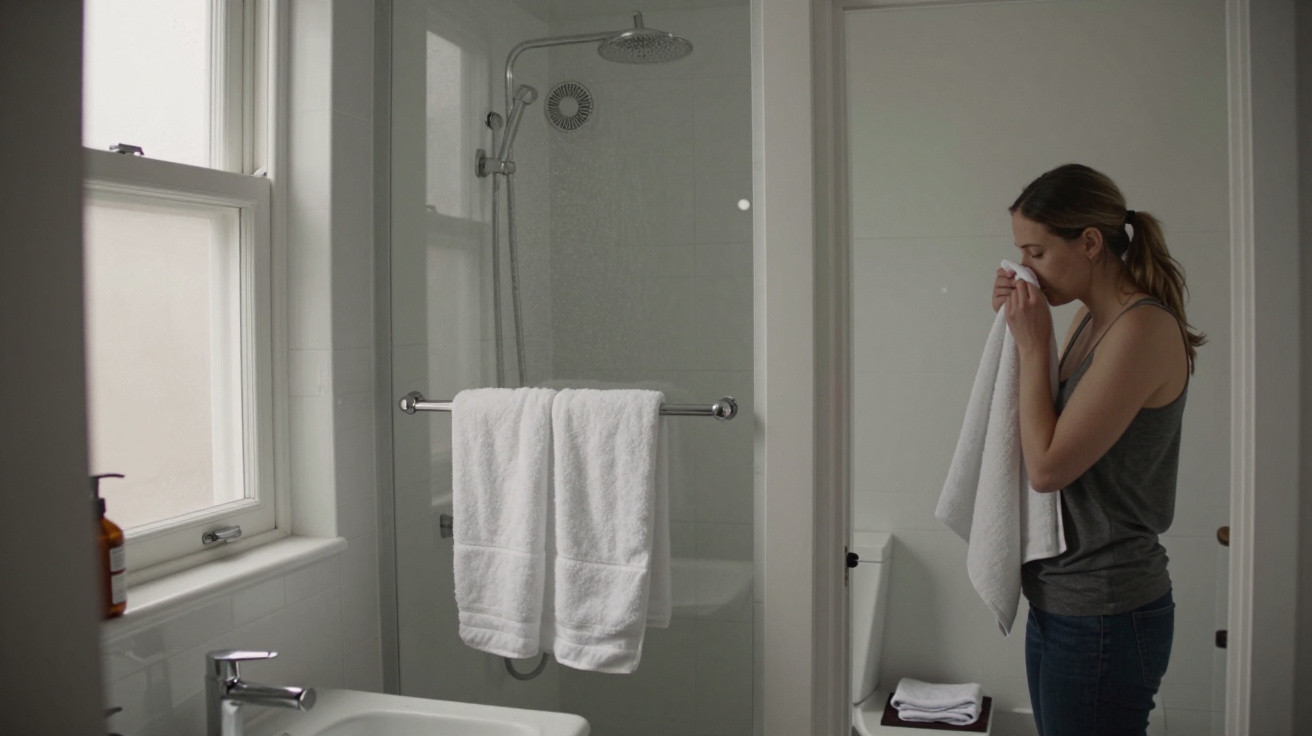
A shower sponge that has been used too long develops a distinctive smell. It is a mildly sour, almost sweet damp odour beneath the remaining fragrance of old shower gel. We notice it when the loofah gets near our face, then immediately find a reason to dismiss it. It is fine, we tell ourselves. It has simply been wet for some time.
Dermatologists would regard that odour as a clue. It signals that what is now living in your loofah is not what was there at the beginning. If something intended to help you wash smells subtly wrong after rinsing, that is seldom encouraging. We would never tolerate that smell from a drinking glass used every day. Yet we somehow accept it from an item rubbed over our entire bodies.
“But I’ve used a loofah for years and I’m fine”
There is always a friend who responds with a shrug: “I’ve had mine for ages, and I’ve never had a problem.” Perhaps you are that person. And it is true that many people will have no issue. Human bodies are resilient, and skin is not a delicate porcelain plate that breaks at the first trace of bacteria. If it were, none of us would survive a journey on public transport.
The concern is not that every loofah user will inevitably develop a staph infection. It is that the risk quietly rises, particularly if you have shaving cuts, eczema, insect bites or any other small openings in the skin. These are like unlocked entrances to an otherwise secure home. Usually nothing happens. But eventually, it might.
Dermatologists notice patterns that we miss. They hear the same accounts repeatedly: “I changed shower gel and then my skin went mad,” or “I’ve been extra good about scrubbing lately.” Looking at infected follicles, abscesses or persistent rashes on arms, legs and buttocks, they ask about loofahs almost automatically. If the answer is yes, they are rarely surprised.
People who should take particular care
Some people can be relaxed about hygiene and generally get away with it. Others cannot. If you have diabetes, an autoimmune disease, recent surgery or recurring skin concerns, your balance with bacteria is more precarious. Your skin may heal more slowly, your immune system may already be under extra strain, and that “just a bit of redness” may not be harmless after all.
Children, older people and anyone whose skin is broken or inflamed face a particularly high risk. With eczema or psoriasis, the final thing your skin needs is more micro-tears followed by pressure from a microbe-filled sponge. A soft cloth used gently, laundered correctly, is a much safer option. It may not look as stylish on the bathroom shelf, but your skin will quietly appreciate it.
What to use instead of a loofah
When dermatologists say “ditch the loofah”, they do not mean “stop washing”. Their point is, “There’s a simpler, cleaner way to do this.” The least exciting solution is also the one skin specialists calmly recommend again and again: your hands. For most people, on most days, clean hands and a mild cleanser that does not strip the skin are enough. You are not inherently dirtier than every other person in history.
For anyone who enjoys some texture, a soft cotton flannel or muslin provides a reasonable compromise. You can put it through a hot wash after a few uses, dry it thoroughly and replace it without any emotional fuss. It does not hold as much dead skin deep within it, while its flat surface is easier to wash. You retain the feeling of a “scrub” without building a bacterial theme park.
If you struggle with body acne, bumps, or ingrown hairs, a loofah might actually be making your life harder, not easier. Many dermatologists now favour chemical exfoliants – lotions or cleansers containing ingredients such as salicylic acid or lactic acid – over abrasive physical tools. They exfoliate more consistently, work within pores and do not depend on friction that can irritate everything.
Ending things with the shower pouf
Feeling attached to a £2 mesh ball is faintly absurd. Still, deciding to put it in the bin can bring an unexpectedly emotional twinge. It has formed part of your routine. You have picked it up during frantic Monday mornings and on long, quiet Sunday evenings after difficult weeks. It has been there when you were most unguarded, naked and humming badly.
But there’s a quiet relief, too, in letting go of things that are secretly working against you. You enter the shower with only your hands and perhaps a soft cloth. The routine becomes slightly easier. Afterwards, your skin does not feel so stripped. Your bathroom smells of soap and steam alone, rather than that faintly suspect damp scent.
Sometimes the smallest changes in a habit you barely think about can shift how you feel in your own body. Once you have seen the difference, an old loofah hanging in somebody else’s shower may look less like self-care and more like a petri dish on a string.
A different meaning of “feeling clean”
We have been taught that clean means scrubbed, scoured and polished. We are encouraged to remove layers of ourselves in pursuit of some ideal version below. Loofahs fit this narrative perfectly. They offer a “deep clean”, visible effort and that slightly raw feeling we have strangely learned to read as proof of success.
Dermatologists are carefully reshaping that narrative. Clean may also mean calm, protected and unbroken. Your skin is not a floor requiring vigorous scouring; it is a living barrier doing its best to protect you. When we no longer assault it with bacteria-filled tools and continual friction, it often reacts with fewer breakouts, rashes and irritation. It looks more like itself and less like a battlefield.
Maybe the real luxury isn’t a shower full of accessories; it’s skin that doesn’t sting when you towel it dry. Water striking the tiles, warmth across your shoulders and soap gliding simply over your skin can be sufficient. Once you have thought about that in the shower, looked at your loofah and pictured it beneath a microscope, there is a strong chance you will never pick it up in quite the same way again.

Comments
No comments yet. Be the first to comment!
Leave a Comment