A faint hissing sound from the bathroom can steadily wear down your patience, increase your water bill and even disturb your sleep.
Quick action can make all the difference.
A persistent trickle after flushing seldom means the toilet is beyond saving. In many homes, a minor adjustment to the flapper chain or float will silence the noise, reduce waste and bring back peace within minutes.
Why a running toilet matters more than you think
A running toilet can seem insignificant, like ordinary background noise. But water is disappearing behind that sound, litre after litre and hour after hour. Utilities in the UK and US now warn that one defective toilet can waste thousands of litres-or hundreds of gallons-every month.
A typical running loo can waste enough water in a day to match several full bathtub loads, without you ever seeing it on the floor.
Water costs continue to climb, droughts affect more areas each year, and households are already under pressure to use less. That continuous trickle from the cistern becomes a genuine expense while contributing to an environmental issue extending well beyond the bathroom.
The reassuring part is that most running toilets do not need a plumber, a complete replacement or hours of YouTube videos. The majority of faults involve two straightforward components inside the cistern:
- the flapper and its chain
- the float that regulates the water level
Understanding how these parts work makes that puzzling nighttime noise much easier to explain.
Inside the cistern: what actually makes your toilet run
Remove the cistern lid and you will find a compact mechanical system driven solely by gravity and water pressure. There are no lights or electronic alerts; the parts simply follow the same gradual, predictable sequence every time you flush.
The flapper: a small hinge with a big job
The flapper is the rubber, or silicone, valve located at the bottom of the cistern. Pressing the handle raises the flap via a chain, allowing water to rush into the bowl. At the end of the flush, it should fall back into place and seal the opening firmly.
When the seal does not hold, water continues to escape. The fill valve then responds by topping up the cistern. Because the toilet never fully settles, you may hear intermittent refilling or a soft, unbroken hiss.
Most chronic running toilets trace back to one simple fault: the flapper does not close cleanly and stay shut.
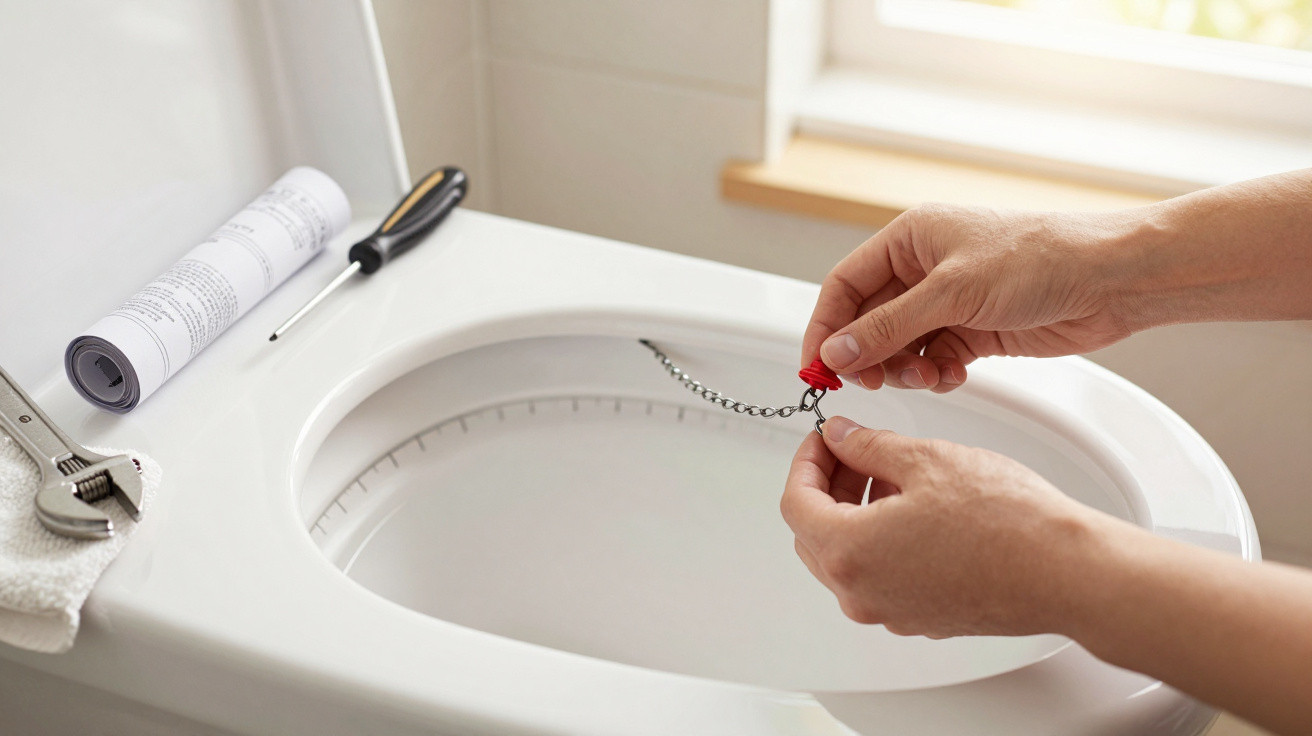
The chain between the handle and flapper is often partly responsible. A chain that is too taut can keep pulling the flapper open, while one that hangs too loosely may become trapped beneath it and hold it open enough to cause a leak.
The float: your tank’s water-level manager
Positioned higher in the cistern and connected to the fill valve, the float rises as water returns after a flush. When it reaches its preset level, it signals the valve to stop filling.
If that setting is too high, water runs into the overflow tube at the centre of the cistern. The fill valve therefore never quite turns off. There may be no visible flood, but you will hear continual refilling as water drains through the overflow.
Older toilets have a large ball float attached to an arm, whereas newer designs usually use a narrow float that slides up and down a vertical shaft. Once you know where to look, either type can be adjusted in seconds.
Five-minute fix: adjusting the flapper chain
For many homes, adjusting the flapper chain is the quickest solution. No tools are required, nor much DIY confidence: simply watch carefully and move a single small metal link.
| Step | What to do | What to check |
|---|---|---|
| 1. Turn off the sound, not the water | Remove the cistern lid and flush once to observe the mechanism. | Watch how the chain raises the flapper and how the flapper falls back down. |
| 2. Check chain length | Check for slack while the flapper is completely closed. | Around 0.5–1 cm (¼–½ inch) of slack is ideal. |
| 3. Shorten or lengthen the chain | Detach the chain from the handle lever and connect it to another link. | The flapper should lie flat without being pulled continuously. |
| 4. Test the flush | Flush again and watch the parts closely. | The flapper should open fully, then seal properly without the chain catching. |
| 5. Listen for leaks | Wait one minute once the cistern has refilled. | There should be no trickling, no ripples in the bowl and no further refilling. |
Aim for a chain that lifts the flapper easily but hangs loose enough that it never stops the flap from sealing.
If the chain continues to snag, inspect it for corrosion or bends. A low-cost replacement chain costs less than a coffee and may restore an otherwise sound cistern.
Fine-tuning the float for a quieter toilet
If the chain is correctly positioned but the toilet still makes a humming noise, the float probably needs a slight adjustment. This determines the cistern’s water level and whether water trickles into the overflow tube.
Adjusting a modern vertical float
Most recent toilets have a slim plastic float that moves along a vertical shaft beside the fill valve. Its height is normally controlled by a small screw or simple clip.
- Locate the adjustment point: usually a small screw or plastic tab close to the float.
- Lower the float slightly, so the water level finishes about 2–3 cm (around 1 inch) beneath the top of the overflow tube.
- Flush the toilet, allow the cistern to refill and observe where the water level stops.
If water still enters the overflow, lower the float a little further. Even a small movement alters the shut-off point.
Adjusting an older ball float
Conventional ball floats are fitted to the end of a long plastic or metal arm. Moving the ball higher or lower changes the final water level.
- Find the screw at the point where the arm joins the fill valve. Turning it down lowers the arm.
- With certain models, carefully bend the metal arm downwards to lower the float.
- Let the cistern refill and monitor the overflow tube. The water line should sit just below its upper edge.
If you can see water slipping into the overflow tube, the tank is overfilling and the float sits too high.
After the water line is at a safe level, the continual refilling sound will usually disappear. The toilet fills, switches off and remains quiet until it is flushed again.
When fast fixes are not enough
A five-minute adjustment does not solve every toilet problem. Some cisterns have more substantial wear that becomes apparent when you begin inspecting the parts.
- Cracked or warped flapper: If the rubber is hard, distorted or covered in rough limescale, it may fail to seal even when the chain is perfectly adjusted. A universal replacement is inexpensive and suitable for most models.
- Damaged overflow tube: A cracked tube may leak without making much noise. Water may dribble from the split rather than flowing over the top. This will generally require a replacement flush-valve assembly.
- Tired fill valve: If the valve does not completely shut off despite a low float setting, its internal mechanism may be worn out. For many people, modern replacement valves can be fitted in under half an hour.
Hard-water regions in parts of the UK and US can experience quicker deterioration because minerals accumulate. Some households now include a brief annual cistern inspection alongside smoke-alarm checks and boiler servicing, helping them spot issues early.
Why this tiny repair has bigger consequences
This year, water regulators in both countries have repeated a shared message: leaks in homes quietly work against conservation targets. Toilets are close to the top of the list. Unlike a burst pipe, they do not demand attention; they merely whisper through the night.
Fixing one running toilet can save more water in a month than switching off the tap while brushing your teeth for a year.
At city level, those figures quickly become significant. Small leaks in tens of thousands of homes put pressure on ageing infrastructure and raise treatment costs. Utilities then pass those costs on to customers. Rather than making smarter use of current supplies, there is greater pressure to construct new reservoirs and treatment works.
Adjusting a flapper or float is therefore a quiet form of prevention. It lowers your bill and reduces demand on local networks. In drought-prone parts of the American West and southern England, such everyday repairs support the wider effort to keep taps flowing without stricter restrictions.
Extra checks and habits that keep the toilet honest
After dealing with the obvious leak, a few simple routines can help stop that late-night hiss from returning.
- Twice a year, remove the cistern lid and look for slime, scale or brittle rubber.
- Add a few drops of non-staining food colouring to the cistern and wait 20 minutes; if the colour reaches the bowl, water is leaking past the flapper.
- Do not put bricks or other heavy items in the cistern to reduce water use, as they can harm components or alter water levels unpredictably.
- Take note of any sudden increase in your water bill, as a concealed toilet leak is often responsible.
Landlords in particular are giving silent leaks more attention. In multi-unit properties, one faulty toilet can distort shared water charges and trigger disputes. Brief inspections between tenancies, including a basic check of the chain and float, now appear on many lists alongside locks and smoke alarms.
For homeowners, this modest knowledge often encourages other straightforward maintenance jobs. Someone who adjusts a float today may feel more at ease replacing a washer or installing a water-saving shower head tomorrow. Confidence comes through small successes rather than major projects.
Some councils and utilities now provide free or discounted flappers and leak strips as part of conservation campaigns. They have identified the same trend: once people see how easily a running toilet can be controlled, they respond more promptly next time rather than waiting months for a repair appointment.
Behind this straightforward five-minute adjustment is a broader change in attitude. Households begin to see fixtures not as sealed-off mysteries, but as quiet machines they can fine-tune. One chain link here and one float adjustment there can make the bathroom still again. Water remains in the system, the bill stays stable, and the only nighttime noise is the gentle creak of a home that is, at last, not sending money down the drain.












Comments
No comments yet. Be the first to comment!
Leave a Comment