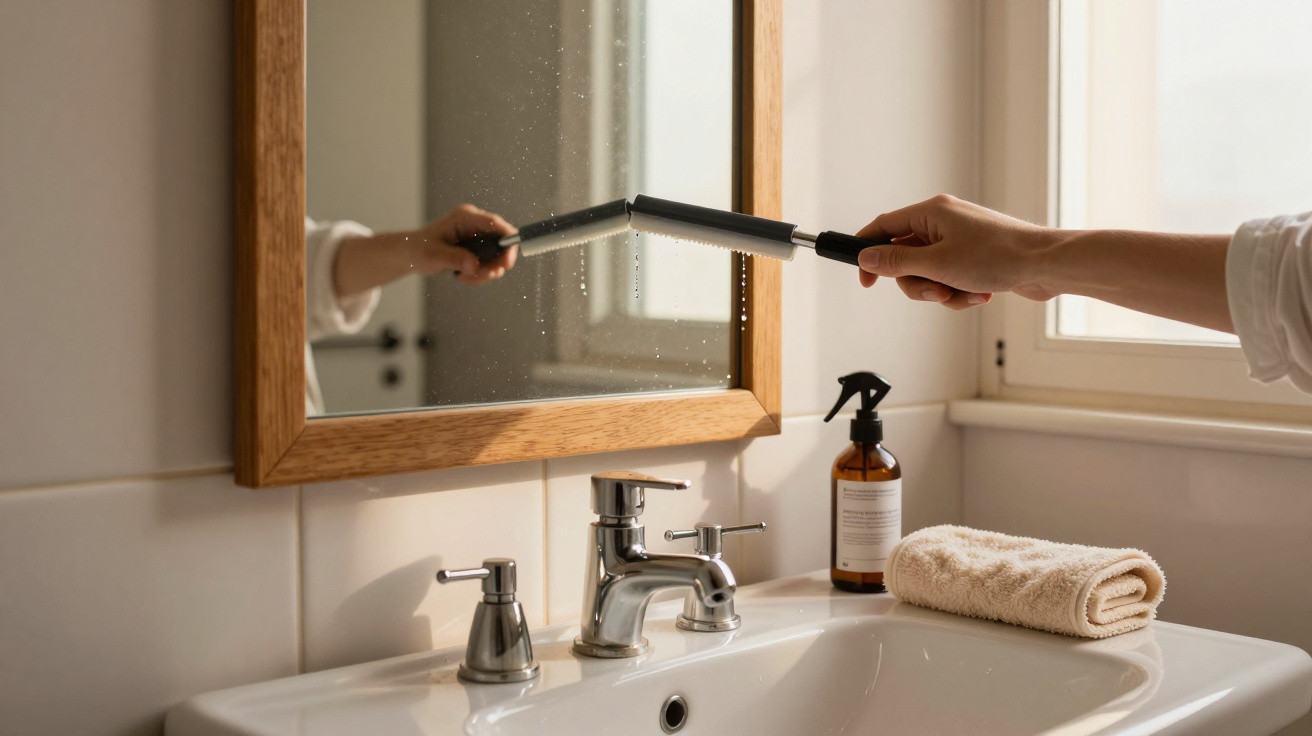
The bathroom door bangs shut, the shower starts hissing, and steam takes over before you have even found your toothbrush.
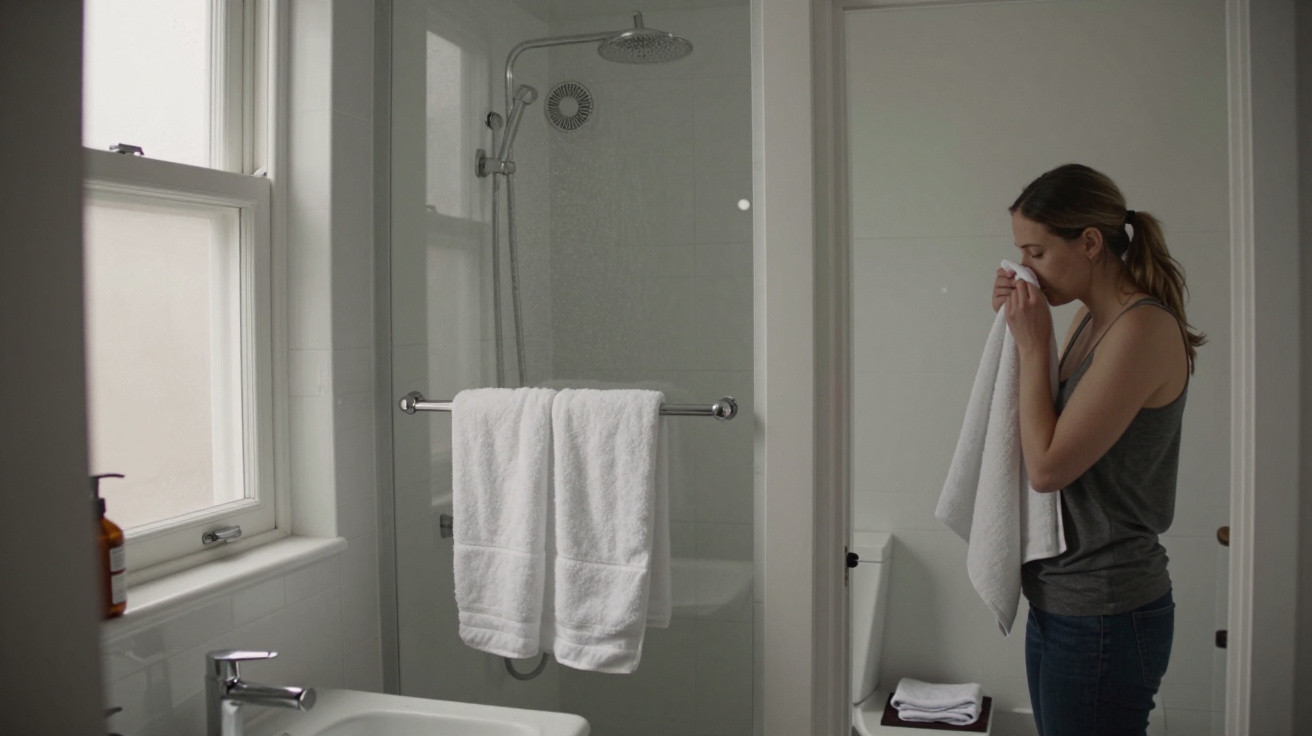
When you emerge with a towel over your shoulders, the mirror has become a white, opaque panel. No face. No hair. Only mist. In a compact flat or studio, it can feel almost absurd: after one quick shower, the mirror is already unusable.
You clear a patch with your hand, it stays visible for a moment, then tiny beads of water spread back across it. It is the same routine every morning. You hardly notice it in a large hotel bathroom. In a tiny bathroom at home, though, it can seem as if the mirror is working against you.
Some bathrooms mist up slowly. Yours steams up like a smoke machine at a concert.
There is a reason for it. Once you understand it, you will notice it every time.
Why small bathrooms steam up your mirror in record time
Stand in the doorway of a small bathroom immediately after a hot shower. The air feels dense and almost weighty, while a faint layer of moisture settles on your skin. You do not need a hygrometer to know that the humidity has risen dramatically. In such a confined room, every warm droplet produced by the shower has very little space to disperse.
The mirror is an ideal landing spot. Its smooth, comparatively cool surface sits on the wall, ready for water vapour to settle on it. The smaller the bathroom, the more rapidly the air becomes saturated. Instead of building up gradually, the mist can appear like an instant curtain.
Your mirror is not worse than anyone else’s. It is simply on the front line of a very small weather system.
Picture two separate mornings. The first is in a narrow, windowless rented bathroom where you could almost touch both walls with your elbows. The second is in a larger family bathroom with a window slightly open. The shower is identical. So is the water temperature. Yet the outcome is completely different.
In the smaller room, three minutes of hot water can make it feel like a sauna. The mirror turns opaque from edge to edge, and the tiles may begin to sweat as well. In the larger bathroom, there may only be a light haze near the top of the mirror, while its lower section remains practical to use.
The difference lies in air volume and ways for moisture to escape. A larger bathroom has air that can circulate, blend and move around. A small one holds steam close to every surface.
A straightforward sequence of physics sits behind this everyday irritation. As hot water becomes steam, it enters the room as invisible water vapour. Warm air can retain a substantial amount of this vapour. When it reaches its limit - known scientifically as 100% relative humidity - the excess moisture has to settle elsewhere.
It condenses on the first cooler surfaces available: mirrors, metal taps and painted walls. In a small bathroom, the air reaches that limit remarkably quickly because there is less space overall and ventilation is often weaker. As the mirror is cooler than the surrounding air, microscopic droplets cling to it and scatter the light.
The mist is not grime or soap residue. It is simply your bathroom’s climate system running at speed.
Simple ways to delay fog on your small bathroom mirror
To gain a few extra minutes of visibility, begin by changing what happens just before you turn on the tap. One small action can have a noticeable effect: leave the door very slightly open before showering. Even a two-centimetre gap gives moist air somewhere to go rather than allowing it to build up immediately around the mirror.
Another useful method is to switch on the extractor fan at least five minutes before showering, rather than only afterwards. This starts drawing drier air through the room in advance, so humidity takes longer to reach saturation. It may feel like you are cheating the system, but it is simply airflow.
Some people also apply a drop of washing-up liquid or shaving cream to the mirror and then buff it dry. This leaves a fine coating that limits the way droplets form beads, giving you a short period of resistance to fogging.
On an exhausting Tuesday morning, no one wants a ten-step bathroom routine. You are barely awake, thinking about coffee and already late for a meeting. This is where small adjustments are genuinely useful. Turning the shower temperature down slightly reduces the amount of steam created from the outset.
Leaving the top of the shower curtain slightly open also allows hot air to rise out instead of directing it straight towards the mirror wall. If you can shower with the door ajar while alone at home, the improvement will be immediately visible on the mirror.
Let us be honest: nobody really does all of this every day. However, building two or three natural habits - turning on the fan early, leaving the door slightly open, and cleaning the mirror weekly with a little vinegar and water - can transform a solid wall of mist into a light haze.
Some people take things further and treat the mirror as a piece of equipment rather than merely a sheet of glass.
“When I moved into my 20 m² studio, my mirror was literally useless after a shower,” laughs Clara, 27. “I ended up sticking a cheap anti-fog film on the middle third. It looks a bit weird, but at least I can see my face.”
Her approach may seem drastic, but it demonstrates an important point: you do not need to prevent fog across the whole mirror, only in the section you actually use. A small heated mirror pad, an LED mirror with an integrated demister, or simply moving the mirror away from direct steam can make a major difference in cramped rooms.
- Start the fan early rather than late: switch it on 5–10 minutes before showering for a meaningful effect.
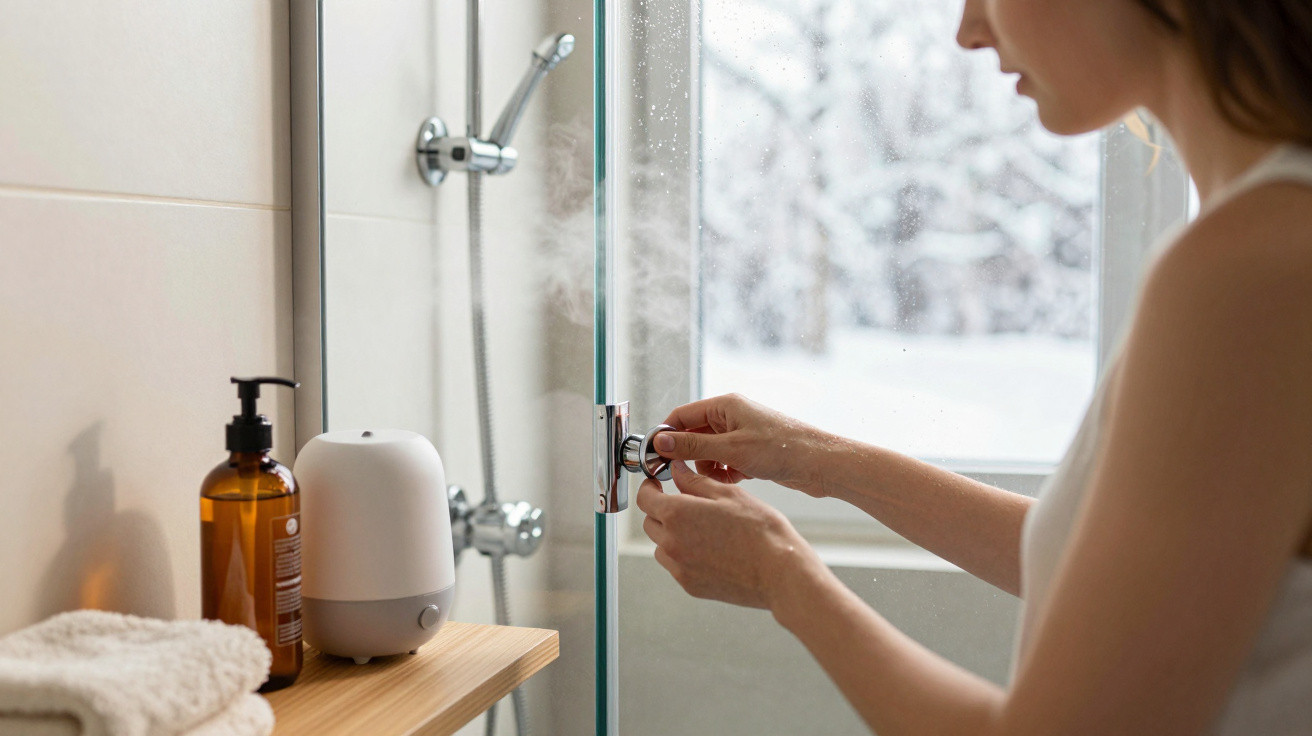
- Give steam an escape route: leave the door slightly open, open a window, or maintain a small gap in the curtain.
- Protect the part of the mirror you use: try anti-fog film, a shaving cream coating, or a demister pad.
- Reduce steam at its source: take slightly cooler showers and limit bursts of very hot water.
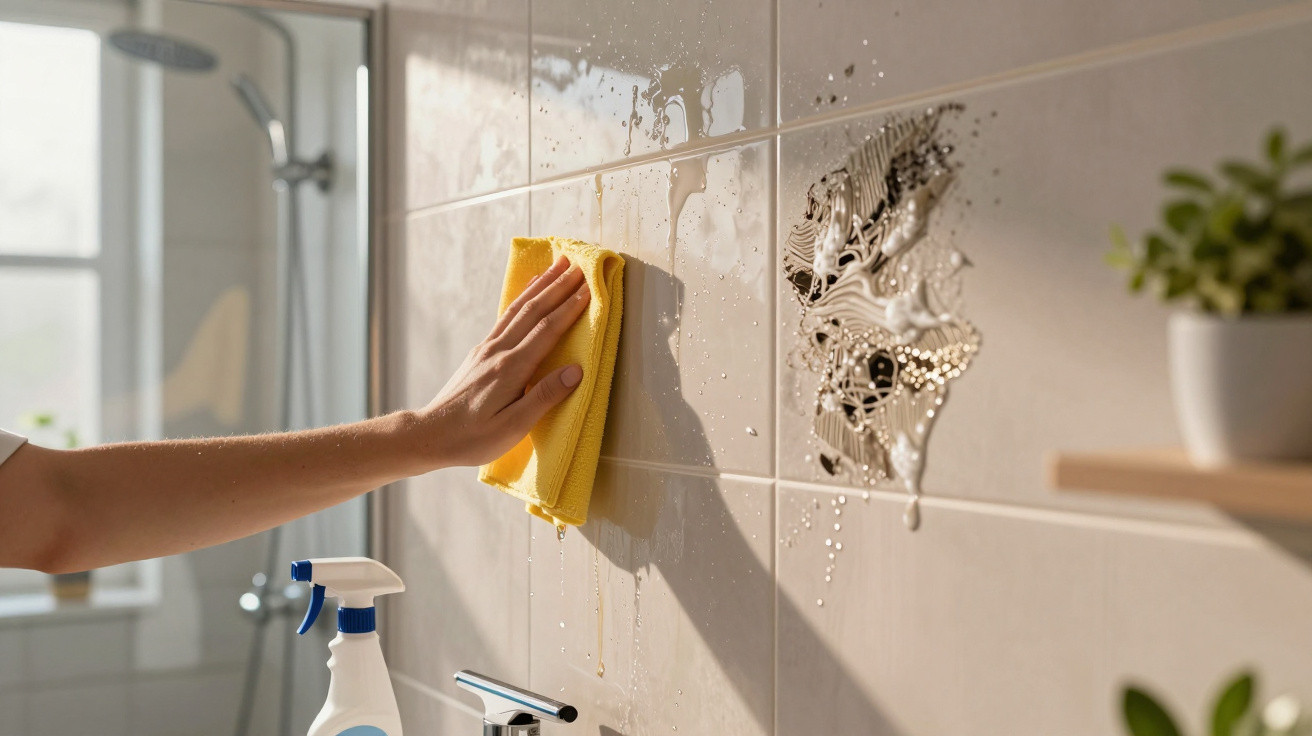
- Keep the glass “neutral”: clean it regularly using a simple vinegar-and-water mixture.
Beyond fog: what your steamy mirror is trying to tell you
A small bathroom with a mirror that instantly mists up is more than a daily frustration. It is a quiet indication of how your home handles air, moisture and heat. Whenever the mirror vanishes beneath a milky layer, the walls, ceiling and tile joints are being exposed to the same surge of humidity.
That does not mean you need to panic every time you shower. It simply means that the mirror acts as a visible warning light. Once you begin to observe it, patterns become clear: perhaps there is no mist in the evening after the window has been open all afternoon, or there is heavy fog on a cold morning when the extractor fan was not used.
These signs can help you adjust your habits and decide what to invest in later.
A conversation may begin with a minor annoyance - “Why does this stupid mirror always fog?” - and end with people reconsidering the comfort of their whole home. A dehumidifier in the hallway, a more effective fan or a new habit of leaving the door open after showering can alter more than your reflection. Friends exchange advice, couples disagree over whether the door should stay ajar, and tenants discover that a simple window catch can make an enormous difference.
On a busy morning, when toothbrushes are crammed into one tumbler and towels are still barely dry from the previous day, the mirror forms part of the daily choreography. A few seconds of clear visibility can change how hurried, stressed or prepared you feel when leaving home.
The next time the glass turns opaque in your small bathroom, you will know that you are not dealing with a “bad” mirror. You are watching physics unfold on a miniature scale, directly in front of you. Often, just a few sensible changes are enough to tip that tiny weather system in your favour.
| Key point | Detail | Why it matters to the reader |
|---|---|---|
| Reduced air volume | In a small bathroom, humidity saturates the air far more quickly. | Understand why the mirror mists up almost instantly. |
| Cool mirror surface | The mirror stays cooler than the air and attracts condensation. | Recognise the mirror’s role as a steam “sensor”, rather than seeing it as a faulty object. |
| Simple actions | Ventilate before showering, leave the door ajar and protect part of the mirror. | Have practical options for restoring a clear view without major work. |



Comments
No comments yet. Be the first to comment!
Leave a Comment