The bathroom ought to be the room where your day begins with a clear mind.
A fresh towel, a hot shower and a spotless mirror. Yet there is another familiar reality: a baffling smell that returns just hours after you have cleaned the room obsessively.
It hangs around the toilet, lurks in the drains and settles into the shower curtain. You use a floral spray, burn a candle and open the window a little. For ten minutes, it smells like an advert for a spa. Then everyday life takes over again.
One evening in a friend’s compact city flat, I noticed something unusual. Her bathroom smelled neutral. Not perfumed, not bleachy. It simply smelled of… nothing. Even in a small room with three visitors, it stayed that way.
I asked what she did differently. Laughing, she showed me a method so easy that it almost seemed unfair.
Why your bathroom never stays fresh
Most people assume bathroom odours come solely from the toilet. We clean the bowl, add blue toilet cleaner and perhaps hang up a scented block, hoping that will do the job. Yet by the following morning, the room can already feel stuffy again.
The less appealing truth is that odours thrive in warm, damp and enclosed rooms. They cling to textiles, collect in drains and seep into the thin, barely visible film of soap residue on tiles. Together, these create a sort of “background odor” that sprays can only disguise temporarily.
At home, your nose gradually adjusts to it. Visitors, however, notice it as soon as they walk through the door.
A US survey into household odours found that the bathroom was the room people felt most self-conscious about before having visitors. Not the kitchen or the bedroom: the bathroom.
That survey revealed something else that was especially telling. People relied far too heavily on quick solutions, including aerosol sprays, plug-in fresheners and powerful cleaning products used only just before guests arrived. There would be a brief burst of intense effort, followed by days of doing nothing.
We do not often consider what happens between those moments. Towels remain damp because they never dry properly. Toothbrush holders become miniature swamps. Shower curtains acquire the faint smell of a long-forgotten swimming pool. The room never has the chance to air properly.
Social media is full of impressive bathroom “before/after” videos. What those clips do not show is the state of the room three days on, once moisture, dust and daily routines have brought back the familiar smell.
There is one straightforward reason these efforts fail to last. They tackle odour on the surface rather than its central cause: the invisible airflow in the room and the areas where moisture and bacteria become trapped.
Odour molecules need an exit route. When all they have are walls, towels and curtains to settle on, they remain in place. Every shower and every flush then adds another layer to this unseen cloud.
This is why one bathroom can seem airy in the morning but feel heavy by late afternoon. The air indoors is caught in the same cycle.
The simple baking soda trick that keeps bathroom air fresh
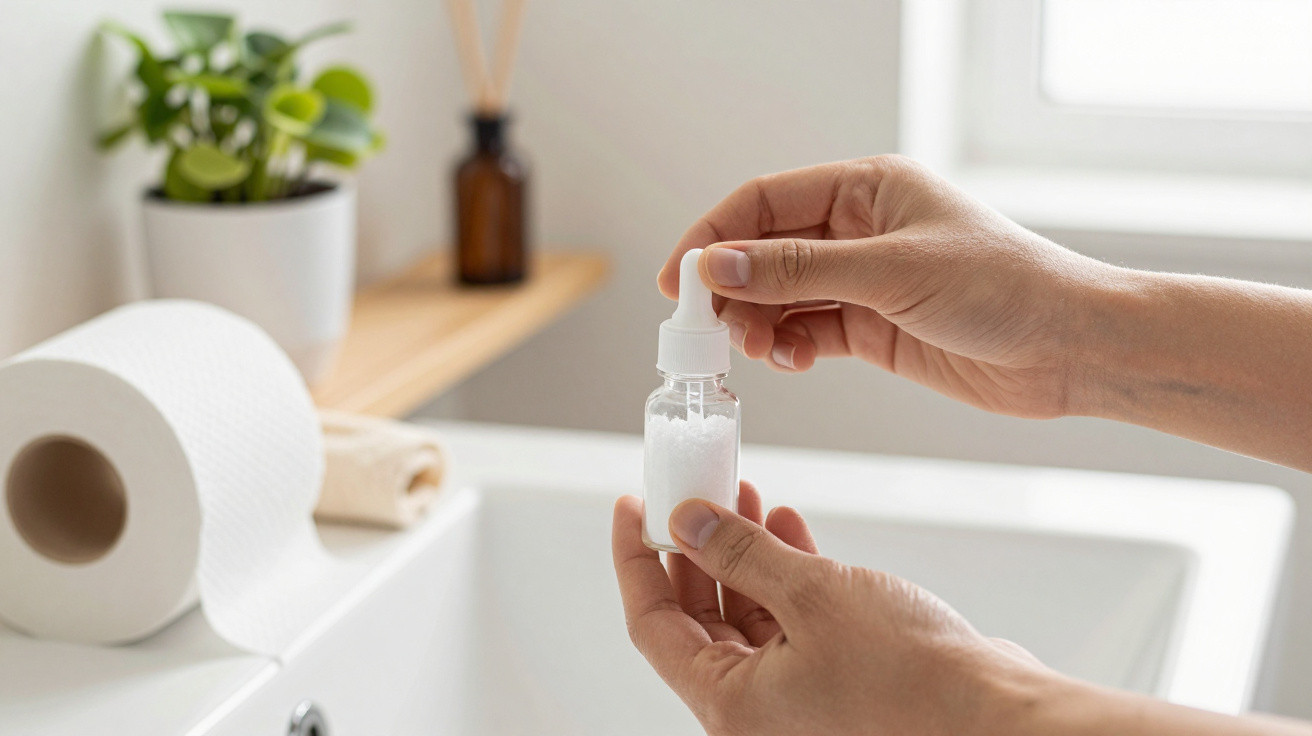
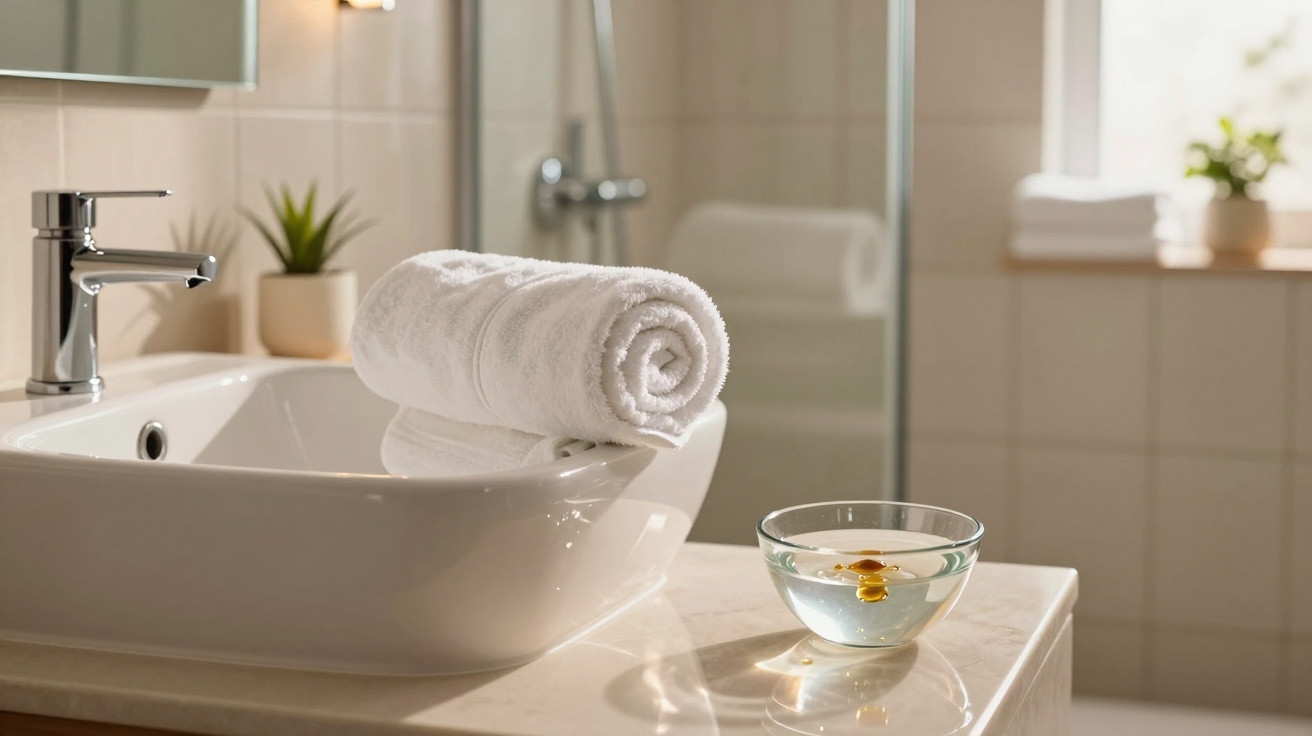
The solution my friend showed me was neither an expensive device nor a viral cleaning tip. It was a small open glass jar, placed on top of the toilet cistern, half-filled with ordinary baking soda and containing a few drops of essential oil.
That was all. There was no label, no brand and nothing especially Instagrammable. Every few days, she stirred it with a spoon to keep the top layer “awake”.
Baking soda does more than scent the air: it absorbs odours. It captures the molecules rather than allowing them to drift around the room. Essential oil contributes a light background fragrance instead of the forceful, “I’m hiding something” effect of a spray. The jar sat precisely where air circulated best: beside the toilet, beneath the window and along the fan’s airflow.
To recreate this at home, use a small jar or bowl. Add 4–5 tablespoons of baking soda, followed by 8–10 drops of an essential oil you genuinely enjoy, such as lemon, eucalyptus, lavender or even simple vanilla. Stir it with a spoon and leave it uncovered where air naturally moves.
Give the mixture a brief stir every three or four days to reveal fresh powder. After roughly a month, discard it and make a new one. It takes two minutes, puts no chemicals into the air and avoids a heavy artificial fragrance.
Let’s be honest: nobody truly does this every day. Rather than aiming for the perfect cleaning routine from a YouTube home tour, try for “good enough, often enough”.
The biggest error is to feel embarrassed about the bathroom. People either overlook the smell entirely or compensate with harsh products that make the room chokingly strong for ten minutes before fading into an odd synthetic scent.
Another frequent mistake is putting strongly fragranced products directly beneath your nose: on the sink, on a face-height shelf or beside the mirror. The result is a headache, not genuine freshness. This approach works best when the fragrance remains gentle and unobtrusive, almost like silence.
There is also the illusion that one major cleaning day will solve everything. You mop, scrub and disinfect the whole room. It looks excellent. Then the same damp bath mat goes back on the floor, the shut window traps the steam and, by the middle of the week, you are back where you started.
A professional cleaner I interviewed for this piece summed it up perfectly:
“Fresh bathrooms don’t come from what you do once a month. They come from the tiny things you barely think about, repeated quietly.”
That is the real benefit of the baking soda jar. It keeps working while you forget it is there. It does not require perfection; it simply makes the air a little better, hour after hour.
For a stronger effect, combine it with three micro-habits that require seconds rather than hours:
- Hang towels fully open rather than folded, so they can dry properly.
- Leave the shower curtain slightly open so air can circulate inside the bath.
- Leave the door ajar for ten minutes after every hot shower, allowing the steam to escape.
None of this appears dramatic. It simply gives the room a quietly clean feel. That is what visitors notice, even if they cannot say why.
A bathroom that smells of calm, not chemicals
Once you are used to a bathroom that simply smells of nothing, returning to the old way feels odd. The disappearance of that lingering, stubborn odour changes how you use the room. You linger slightly longer after showering, turn on softer lighting and stop worrying when a visitor asks, “Can I use your bathroom?”
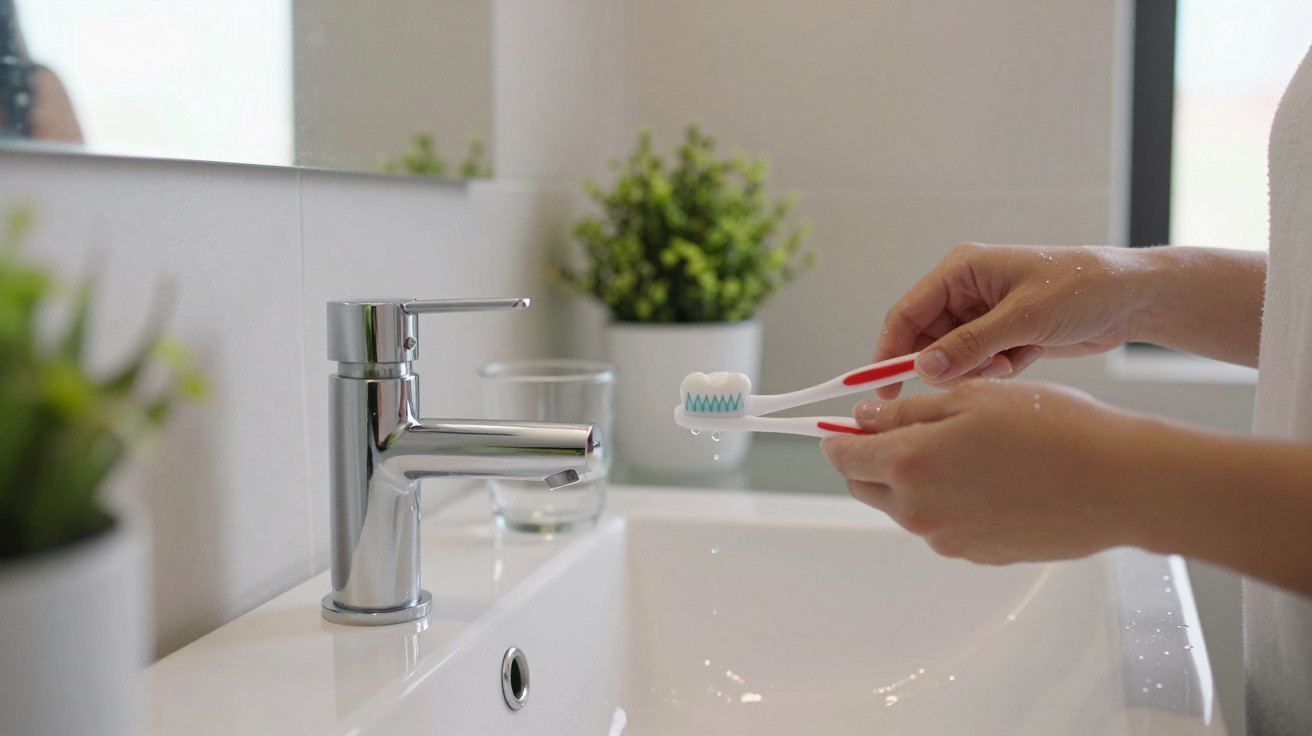
Something else happens too, although it is more subtle. You begin to look after the space with a little more care. You hang up the towel rather than dropping it, and rinse the basin after brushing your teeth. It is not because you have become a cleanliness obsessive, but because the room now reflects the life you want to lead.
On a difficult day, it can become a reset button: neutral air, warm water and five minutes to breathe. There is no floral cloud attempting to impress you, only clean and quiet air that does not demand attention.
This easy trick is not magic. It will not solve a leaking pipe, a faulty extractor fan or months of ingrained grime. What it provides is a baseline: a low, consistent level of freshness that helps every other effort work better.
Once you notice the change, you may start seeing other small places around your home where the same principle could help: slow, quiet routines instead of grand heroic efforts. The sort of habits you do not need to post about, but which make daily life feel a little lighter.
| Key point | Detail | Benefit for the reader |
|---|---|---|
| Neutralise, do not mask | Baking soda absorbs odours, while a few drops of essential oil provide a subtle background fragrance. | Creates a bathroom that smells truly fresh, rather than perfumed over something stale. |
| Put it where air moves | Place the open jar near the toilet, below a window or close to the fan’s airflow. | Increases the effect without relying on overpowering fragrances. |
| Tiny habits, big impact | Dry towels completely, leave the shower curtain open and air the room after showering. | Helps freshness last longer with almost no additional time or daily effort. |

Comments
No comments yet. Be the first to comment!
Leave a Comment