Water strikes the tiles with its familiar echo, steam clouds the mirror, and two new notifications flash up on the phone balanced by the sink - messages you choose to ignore.
It is your morning shower: the same habit, at the same hour, with those drawn-out minutes when everything beyond the bathroom seems to stop. You linger beneath the spray, allowing the warmth to rinse away both sleep and the news you stayed up far too late reading.
You know it is time to get out. Your mind runs through your to-do list, the environment and the growing household bills. Still, the water feels protective: a small, private refusal to join the rush waiting outside the door. The internal clock says you have already overdone it. Your body does not move.
But what if cutting only a handful of those borrowed minutes could make a greater difference than you realise?
Why extra minutes in the shower matter more than we admit
Few of us know how much time we actually spend showering. Ask someone and they will usually say, “five minutes, perhaps seven”. Under hot water, time becomes elastic. One song ends, another begins, and suddenly you are reliving a conversation from three days ago while the water continues to pour away. It seems innocent and barely noticeable. It is only water, isn’t it?
During a hectic weekday, a lengthy shower may feel like the one space you have to yourself. Shut the door, turn on the tap and let the rest of life recede. A difficult email can wait. Last night’s disagreement goes quiet. That feeling of getting away from it all is genuine. However, each additional minute is a small, unseen exchange: comfort in return for resources disappearing out of sight.
The cost does not appear until several weeks afterwards.
Consider a typical shower head delivering around 9 litres per minute. A 10-minute shower uses approximately 90 litres of water. Extend it to 15 minutes and the total reaches 135 litres. Repeating those extra five minutes every day adds up to more than 16,000 litres over a year. That is roughly the volume of 200 full baths, lost down the drain without really registering.
Warming that water requires energy as well. Depending on your location, this means using more gas or electricity, along with producing more emissions. A UK study estimated that reducing a shower from eight minutes to four could save around 47 kilograms of CO₂ annually for each person. You cannot sense that figure as you stand on the bath mat, but it accumulates quietly across household after household.
There is the financial impact, too. Energy specialists frequently calculate that briefer showers can reduce yearly bills by tens, and in some cases hundreds, of pounds, particularly for families. The difference happens behind the scenes, as lower figures on water and energy statements. Yet it begins during those few moments when you choose to remain beneath the spray - or not.
Long showers also come with an odd contradiction: they do not necessarily leave you feeling better. Very hot, prolonged showers may remove your skin’s natural oils, making it dry and itchy. People with eczema or sensitive skin are commonly advised to shower briefly in warm, rather than scalding, water. Your hair may not appreciate a 20-minute soaking every day either, particularly when you shampoo it every time.
By shortening your shower, you are doing more than conserving water; you are also allowing your body a break from thermal shock and excessive cleansing. Dermatologists generally favour a straightforward approach: short, lukewarm showers that deal with the essentials, rather than scrubbing every centimetre as though you were in a detergent advert. Your skin barrier will secretly thank you for it.
There is a psychological side to this as well. A long shower can shift from being “me time” to becoming scrolling time, worrying time or avoiding-life time. Spending less time there creates a subtle change: instead of relying on automatic comfort, you begin making a conscious decision. You enter knowing you will leave sooner. Surprisingly, that limit may make the experience feel more valuable rather than less so.
How to take shorter showers without feeling deprived
The simplest way to reduce shower time is to be clear about when it ends. Try choosing a three- or four-minute song as your shower soundtrack. Press play as you turn on the water, then get out when the track finishes. There is no negotiation and no “just 30 seconds more”. The music makes the decision for you.
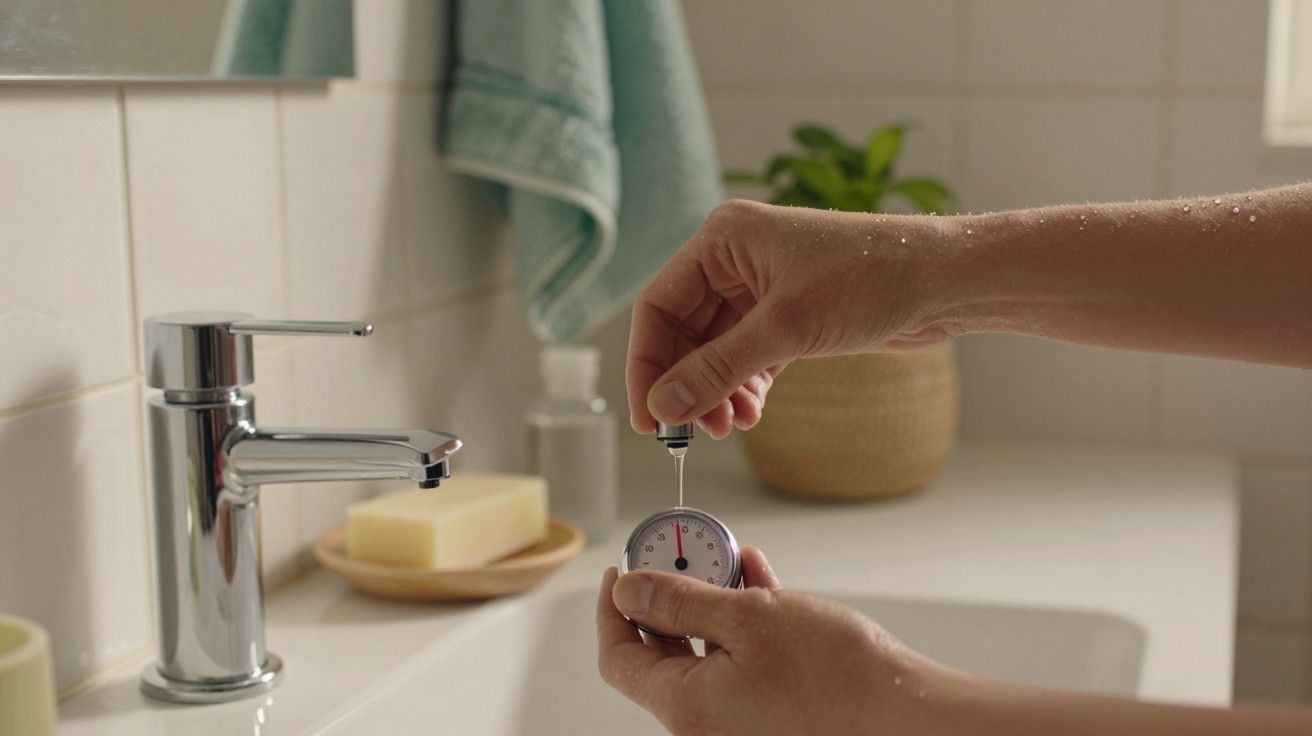
Some people attach a waterproof sand timer to the wall, while others set a phone timer to sound beyond the shower curtain. Another option is a low-flow shower head, which reduces the impact even when you accidentally run over time. This modest hardware change can lower water use by up to 40%, while still providing a satisfying spray if you select a good model.
The key is to make the time limit part of the routine, rather than treating it as a penalty.
In practice, that means entering the bathroom with a plan. Is it a hair-washing day? Are you having a full wash or simply a quick rinse? When you decide before turning on the tap, you naturally move with more intention. Shampoo in, shampoo out. Body wash, rinse, finished. These small choices save minutes because you are no longer standing under the hottest setting with your eyes shut and your thoughts elsewhere.
On a cold, dark morning, it can feel as though you could remain beneath the spray forever. That is only human. Nobody needs to be lectured at 7 a.m. while they are half awake, disoriented and running late. A kinder approach is to schedule “luxury showers” once or twice a week, while keeping the rest deliberately short. Nothing has been taken away from you; the indulgence has simply been saved for an intentional occasion.
Let’s be honest: no one measures every shower perfectly, every day. There will be times when you linger, forget the plan, or stay longer because you are rinsing away the aftermath of an awful meeting or a broken heart. Perfection is not the aim. Direction is. The goal is to shift the default from endless running water to “enough is enough”.
As one environmental researcher told me on the phone,
“If a million people cut just three minutes off their shower, that’s not a lifestyle change, that’s a collective infrastructure.”
Within one bathroom, those three minutes seem insignificant. Across an entire city, they are enormous.
For an individual, spending less time in the shower can become a quiet act of self-respect. Rather than leaving the tap running because you are too exhausted to step out, you decide where your water, money and energy will go. That decision can influence other routines too: laundry loads, heating, and how long the tap runs while you brush your teeth.
- Begin by reducing your shower by one minute, rather than five. Small successes are easier to maintain.
- Keep long, steamy showers for particular evenings instead of having them “whenever”.
- Replace aimless lingering with an established routine: wash, rinse, leave.
- Discuss it with others at home, so you are not making the effort alone.
- Check one water or energy bill to follow the knock-on effect.
Shorter showers, bigger effects than you might expect
Once you begin noticing how long your showers last, something curious occurs: you cannot stop noticing it. That uninterrupted stream becomes a visible resource again instead of mere background sound. You may reach for the tap automatically, then hesitate for a moment. Your influence lies in that pause.
Reducing your shower by a few minutes does not make you a different person. You can still love the relief of hot water after a difficult day and sometimes remain under it too long when life feels overwhelming. You have simply changed your starting point: less autopilot, more purpose. That shift often travels quietly beyond the bathroom and into other parts of your life.
At a time when droughts appear in the news more regularly and energy bills place families under pressure, these small actions are not merely symbolic. They are practical. They are the sort of changes children see and imitate. You can mention them to friends without sounding preachy. “I’m trying to keep my showers under four minutes now, it’s weirdly satisfying,” is the sort of comment that connects.
We have all looked at a misted-up mirror and thought, I should probably get out now. That is the turning point. Nobody will congratulate you for switching off the tap sooner, and your neighbours will not know. Yet the figures will gradually change - on your bills, in your footprint and perhaps even in your skin. And perhaps, the next time water echoes against the tiles, you will already see your shower time a little differently.
| Key point | Detail | Benefit for the reader |
|---|---|---|
| Reduce the duration | Move from a 10–15-minute shower to one lasting 4–5 minutes | Substantially lower water and energy consumption without changing your whole life |
| Create a clear ritual | Decide in advance: wash your hair or not, schedule a “luxury shower” | Spend less time daydreaming beneath the water while keeping the enjoyment |
| Use simple tools | A cue song, timer or water-efficient shower head | Turn a good intention into a real, measurable habit |




Comments
No comments yet. Be the first to comment!
Leave a Comment