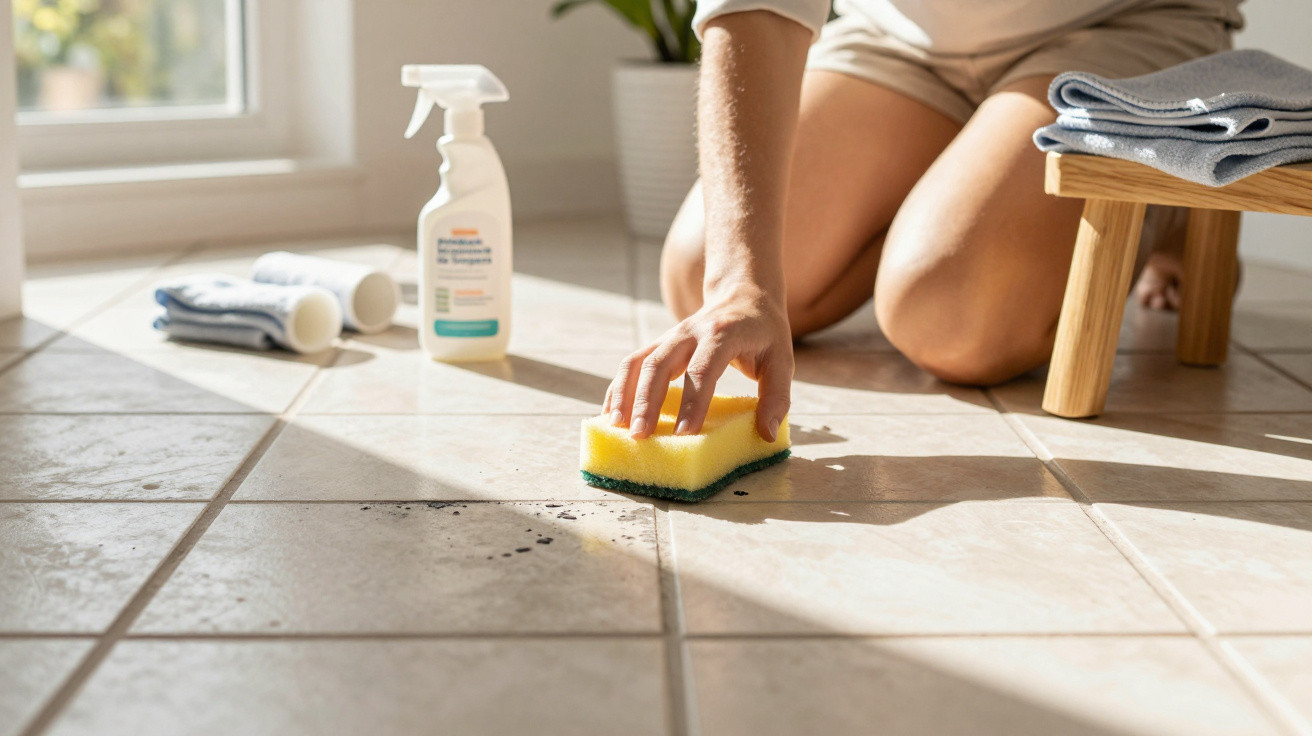
Bathroom still looking tired after you have scrubbed the floor?
The likely culprit may be right in front of you: the spaces between the tiles.
Fine grout lines can make an otherwise spotless room seem dull and uncared for. In bathrooms and kitchens across the US and UK, a subtle change is taking place: households are replacing aggressive cleaners with a straightforward, almost traditional product that brightens grout within minutes, without bleach fumes or the sharp scent of vinegar.
Why grout quickly changes from bright to black
Grout works much like a sponge. Its porous, uneven texture is rougher than tile, and it sits precisely in the gaps where grime tends to collect.
Each shower, cooking session and pair of shoes crossing the floor deposits tiny particles. Soap scum, skin cells, cooking grease, dust and mineral residue work their way into grout lines. Gradually, a light grey or white strip becomes darker: first a faint beige, then grey, and finally nearly black.
Damp conditions intensify the issue. Hot showers, steamy kitchens and inadequate ventilation provide perfect conditions for mould and mildew. Condensation penetrates the grout, spores establish themselves and marks become more pronounced. While the tiles themselves can still appear clean, the lines around them start to dominate the room.
Regular mopping smooths the surface of the tiles, but often leaves the real grime behind, packed into the joints.
Ordinary cleaning equipment seldom gets into these narrow grooves. A mop passes over them, while a vacuum removes loose dust rather than the greasy layer lodged in the pores. As a result, many households turn to powerful cleaning products, often sooner than necessary.
Why households are moving away from vinegar and bleach
For years, the standard solution for dirty grout was found beneath the kitchen sink: white vinegar for grease and limescale, and bleach for mould and stains. Both can be effective to a degree, but their disadvantages are increasingly under scrutiny.
- Vinegar is acidic and may gradually weaken cement-based grout.
- Acid can permanently etch and dull certain natural stone surfaces.
- Bleach may whiten surfaces, but it can also remove colour and harm surrounding materials.
- Its vapours can irritate the eyes and respiratory system, particularly in compact bathrooms.
- Bleach frequently brightens the top layer of a stain without properly breaking down grease or mineral deposits.
As attention to indoor air quality and milder household care grows, a less conspicuous product has returned to prominence: a clay-based solid cleaning “stone”.
White cleaning stone: the product changing cleaning routines
Commonly marketed as “white cleaning stone” or “clay cleaning paste”, this solid cleaner has been a fixture in European cupboards for years and is increasingly popular in English-speaking households. It is generally supplied in a small tub as a firm, chalky disc that produces foam when worked with a damp sponge.
Its main component is finely ground white clay, combined with gentle surfactants, plant-based soaps, glycerin and, in some cases, a small amount of vegetable oil or citrus fragrance. It contains no phosphates, strong acids and usually no harsh solvents.
The white stone acts like a very fine polishing powder: strong enough to cut through the film on grout, gentle enough to spare the material underneath.
When used on grout, it has a double benefit. It removes dull deposits, including grease, soap residue and embedded dust, while gently smoothing the joint surface. Grout that is cleaner and less porous attracts grime more slowly, meaning the next intensive clean can be postponed.
The same tub is also used in homes to revive stainless-steel sinks, ceramic hobs, tap bases, oven doors and certain outdoor fittings. Its solid form can reduce waste: a small amount of foam cleans a large area, and the disc will not dry out in the way a liquid spray can.
How to use white cleaning stone on grout step by step
The technique has spread rapidly on social media because it appears remarkably simple. However, applying it properly can make a noticeable difference.
| Step | Action |
|---|---|
| 1 | Get the floor or wall ready by sweeping or vacuuming away loose dust before starting. |
| 2 | Moisten a soft sponge and lightly rub it across the stone until a thin foam forms. |
| 3 | Apply the foam along the grout lines, avoiding excessive pressure. |
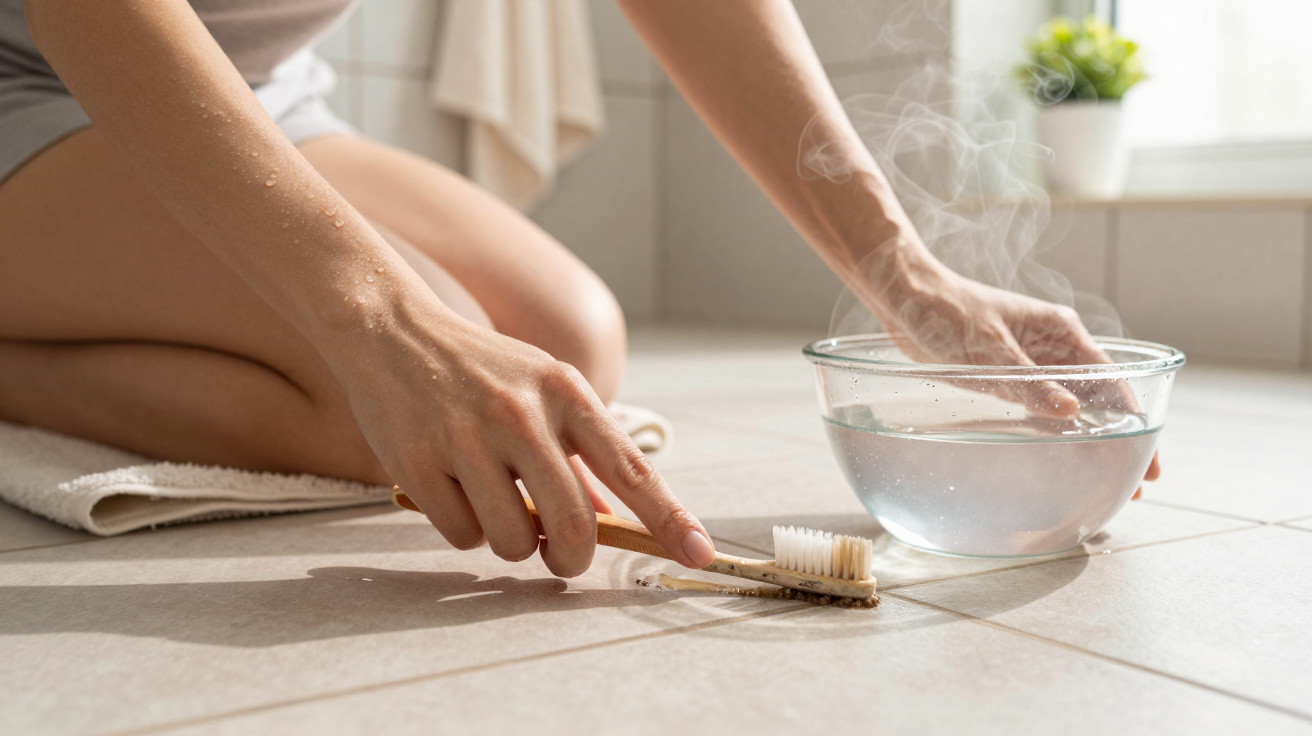
| 4 | For especially dark or narrow sections, use a soft toothbrush to work the cleaner into the textured surface. |
| 5 | Leave it for a short time – usually under a minute. |
| 6 | Scrub using small back-and-forth motions, then rinse thoroughly with clean water. |
| 7 | Dry the area with a microfibre cloth to prevent marks and reveal the finished result. |
Supporters of this approach suggest tackling small areas of around a square metre at once. This prevents the foam from drying out and lets you see the grout change colour as you clean.
On many standard bathroom floors, the grout lightens after a single pass, with the room suddenly feeling brighter.
As with any mildly abrasive cleaner, basic care is needed when using the stone. A test area is important on polished marble, high-gloss lacquer and highly delicate glass. Using a soft cloth with minimal pressure helps to limit the chance of micro-scratches.
How white cleaning stone fits into everyday routines
For many tenants and homeowners, its attraction lies not only in the outcome but also in how approachable the job seems. There is no requirement for a protective mask, heavy-duty gloves or half an hour of airing out the room.
A single evening with a sponge and tub of cleaner can refresh:
- Shower and bath surrounds before an inspection or visit from guests
- Kitchen splashbacks behind the hob, where grease and steam settle into the joints
- Hallway tiles by the entrance, marked by wet footwear and dirt from outdoors
The same pot can tackle kettle marks around taps, fingerprints on stainless steel and the grey film that often remains on ceramic hobs. Its appeal is partly about cutting down on clutter: one small tub rather than four separate sprays.
Beyond grout: where white cleaning stone works and where caution is needed
Users have reported favourable results on a range of hard, uncoated surfaces. In stainless-steel sinks, it clears faint rainbow discolouration and water marks. On oven doors, it helps remove baked-on splatters around the handle. Used on outdoor metal fittings, it can lift light rust films and deposits caused by pollution.
Some materials, however, need a more restrained approach. Highly polished stone, shiny painted cupboards and certain plastics may become marked if scrubbed too hard. The safest method is to let the cleaner work while keeping pressure to a minimum. Brief, gentle strokes followed by plenty of rinse water usually offer the best balance between cleaning performance and surface protection.
Keeping grout black-free: everyday habits that make a difference
Once grout has been restored, the next challenge is keeping it clean without repeated scrubbing. Minor changes to daily habits can push the next deep clean back by months.
- Ventilate after moisture-heavy tasks: open a window or switch on the extractor fan after showering or boiling pans.
- Remove standing water: use a squeegee on shower walls and floors, and blot splashes near sinks and hobs.
- Clean as you go: quickly wiping surfaces after major cooking sessions reduces the film that later settles into grout.
- Seal cement-based grout: applying a penetrating sealer roughly once a year lowers porosity and limits stain absorption.
Less moisture plus less residue means slower staining, shorter cleaning sessions and fewer harsh products in circulation.
These routines can also reduce mould growth in homes where asthma or allergies are a concern. Lower humidity, more frequent drying and less exposure to chemical fumes can all contribute to improved indoor air quality.
When stains persist despite using white cleaning stone
Not all dark stains are simply grime. Long-standing water penetration, failing seals around a shower tray or damaged grout may cause structural discolouration. Where grout feels soft, crumbly or cracked, cleaning merely disguises a more serious problem.
In these circumstances, re-grouting some of the affected area may be the only lasting solution. Epoxy grout, increasingly used in modern wet rooms, withstands water much better and seldom becomes black from within. Soap film can still form on its surface, though, and careful use of white stone may sometimes return it to its original shade.
Ongoing mould on ceilings or in corners, particularly when accompanied by a musty odour, points to an issue with ventilation or a leak. Checking extractors, window seals and plumbing joints is then more pressing than the cosmetic cleaning itself.
Why this “old” product suits modern cleaning trends
Growing interest in white cleaning stone reflects wider changes in home care. Consumers are looking for fewer bottles beneath the sink, less contact with harsh chemicals and products with a long useful life. A solid, multipurpose cleaner meets many of these preferences.
A tub may appear expensive beside a typical supermarket spray, but its cost per use often becomes lower when its slow rate of wear is considered. For renters dealing with demanding inventory inspections, being able to restore grout, stainless steel and glass using one cleaner may also help avoid deposit disagreements.
There is a modest psychological benefit too. Many users find that the obvious before-and-after transformation of grout delivers a satisfaction that mopping rarely matches. A brief, targeted job with visible results can be less daunting than an undefined “deep cleaning” session. That change in mindset alone can help bathrooms and kitchens stay more polished, while spreading less effort across the year.






Comments
No comments yet. Be the first to comment!
Leave a Comment