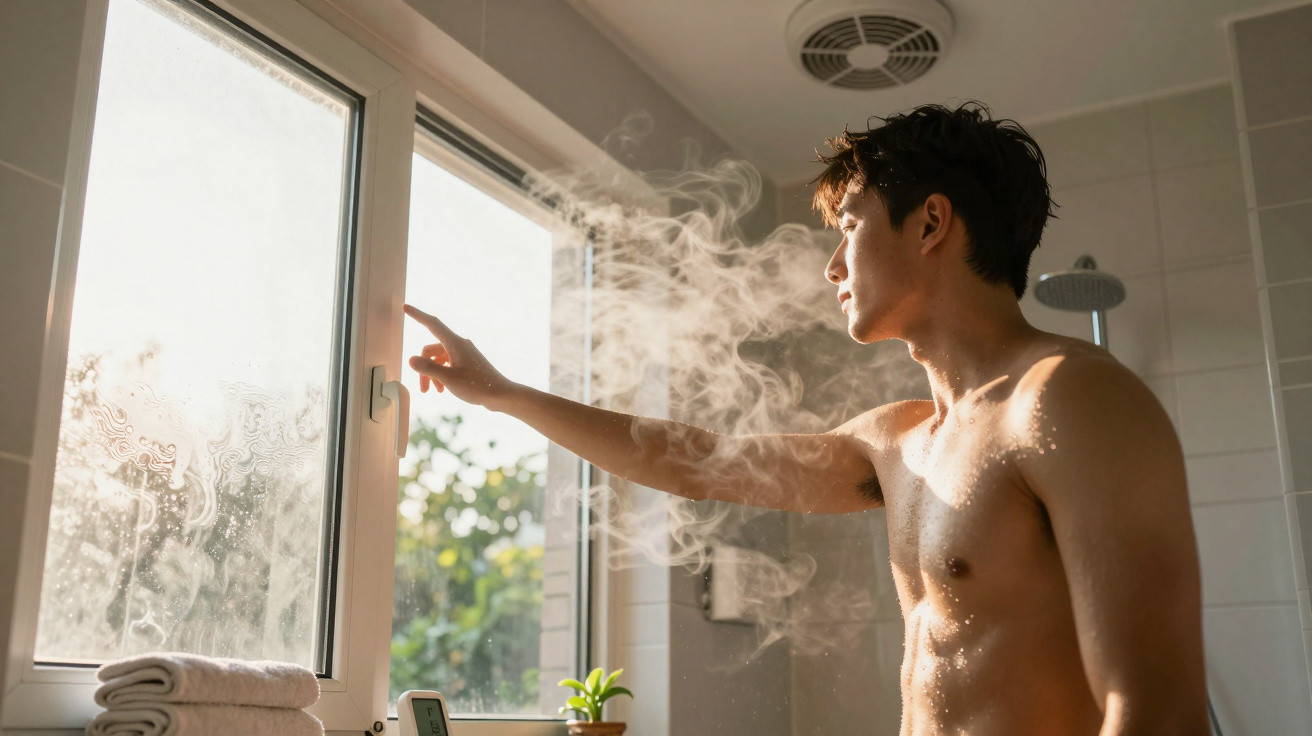
Tiny beads of water run down the tiles, the air is heavy, and your reflection is barely visible through the steam. You open the bathroom door a crack, perhaps switch on the fan automatically, then step into a hallway where the cooler air hits you like a barrier. Five minutes on, the floor remains wet, the ceiling is covered in moisture, and a faint musty odour seems to come from nowhere. You reassure yourself: “The extractor fan will handle it.”
Here is the catch: by itself, it seldom will.
Why your bathroom keeps steaming up, even with a fan humming
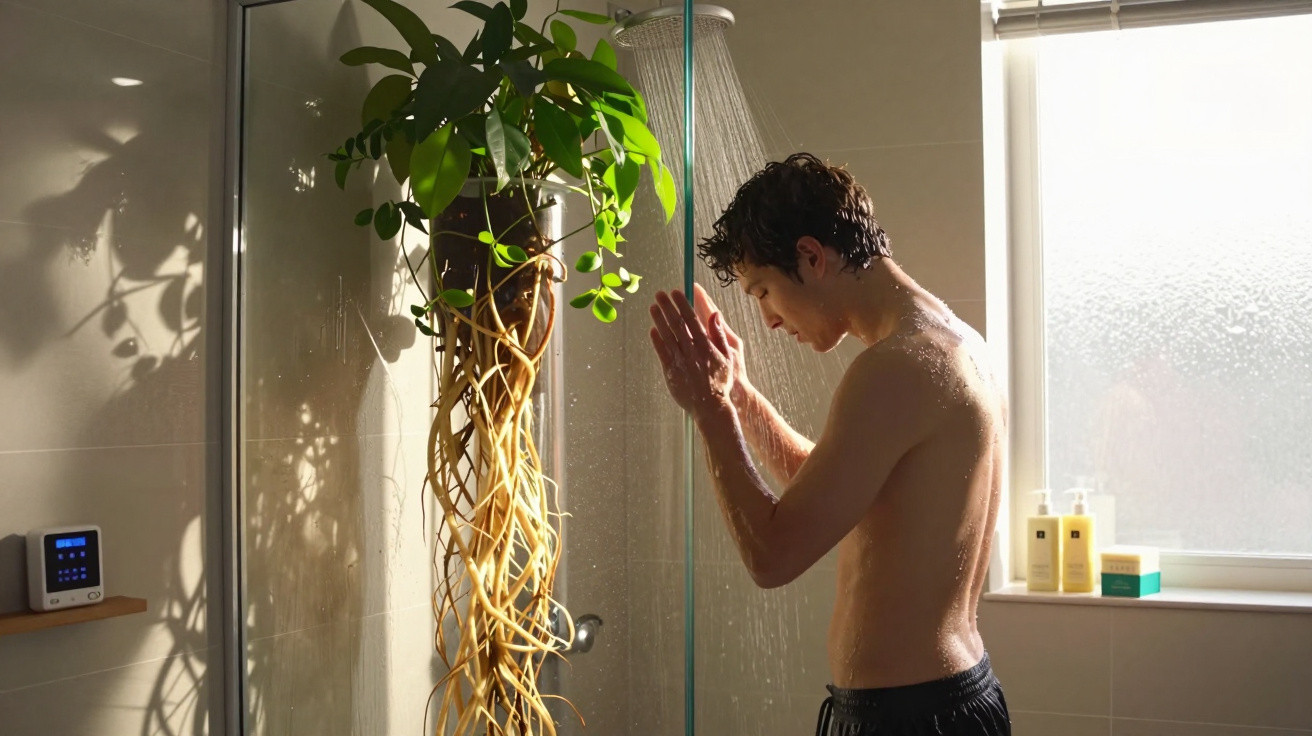
Visit almost any small flat at 7.30 on a weekday morning and the picture is familiar. The shower is on, somebody is in a hurry, and a fan drones weakly in the background. The window stays firmly shut because it is cold outdoors or the neighbours are too near. Within ten minutes, the room becomes a sauna. Shampoo bottles gather moisture, towels become heavier, and the ceiling paint soaks up every drop like a sponge.
Although the fan is turning, steam seems to hang in the room in an uncomfortable haze that never properly lifts. You go to work, and when you return the mirror is dry, making it easy to assume all is well. But the tile grout appears slightly darker. There may be a faint shadow along the silicone seal around the bath. The gradual harm goes unnoticed because it happens silently.
In a London housing survey, tenants placed “damp and mould in the bathroom” among their leading everyday housing frustrations, alongside noise and inadequate heating. Landlords commonly cite “poor ventilation”, formally meaning that the fan is either insufficiently powerful or not used. Yet ventilation on paper is very different from fresh air in everyday life. The humidity science is straightforward: warm air created by a shower can hold more water, and if it has no rapid route out, the moisture must settle somewhere. Very often, that means your walls, ceiling and lungs.
Why opening the window wins against the fan alone
The moment you finish showering and open the window, the situation changes. Rather than relying on a small ceiling motor to pull all humid air through a narrow duct, you provide steam with a broad, clear way out. Fresh, cooler air enters quickly. Heavy warm air full of water vapour escapes, like a stadium crowd leaving through several exits rather than one doorway.
Picture the bathroom as a glass filled with warm breath. An extractor fan slowly sips from its surface. Opening the window turns over the glass, allowing gravity to do part of the work. Cross-ventilation - the fan running, the door slightly open and the window wide open - accelerates the natural air exchange. This is why the minutes immediately after a shower matter so much. Surfaces are still wet, the air is saturated, and a fast, forceful flush of air visibly speeds up drying.
Moisture does not simply vanish; it travels. A fan working alone must overcome pressure, duct length and, sometimes, years of dust coating its grille. Opening a window lowers that resistance and enlists the outdoor conditions. Put simply, you use the space outside your walls as one enormous lung. Warm, humid air out, cooler, drier air in. This shift in temperature and humidity interrupts the pattern of persistent damp, condensation trails and the “old bathroom” smell nobody wants to admit to.
How to use your window like a secret moisture weapon
As soon as you turn off the water, do not leave the bathroom shrouded in cloud. Open the window as wide as possible, even if only for 5 to 10 minutes. Run the fan at the same time. Keep the door slightly ajar, allowing air to move through the room rather than circulate in place. You are creating a short-lived wind tunnel, whether or not you can see it.
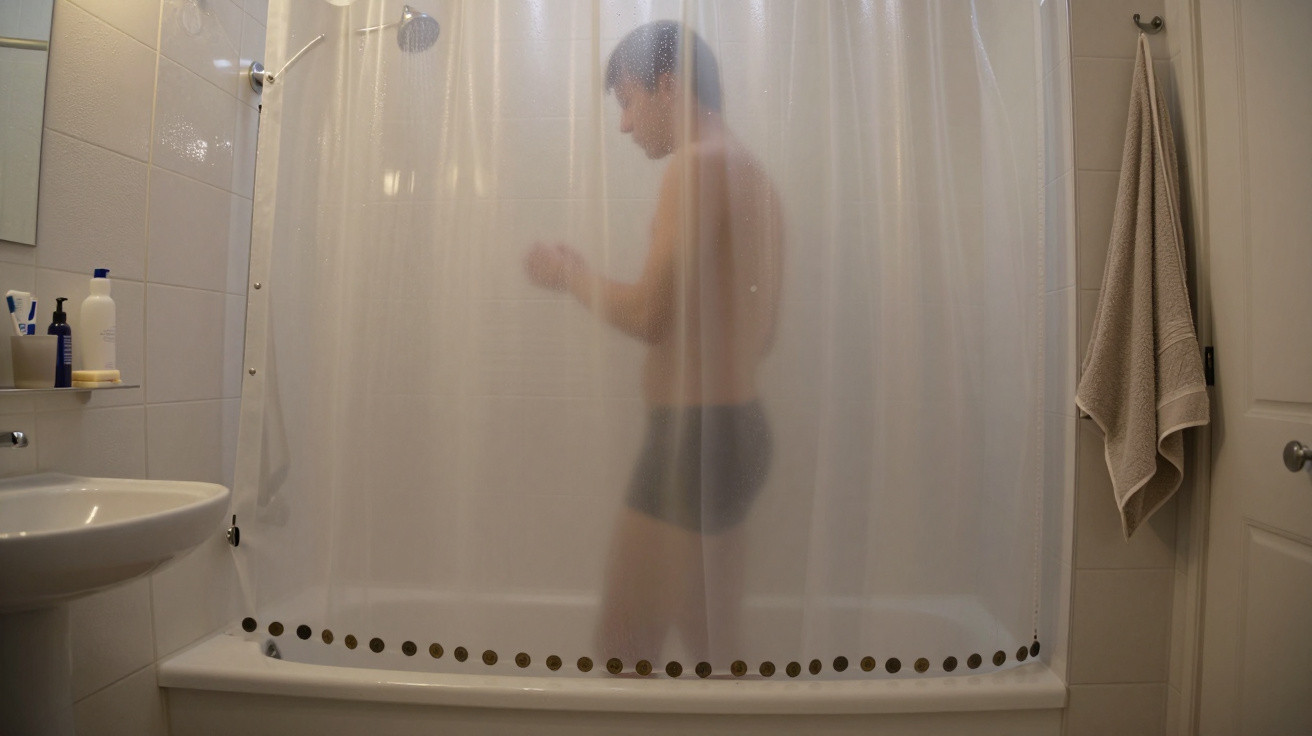
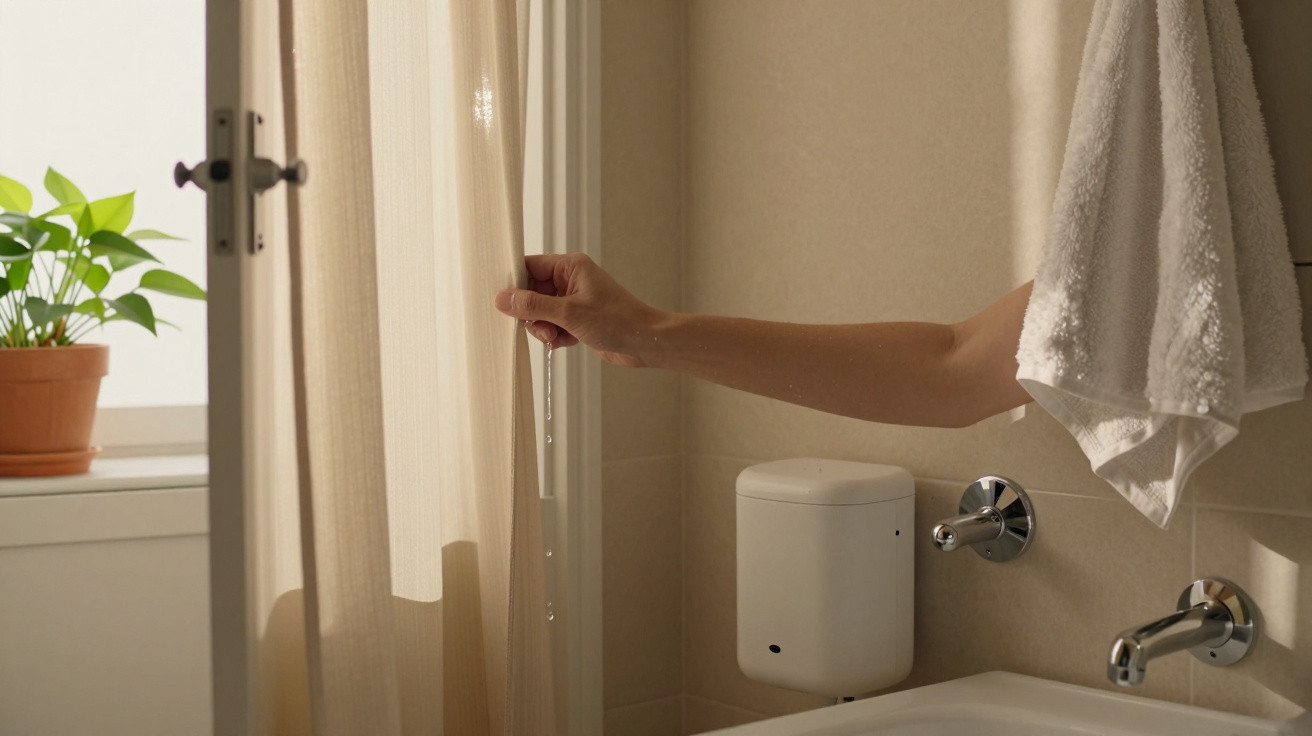
Draw back the shower curtain so that moisture is not held inside a folded plastic enclosure. If possible, use the shower head to rinse excess water from the walls. If you are particularly motivated, wipe the worst condensation patches with a towel. Then leave the fan and open window to work together. Those few minutes remove more humidity than half an hour with only a fan in a sealed room.
Most people do not follow this routine every morning, and that is where problems begin. On a cold winter day, allowing freezing air inside feels counterintuitive. Half-dressed and shivering, you close the window and tell yourself you will “air it out later”. The spoiler is that later rarely arrives. Let’s be honest: nobody really does this every day. As a result, the room never dries completely. Towels remain a little clammy, the mat never feels genuinely fresh, and you gradually accept this as the “normal bathroom smell”. It does not need to become normal for you.
“The most effective ventilation is the one that happens immediately, not the one we vaguely plan for ‘after coffee’ or ‘when I get back from work’.”
- Open right after showering – the first 10 minutes determine whether moisture escapes or settles.
- Use the fan and window together – they work as a team, not as competitors.
- Leave a gap beneath the door – without incoming air, no air can leave.
- Check the mirror – if it clears quickly when the window is open, you are getting it right.
- Trust your nose – a musty note suggests that yesterday’s moisture is still lingering.
The small habit that changes how your home breathes
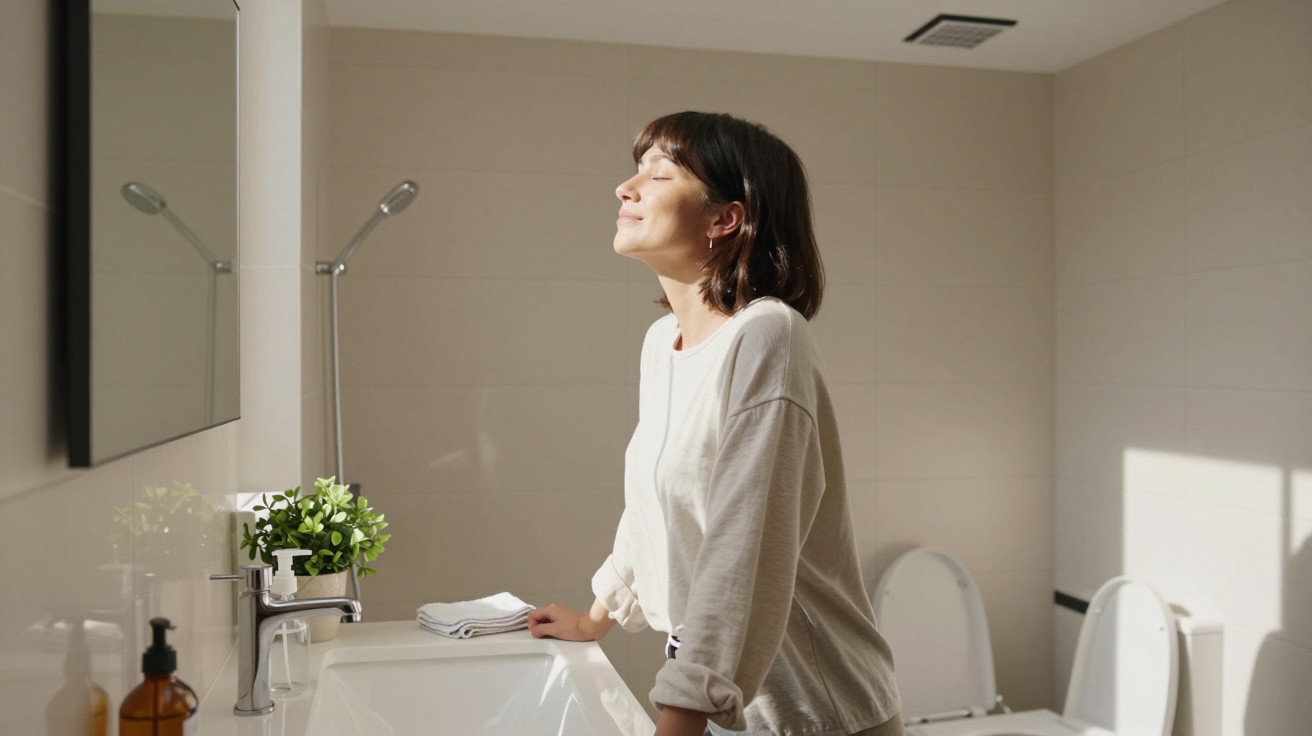
After opening the window immediately after showering for a week, you begin to notice small changes. The mirror clears more quickly. Towels smell fresher between washes. Tiny droplets no longer stay on the ceiling for so long. The space feels less like an overlooked utility room and more like part of the home again. This improvement in the air also has a subtle psychological impact. A fresher bathroom makes the whole morning routine feel brighter, as though the day starts a little lighter.
In practical terms, you are also delaying the space’s unseen deterioration. Paint takes longer to peel. Silicone seals remain whiter. The black mould marks that you scrub, bleach and curse at appear less frequently, or may not appear at all. People often pay for more powerful cleaners, fragranced sprays and even replacement tiles, when the least expensive improvement lies beyond the glass: a few minutes of genuine outdoor air at the right time.
Many homes were planned on the assumption that a small fan could take the place of what an open window once provided. In reality, the picture is less clear-cut. Lifestyles have changed, showers have become hotter and longer, and bathrooms have become smaller and more sealed. Our routines have not fully adapted. That modest daily action - opening the window as soon as you switch off the shower - is less about being “perfect” than deciding how you want your home to feel and smell in five years’ time. It is a small way to take charge of something we usually merely put up with.
| Key point | Detail | Benefit for the reader |
|---|---|---|
| Open the window immediately after showering | Creates a rapid flow of air that drives out steam before it settles | Reduces condensation, odours and the feeling of a stuffy bathroom |
| Combine the window with mechanical ventilation | Lets steam escape through the window while the fan supports the airflow | Dries walls, the ceiling and textiles more quickly |
| 5–10-minute routine | Keep the window open, door ajar and fan running after every shower | Limits mould growth and extends the bathroom’s lifespan |





Comments
No comments yet. Be the first to comment!
Leave a Comment