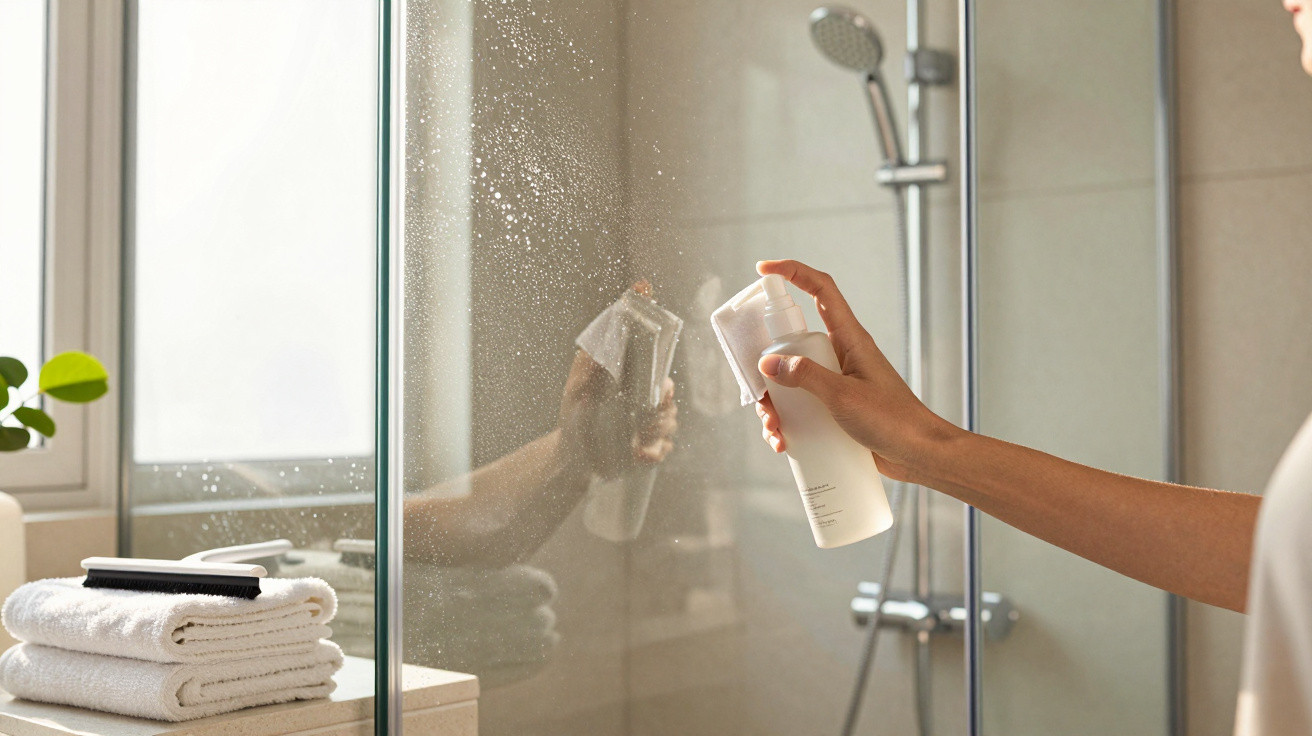
The glass seems almost absent: no streaks, specks or milky white mist. A new guest can arrive, set down their suitcase and think, “Wow, this is clean.” They will have no idea that, two days before, that same pane was marked with limescale shadows and rings of soap scum.
In five-star hotels, this permanently new-looking finish is not achieved through sheer hard work alone. It relies on one small additional stage that most people leave out at home, one that subtly alters the way water sits on glass for weeks.
Once you know about it, you will spot the difference everywhere.
The invisible enemy on your shower screen
Take a proper look at your own shower screen. You may notice drip marks reflecting the light, a cloudy band around shoulder level, or a faint shape where the water normally lands. It may not seem dirty exactly, only… worn out. This is the sort of dullness that survives every speedy weekend clean before gradually becoming the “new normal”.
That coating is made up of several things: hard-water minerals, soap deposits, body oils and remnants of shampoo. These attach themselves to minute flaws in the glass and then accumulate. Each shower adds another microscopic coating. Before long, the screen that came with the flat three years ago is no longer clear; it simply appears old.
Hotels cannot let this slide. Guests often assess cleanliness from one glance at the bathroom. Even an impeccably made bed will not make up for shower glass that looks misted and streaky. Hotel teams have therefore learnt to tackle a highly specific foe: one that returns daily, one drop at a time.
A head housekeeper in London admitted she could estimate the level of guest complaints from the shower screens on a floor. Rooms with even slightly dull glass received more remarks, lower ratings and more notes saying “not as clean as expected”. Germs were not the issue; it was what the eye interprets as “fresh”.
Her team attempted everything to solve it: stronger limescale removers, daily scrubbing and softened water. Although these measures worked, they demanded time the team did not have. She then noticed the approach used by a Scandinavian boutique hotel group. Their shower screens remained crystal clear with half the effort. The answer was not a more aggressive cleaning product, but a transparent, nearly undetectable layer applied after cleaning.
She adopted the technique. Within a month, repeat descaling sessions had been reduced and comments about “foggy shower” screens had almost vanished. Guests did not specifically praise the improvement in their reviews. Instead, they began using terms such as “sparkling” and “spotless” again: the sort of feedback every hotel quietly hopes for.
The explanation is straightforward: glass is not as smooth as it appears. Viewed under a microscope, it consists of peaks and hollows. Minerals from hard water and soap settle happily into those hollows. Standard cleaning removes the existing deposits but does not alter the surface itself, so the next shower begins the process all over again. The hotel solution does more than clean these hollows; it fills them. Water cannot cling to the surface and runs away instead.
This is where the real magic takes place.
The hotel secret: clean once, then “seal” the glass
The technique used in high-end hotels has two stages. First comes a deep clean that takes the surface back to bare glass. The second is a protective treatment that preserves the newly cleaned appearance for weeks. It is the latter stage that almost everyone misses at home.
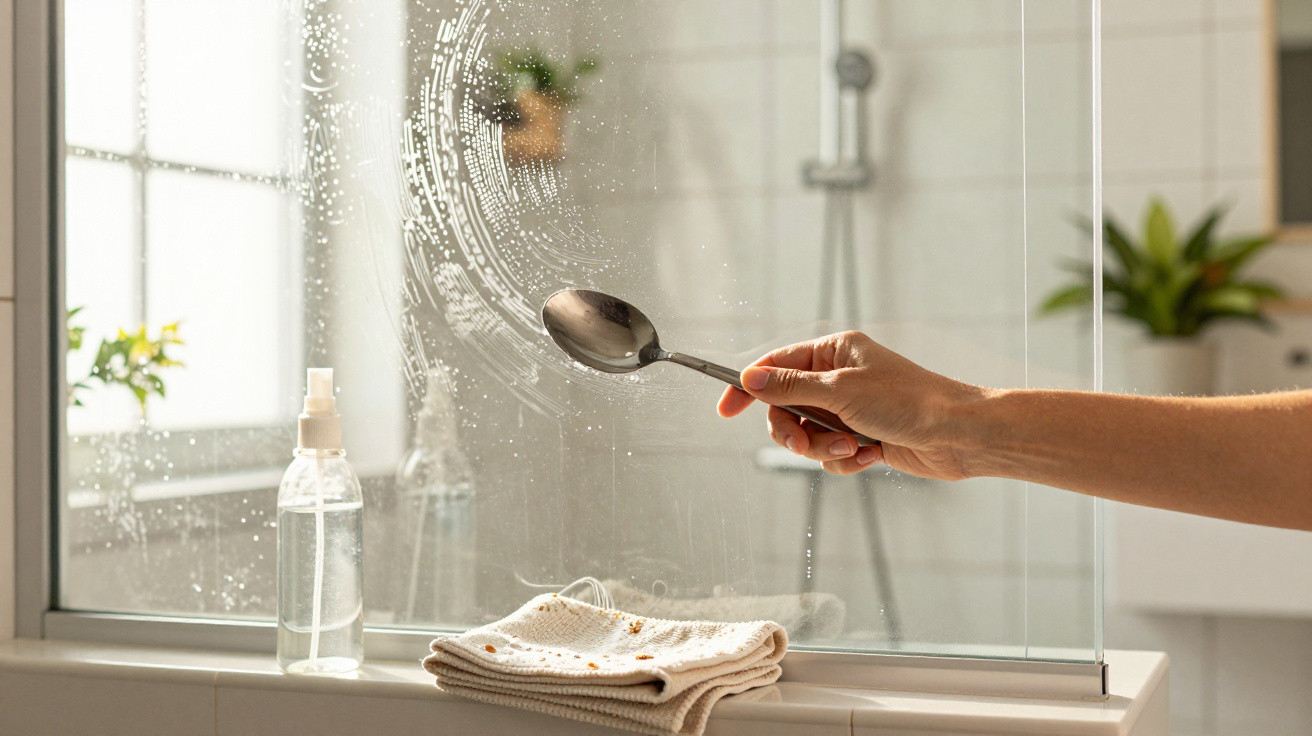
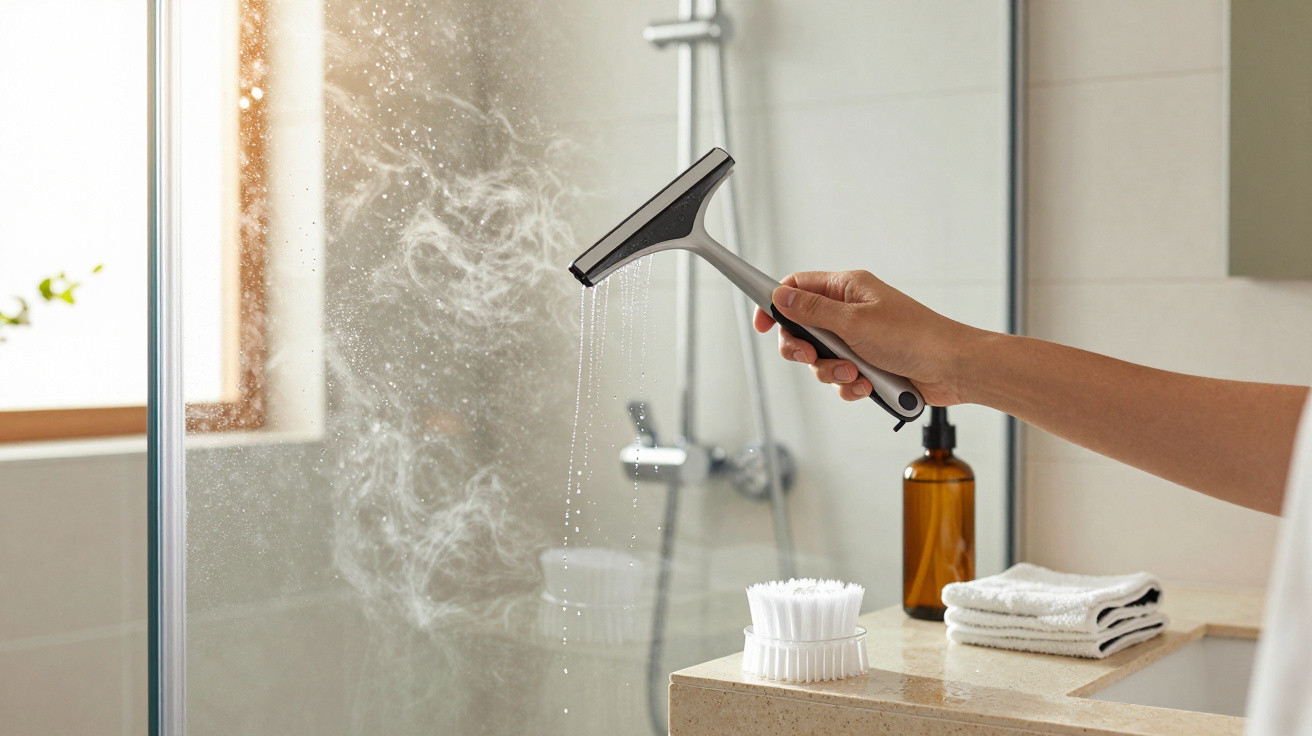
The deep clean is uncomplicated, though more detailed than a usual weekend wipe. Use a non-scratch sponge, a limescale remover or a white-vinegar mixture, working slowly from top to bottom in overlapping strokes. Rinse thoroughly, then dry the glass with a microfibre cloth until it squeaks. This is the “reset”. Missing out the drying stage ruins the effect, as water marks are precisely what you are trying to avoid.
Next comes the hotel step: they do not stop at this point. They add a water-repellent coating, similar to products designed for car windscreens. Apply a very fine layer, buff it in circular movements, then wipe it away until the glass looks ordinary once more. There should be no visible shine or film. Yet when the shower is next used, water forms beads and runs down rather than lingering on the screen. Soap and minerals have fewer places to attach themselves, which dramatically slows the build-up.
At home, people often attempt to make up for this with daily squeegee habits, complicated cleaning plans and costly sprays. Let’s be honest: nobody truly keeps that up every day. Hotels understand this as well. Rather than relying on guest behaviour or heroic housekeeping hours, they use a protective barrier. You can use the same approach at home with one extra product and five minutes of care once or twice a month.
At first, the change is subtle – then it becomes impossible to miss. After one week, your shower screen will still resemble the way it looked on cleaning day. After two weeks, there may be a few marks around the edges. A single light wipe restores it to perfection. There is no scraping or struggle with stubborn chalky deposits: it becomes maintenance rather than a battle.
“We stopped trying to win a daily war against water marks,” says Laura, a head housekeeper who oversees 180 rooms. “We changed the rules of the game. Once the glass is sealed, it works with us, not against us.”
The most widespread mistake at home is making the routine unnecessarily complicated. People combine too many products, apply vinegar over harsh chemicals, and then question why the glass is streaky or the seals begin to crack. The best sequence is simple: clean, dry, protect. Nothing more is needed. Do not scrub harder; clean more intelligently.
Another common oversight is neglecting the edges and bottom third of the glass. Those are the very areas where limescale tends to settle. Spend an additional minute on these sections. Choose soft cloths instead of old towels that leave lint behind. Think like hotel housekeeping: small, regular actions rather than frantic weekend cleaning marathons.
There is an emotional benefit that rarely gets mentioned, too. On a grey Monday morning, entering a shower that resembles a boutique spa can lift your mood slightly. On a hectic evening, cleaning feels less punishing when a five-minute refresh is known to last. In very human terms, clear glass creates mental space.
- For the deep clean, use a dedicated glass cleaner or a vinegar mixture, then rinse thoroughly.
- Dry the shower screen completely before using any water-repellent product.
- Renew the protective layer every 3–4 weeks, or once the water-beading effect begins to disappear.
Living with a shower that actually stays clear
When the glass has been properly sealed, your approach to bathroom cleaning changes. You are no longer confronted with a disheartening “before and after” every weekend. Instead, the screen keeps an almost-new appearance consistently. It becomes one less feature demanding your attention when you are already exhausted.
In practical terms, the weekly clean turns into a wipe-down instead of a full-scale attack. All it takes is a soft cloth, a gentle cleaner and a few minutes. The glass no longer resists with white scars and gritty areas. The hotel trick has simply made the surface less inviting to grime, so you are not starting from scratch each time.
At a deeper level, this modest adjustment often encourages other changes. A transparent shower screen makes the rest of the bathroom seem a little better. You may pay more attention to the grout or choose to keep the basin slightly tidier. While this may sound insignificant when reading on a phone at midnight, such small shifts create a space that quietly supports you in everyday life rather than draining you.
That is why this hotel secret stays with people after they try it: it is not only about glass, but also about how mornings and evenings feel.
| Key point | Detail | Benefit for the reader |
|---|---|---|
| “Reset” clean | Completely remove limescale and soap before applying any protection | Lets you begin again with genuinely transparent glass |
| Water-repellent layer | A car-windscreen-style or glass-protection product, applied in a thin layer | Keeps the shower screen clear for weeks |
| Light maintenance | A simple weekly wipe-down and monthly reapplication | Saves time and reduces day-to-day cleaning effort |

Comments
No comments yet. Be the first to comment!
Leave a Comment