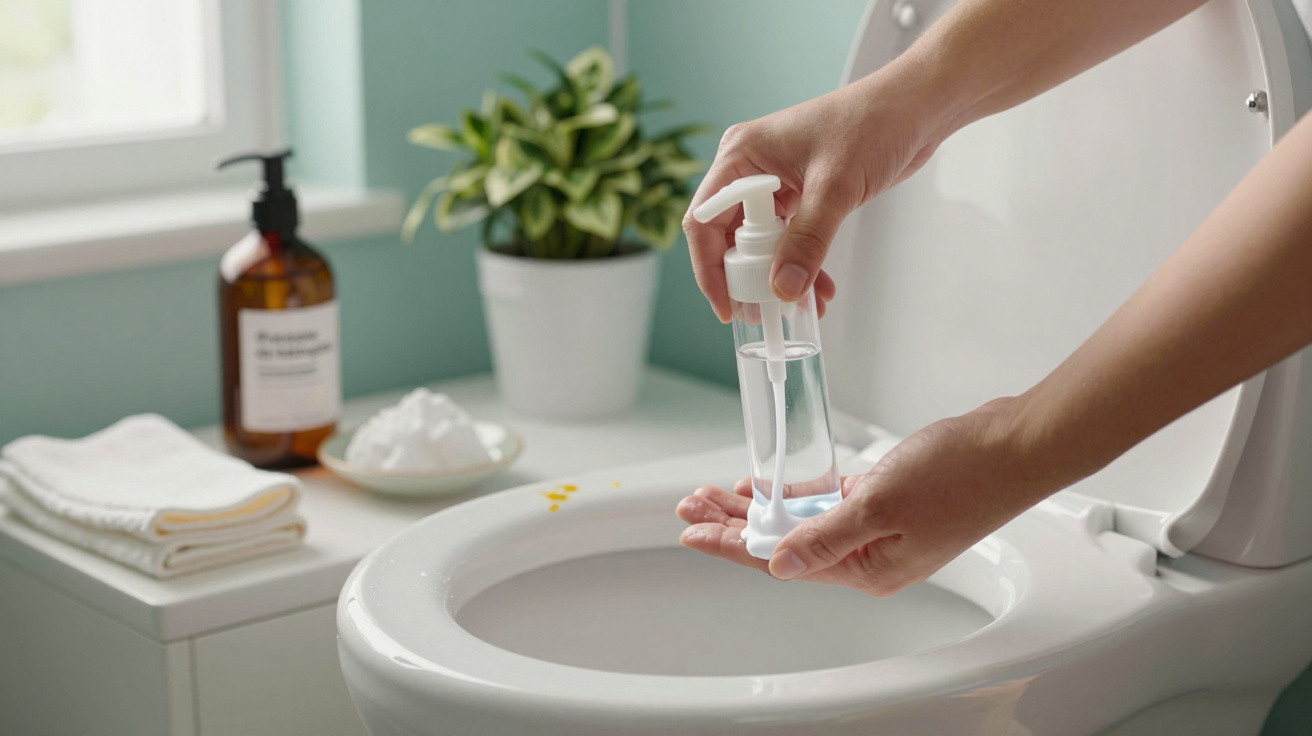
The bathroom looked spotless at first glance: the floor had just been mopped, the towels were folded neatly, and a candle was doing its best to suggest that everything was under control. Then the morning sun caught the toilet seat. Around the hinges sat that depressing yellow halo. It was not quite dirt, but rather the weary beige of ageing plastic that seems to say, “I’ve seen things.”
You scrub, spray on powerful bleach and find yourself watching cleaning videos on TikTok at midnight. Yet the yellow remains. It may fade slightly, but it still clings on like an old mark on a white shirt.
Then, almost accidentally, you reach for a bottle that normally goes unused: an ordinary, unremarkable bathroom liquid. Before your eyes, the seat begins to change.
It is not magic, only chemistry in plain sight.
Why your toilet seat turns yellow
Most people assume a yellow toilet seat is caused by “dirt”. That seems sensible, and rather reassuring: if it is dirt, surely you can simply scrub it away. But this kind of discolouration is different. It develops gradually, quietly, and remains even after you have exhausted a sponge.
In reality, it is closer to skin ageing than the aftermath of a messy weekend. The plastic itself is changing. Every shower, flush and cleaning-product spray puts it under a little more strain. The seat endures it, but it is never quite the same afterwards.
Its colour shifts from white to cream, then from cream to a pale nicotine-like shade. The change is gradual, until it becomes the only thing you notice.
Consider what a toilet seat goes through over a year. Humidity rises whenever somebody has a hot shower. Strong cleaning products settle on it and are only partly rinsed away. Day after day, UV light from the window falls on the same spot. There are also skin oils, cosmetics, and perhaps traces of hair dye or fake tan.
One small consumer study in Germany found that households replaced toilet seats approximately every four to five years, usually for “aesthetic reasons” rather than because they had broken. The issue is not that the plastic stops working; it is that the colour changes.
That yellowing can become a private embarrassment. You clean thoroughly enough, the bathroom smells fresh, yet the toilet seat appears to tell a different tale.
The science may be unexciting, but the effect is starkly obvious. Many toilet seats use plastic containing brominated flame retardants. These make the seat safer and less likely to catch fire. In time, however, the molecules react with oxygen, moisture, cleaning products and UV rays.
Minute alterations within the plastic form new compounds that absorb light in another way. To the eye, the result is simply yellowing. It is not merely on the surface: it is within the material. This is why standard bleach and abrasive powders seldom solve the problem. They work on the outer layer rather than the underlying cause.
A better option is something able to break down these oxidised compounds and move them closer to their original, lighter state. That is where the overlooked bathroom liquid becomes useful.
Hydrogen peroxide: the forgotten liquid for a yellow toilet seat
The modest product tucked away in many cupboards is plain hydrogen peroxide. It is the clear, slightly clinical-looking liquid once commonly kept for disinfecting small cuts or gargling for a sore throat. These days, it is often hidden behind more elaborate sprays and barely used.
At a low concentration, it appears harmless and unremarkable. Under suitable conditions, though, it can be remarkably effective on yellowed plastic. Rather than simply sitting on the surface like an ordinary cleaner, it reacts with the oxidised molecules responsible for the yellow tint and helps to break them down.
For a toilet seat, that can mean lighter, brighter plastic with very little scrubbing.
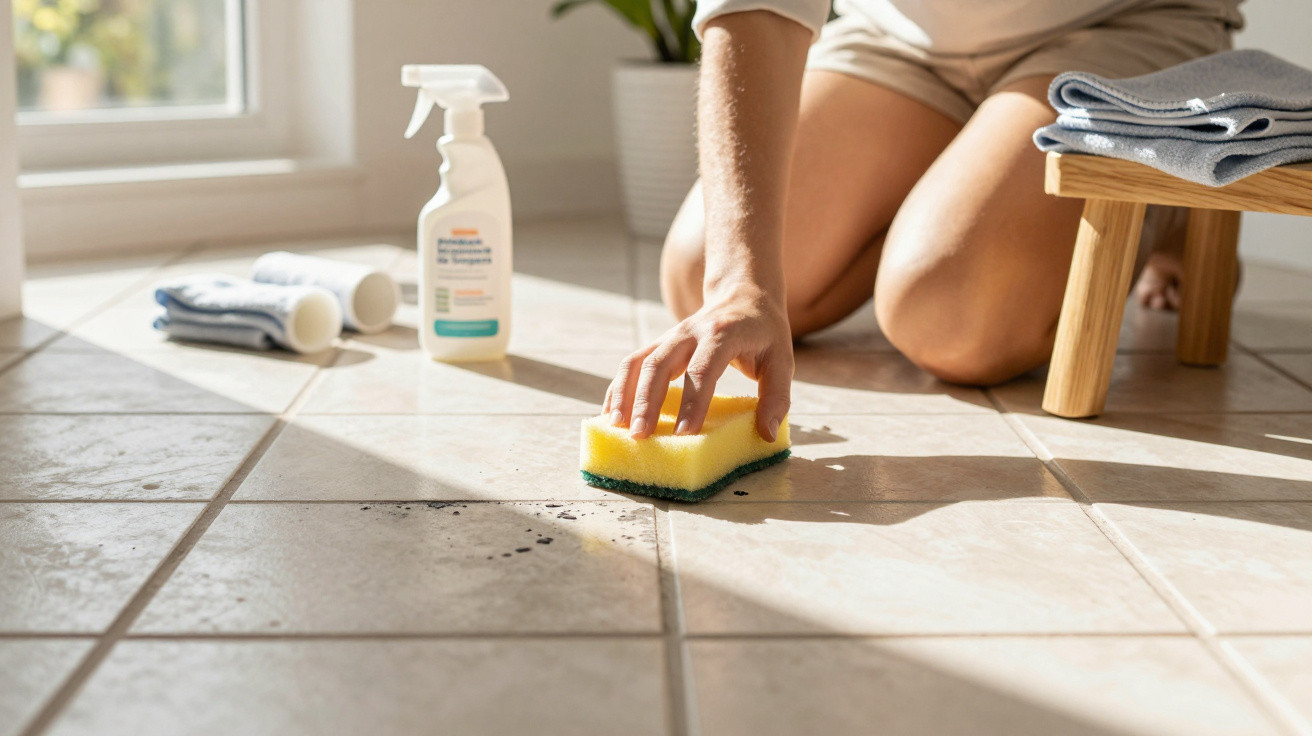
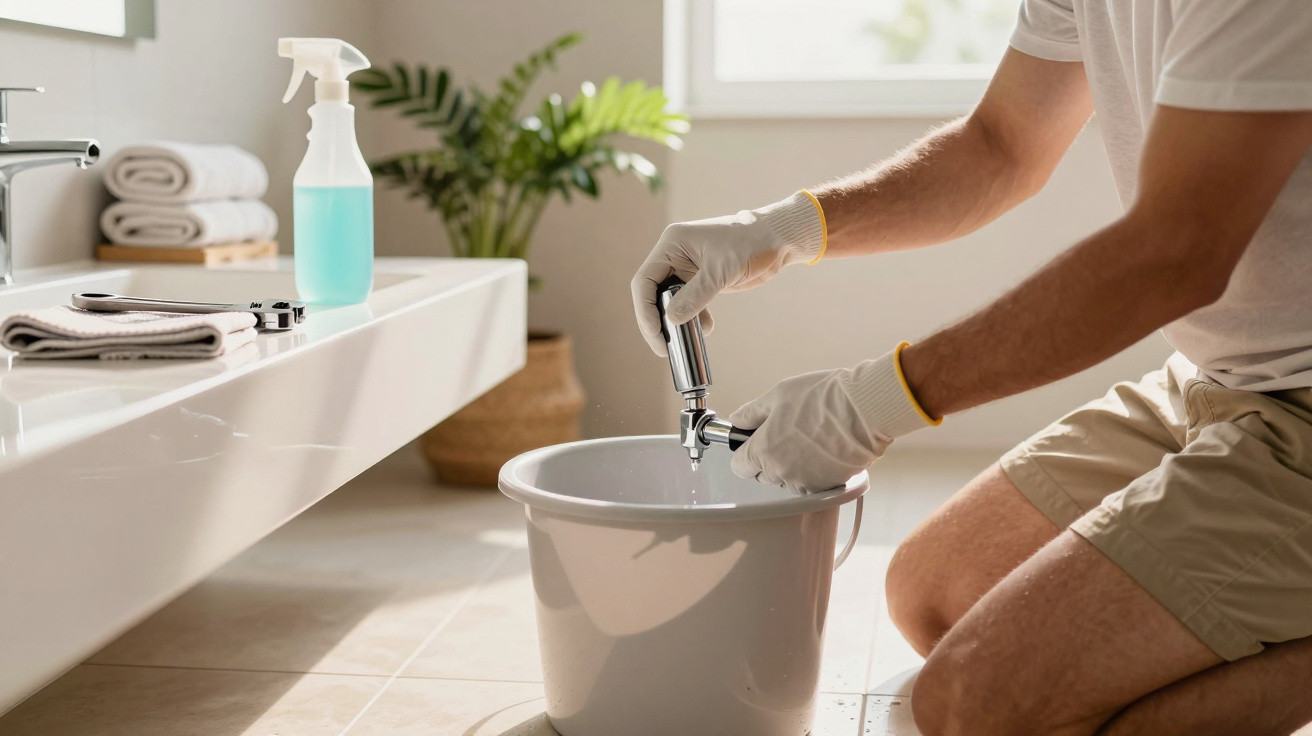
The process is almost frustratingly straightforward. If possible, remove the seat, or at least lift it completely. First wash it with a normal mild cleaner to remove dust, soap residue and grime. Dry it thoroughly using an old towel.
Next, soak cotton wool pads or thick kitchen roll in pharmacy-grade hydrogen peroxide, at around 3%. Place them carefully across every yellowed section, particularly around the hinges and along the ring. They should adhere to the plastic and look wet, but must not drip.
Leave the treatment undisturbed for several hours, preferably in strong natural light. Some people cover the entire seat with cling film to prevent the liquid evaporating. Once you remove the pads and rinse the seat, the improvement can seem almost unreal.
This is also the stage at which many people undermine the result. They are impatient: 15 minutes, a quick wipe, then the conclusion that it “doesn’t work”. Others go straight for very concentrated peroxide intended for hair bleaching or industrial applications. That is unnecessarily harsh and carries greater risks, particularly where children or pets are present.
Another common error is combining peroxide with chlorine bleach in the belief that it will be “extra strong”. Not only is that pointless, it may release harmful gases. Let’s be honest: hardly anyone reads every label from start to finish, particularly after a long day.
A gentler, more patient method is more effective. Allow the product enough time to work. Wear gloves. Air the room well. And recognise that a seat yellowed for eight years may not become showroom white in a single afternoon.
Someone who tested the method told me:
“I was honestly ready to order a new seat. I did the hydrogen peroxide compress as a last attempt. When I rinsed and saw the original color coming back near the hinges, I just stood there laughing in my bathroom.”
That modest household win matters more than brands may realise. It reduces expense and waste, as well as the quiet embarrassment of a bathroom that looks unclean despite actually being clean.
- Test a small hidden area first if the seat is painted or made from anything other than standard plastic.
- Use daylight or another good light source, as UV helps peroxide work on plastic.
- Rinse well and dry the seat after treatment to prevent fresh marks or streaks.
A brighter toilet seat can change more than its colour
There is something oddly symbolic about a toilet seat. It is among the least glamorous items in a home, yet when it looks grey or yellow, the entire bathroom can feel more miserable. Fresh tiles, clean towels and even expensive soap cannot fully draw attention away from a dull plastic ring.
Restoring a lighter shade is about more than hygiene points. It is about regaining the quiet feeling that “I take care of my space” without slipping into obsession. It is one small, highly visible improvement that needs neither a renovation nor three days away from work.
On a busy evening, switching on the bathroom light and seeing a crisp-looking seat can feel surprisingly satisfying.
You do not need to become someone who deep-cleans the bathroom every 48 hours. Nobody lives in a showroom, and most people are simply balancing tiredness, children, work and a basin covered in toothpaste. This approach is about strategy, not perfection.
One deliberate treatment with a bottle of hydrogen peroxide can provide months of visual calm. You enter the room, glance at the toilet, and your mind no longer catches on that faded yellow shade.
That sense of mental ease is subtle and almost invisible, but it can alter how untidy or behind you feel at home.
Some people will read this and immediately send it to a friend, sister or colleague who regularly complains about their “ugly” bathroom. Others will simply remember it and try it during their next deep clean on a rainy Sunday.
A straightforward way to whiten a toilet seat can encourage a different approach to household repairs: targeted, affordable and almost surgical. Small solutions that acknowledge you are human, that time and energy are finite, and that not everything must be replaced before it can feel new again.
In practical terms, the toilet seat becomes brighter. On a more personal level, you regain a little control in a room that usually only brings chores to mind.
| Key point | Detail | Benefit for the reader |
|---|---|---|
| The role of plastic | Yellowing results from internal oxidation, not solely from dirt | Understand why standard products often seem ineffective |
| Hydrogen peroxide | Apply a 3% solution as compresses to the yellowed areas | Achieve a genuine improvement without scratching or replacing the seat |
| Time and safety | Leave it to work for several hours and never mix it with bleach | Reduce risks and maximise results with one product |

Comments
No comments yet. Be the first to comment!
Leave a Comment