The hot water clouds the mirror until your reflection vanishes.
You rest against the tiles for “just one more minute”, allowing the spray to beat against your shoulders. Minutes lose their edges. The noise of the day fades away. Somewhere at the back of your thoughts, you know the meter is ticking, the cylinder is emptying and the bill is climbing. Yet the shower is the one place where nobody answers back.
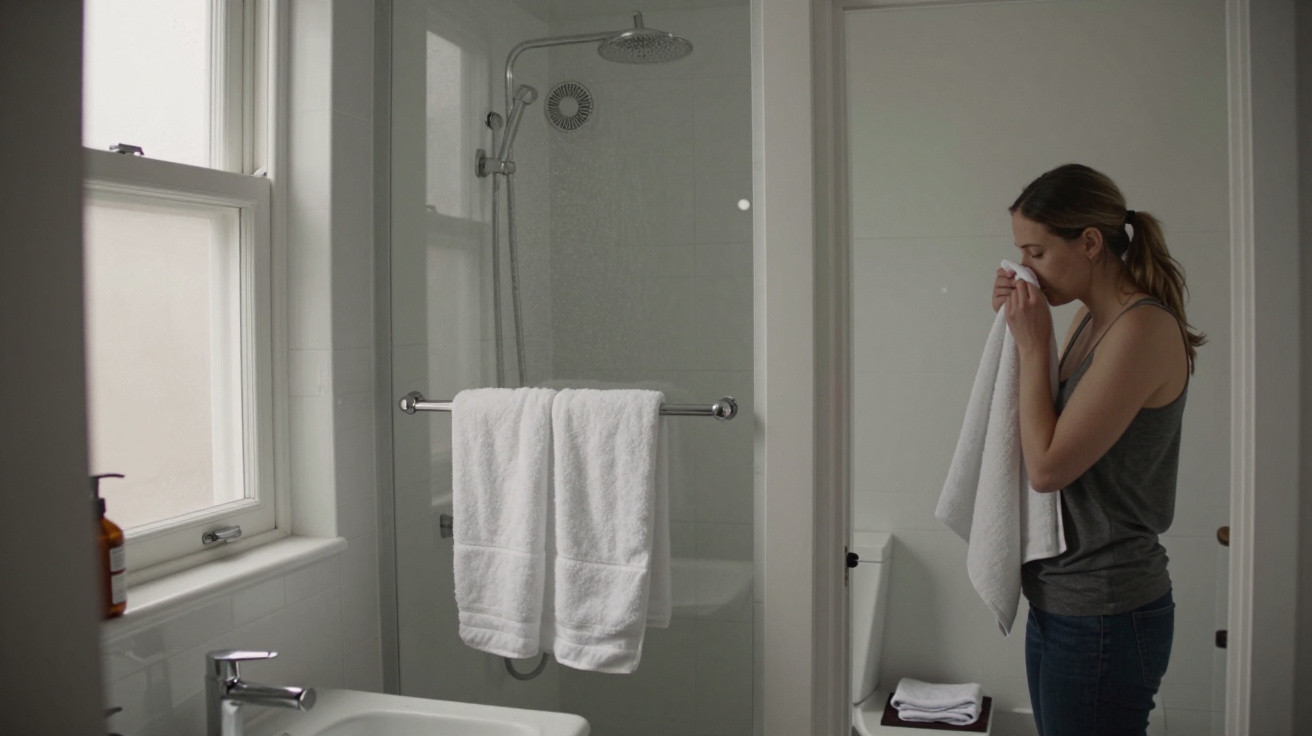
Then, one evening, something small changes. It is the same bathroom, the same shampoo and the same lukewarm towel on the radiator. But the shower seems… shorter, without becoming hurried. You emerge with that deep, loose feeling in your muscles and realise that you have used much less water than normal.
No expensive device. No freezing showers. No lecture about guilt.
Only one minor adjustment that subtly transforms everything.
A long shower does not require continuous water flow
There is an odd daily ritual many of us follow: standing beneath litres of treated, heated drinking water while doing things that do not actually require water to be falling on us throughout. We shampoo with our eyes shut. We wash our arms. We stand still, replaying an embarrassing meeting from three years ago. All while the tap remains fully open.
The central principle is wonderfully uncomplicated. Saving water does not mean reducing the length of your shower; it means reducing the time the water is actually flowing. You can keep the warmth, steam and comfort. What you can lose is the uninterrupted stream.
That is where the routine begins to unravel. When you spot how many minutes are spent not actively rinsing, you view the entire habit differently. Wasted water starts to seem like background noise rather than part of the enjoyment.
Visit any shared flat on a Monday morning and you will hear the familiar complaint: “Who spent 20 minutes in the shower?” Very few people, though, could say how much of that time was spent rinsing. A typical shower head delivers roughly 9 to 12 litres a minute. Over 10 minutes, that is close to 100 litres for one wash. Make it 20 minutes and you have exceeded what some people use in an entire day.
Now imagine two identical seven-minute showers. In the first, water runs from the beginning to the end. In the second, it flows for only four of those minutes. Shampooing, washing and cleansing your face happen while the tap is off. The atmosphere is unchanged, the warmth is the same and music is still playing from your phone on the shelf.
Several studies by water utilities indicate that “stop and go” showers may reduce water consumption by approximately 30–50%. This is not a token environmental gesture. In a family home, it can amount to hundreds or even thousands of litres each month.
Once you recognise it, the reasoning is stark. Shower comfort does not depend on an endless waterfall; it comes from the temperature, the feel of the room and the small psychological bubble you enter. You do not need water pouring over you while you scrub your elbows. You merely assume that you do because it is how you have always showered.
The adjustment is therefore extremely simple: introduce pauses. Keep them short and purposeful. Preserve the experience while removing its wasteful soundtrack.
The small shower tweak: create a “pause button”
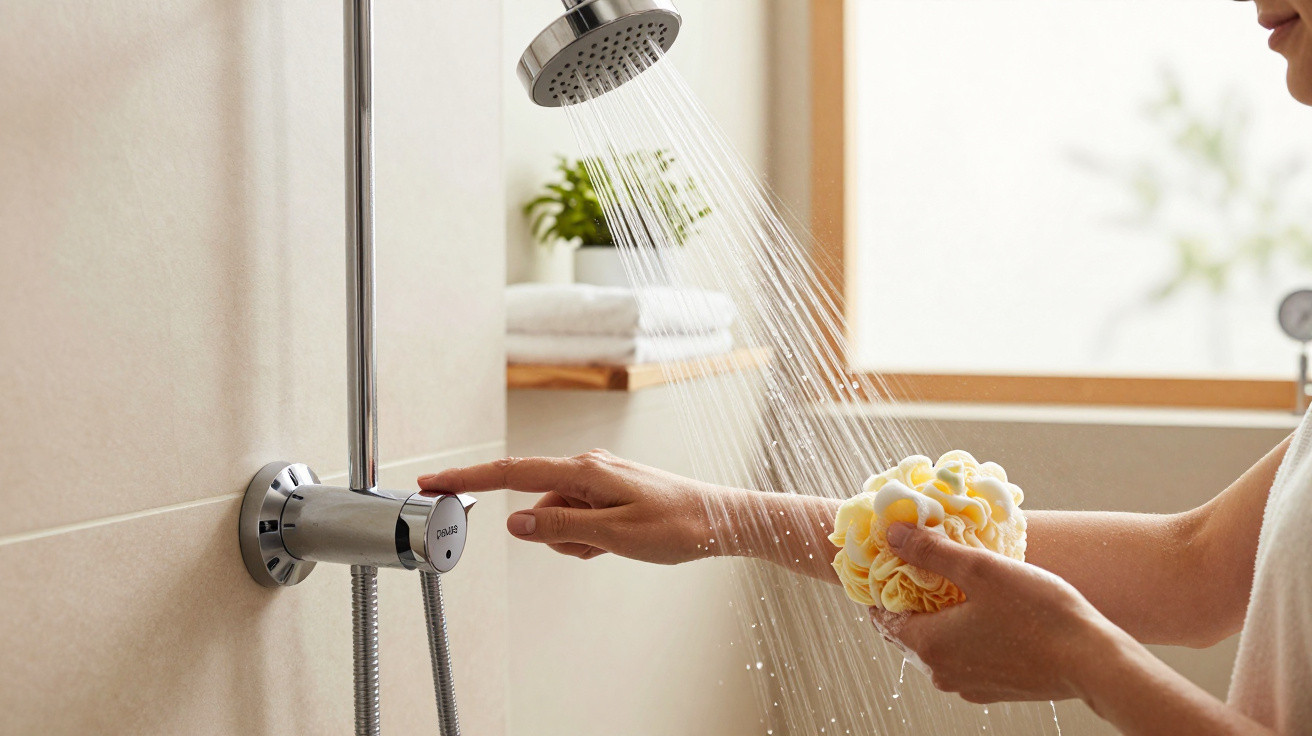
The change that truly affects the figures is this: keep the shower hot and pleasant, but interrupt the flow whenever you are not actively rinsing. Simply step in, wet your body, switch the water off or turn it down to a trickle, soap and shampoo, then turn it back on to rinse. Do it once, perhaps twice.
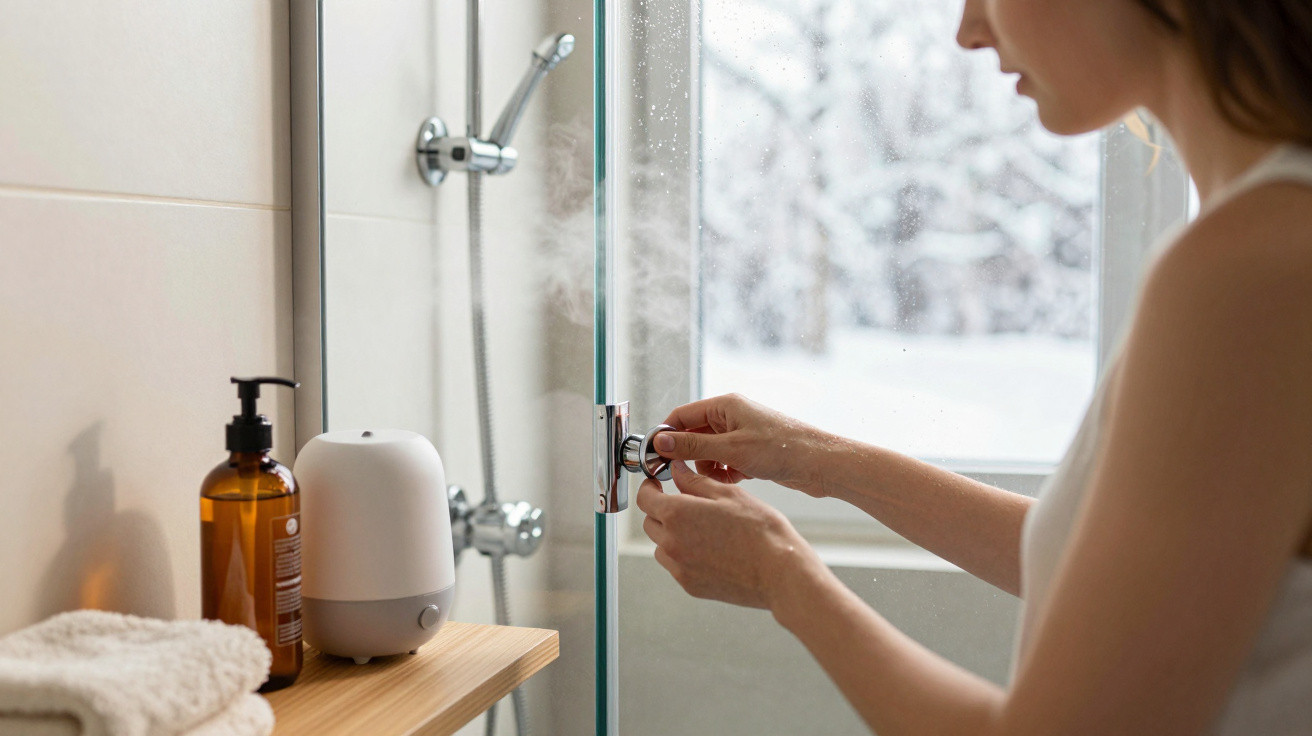
There are several ways to make it almost effortless. Some people fit a small thumb switch or shut-off valve to the hose close to the shower head. Others learn to flick the mixer handle down between stages while leaving the temperature setting untouched. Within a few days, it becomes automatic, much like turning off the tap while brushing your teeth.
The aim is not discipline; it is design. Build the pause into your shower routine so that you do not need to make a conscious decision every time. Keep the hot steam, your favourite playlist and the same slow breathing under the spray - only in briefer intervals.
This is the point at which many people falter: they attempt to change everything at once. Cold showers, two-minute timers and guilt over every drop. Then they quickly return to their former habits. Let us be honest: nobody really does that every day.
Begin on a tiny scale. Pick one “off moment” and follow it for a week. For instance: turn the water on to wet your body and hair, turn it off while shampooing and soaping, then turn it back on to rinse before finishing. No timer. No moral pressure. Just one small rule.
A common error is switching the water off entirely, then spending ages trying to find the right temperature again. Where your shower fittings permit it, retain the mixer setting and use only a small shut-off on the hose, allowing the temperature to return immediately. Another pitfall is slipping into “spa mode” at weekends and abandoning the habit altogether. That is fine. This routine is not about perfection; it is about regularly cutting obvious waste.
After two or three weeks, the quiet during the soaping stage begins to feel ordinary. It may even feel unexpectedly calming.
“The shower is where people are most ready to change,” says a sustainability researcher I spoke to. “They’re already in the habit loop. You just slip a tiny new step into a routine they love, without attacking the routine itself.”
Once people experience that shift, they are often interested in making further refinements. Some fit a low-flow shower head, while others simply reduce the pressure slightly. Neither is essential. The stop-and-go pattern alone already moves the needle significantly.
For a practical reminder to screenshot before your next shower, use this quick guide:
- Turn the water on: wet your body and hair, and enjoy the warmth
- Turn the water off or down: soap, shampoo and scrub
- Turn the water on: rinse quickly and with focus
On a busy weekday morning, that is all that is required. No slogans or apps - simply a new default.
A quiet shower habit with major consequences
What is remarkable about this small habit is how quickly it alters your view of water. Within a few days, the continual roar of an uninterrupted shower starts to feel… excessive. You notice friends doing it. Hotel bathrooms begin to seem wasteful. You become conscious of the invisible luxury of having hot water whenever you want it.
Some people notice unexpected side effects. Reduced flow time means hot-water cylinders last longer, so there is less of the frustrating “last person gets the lukewarm shower” situation. Bills ease slightly too, particularly where energy costs are high. The environmental case remains in the background, but it need not be the main focus. Everyday comfort is reward enough.
At a deeper level, modest routines like this show us that we are not fixed in the ways we have “always” done things. A shower can remain a sanctuary, a place to think and somewhere the day resets. The difference is that far less water now swirls down the drain while you replay the same three thoughts.
We all understand that major environmental changes are difficult to sustain when they conflict with pleasure, tiredness and real life. A straightforward shower pause is different. It asks for no sacrifice. It only requires a split-second choice, repeated several times.
When that choice becomes instinctive, the savings become part of your everyday life. Quietly. Reliably. Drop by drop.
| Key point | Detail | Benefit for the reader |
|---|---|---|
| Shorten flow, not shower time | Use water only when rinsing, and keep it off while soaping and shampooing | Retain comfort and relaxation while dramatically reducing waste |
| Add a simple “pause button” | Use a shut-off valve or a quick mixer adjustment rather than complicated gadgets | The change is easy, repeatable and requires little effort each day |
| Small habit, big savings | 30–50% water reduction reported with stop-and-go showers | Lower bills, reduced energy use and a smaller environmental footprint |



Comments
No comments yet. Be the first to comment!
Leave a Comment