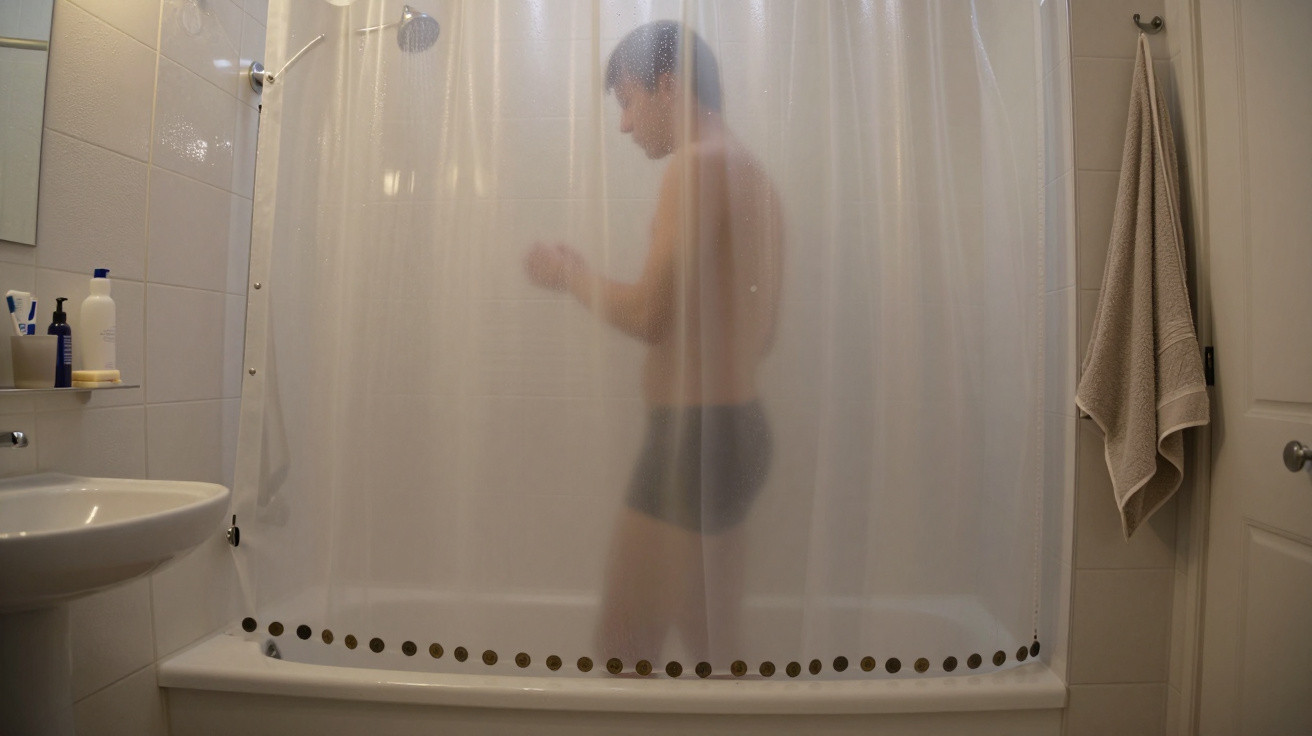
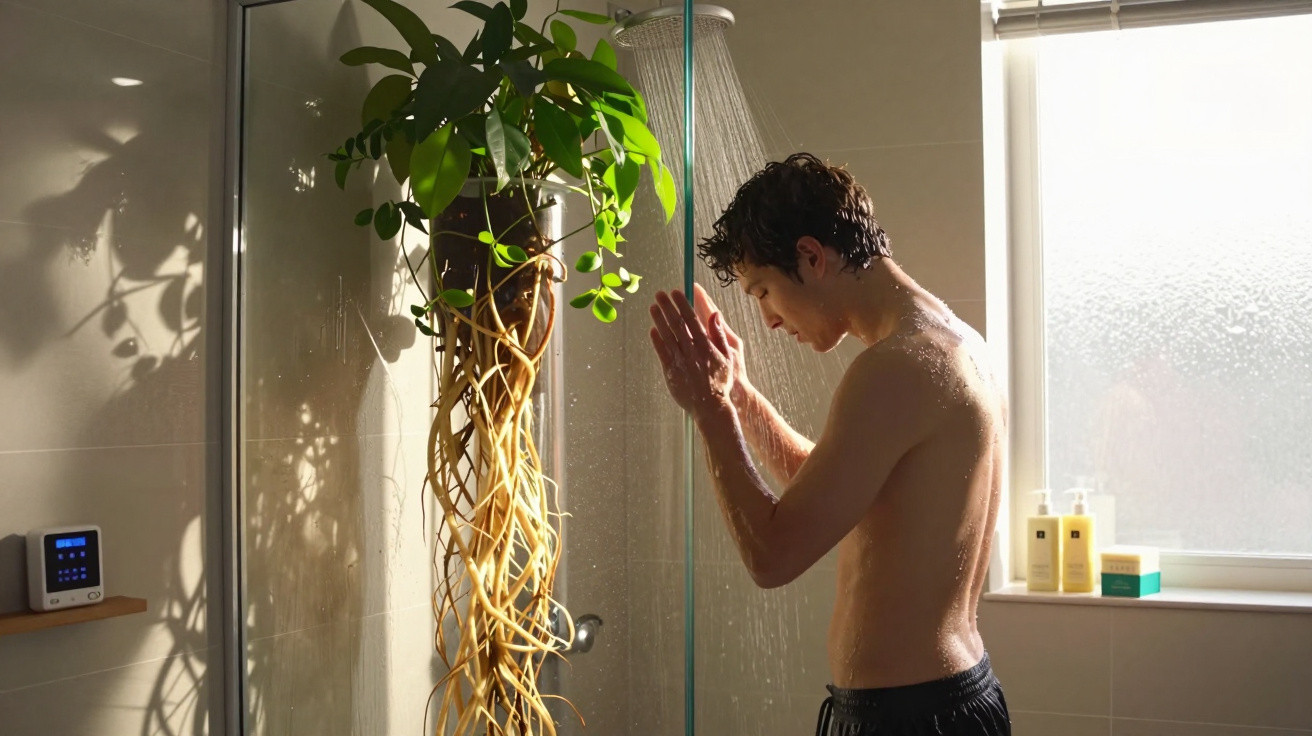
The water is at last properly warm, the door is shut and your favourite podcast is ready to play.
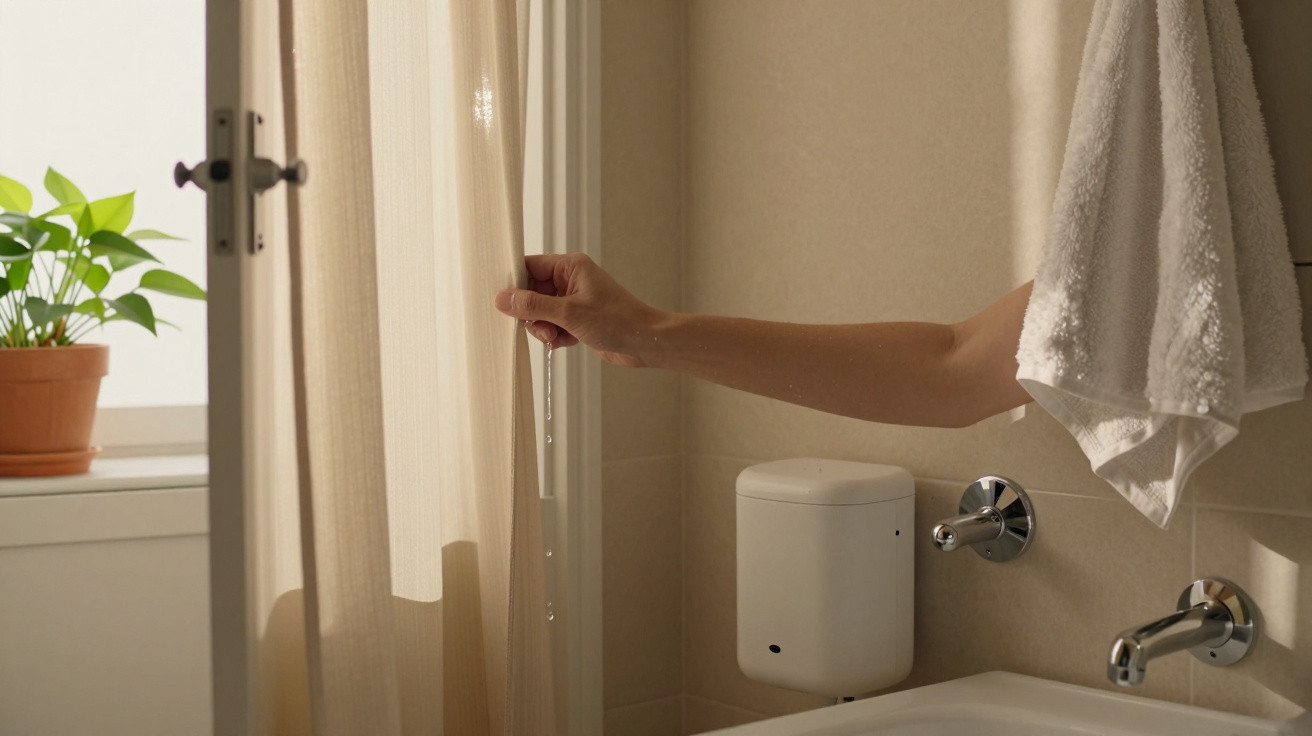
Five seconds beneath the spray, it begins: a cold, clingy sheet of plastic drifts towards your legs like a timid yet determined ghost. You brush it aside with your foot. It swings straight back. You shove it further away. Once again, it winds itself around you, tacky and relentless. What was meant to be a soothing shower suddenly resembles an uncomfortable wrestling bout in a phone box.
You have tested every supposed fix: opening the bathroom window, shutting it again, reducing the pressure, increasing it, and swearing at the ceiling as though your landlord might hear through the tiles.
Still, each morning, the curtain comes for your knees.
But what if it sticks to you for a reason other than the one you have always heard?
Why your shower curtain is really attacking you
If you were told growing up that a shower curtain moves because of “steam” or because “the air gets lighter”, you are far from alone. Most people retain a hazy school-science explanation without ever examining it. What happens in that small bathroom is far more physical and immediate: a miniature weather system whirling around your ankles.
When hot water meets the air, it does not simply rise like a cartoon arrow. It rushes, bends and draws surrounding air along with it. Water spraying from the showerhead cuts through the air, creating quick-moving currents and small gusts. You cannot see them, but you certainly notice them when a thin plastic sheet begins acting like a sail.
Your curtain is not haunted; it has merely been caught in a tiny storm you have created.
One of the clearest accounts emerged from an unexpected partnership of householders and fluid-dynamics enthusiasts. In the early 2000s, retired engineer David Schmidt used computer simulations to investigate why curtains bend inwards. His virtual shower revealed an unexpected result: pressure falls within the shower, rather like the low-pressure pocket that develops behind a fast-moving lorry on the motorway.
That pocket of low pressure gently draws the curtain towards you, in much the same way that a passing train pulls in air - and anything sufficiently light nearby. At the same time, the water jets drive air sideways, leaving lower pressure behind the falling water than in the room beyond it. Your warm, peaceful shower is actually filled with competing forces.
People notice this in everyday life without ever putting it in scientific terms. Ask several friends and the descriptions will be familiar: “It starts sticking to my legs the second the water’s properly hot”, “If I turn sideways, it suddenly wraps around my back”, “It’s worse in winter, no idea why”. Each observation describes changing airflow, invisible eddies and small vacuums.
Without the mathematics, the explanation is straightforward. Hot water makes air move faster inside the shower. Faster-moving air produces lower pressure. As the curtain is the lightest and most easily moved object there, the pressure difference draws it inwards. The stronger the showerhead, the more pronounced this effect is likely to be.
The visible steam is almost a red herring. It may drift about attractively, but the important activity takes place in the unseen air: the air pushed away, pulled upwards and then drawn back into the falling stream.
Picture the curtain as an uninvolved person standing in a crowd. As soon as the crowd rushes in one direction, that person is swept along. Because the curtain is nearby, lightweight and able to move freely, it is caught in the flow towards you.
The simple weight trick that stops shower curtain cling
There is a pleasingly simple answer that needs neither engineering expertise nor a bathroom refurbishment: add just enough weight to keep the curtain out of the turbulence. This does not mean a sandbag or concrete block, only a subtle weighted line along its lower edge so that it hangs with purpose.
Weight changes how the air affects the curtain. Those low-pressure “tugs” find it much more difficult to pull a heavier curtain inwards. Gravity quietly works in your favour, keeping the material hanging vertically where it belongs. The objective is not to make it stiff, but to prevent it acting like a balloon in a breeze.
You can purchase shower curtains with weighted hems or small magnets already fitted, although it is also possible to adapt the curtain you own. Some people tape pennies into the lower edge, attach metal curtain weights or use unobtrusive fishing sinkers spaced along the hem.
Here is the practical approach favoured by experienced bathroom users. Thoroughly dry the lower hem, then apply a strip of adhesive curtain weights or lead tape - the type used by golfers on clubs - to the inside, near the edge. Press it down securely and leave it overnight before showering again. If you rent and are worried about leaving marks, use tiny stainless-steel binder clips with washers attached instead; move them until you find the ideal position.
Balance is the key: enough weight to keep the curtain down, but not so much that handling it feels like grappling with a tarpaulin. Begin with several small weights and watch the results over a week. Adjust gradually where needed. Your morning routine becomes a quiet scientific trial, with a towel in place of a lab coat.
On a personal level, the solution matters because a clingy curtain bothers you at a particularly exposed moment. You are naked, in a hurry and only partly awake. You do not have the mental capacity to battle plastic. A carefully positioned weighted strip can transform a daily irritation into something you no longer notice.
“I thought weighted curtains were just a marketing gimmick until I realised I’d wasted years doing this ridiculous leg-kick dance every morning,” laughs Emma, 34, who tested the penny hack in her tiny London flat. “Now the curtain just… behaves. I stepped out of the shower one day and realised I hadn’t sworn once. That felt new.”
This small improvement also brings a quieter psychological benefit. Bathrooms, particularly in compact homes or shared flats, are places where people often tolerate inconveniences. There is the dripping tap, the mouldy grout and the curtain that grabs you at precisely the wrong time. Addressing even one such annoyance - including something as ordinary as a clingy curtain - subtly reinforces the idea that your everyday comfort matters.
- Add understated weights or magnets to the curtain’s bottom hem.
- Keep the liner inside the bath and the decorative curtain on the outside.
- Leave a small opening at the top or side to let air escape.
- Make sure the rail is high enough for the curtain to hang freely rather than bunching up.
- Replace very flimsy liners with slightly thicker, heavier alternatives.
Reducing bathroom “micro-annoyances”
Few people discuss their shower curtain, but it quietly influences the beginning of every day. Those first ten minutes beneath hot water can be a reset: a warm cave in which your brain begins to wake up. Alternatively, they can leave you irritated before you have even located a clean pair of socks.
Bathrooms are also places where small domestic frustrations can quickly become social tensions. Housemates blame one another for wet floors. Partners disagree over mouldy liners or unexplained puddles. The modest curtain, constantly getting in the way, becomes the story’s unspoken villain. Altering its behaviour changes the experience for everyone sharing the room.
There is something quietly empowering about learning the reason for an everyday irritation. When you understand that your curtain reacts to airflow and pressure rather than being annoying for its own sake, it no longer feels like a personal assault. You are not being tormented by a haunted plastic sheet; you are the person who has worked out the solution.
This extends beyond a bathroom hack. The same pattern appears elsewhere in life: minor sources of friction that go unaddressed because they seem too insignificant to solve. A squeaking desk chair. A cupboard door that refuses to shut. An app notification you repeatedly dismiss but never disable. Choosing to deal with even one of these can change the feel of an entire day.
The next time your shower curtain begins drifting towards you, you will know that a small pressure system is responsible, along with a distinctly human story. You may even smile, having learned the straightforward trick that puts gravity back on your side. Once you have won this strangely intimate contest with a sheet of plastic, you might start considering which other “small storms” at home could benefit from a quiet, clever solution.
| Key point | Detail | Benefit for the reader |
|---|---|---|
| Physical reason | Falling water creates an area of lower pressure that pulls the curtain inwards. | Understand that this is not “all in your head”, but a genuine aerodynamic phenomenon. |
| The role of weight | A lightly weighted hem withstands pressure changes and remains vertical. | Discover a simple, inexpensive solution that makes a real difference to shower comfort. |
| Practical adjustments | Combine weights, curtain type, positioning and airflow for a lasting result. | Put precise, no-renovation measures into practice immediately to reduce everyday irritations. |






Comments
No comments yet. Be the first to comment!
Leave a Comment