You probably do it automatically.
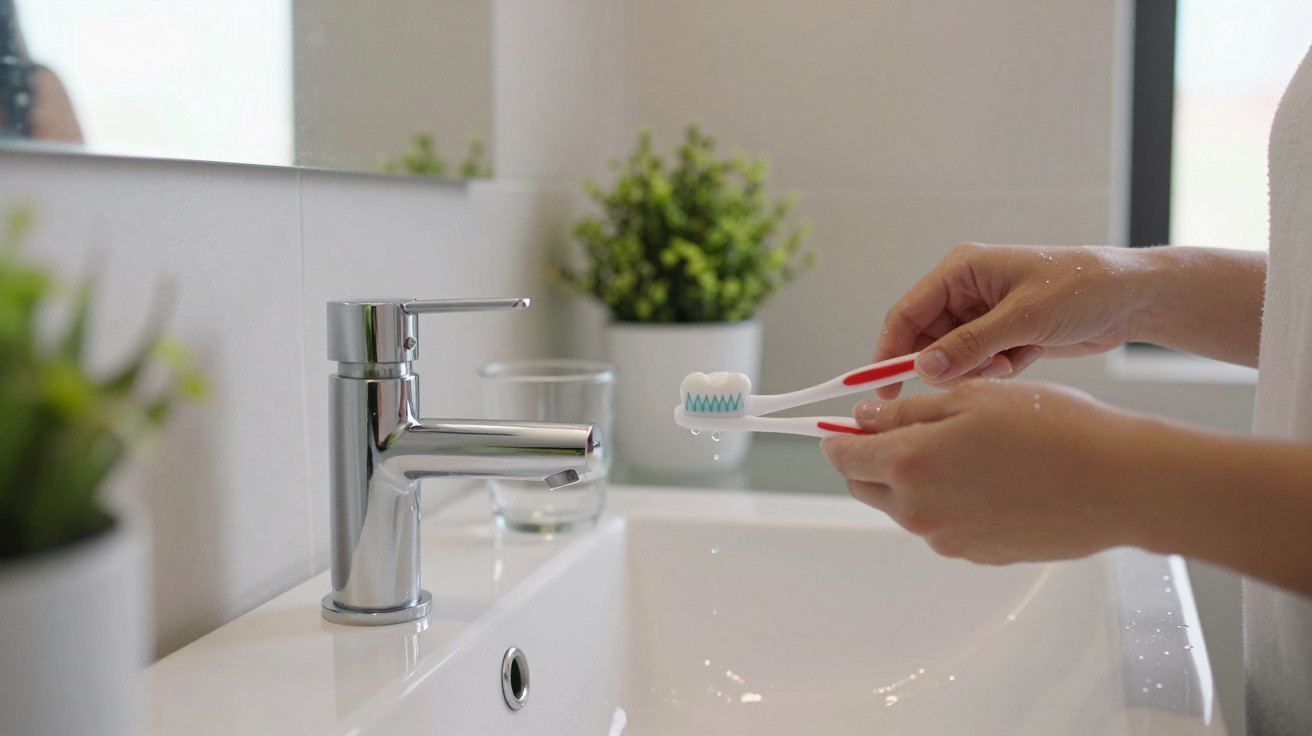
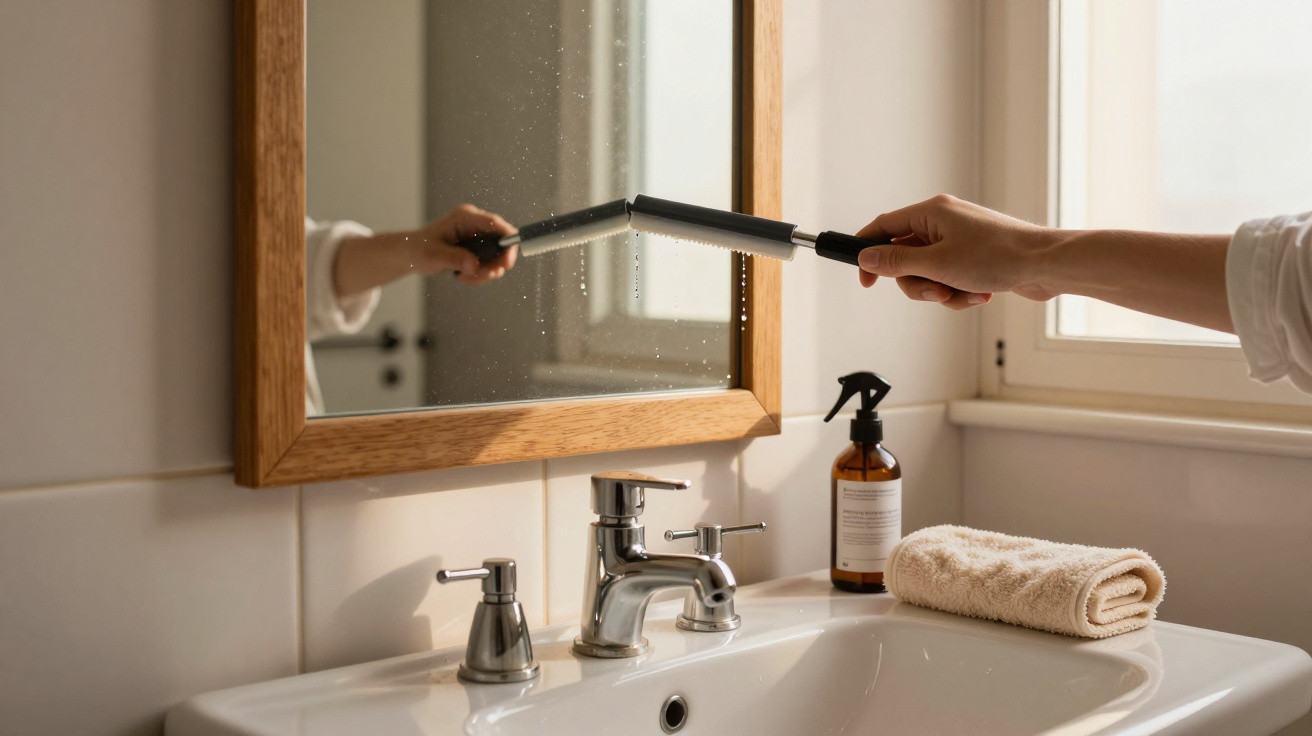
You walk into the bathroom, where the mirror is still steamed up from the previous shower, and reach straight for the tap. Cold, clear water rushes into the basin, and you leave it flowing for a few moments as you scroll, daydream or simply gaze into nowhere. Perhaps you are cleaning your teeth, preparing to shave, or washing your hands for longer than needed because your thoughts are elsewhere.
As this happens, litre after litre disappears down the plughole, taking money, energy and a resource that your future self may badly need. Oddly, it does not register as waste. It seems minor, harmless and almost insignificant.
That is exactly what makes it risky.
The bathroom habit that quietly wastes litres
The behaviour could hardly be simpler: leaving the tap on when you are not actively using the water. It happens while you brush your teeth, work soap into your hands or apply facial cleanser. The water remains available, just in case, like background sound you no longer notice.
For plenty of people, the routine began in childhood. Parents said, “go brush your teeth”, rather than “go brush your teeth and turn the tap off between rinses”. You then repeated what you watched in adverts, films or older siblings’ routines. A strong stream of water became part of the ritual, as familiar as a towel on the radiator or a toothbrush in a tumbler.
The routine remained, but the world moved on.
The figures make the issue clear very quickly. A typical bathroom tap delivers around 6 litres of water each minute. If it stays on throughout the two minutes spent brushing your teeth, about 12 litres are wasted. Repeat that twice daily and the total reaches 24 litres. Every day. For teeth alone.
For a family of four, that small, unseen routine can approach 700 litres a month. That is equivalent to several full baths being emptied directly into the drain while nobody is using the water. Include shaving, washing your face and removing make-up, and the total steadily rises.
On your water bill, it may amount to a few additional pounds. Across a whole city, however, it means millions of litres that needed to be treated, pumped and heated before being lost through thoughtless routine.
Psychologists describe “set and forget” actions. When a movement becomes embedded in muscle memory, the brain scarcely reviews it. Switching on the bathroom tap is one such action. You turn the handle, water flows, and your attention shifts immediately to the “real” task: washing, grooming or planning the day ahead.
The water therefore continues running while your focus is elsewhere. This is why the habit is so difficult to change: it is not caused by bad intentions, but by distracted attention. You do not feel the loss as you would if you tipped out a full bottle of water. There is no satisfying thud of a bin lid or visible heap of plastic, only a little extra sound from the basin.
The genuinely striking part is this: the largest proportion of wasted water is lost during the 30–60 seconds when you are not touching it whatsoever.
Small changes that save substantial litres
The best step is almost ridiculously easy: think of the tap as a switch rather than background music. Only turn it on when water needs to touch your hands, toothbrush or razor. Switch it off as soon as that direct contact ends.
Wet your toothbrush, turn off the tap, brush in quiet, then run the water again only to rinse. Apply the same approach to shaving: use water to wet the razor, stop the flow as you shave, then turn it back on for a brief rinse. Initially, it can feel unusual, rather like pausing a song midway through. In time, your hands will begin doing it without prompting.
That brief gap between actions is where you can save several baths’ worth of water each year.
Another surprisingly effective option is to make the water less “loud”. Install a small aerator on your bathroom tap to reduce the flow without greatly altering how it feels. You still have a consistent stream, but may use roughly half as much water per minute. Many newer taps include aerators already, while older properties often lack them.
If you live with family or share a flat, make it into an unspoken game. Who can brush their teeth with the tap running for the shortest time? Who remembers to turn it off first? In homes with children, it can work even better if they are allowed to “catch” you making a mistake and point out that you are wasting water.
Let us be honest: nobody gets this right every day from the start. You will forget, become distracted and leave the water running again. Then you will hear it and feel a small pang of guilt. That pang is helpful, because it shows the habit is beginning to weaken.
“I used to leave the tap running just because that’s what everyone did,” admits Claire, 32, who lives in a small flat with an old bathroom. “Once I realised I was basically paying to water the sink, I couldn’t unsee it. Now the silence while I brush feels strangely peaceful.”
- Micro-action 1 – Wet, stop, scrub, rinse: establish a two-stage rhythm for your teeth, hands and face.
- Micro-action 2 – Reduce the flow: fit a tap aerator or make the half-open setting your usual position.
- Micro-action 3 – Check the sound: if water is flowing while your hands are dry, turn off the tap. Every time.
Why this small decision matters more than you might expect
On a hectic Tuesday morning, worrying about a few additional litres in the basin can feel abstract. You are running late, tired and thinking about emails rather than reservoirs. But that is precisely what makes this habit so effective: it requires virtually nothing from your timetable, only a slight increase in awareness.
Reducing the time your tap runs by only one minute during each bathroom visit can save hundreds of litres per person every year. There is no need for new equipment or a major lifestyle overhaul. It is simply a small interruption to autopilot.
There is a further, hidden benefit: you can actually hear the change. With the tap off while you lather soap or brush your teeth, the bathroom becomes calmer. There is more room for your thoughts. Some people experience it as a small moment of peace at the beginning and end of the day. The quiet itself becomes a modest reward.
In places already affected by drought, low river levels or hosepipe bans, these litres are not merely theoretical. They belong to the same system that supplies your shower, coffee and the trees in your neighbourhood. Water you do not waste does not have to be pumped, purified or heated. This results in lower energy use, lower bills and less pressure on ageing infrastructure.
At a global level, domestic water consumption represents only one part of the challenge, but it is the part you interact with every day. You cannot redesign a city’s entire plumbing network from your bathroom basin. You can decide what happens in the ten minutes you spend there.
Personally, that decision can spread quickly. Visitors notice when you turn off the tap. Children imitate your actions more readily than your words. Housemates may tease you when you forget, laughing as they reach past to close the tap you left on. In a social media world full of “big” environmental gestures, simply refusing to let water run for no reason can seem almost dull.
Perhaps that is why it succeeds. It is not dramatic. It does not require you to relocate to the countryside, purchase a new car or grow vegetables on your balcony. You simply stop sending perfectly drinkable water down the drain while looking at yourself in the mirror.
At a deeper level, altering this single habit can change how you view resources more broadly. Once you notice the running bathroom tap, you may start spotting other “invisible leaks”: lights left on in unoccupied rooms, endless scrolling through online shopping pages, or food discarded because it disappeared at the back of the fridge.
On a peaceful morning, when the home is quiet and the mirror is fogged, you may suddenly become aware of what is missing. There is no rush of water, only the gentle scrape of toothbrush bristles and your own breathing. It can feel strangely personal. Almost as though you have been there all along but have only just arrived.
We have all experienced the moment when a bill arrives and we ask where everything went: money, time and water. Routines such as leaving the tap on are small leaks that quietly accumulate in the background. Close one of them, and the others become easier to recognise.
The next time your hand reaches for the bathroom tap, stop for half a second. Put one simple question to yourself: “Do I need the water right now, or just the feeling that it’s there?”
Your response may reveal more about your life than your basin.
| Key point | Detail | Benefit for the reader |
|---|---|---|
| Running tap = silent water drain | Leaving the tap on when you are not using the water can waste dozens of litres a day | Helps you identify where your money and resources are literally disappearing |
| Small habit, big numbers | Two minutes of running water twice daily can reach 24 litres per person, every day | Shows why the “small” adjustment is worth making |
| Simple fixes that last | On/off routines, lower flow and playful challenges at home | Offers easy, low-effort actions you can begin tonight |

Comments
No comments yet. Be the first to comment!
Leave a Comment