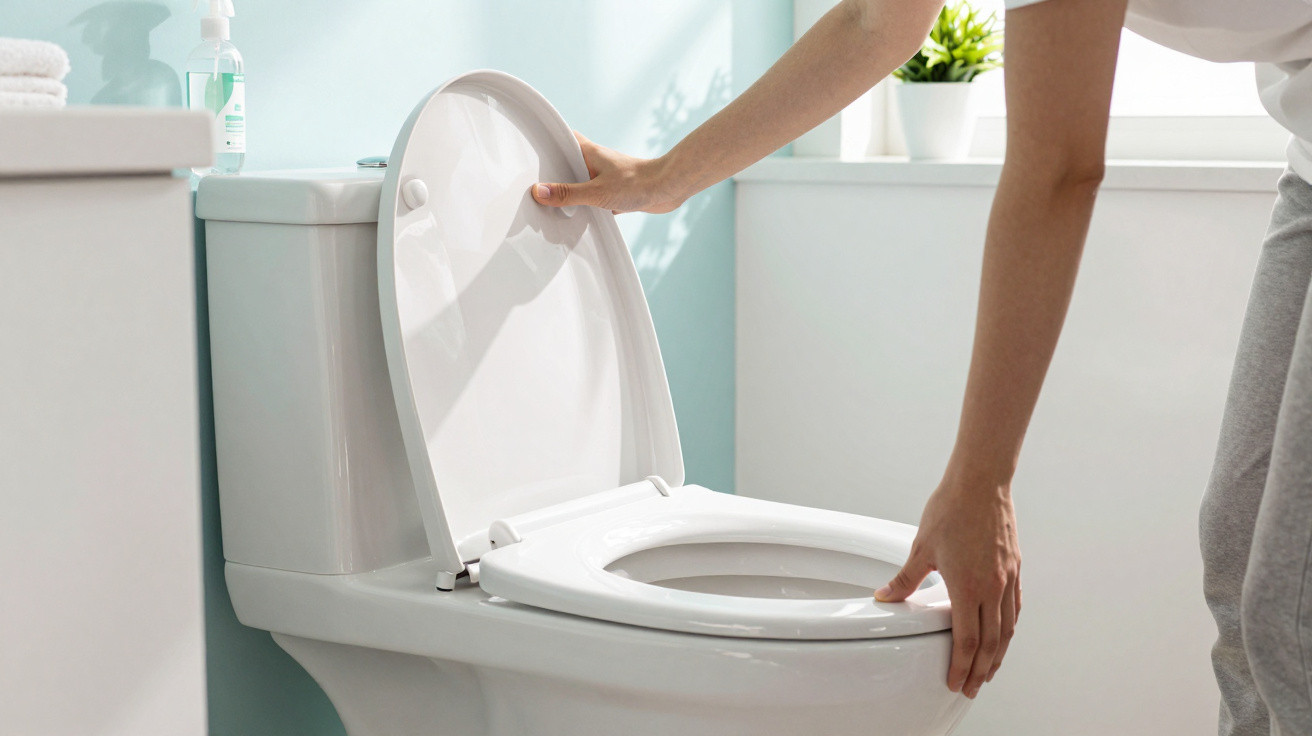
You nudge the door open while still half asleep and find it: the toilet seat sitting in the “wrong” position. To some, it is merely a hinged piece of plastic. To others, it feels like an act of hostility before the first coffee of the day.
With a sigh, you lower it, flush and wash your hands. It is a routine you have repeated countless times. Elsewhere in the home, somebody is probably already sighing too, preparing to grumble about “certain people” who never consider anyone else.
Toilet seats sit at an odd crossroads of hygiene, etiquette and unspoken irritation. This tiny action can reveal plenty about how people share a home. Hygiene specialists do, in fact, have a preferred approach - and it is not the issue most people argue over.
The toilet seat dispute: etiquette, myths and microscopic spray
The familiar divide is straightforward: one group insists the seat should always be lowered, while the other believes it should remain as the previous user left it. Yet the disagreement is seldom only about plastic and hinges. It concerns consideration, emotional labour and who has to clean up the unexplained droplets around the toilet bowl.
In social terms, an upturned seat can be interpreted as saying: “Someone else can sort that out.” A lowered seat suggests: “I considered the person after me.” Hygiene experts take another view entirely. To them, each flush is a small weather system, producing a plume of droplets and aerosols that can travel further than many people expect when the lid is open.
In a frequently referenced laboratory study, scientists used a harmless virus to follow what occurred during a toilet flush. When the lid was left open, minute particles travelled as far as 1.5 metres, settling on floors, walls and even toothbrushes nearby. Closing the lid reduced contamination substantially, although it did not eliminate it. This is what many household disputes overlook: the key question is not simply whether the seat is up or down, but whether the lid is raised or lowered when flushing.
One Tuesday afternoon in a London office, I saw the disagreement unfold first-hand. Someone put a handwritten notice on the toilet door stating: “Please leave the seat down – we are not animals.” The following day, somebody had added a scrawled response: “We are adults. Use your hands.” HR then became involved, putting up an impartial printed notice about “shared responsibility and hygiene”, featuring upbeat symbols and a smiling cartoon toilet that looked as though it belonged in a children’s book.
Surveys beyond the office tell a similar tale. In one UK poll, roughly two-thirds of women said that a toilet seat should always be left down. Fewer than half of men shared that view. The divide can be even more pronounced in shared flats: one resident feels slighted, while another feels controlled. It is a minor detail with major emotions attached.
Hardly anyone in these surveys talks about the lid. Infection-control experts say that is the crucial point. Rather than focusing on gender disputes, they refer to the “toilet plume” - the mist of micro-droplets that may transport bacteria such as E. coli, or traces of viruses, from the bowl into the air. In hospitals and care homes, guidance is unambiguous: lower the lid before flushing whenever it is practical to do so.
Put the emotions aside and the science is fairly clear. A toilet is, in effect, a water-filled bowl that is forcefully disturbed several times each day. Flushing with the lid open sends some of that water, along with its contents, into the air as particles. Most are large enough to settle quickly on surfaces nearby. A small proportion are sufficiently tiny to remain airborne for minutes.
Lowering the lid creates a partial shield. Research indicates that airborne particle levels still increase, but by much less. Whether it is raised or lowered, the seat itself is another surface on which droplets can land. Hygiene experts consistently return to the same advice: close the lid before flushing, wash your hands thoroughly and clean the seat and nearby area regularly. The seat-up-versus-seat-down debate is more about politeness and avoiding mishaps in the dark than a major health hazard.
What hygiene experts recommend for your toilet seat
The most straightforward expert-supported step is this: once you have finished, lower the lid and then flush. It takes one additional second and a small movement of the hinge, yet it reduces the amount of microscopic spray released into the bathroom. Some specialists also advise waiting a few seconds before reopening the lid, allowing heavier droplets time to settle.
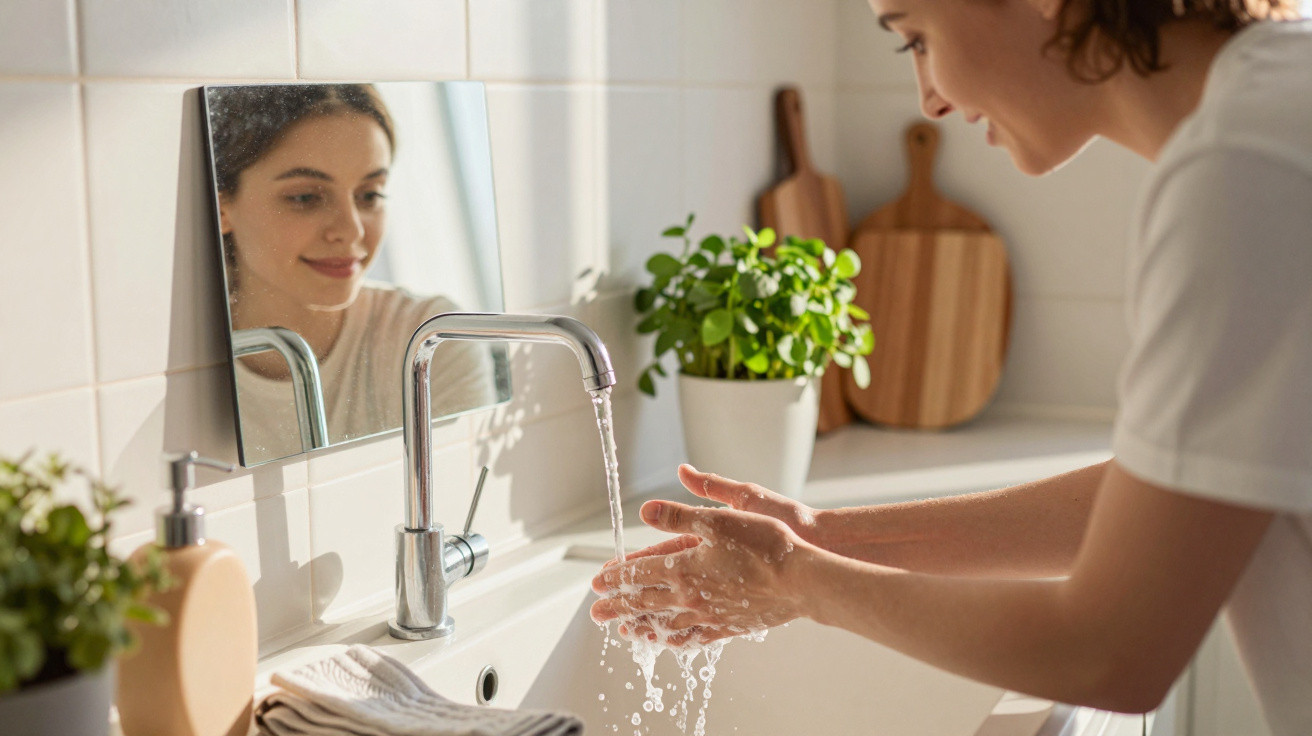
The rest of the routine is unglamorous but useful. Clean the seat regularly, particularly in bathrooms used by several people. Use soap and water or an ordinary bathroom cleaner rather than simply running over it with a tissue. Wash your hands for around 20 seconds and dry them properly afterwards. There is no need for miracle products or influencer tricks - only simple habits that can be repeated and that discreetly protect everyone.
The uncomfortable reality in home bathrooms is that most people clean them less frequently than they say they do. We claim it happens “once a week”. In practice, it often becomes “when it starts to smell” or when visitors are expected. Let’s be honest: nobody truly does it every day.
This difference between what we understand and what we practise is where minor issues can become bigger ones. Consider a child with a stomach bug, a partner suffering food poisoning or a visitor with a weakened immune system. In these situations, routinely flushing with the lid raised shifts from being a harmless quirk to a risk. Fortunately, adopting the sequence of lid down, flush, wash is easier than increasing the frequency of a full bathroom deep-clean.
On matters of etiquette, relationship therapists and household coaches are increasingly reaching a quiet agreement: in a mixed household, both the seat and lid should be lowered. One expert I spoke to put it like this:
“Leaving the seat and lid down is a tiny, daily way of saying: I remembered you exist. In shared spaces, that matters more than people admit.”
The rule of keeping “both down” brings practical benefits as well. The toilet appears neater, pets and toddlers have less opportunity to investigate the bowl, and fewer objects end up falling inside. It also fits neatly with hygiene guidance and basic courtesy.
- Seat position: Leave both the seat and lid down after use.
- Flushing: Close the lid before flushing, particularly when somebody is ill.
- Cleaning: Wipe the seat and flush handle on a regular basis.
- Communication: Set an easy household rule and write it down if necessary.
- Flexibility: Visitors may not always follow it, so do not let it become a battle.
Should the toilet seat be left up or down?
From a hygiene perspective, whether the seat is raised or lowered is not the main issue. What matters is whether the lid is open or closed. If you are concerned about what may land on your toothbrush, phone or stack of folded towels beside the basin, experts offer a clear answer: keep the lid down before flushing whenever it is reasonably possible.
From a relationship perspective, the decision is equally uncomplicated - and equally charged. A shut seat and lid communicate: “This is a shared space, and I have prepared it for the next person.” An open bowl marked with splashes communicates something different. People do not all interpret that message in the same way, which is why the same disagreement returns in fresh forms across generations.
What has changed is how much more we know. We have watched slow-motion recordings of toilet plumes. We have experienced a global pandemic that heightened awareness of invisible particles. We have heard from hygiene specialists, microbiologists and cleaning staff who deal with the outcome every day. The decision made at that plastic hinge becomes less about “winning” a dispute and more about the type of household you want to maintain.
That is the understated irony. A toilet seat seems like a trivial and rather silly concern. Still, the way we discuss it - or refuse to discuss it - shows how we approach fairness, effort and invisible domestic work. This small everyday ritual can fuel resentment or offer a brief gesture of care. It is also an unusual household argument in which science, manners and common sense all point, surprisingly, in the same direction.
You may disregard the expert advice, flush with the lid raised and hope nothing comes of it. Alternatively, try a different routine for a week and see how the bathroom feels. Ask the people you live with what they genuinely prefer and their reasons for it. That is where the real story lies: not in the hinge itself, but in the conversation surrounding it.
| Key point | Detail | Why it matters to the reader |
|---|---|---|
| Close the lid before flushing | Significantly reduces the spread of micro-droplets into the air | Limits exposure to bacteria and viruses in the bathroom |
| Keep both the seat and lid down | A simple compromise between hygiene, appearance and consideration for others | Reduces tension at home and everyday “little wars” |
| Choose routines over miracle products | Handwashing, regular cleaning and shared rules | Provides genuine control over cleanliness without unnecessary spending |


Comments
No comments yet. Be the first to comment!
Leave a Comment