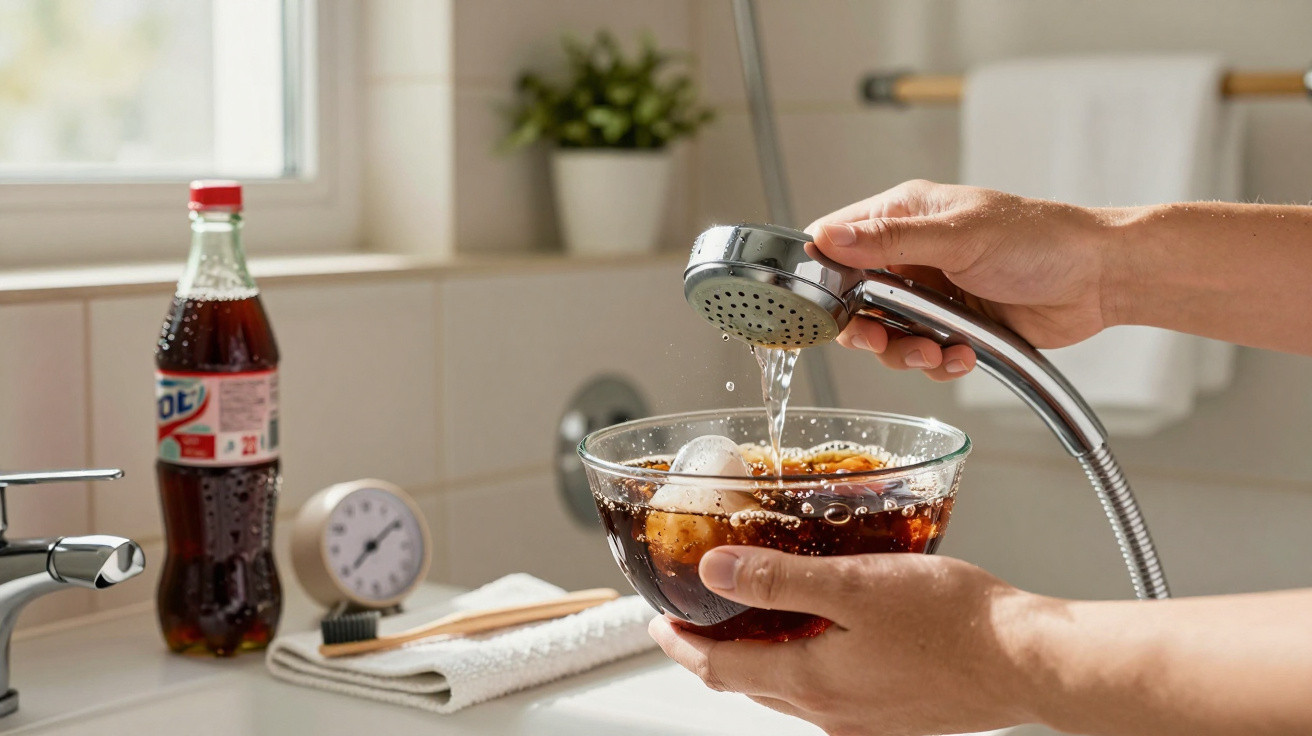
I was standing there with an old bottle of cola, a resealable bag and a showerhead so clogged with limescale that it had been sputtering like an asthmatic kettle for weeks. I had already tried scrubbing it, prodding at it and even muttering a few choice words while the spray shot off sideways, missed me completely and drenched the tiles. I pulled the bag over it, fastened it with a hair tie, watched the cola surround the chrome and left it to do its thing. By morning, the liquid resembled weak tea, with pale flakes drifting through its brown depths like snow. When I switched on the shower, the initial burst smelled sweetly of caramel, with a touch of mischief. Then the water transformed.
The sticky experiment that genuinely worked
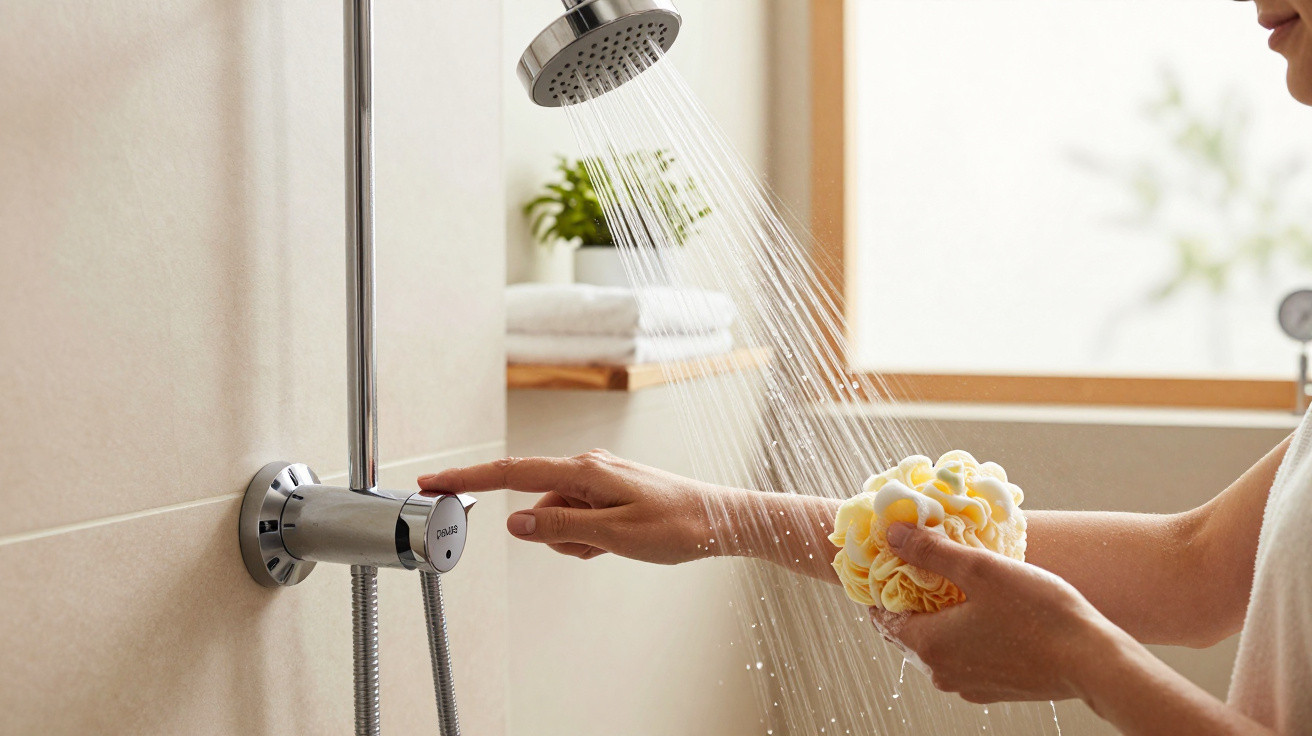
To put it plainly, the cola loosened the limescale. The showerhead, previously blocked up and uncooperative, seemed to breathe properly again. Tiny jets that had not worked for months suddenly sprang back to life in clean streams, like a sprinkler rousing itself after a long sleep.
I did a little dance on the bath mat, because that first unobstructed spray felt like a proper triumph. More than half of UK homes are in hard-water areas, making this a near-universal battle. My neighbour had even changed her shower gel, convinced it was causing her dull-hair days, when mineral deposits had been restricting her shower all along.
Inside that bag, the process was straightforward chemistry dressed up as a party trick. Cola contains phosphoric and carbonic acids, which work on calcium carbonate until it releases its grip. The fizz helps the liquid reach into narrow gaps, the acid handles the dissolving, and the sugary stickiness is merely along for the journey.
How to clean a limescale-clogged showerhead with cola
This is the straightforward method that worked for me. Pour enough cola into a strong freezer bag to cover the showerhead, carefully place the head inside and secure the bag using a hair band or elastic so that it fits snugly. Leave it overnight, rinse it with warm water the following morning, then lightly brush the nozzles with an old toothbrush to remove the loosened debris.
A few precautions are worth taking. For polished brass or another delicate finish, try a concealed area first, as acid may take the edge off a mirror-like shine. Diet cola is less sticky, while a teaspoon of bicarbonate of soda in the rinse can help neutralise any residue before you polish the surface with a microfibre cloth. Realistically, no one is doing this daily. Save it for when the spray becomes erratic or the pressure seems to drop for no obvious reason.
I also discovered the things to avoid, in the slightly clumsy manner through which most of us learn household jobs. Do not leave the bag in place for several days, and remember to rinse the hose and holder as well, otherwise grit may continue to work loose for a week.
“Acid breaks scale; time does the heavy lifting,” a plumber told me. “Keep it gentle, and your fittings will last longer than any bottle promises.”
- Use a bag and elastic instead of immersing the entire bar or rail.
- Brush gently after soaking rather than beforehand.
- Rinse for longer than seems necessary, then run hot water for one minute.
- If the showerhead comes off easily, soak it in a bowl for a more even result.
Beyond the fizz: what this small trick reveals about our homes
We have all experienced a modest household success that feels far bigger than the effort it took. This was one of those moments. I had simply tolerated an unpredictable shower out of habit, yet the solution was sitting in the cupboard beside the cake-mix tin.
There is a quiet lesson in the fizz, too. Limescale accumulates in plain view, building up unnoticed until one day your normal routine feels less pleasant and you cannot quite work out why. For months, we had been cleaning around the issue rather than tackling the issue itself. Cola made what had been invisible easier to see, before sending it down the drain.
The biggest surprise was this: The spray pattern was crisp, softer on skin, and somehow the room sounded different as the water hit the tray. That clear, even hiss brought a sense of calm I had not expected from an experiment involving a fizzy drink. It made me question which other seemingly silly household tales might contain a small grain of truth.
What cola does to limescale - and potentially to your finish
From a scientific perspective, cola is not miraculous: it is simply a mild and readily available acid, at approximately pH 2.5. Calcium carbonate, the persistent substance that forms limescale, reacts badly to acidic soaking. During several hours, the hard deposit softens and comes away, helped by the movement of water when the shower is turned on and the light action of a toothbrush. You do not need to dismantle the fitting like a watchmaker to notice an improvement.
There are some limitations to bear in mind. Natural-rubber shower nozzles are generally hard-wearing, but prolonged soaking will not do them any good. Chrome usually handles a brief treatment without trouble, whereas vintage nickel may react badly if it is left too long. Ordinary cola leaves behind a sticky film, so keep rinsing until the caramel smell has disappeared and run the shower hot to clear away the remainder.
The apparent improvement in pressure is not pressure appearing from nowhere; it is pressure that is no longer being lost through obstructed jets. Cola didn’t create water pressure, it freed it. That is why the effect will be more dramatic on a heavily scaled showerhead, while one already in reasonable condition may show only a modest improvement.
If you decide to try it, use this method
Pour two cups of diet cola into a bag, fit it over the showerhead and secure it firmly so that all the nozzles sit below the liquid. Eight to twelve hours is the ideal window. In the morning, take off the bag, run the shower on warm for a complete minute, brush the nozzles using a soft toothbrush and finish by buffing with a microfibre cloth. A final splash of clean water over the rail and wall plate will help prevent sticky fingerprints.
Most common problems can be avoided with a little care. Do not use boiling water to rinse plastic fittings, and do not miss out the toothbrush stage, or loosened grit may be left ready to block the jets again. Where water is especially hard, repeat the treatment monthly, or alternate it with a vinegar soak every other time so that you are not relying only on sugary drinks. This is household maintenance rather than a laboratory test; allow yourself some room for error and it should be fine.
When I told a local installer about the cola method, he laughed before agreeing. He had encountered both worse and better solutions, and understood what counted most.
“Use what you’ve got, but be kind to the finish and don’t overcook it,” he said. “Short soak, long rinse, job done.”
- Choose diet cola for less stickiness, or regular cola for a slightly stronger effect.
- Thirty minutes can help, but an overnight soak works best.
- A soft brush is more sensible than a sharp pin.
- Finish with a towel buff to avoid water marks.
The small domestic thrill nobody mentions
I expected this to be an amusing footnote to my week. Instead, it made me think about how we tolerate minor irritations until they become part of the background of everyday life. What appears to be a simple hack can sometimes be permission to experiment, make small adjustments and recognise what is actually wrong.
Perhaps that is why a bottle of cola on a bathroom shelf felt strangely optimistic. You do not need the most expensive equipment for a good result; you need time, a gentle approach and a willingness to rinse, rinse, rinse. If you give it a go, tell somebody. These are the stories people genuinely put to use.
| Key point | Detail | Why it matters to the reader |
|---|---|---|
| Why cola works | Mild acids dissolve calcium carbonate, bubbles aid penetration and time completes the process. | It turns a marketing myth into a repeatable method you can try tonight. |
| Risks and limits | It may dull delicate finishes if left to soak too long, and it leaves sticky residue without thorough rinsing. | It protects your fittings, prevents mess and stops the “win” becoming a chore. |
| A smarter routine | Short, regular soaks and light brushing keep jets clear; alternate with vinegar if you prefer. | It saves money on descalers, restores pressure and keeps showers feeling new for longer. |


Comments
No comments yet. Be the first to comment!
Leave a Comment