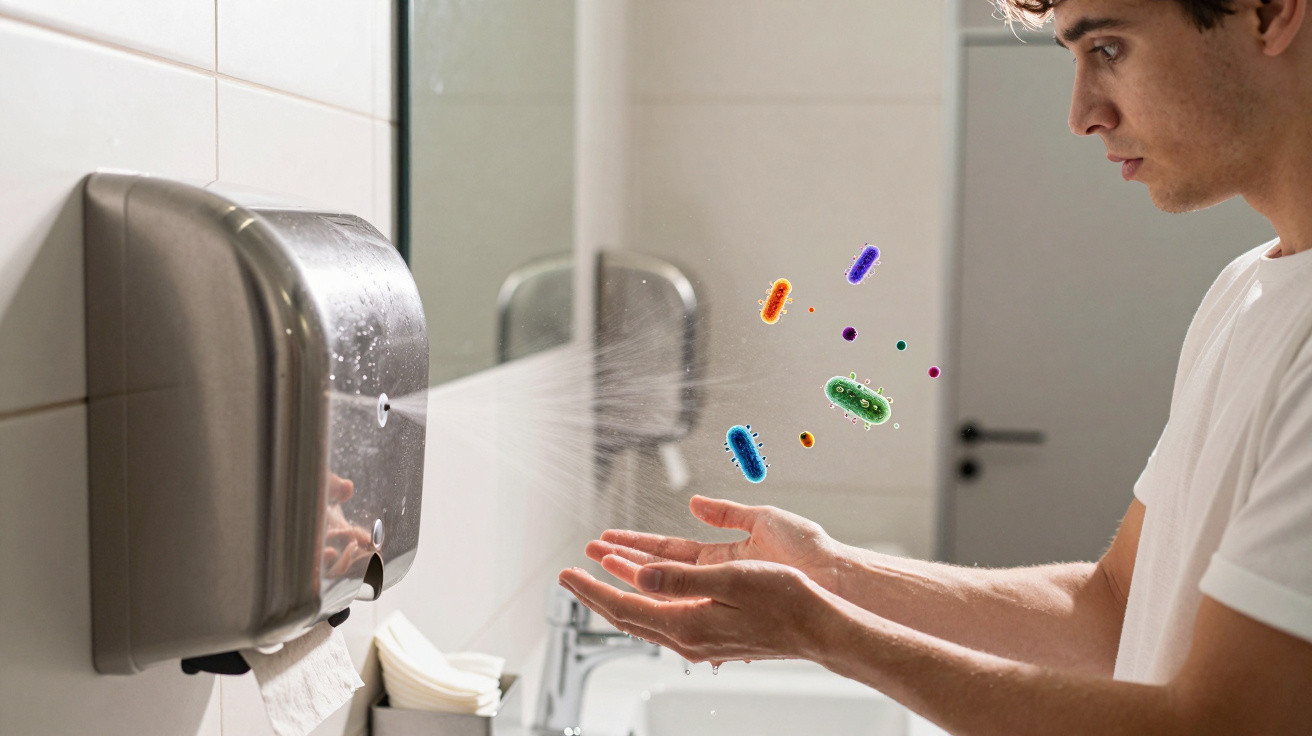
Washing your hands thoroughly with soap can make you feel protected. Many people then hold them under a hot air stream and consider the job done. However, a viral laboratory experiment suggests that this final stage can reload freshly washed hands with germs – to an extent that surprised even experienced scientists.
A simple experiment with striking results
Ruth, a scientist known as “Devon Science” on TikTok, wanted a clear answer to a straightforward question: how many bacteria actually reach the skin when someone uses a hand dryer in a public toilet?
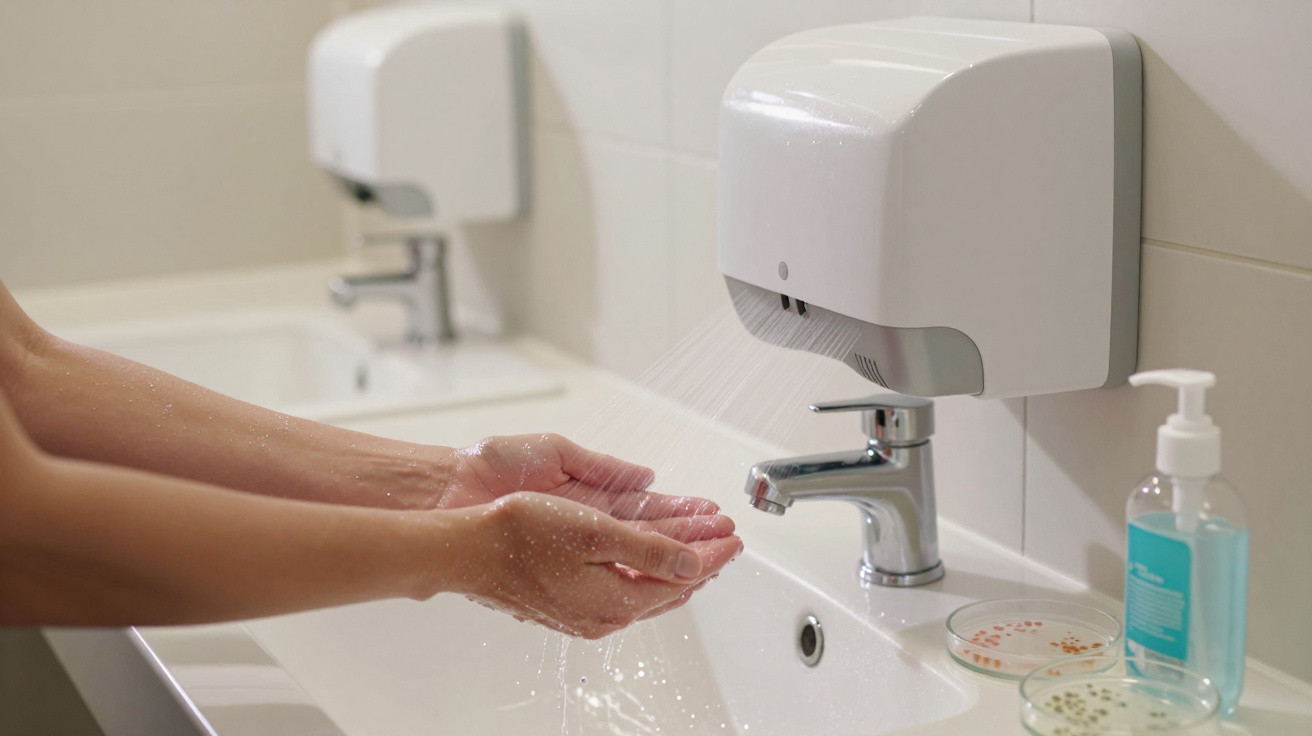
She used a standard laboratory method: Petri dishes containing growth medium. One dish was held directly beneath an operating hand dryer. A second was left in the comparatively clean laboratory as a control, with no direct exposure to the appliance.
After one day in an incubator, the difference was unmistakable. The dish exposed to the hand dryer developed dense colonies of yellow, white and dark spots, while the control dish remained almost clean. The contrast was so pronounced that even non-specialists could see it immediately.
The experiment clearly shows that the airflow from hand dryers can blow bacteria from toilet air straight back onto hands.
Which germs can end up in a hand dryer
The laboratory results indicated several common germs regularly found in public toilets. Some are harmless, while others can be unwelcome everyday companions:
- Staphylococcus aureus: Often found on human skin, but it can cause pus-forming skin infections, abscesses or, in extreme cases, pneumonia.
- Escherichia coli (E. coli): A bacterium from the gut that enters the surroundings through traces of faeces. Certain strains can trigger diarrhoea, urinary tract infections or more serious gastrointestinal illnesses.
- Fungal spores: The black spots on the dish point to fungi. They may be a problem for people with allergies, asthma or weakened immune systems.
This makes it clear that the issue is not limited to a few harmless skin bacteria. In the air of a heavily used washroom, traces of faecal bacteria, fungi and other microorganisms can circulate and be efficiently spread by a dryer’s airflow.
Why hand dryers spread germs so efficiently
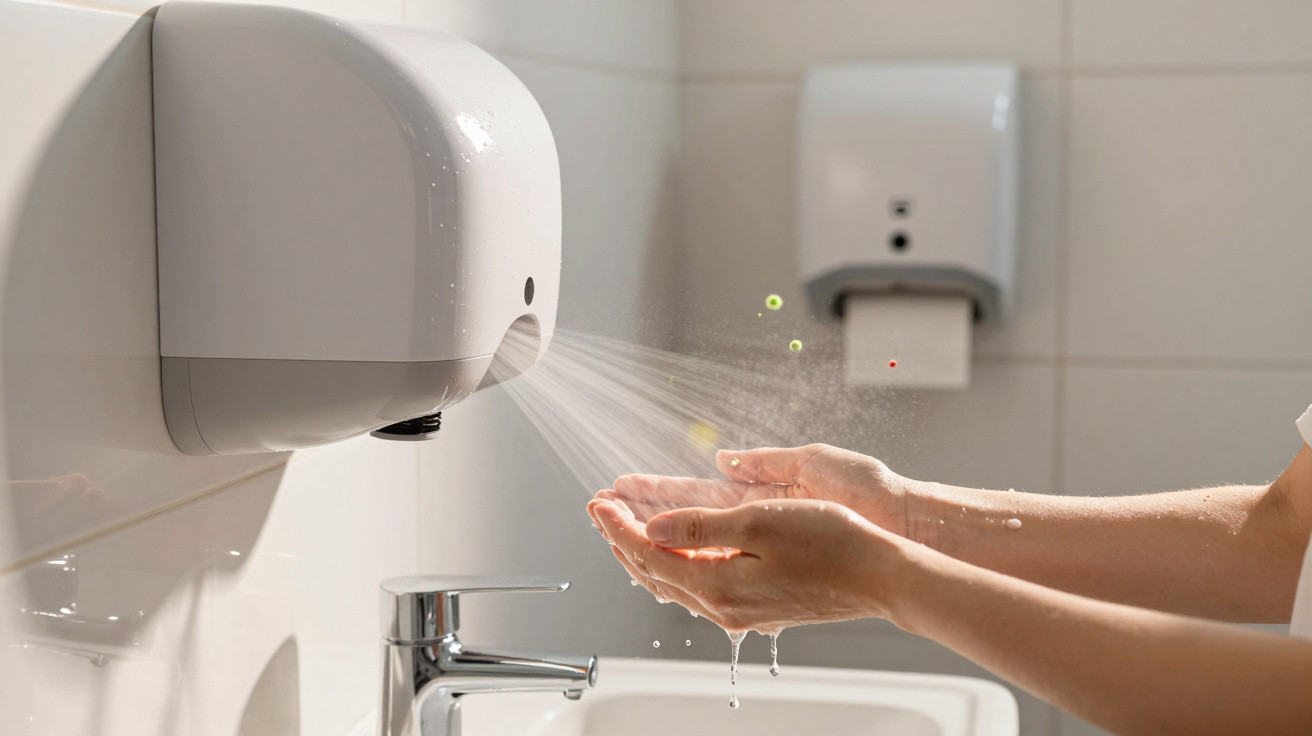
The principle behind a hand dryer is simple: a motor draws in air from the room and forces it onto wet hands at high pressure. That is precisely where the problem lies.
High air speed, wide dispersal
Modern turbo models can produce air speeds of several hundred kilometres per hour. This removes moisture from the skin quickly, but it can also propel tiny germ-carrying droplets far around the room.
- Aerosol formation: Damp surfaces, the floor around toilets and spray created by flushing toilet bowls all release bacteria into the air. A hand dryer stirs up these particles and distributes them.
- Long reach: Germs do not settle only on hands. They can also reach the face and clothing, and later end up at home on light switches, door handles or a smartphone.
Dirt inside the appliance
In another test, Ruth swabbed the inside of a hand dryer with a cotton bud. The swab became noticeably dark, suggesting a substantial biofilm made up of dust, skin flakes and bacterial residue inside the machine.
These accumulated particles may detach every time the dryer starts, mix with the airflow and return to recently washed hands. In effect, the dryer repeatedly recirculates air from one of the most germ-laden spaces in a building.
Anyone who washes their hands and then holds them beneath a heavily contaminated hand dryer immediately undoes part of the hygiene benefit.
Technology measures: how effective are HEPA filters and UV light?
Manufacturers are responding to criticism by increasingly offering “hygienic” premium models. Two technologies are at the centre of this approach.
HEPA filters – almost like those on an aircraft
HEPA filters, meaning High Efficiency Particulate Air filters, sit within the airflow and capture tiny particles. In effective systems, around 99.97 per cent of particles measuring 0.3 micrometres are retained. This includes many bacteria, fungal spores and dust particles.
That may sound like the ideal answer, but there are limitations:
- Not every hand dryer is fitted with a HEPA filter.
- Filters need regular replacement. If this is neglected, the filter itself can become a source of germs.
- Extremely small viruses and ultrafine particles can still partly pass through.
UV light inside the unit
Some newer appliances also use UV radiation inside the casing. The light is intended to kill bacteria on internal surfaces, which should theoretically reduce the germ load in the airflow.
In real-world use, however, the result depends heavily on how long germs are exposed to the rays and whether every corner is reached effectively. Many washroom appliances use relatively weak UV lamps that must not overheat during continuous operation. A residual risk therefore remains.
What do health professionals say?
The viral experiment has alarmed hospital staff, hygiene specialists and parents around the world. Nurses and other healthcare workers have spoken up, asking whether hand dryers are still appropriate in sensitive settings such as intensive care units.
Older studies have often found that paper towels performed better in hygiene tests than warm-air or jet dryers. The reason is that paper not only absorbs water but also mechanically removes some germs from the skin before being discarded in a bin.
For high-risk settings such as hospitals, care homes or nurseries, many experts regard paper towels as the clear favourite.
How to keep your hands genuinely clean every day
Nobody wants to think about germ counts after every visit to the toilet. A few simple habits can reduce the risk without causing panic.
The order makes a difference
- Wash properly: Use soap for at least 20 seconds, including between the fingers and around the thumbs.
- Shake off water: Briefly shake away excess water before drying.
- Choose paper where possible: If paper towels are available, they are generally the safer option.
- Use hand dryers sparingly: If there is no alternative, stay under the dryer for as short a time as possible and avoid touching your face straight afterwards.
- Keep sanitising gel in your bag: A small dispenser can help you feel safer afterwards, particularly when travelling or stopping at motorway service stations.
Where hand dryers are less problematic
In a home bathroom or a small office with few users, the germ load is considerably lower than in a busy shopping centre. Someone using a hand dryer at home and cleaning the appliance regularly faces a different level of risk from someone at a motorway service station.
Why the toilet remains a germ hotspot
A hand dryer is only one element of the wider hygiene picture. Toilets combine several conditions that germs favour: high humidity, warm temperatures, many touchpoints and a constant flow of new visitors.
One important factor is the so-called “toilet aerosol”. When a toilet is flushed, swirling water can send tiny droplets from the bowl into the air, especially if the lid is left open. These droplets contain gut bacteria, viruses and remnants of pathogens. The particles can remain airborne for some time – exactly the air later drawn in by a dryer.
Outdated ventilation systems, or windows that are rarely opened, make the situation worse. The result can be a kind of germ mist that modern jet dryers blast through the room at full force.
What public toilet operators can do now
For operators of restaurants, petrol stations and shopping centres, this is not solely a hygiene matter but also one of reputation. A dirty hand dryer in an already questionable toilet can put visitors off.
Useful measures include:
- Regular cleaning and disinfection of internal hand dryer surfaces
- Visible servicing of HEPA filters, including replacement intervals
- Providing both hand dryers and paper towels for more vulnerable user groups
- Improved ventilation systems or more frequent full airing where windows are available
- Toilet lids that are easy to close, helping to reduce flushing spray
What terms such as aerosol and biofilm mean
The term aerosol describes a mixture of air and extremely small liquid or solid particles. These particles are so light that they can often remain suspended for several minutes. Aerosols are created when people cough or sneeze, but also when a toilet is flushed.
A biofilm is a slimy layer of bacteria and fungi that attaches itself to surfaces, for example inside hand dryers, on seals or in ventilation ducts. Germs thrive in this film because it protects them from drying out and from cleaning agents.
Both phenomena play a central role in public toilets. Where many people come and go, biofilms can quickly build up in appliances while aerosols accumulate in the air. Hand dryers can set both in motion, carrying long-forgotten germs back onto clean hands.
For everyday life, the essential message remains: wash well, do not place blind trust in shiny technology, and where a stack of paper towels is available, feel free to choose the simpler but often more hygienic option.

Comments
No comments yet. Be the first to comment!
Leave a Comment