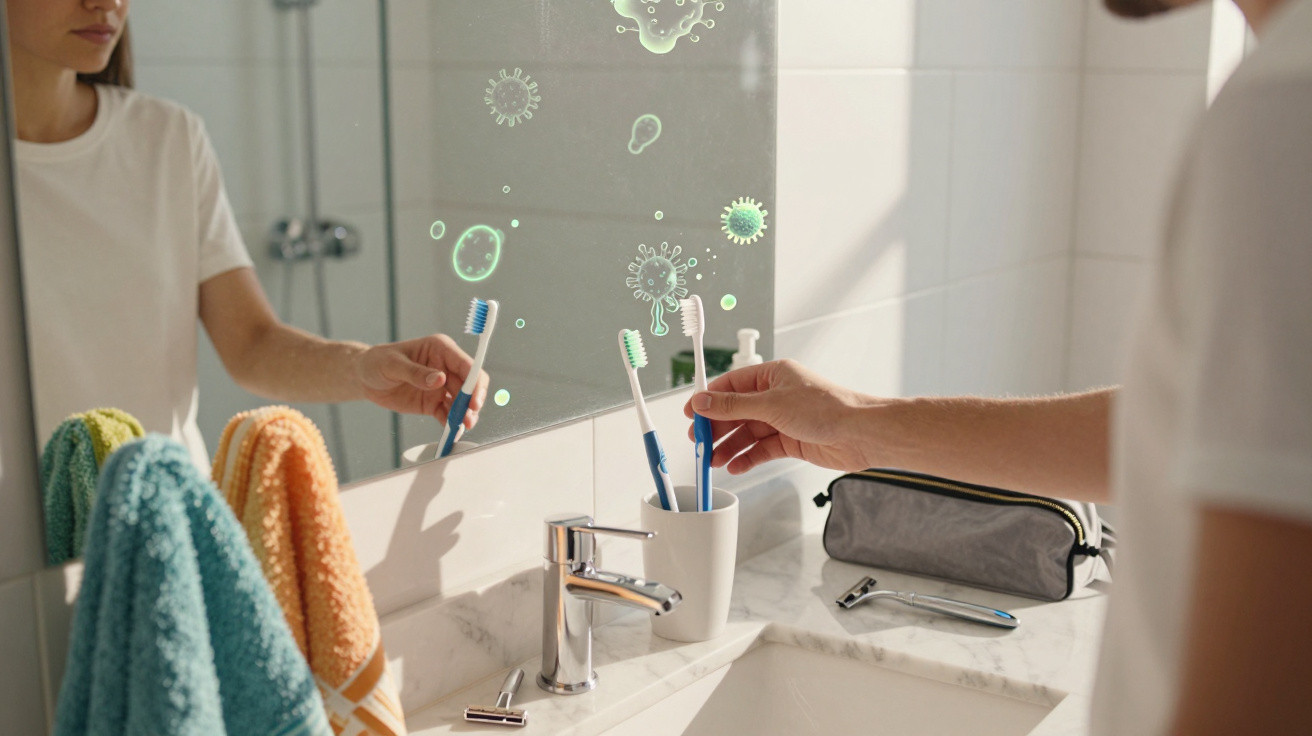
Imagine being away from home and realising you have not packed a towel, razor or toothbrush.
Is it safe to use somebody else’s?
Here is why you should probably avoid making it a regular practice.
Microbes can remain active for some time
A wide range of disease-causing bacteria, viruses and fungi can live on the fabric, plastic and metal items found in bathrooms. These pathogenic microbes may stay viable on such surfaces for long periods, meaning they can still cause infection days, months or even years later.
For instance, the fungus Aspergillus can remain viable on fabric and plastic for over a month. Certain bacteria are able to survive on these materials for years. Many viruses can also remain viable for anything from hours to months on materials including ceramics, metals, fabric and plastics.
So what is the risk associated with specific items, including used towels, razors and toothbrushes?
Scientists have not carried out randomised controlled trials - the gold-standard study design - to establish that risk. Such a trial would randomly assign one group, for example, to shave their legs using another person’s used razor, then compare infection rates from known pathogens with a control group who did not.
However, other research provides some useful indications.
Can I share towels? If you play footy, perhaps not
Less rigorous research indicates that using someone else’s towel may raise the likelihood of acquiring a skin infection.
One United States report described an outbreak of antibiotic-resistant Staphylococcus aureas - Staph for short - among high-school football players. Those who shared towels were eight times more likely to acquire an infection.
Staph can lead to the skin condition impetigo. In uncommon cases, though, it may result in life-threatening septic shock and organ failure.
For these players, the likelihood of passing on Staph was probably higher because contact sport can cause cuts and grazes.
A further US study tracked 150 households over 12 months. In every household, one child had a Staph infection.
Sharing towels between household members significantly increased the risk of Staph transmission.
You may assume that showering removes microbes. Although soap and water lower the number of microbes on skin, they do not get rid of them entirely. The warm, damp environment in a typical bathroom also promotes microbial growth.
Even where an infection does not develop, being colonised with pathogens - meaning they are present without causing damage - can still be an issue.
This is because exposure to antibiotic-resistant species may raise your likelihood of developing antibiotic-resistant infections later on. Such infections take more time and cost more to treat.
What about a toothbrush? Consider the viruses
Microbes can stay viable on hard items, including toothbrushes. As toothbrushes can make gums bleed, sharing them is not advised because it may spread blood-borne viruses such as hepatitis C.
Not everybody in a hepatitis C risk category has undergone testing. People may also be infectious despite having no symptoms.
Objects exposed to saliva, including a toothbrush, can potentially pass on pathogens too. These include herpes simplex virus type 1 (HSV-1), which causes cold sores, and Epstein-Barr virus, which causes glandular fever.
Someone who has no apparent signs of HSV-1 infection may still shed the virus and infect another person.
One review identified contamination of toothbrushes with potentially pathogenic bacterial species, including Staph, E. coli and Pseudomonas. It also found HSV-1 in quantities sufficient to cause infection. On plastic objects, this virus can remain viable for two to six days.
Surely a razor’s OK? Not if you hate warts
Hard objects such as razors can also harbour viable microbes. Because it is difficult to avoid small cuts while shaving, sharing razors brings a risk of transmitting blood-borne viruses.
Razors, towels and other personal hygiene products may also spread the human papillomaviruses responsible for warts. It is therefore unsurprising that dermatologists advise everyone to use their own items.
Who is at risk?
Cuts and grazes create an entry point for microbes, increasing the risk of infection. Think again of the footy players who shared towels.
Weakened immune function likewise makes infection more likely. This includes:
- babies, whose immune systems are still developing
- older people, whose immune function reduces in later life
- people using immune-suppressing medicines, including cancer drugs, oral corticosteroids and drugs taken after an organ transplant
- people with type 2 diabetes, as raised blood glucose levels impair the function of immune cells and related molecules.
Nevertheless, the overall chance of catching an infection on a single occasion is low. If you share a towel, razor or toothbrush with a partner, you will already have regular close contact and be exchanging microbes anyway.
Even so, it remains sensible not to get into the habit of sharing other people’s used bathroom items.
Thea van de Mortel, Professor Emerita, Nursing, School of Nursing and Midwifery, Griffith University
This article is republished from The Conversation under a Creative Commons licence. Read the original article.



Comments
No comments yet. Be the first to comment!
Leave a Comment