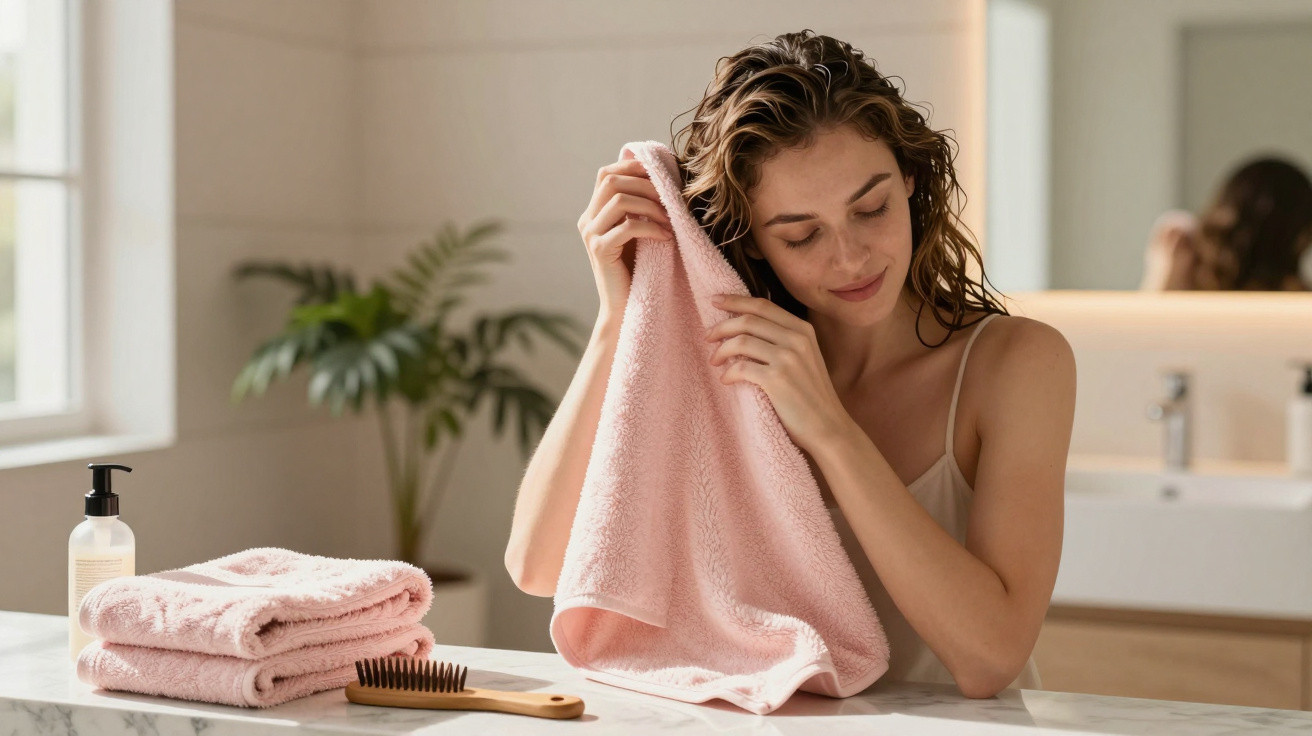
We hurry. We scrub. We accuse the damp air. Yet much of the damage done to hair after washing begins with the towel rather than the hairdryer. Everyone knows the feeling: the steam lifts from the mirror, and the frizz is already appearing.
She tipped her head sideways, with her hair squeaking against the cotton, and sighed as it caught in small knots. Her flatmate walked by wearing a tidy microfibre wrap, as light as a T-shirt, then left ten minutes later with smooth waves and no fuss. The bathroom fell quiet, but the contrast said everything. Your hair’s worst enemy isn’t heat; it’s rough handling when wet. The first tool you reach for influences every step that follows. The towel makes the difference.
Why a microfibre towel dries your hair more gently
When hair is wet, it becomes stretchy, elastic and particularly fragile. The cuticle - the minute overlapping shingles that keep every hair strand smooth - rises like scales when exposed to water. Cotton terry towelling has large loops that catch on these scales, whereas microfibre uses exceptionally fine threads to absorb water without scraping the surface. Imagine countless tiny capillaries drawing in moisture rather than a few heavy ropes squeezing it away. There is less rubbing, snagging and friction. Your hair recognises the contrast much as your face does between a soft tissue and a scratchy one.
I tested this with the curiosity of a lab rat: identical shampoo, identical conditioner, but a different towel. I spent one week using my thick cotton towel and another using a microfibre hair wrap. With microfibre, my average blow-drying time was eight minutes shorter, and my brush no longer gathered its familiar little cloud of snapped ends. A hairstylist later told me that clients with curls experience the most noticeable shift: curl clumps form earlier, so frizz does not get a chance to take hold. Results will naturally differ from one bathroom to another, but the overall pattern is simple to recognise.
This is the reason. Microfibre has an extensive surface area - finer than silk and often divided into several channels - allowing it to wick water through capillary action instead of forcing it out by pressure. This is important for “hygral fatigue”, the stress caused by the repeated swelling and shrinking of hair as it dries. Each rub creates friction, while every major swell raises the cuticle further and can cause it to crack. By quickly drawing away moisture, a microfibre towel shortens the period in which hair remains swollen and vulnerable. Fewer snags mean fewer split ends. It is not magic; it is physics working at the scale of individual strands.
How to use a microfibre towel correctly
Once you have turned off the tap, resist reaching straight for the towel. Begin by pressing your palms down the lengths to remove dripping water, then pass the towel over your hair as though you were blotting a treasured jumper. If you prefer a wrap, position the towel at the nape of your neck, collect your hair forwards, make a loose twist and turn it back so the weight rests high up rather than pulling at your hairline. For curly hair, scrunch upwards in sections using the towel, then “plop” for 10–20 minutes. This brief pause makes every later stage easier.
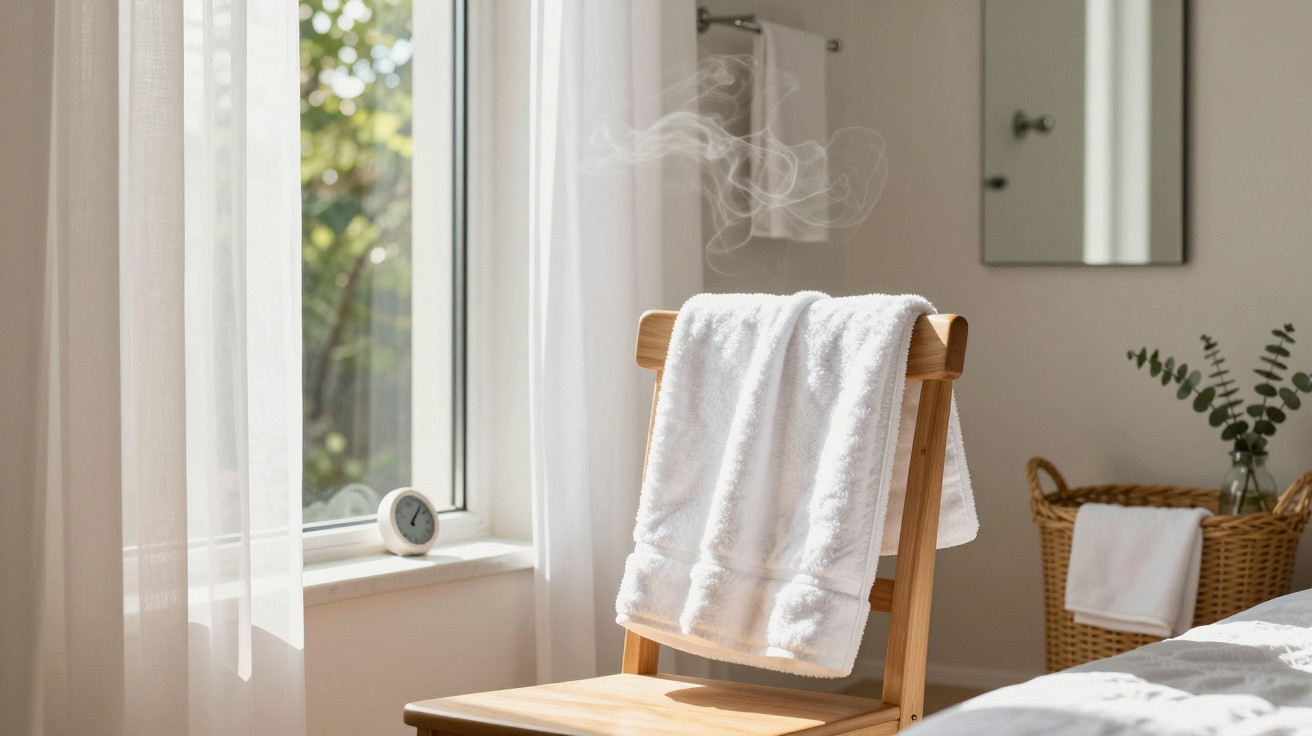
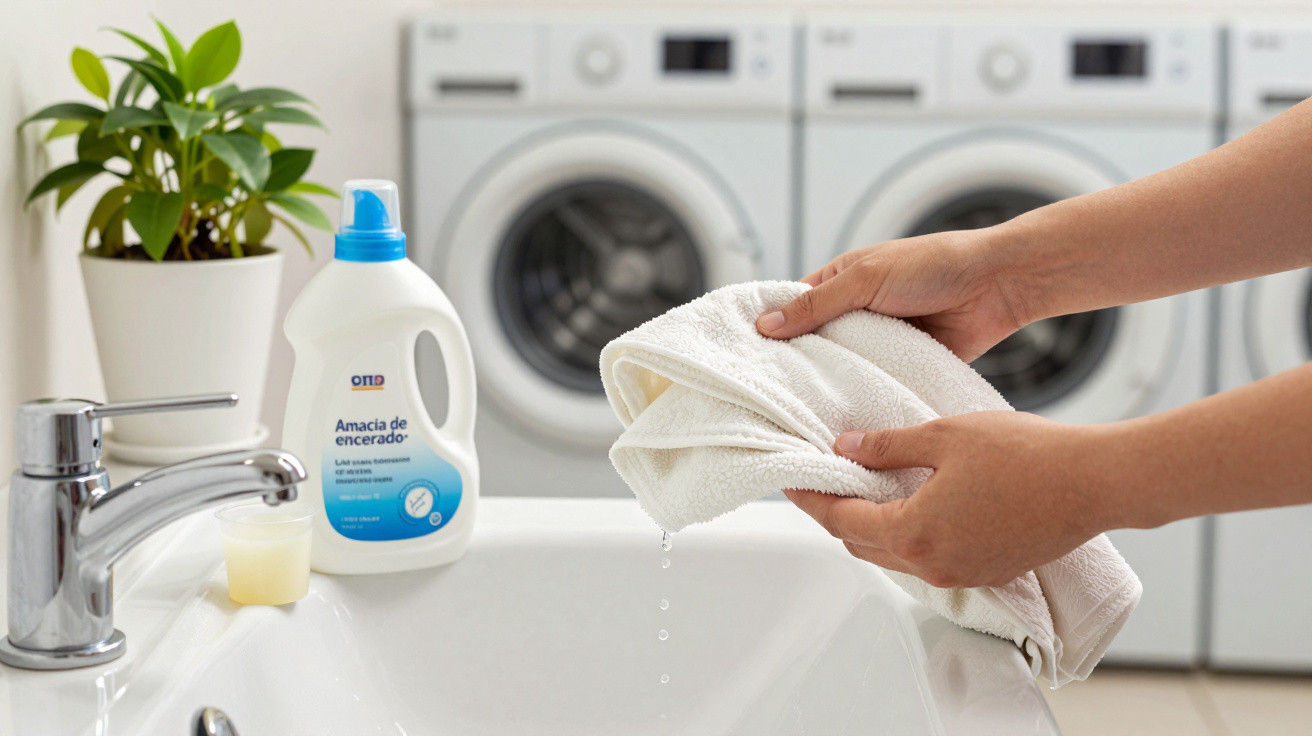
Avoid rubbing altogether. It lifts the cuticle and creates fresh tangles that you will have to battle with a brush afterwards. Do not twist the wrap tightly or leave it on for an hour; hair needs airflow, not a tourniquet. Keep your towel free from fabric softener so it remains absorbent, and wash it on a cool setting. Apply leave-in product only through the mid-lengths and ends before wrapping. Realistically, no one manages that every single day. On the occasions you do, though, your hair seems as if it received the instructions.
A practical everyday sequence is: blot, scrunch, wrap, release and style. Be gentle at the beginning, and continue that way.
“The way you dry hair is half the haircut,” says London stylist Rina Patel. “Microfibre gives me a calmer canvas, and clients notice their ends look newer for longer.”
- Fine hair or oily roots? Wrap for 5–7 minutes, then let it air-dry to avoid flattening volume.
- Thick or coily hair? Keep it in a wrap for 15–20 minutes, then diffuse on a low setting.
- Colour-treated hair? Pat rather than twist; handle your cuticle as you would silk.
- Gym bag tip: keep a smaller microfibre towel for blotting sweat from roots without making the lengths frizzy.
- Care essentials: wash cold, avoid softener, tumble-dry on low heat; replace it once it feels slick rather than thirsty.
The quiet fix hiding in plain sight
Changing towels is unlikely to earn you likes, but you will notice the effect every morning. Hair does not usually break in spectacular snaps; it wears away through tiny everyday abrasions that eventually become dull ends and persistent flyaways. Drying gently reduces that daily toll of damage. Small rituals beat expensive fixes. You may find that serums go further, curls form sooner and blow-dries hold for longer. There is also a subtle easing in your shoulders: the wrap weighs less, your neck is not under strain and your routine slows down. You begin to treat your hair as fabric worth preserving for years. The mirror then gives a gentler answer: shine is often simply low friction, repeated over time.
| Key point | Detail | Benefit for the reader |
|---|---|---|
| Microfibre = less friction | Ultra-fine fibres draw in water without rough loops | Fewer splits, a smoother cuticle and less frizz |
| Blot, scrunch, do not rub | Press out water and wrap loosely for short periods | Faster drying, improved shape and less breakage |
| Care affects performance | No fabric softener; cool wash; replace when slick | Long-lasting absorbency and reliable results |




Comments
No comments yet. Be the first to comment!
Leave a Comment