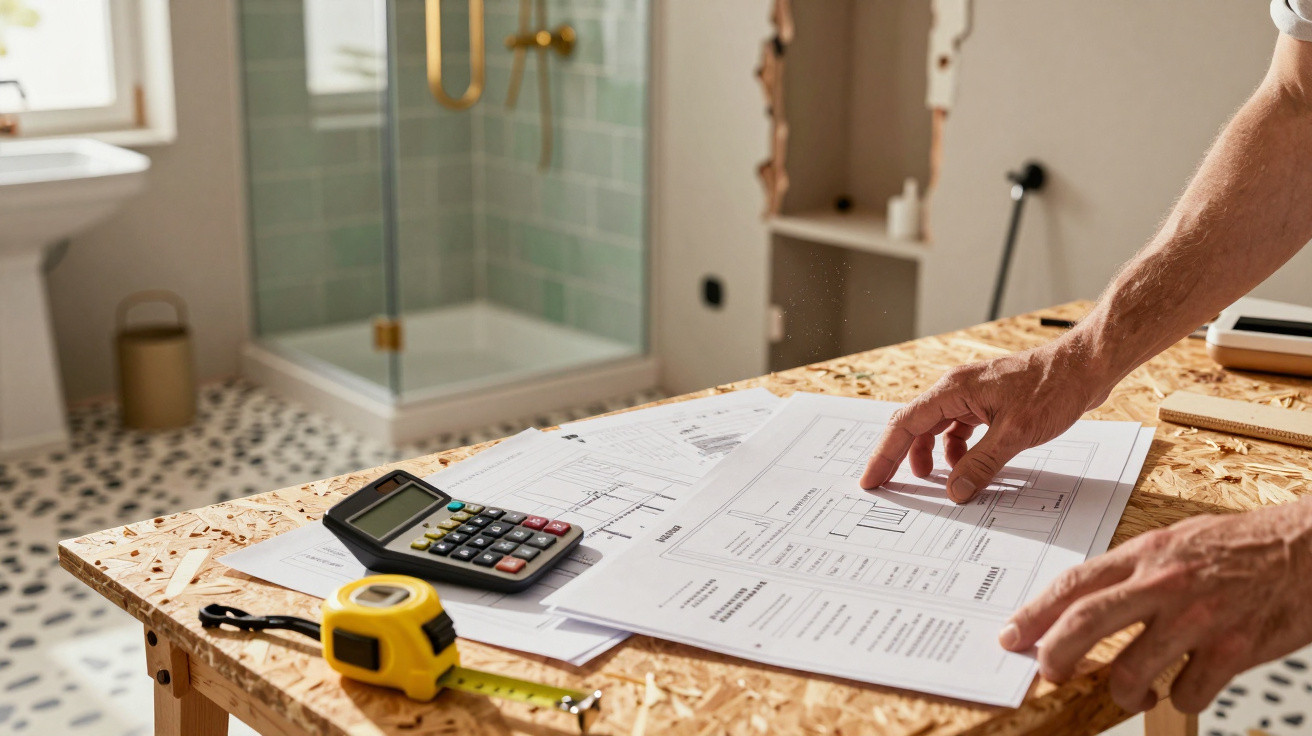
It often starts with a tiny crack, a yellowed seal or a cabinet swollen by moisture. You open Pinterest, search for “bathroom makeover 2025”, and suddenly everything seems achievable: a walk-in shower, a backlit mirror, matt-black taps. You may even catch yourself picturing perfectly folded towels. Then the first quotations arrive. That is when the cold shower comes, sometimes colder than the one you are trying to replace. With material costs, labour, overlooked regulations and ever-longer lead times, the dream can quickly become a financial black hole. The real question is no longer “which bathroom do I want?”, but “how far am I genuinely willing to go?”
How much does a “real” bathroom renovation cost in 2025?
Step into any showroom today and someone will tell you that you can “redo your bathroom from £3,000”. That is not technically untrue, but for most UK homes in 2025 it is wildly hopeful. Energy bills, material prices and labour rates have all increased, while bathrooms bring plumbing, electrical work and finishing trades together in one room. That means more specialists, more time and more potential complications. Replacing taps and tiles is in a completely different league from relocating a soil pipe or fitting underfloor heating. The headline price in your mind is rarely the figure you will ultimately pay. The true cost emerges once every hidden problem has come to light.
Here are the figures. A basic refresh – replacement tiles, a new basin, a replacement bath or shower, with no alterations to the layout – will generally cost £5,000 to £8,000 across much of the UK in 2025. A mid-range renovation, including a walk-in shower, improved lighting, some storage and modest layout changes, commonly comes in between £8,000 and £15,000. Planning a complete redesign with relocated pipework, niches, feature lighting and more premium finishes? A budget of £15,000–£25,000 is more realistic, particularly in London and the South East. That excludes smart mirrors that speak to you and a Japanese toilet. Uncomfortably, many homeowners begin with a budget 30–40% lower than the project actually requires.
Those figures are driven by three major categories: labour, materials and “everything that goes wrong in old houses”. Labour takes the largest share, covering plumbers, tilers, electricians, plasterers and decorators. For a full renovation, it can consume 50–60% of the overall budget. Materials may appear easier to cut back on – less expensive tiles or mid-range taps, for instance – but there is a point below which quality simply fails. The final category is where most budgets sink: decayed subfloors, ageing electrical systems, missing extraction and poorly positioned pipework. These problems are invisible on Instagram, but they determine the final invoice. You are not only paying for an attractive room; you are paying to make a heavily used, wet space function properly.
The financial traps you do not see in glossy “before/after” photos
In 2025, the smart approach is not finding the lowest quotation but creating one that will withstand reality. Begin with a written scope of works that is almost painfully detailed: what will move, what will be retained, which walls will be affected and which electrical work will be upgraded. Next, contact at least three independent tradespeople or small firms and ask each one to price precisely the same scope. Request separate costs for labour and materials. It takes longer than sending a “bathroom reno?” WhatsApp message, but it is the only meaningful way to compare like for like. Taking that extra step now can prevent disputes later.
Most homeowners make a familiar set of errors. They omit the price of correcting unforeseen issues once the room has been stripped out. They underestimate the cost of good lighting, extraction and waterproofing. They purchase supposedly bargain fittings online, then spend more on labour to make them fit. They also seldom allow for the days when the bathroom cannot be used at all. Let us be honest: nobody really plans for that every day. The emotional burden of brushing your teeth at the kitchen sink for three weeks will not appear on a spreadsheet, but it affects how you experience the entire project.
There is also a psychological trap in the small upgrade that gathers momentum. A client may begin with “just the shower tray”. Once the walls are opened up, the tiler notices damp. The electrician is concerned by 1990s wiring. The plumber uncovers a bodged repair on the waste pipe. One legitimate repair follows another, and the cost quietly doubles. As one veteran installer told me:
“Bathrooms rarely go over budget because someone chose nicer tiles – they go over because the house was hiding a story behind the plasterboard.”
- Hidden costs to expect: upgrading old electrics, repairing subfloors, moving waste pipes, strengthening joists, and adding proper ventilation.
- Red flags in quotes: vague “allowances”, no mention of waterproofing, and timelines that sound too neat for a lived-in house.
- Silent budget killers: last-minute design changes, choosing fixtures after work starts, and skimping on planning permissions or building control where needed.
How to protect your wallet without butchering your dream bathroom
The strongest safeguard is unexciting on paper: a contingency fund. Set aside 15–20% of your total budget and act as though it does not exist. Do not spend it on better taps or a more fashionable vanity unit. It is for what cannot be seen at the outset: pipework embedded in concrete, uninsulated external walls or a shower tray requiring a bespoke frame. Work backwards from there. Establish the absolute maximum you can spend, including that contingency, then design a bathroom that costs 15–20% below that figure. It may feel cautious, but in practice it is what helps you sleep when the builder sends a “we’ve found something” photograph.
Alongside that financial buffer, several people skills can quietly save thousands. Ask every trade: “What’s the worst surprise you’ve seen in a bathroom this year, and how would you handle it here?” Listen rather than argue. Put dates in writing, including what happens if either party causes a delay. Request references and genuinely call them, preferably from someone whose bathroom was completed at least a year earlier. Be realistic about which jobs you can tackle yourself and which truly require a professional. Taking off old tiles? Possibly. Re-routing a waste pipe beneath a timber floor? That is where an optimistic weekend can turn into a four-figure repair.
One bathroom designer I spoke to put it bluntly:
“My most relaxed clients aren’t the biggest spenders. They’re the ones who gave themselves margin – in money, in time, and in expectations.”
- Non-negotiables: waterproofing (tanking), a proper extractor fan, safe electrics and sound plumbing connections.
- Where you can save: tile size and pattern, mid-range brassware, and flat mirrors instead of smart models.
- Questions to ask every fitter: who deals with waste disposal, what happens if rotten timbers are found, and how are changes priced?
Living with the cost – and why the numbers are not the whole story
A bathroom in 2025 is no longer simply a white box containing a bath and pedestal basin. It is where you wake up, where children splash and where guests quietly assess your grout. The money invested in it lies somewhere between a home improvement and an investment in daily routine. That does not automatically make any price acceptable, but it changes how you assess the balance between “cheap now” and “comfortable for a decade”. A room that does not leak, does not steam up like a greenhouse and does not make you wince whenever you enter has a subtle value that spreadsheets rarely reflect.
Speak to people who have renovated recently and a clear pattern appears. Those who exceeded their limit tend to say the same thing: they fell in love with an image and attempted to force their home – and their finances – to match it. The less stressful stories come from homeowners who began with the way they live. How often do they shower? How long will they remain in the property? How much do they dislike cleaning glass? They spent on easy-clean screens rather than designer handles. They selected a slightly smaller shower to retain a storage cupboard. Their bathrooms may not become social-media trends, but they suit their lives in a way that feels quietly luxurious.
The real discussion around bathroom renovation cost in 2025 sits at the meeting point of money, time and ego. You can reduce a quotation by cutting corners, or push it up by chasing trends that will soon lose their appeal. Alternatively, treat the work for what it really is: a short but intense disruption that changes the way you begin and end almost every day. Tiles, lighting and taps will date; plumbing, layout and ventilation will outlast them. The wisest investment is not always the first thing the eye notices. Sometimes it is behind the wall, where no one looks – until something goes wrong.
| Key point | Detail | Benefit for the reader |
|---|---|---|
| Realistic budget | Allow £8,000–£15,000 for a standard renovation in 2025, excluding extreme luxury | Helps prevent an underfunded budget from spiralling during the work |
| Contingency fund | Keep 15–20% of the total budget in reserve for unforeseen technical issues | Reduces stress and borrowing if an unwelcome surprise appears |
| Detailed quotations | Request at least three comparable quotations, separating materials and labour | Makes it easier to compare offers clearly and spot hidden traps |









Comments
No comments yet. Be the first to comment!
Leave a Comment