If you are a parent, or you live with a long-term health condition that means you need the loo quickly or regularly, you will probably know where the reasonably decent public toilets are nearby.
Yet there are times when there is no alternative but to use a toilet that appears not to have been cleaned for weeks. Should you take the risk and sit on the seat?
Even if it appears fairly clean, you may still wonder whether using the seat could make you ill.
What is in a public toilet?
Healthy adults pass more than a litre of urine and more than 100 grams of poo each day. Everyone releases bacteria and viruses in their faeces (poo) and urine, with some of these ending up in the toilet.
People with diarrhoea in particular may release larger amounts of harmful microbes, including bacteria and viruses, when they go to the toilet.
Where lots of people use them and they are not cleaned as regularly as they should be, public toilets can become a "microbial soup".
Which germs are on public toilet seats?
A wide range of microbes has been detected on toilet seats and in the surrounding areas, including:
- Gut bacteria such as E. coli, Klebsiella and Enterococcus, alongside viruses including norovirus and rotavirus. These may cause gastroenteritis, leading to episodes of vomiting and diarrhoea.
- Skin bacteria, including Staphylococcus aureus, as well as multi-drug resistant S.aureus and other bacteria such as pseudomonas and acinetobacter. These can lead to infections.
- Parasite (worm) eggs carried in poo, plus single-celled organisms known as protozoa. These may cause abdominal pain.
There is also biofilm: a combination of germs that accumulates beneath toilet rims and across surfaces.
Are toilet seats the filthiest area?
No. A recent study found that seats in public toilets often contain fewer microbes than other parts of the facilities, including door handles, tap controls and flush levers. These surfaces are frequently touched, often by hands that have not been washed.
Public toilets in high-traffic settings may be used hundreds or even thousands of times every week. While some receive regular cleaning, others, such as those in parks or at bus stops, might be cleaned only once daily or far less often, allowing germs to accumulate rapidly. Warning signs that a toilet has not been cleaned include the smell of urine, dirty floors and anything visibly unclean.
The main concern, however, is not simply sitting down: it is what occurs when a toilet is flushed. Flushing without a lid creates a "toilet plume", sending tiny droplets into the air. Those droplets may contain bacteria and viruses from the bowl and can travel up to 2 metres.
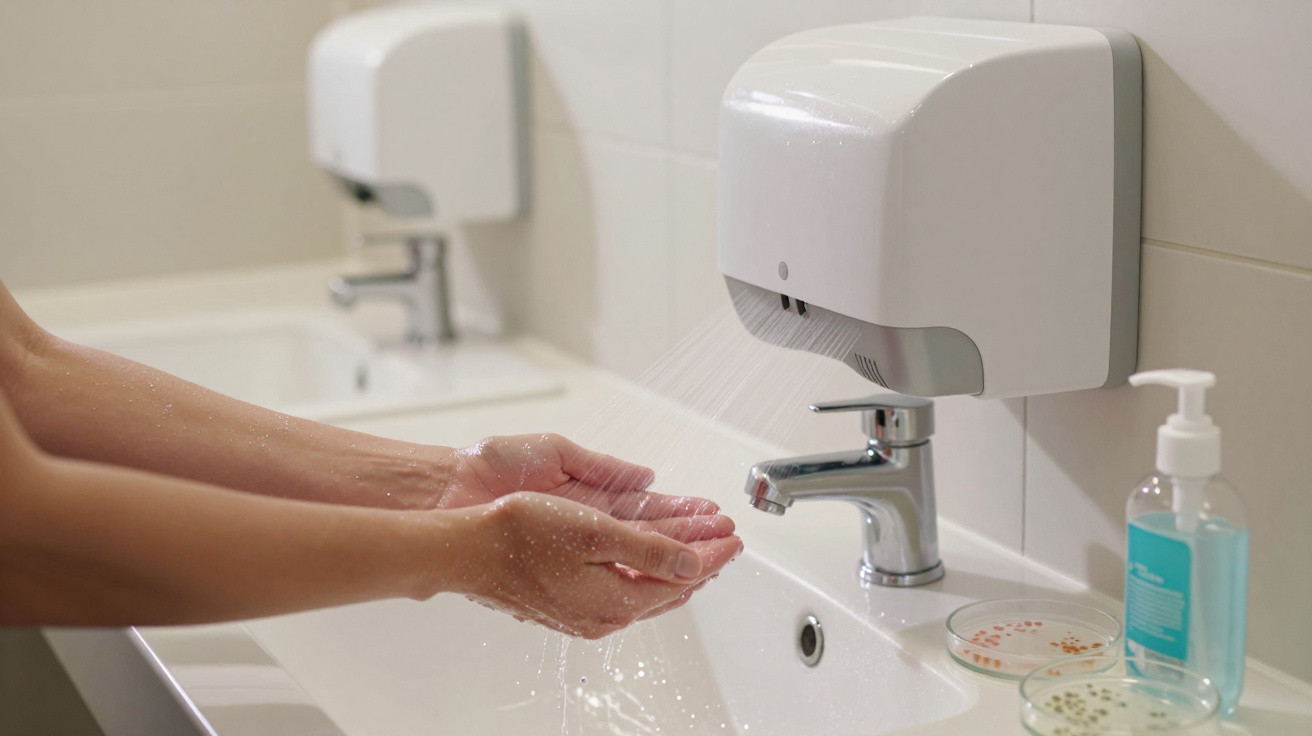
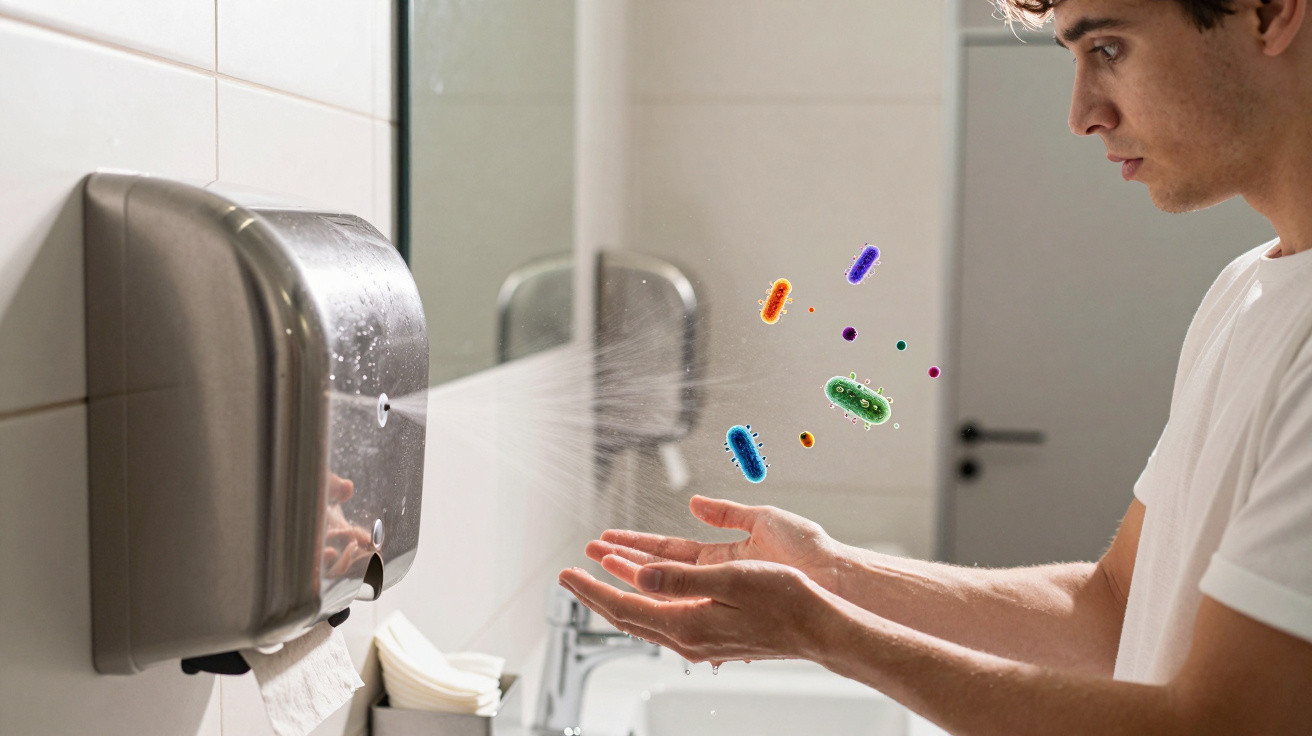
Air-blowing hand dryers may also disperse germs when people have not washed their hands properly. Rather than merely drying your hands, they could blow germs over you, other people and the bathroom.
How do germs spread?
There are several ways you could come into contact with germs in public toilets:
- Skin contact. Sitting on an unclean seat or touching handles can transfer bacteria. Although healthy skin provides an effective barrier, germs may enter through cuts or grazes.
- Touching your face. If you touch your eyes, mouth or food after visiting the toilet and before washing your hands, germs can enter your body.
- Breathing them in. In cramped or busy toilets, you may inhale tiny particles generated by toilet plumes or hand dryers.
- Splashes from toilet water. Germs may remain in the water even following several flushes.
What can you do to stay safe?
The following straightforward measures can help protect you:
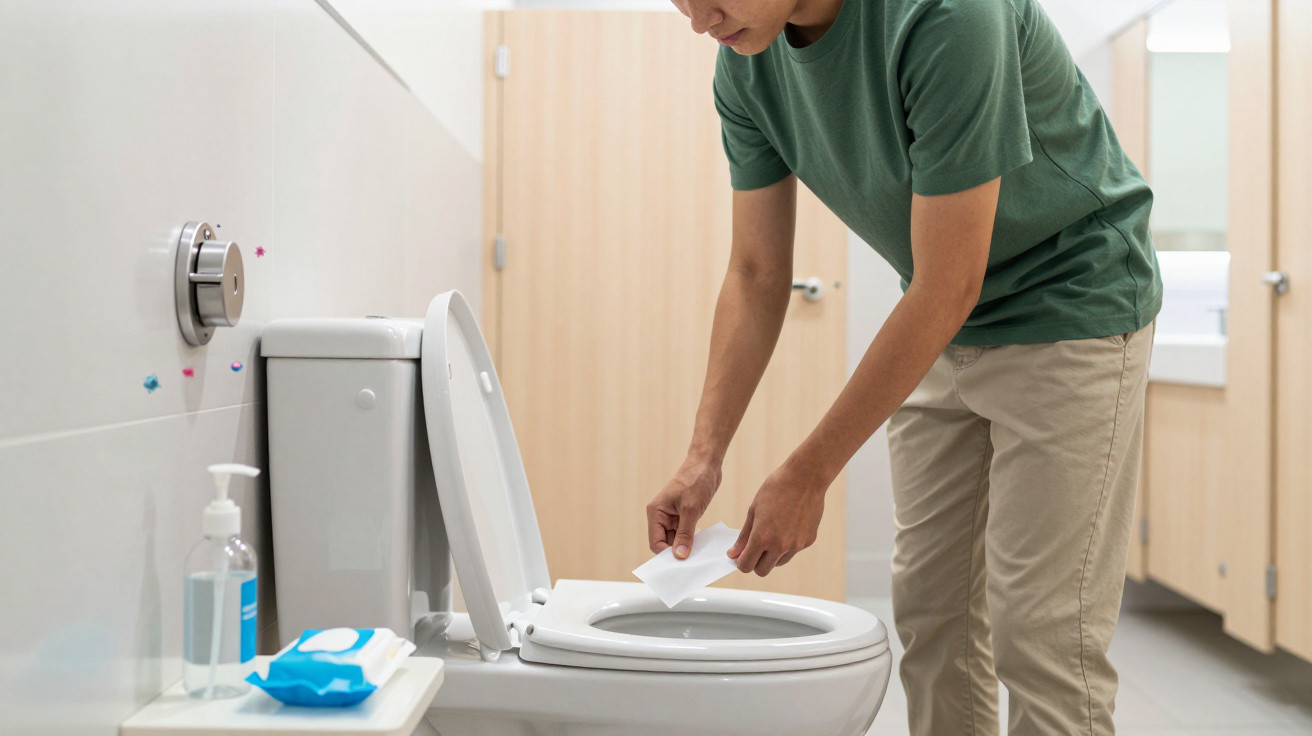
- Use a toilet seat cover, or lay toilet paper across the seat before sitting down.
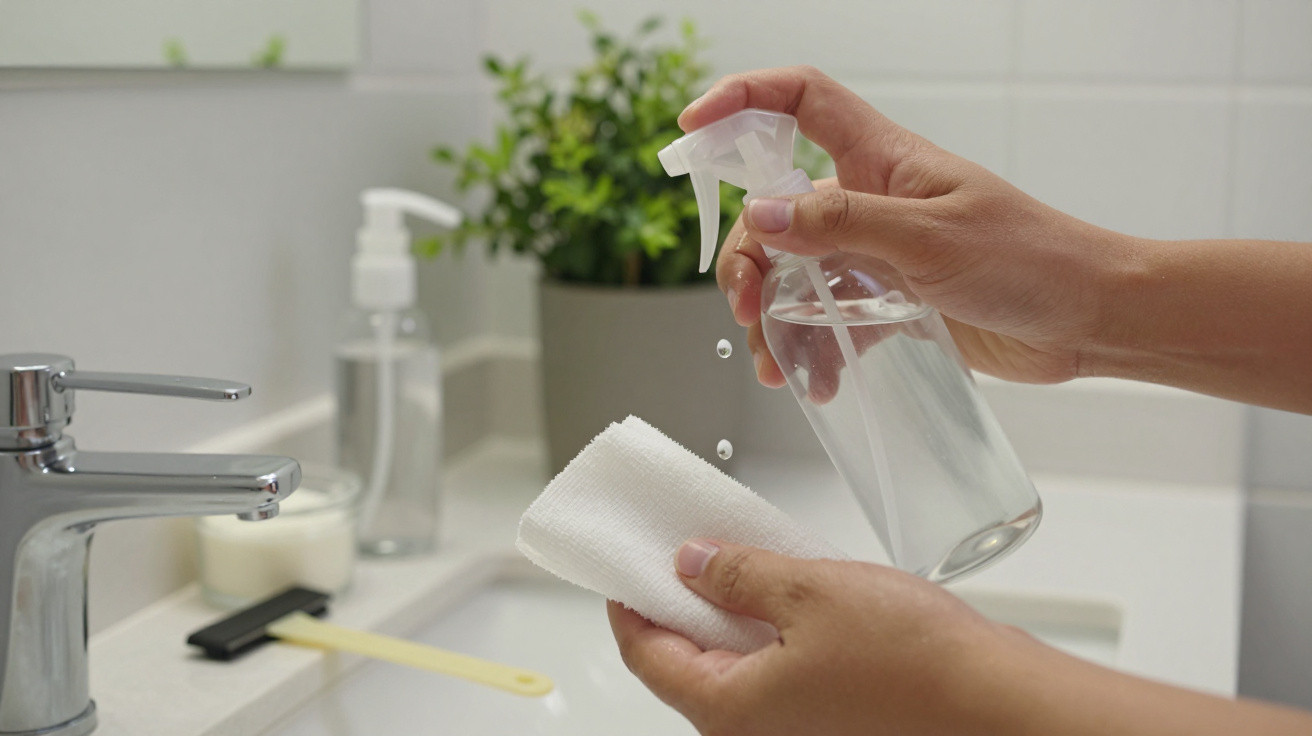
- Where the toilet has a lid, clean it with an alcohol wipe before using it and close it before flushing to reduce exposure to toilet plumes. (However, this will not completely prevent the spread.)
- Wash your hands thoroughly with soap and water for at least 20 seconds.
- Take hand sanitiser or antibacterial wipes with you to clean your hands afterwards when soap is unavailable.
- Avoid hand dryers where possible, as they may spread germs. Choose paper towels instead.
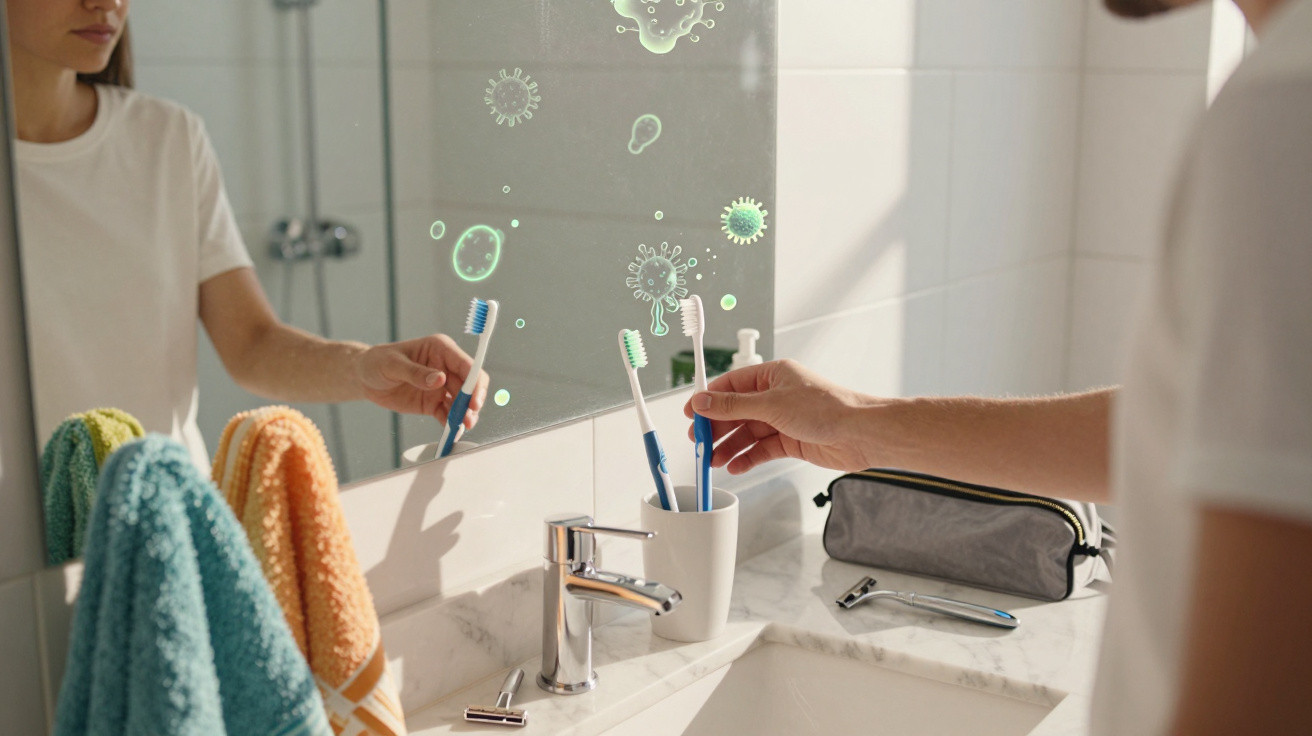
- Sanitise your phone regularly, and do not use it in the toilet. Phones can readily collect and carry bacteria, particularly when they are used in bathrooms.
- Wipe down baby-changing areas both before and after use, and always wash or sanitise your hands.
Is it safe to sit on public toilet seats?
For most healthy people, yes: sitting on a public toilet seat carries a low risk. For reassurance, you can wipe the seat with an alcohol wipe or use a toilet seat cover.
Most infections arise not from the seat itself, but from unwashed hands, door handles, toilet plumes and phones used in bathrooms.
Rather than focusing on whether to sit down, prioritise good hygiene. This includes washing your hands, choosing paper towels instead of dryers, cleaning the seat when necessary and keeping your phone clean.
And please do not hover over the toilet. Doing so tightens the pelvic floor, which makes it harder to empty the bladder completely. You could also accidentally spray bodily fluids.
Lotti Tajouri, Associate Professor, Genomics and Molecular Biology; Biomedical Sciences, Bond University
This article is republished from The Conversation under a Creative Commons licence. Read the original article.



Comments
No comments yet. Be the first to comment!
Leave a Comment