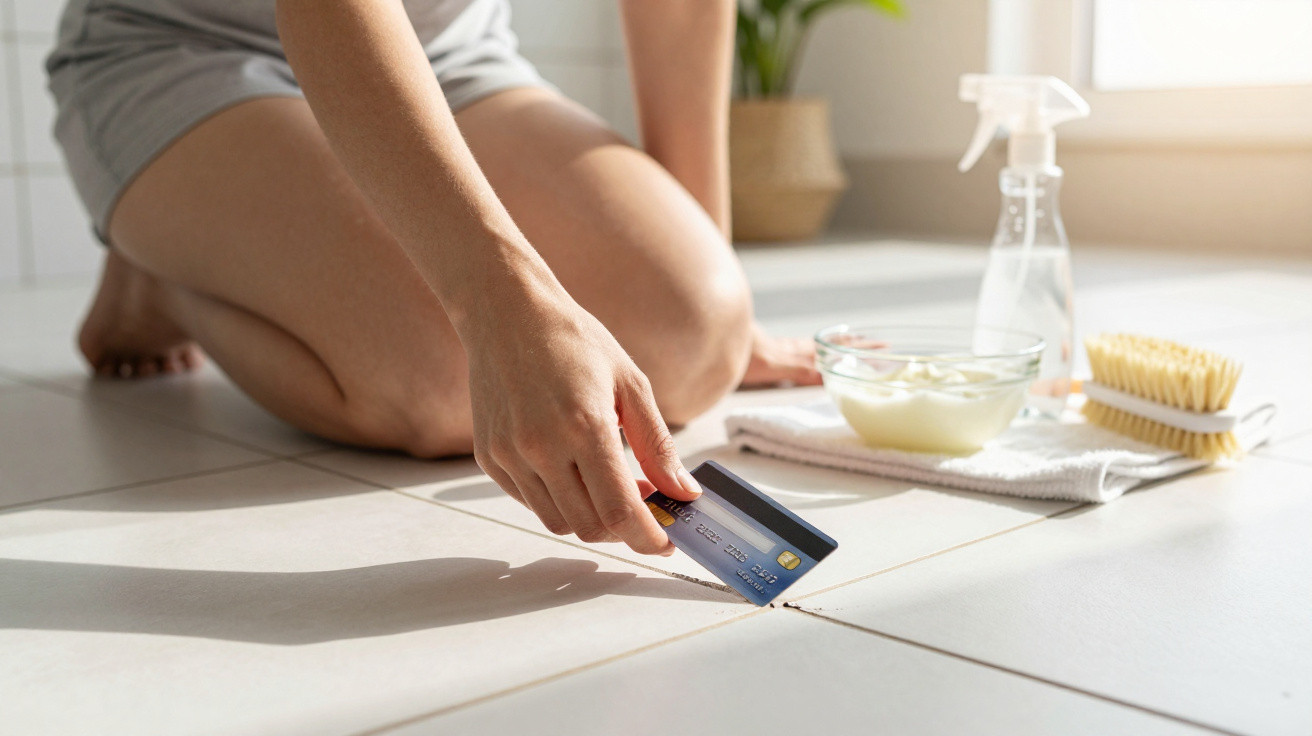
It usually starts innocently enough: you give the bathroom a quick clean, wipe over the tiles, catch the scent of the cleaner and initially think it will do. Then, while brushing your teeth, you notice one tiny detail: the grout. Grey shadows sit between bright white tiles, rather like dark circles after too little sleep. The longer you look, the more neglected the whole room appears. Suddenly, that is all you can see: dark lines, small marks and that slightly yellowish patch in the shower corner. It is the moment you realise that a cleaning cloth alone will not win this battle. This is where an unremarkable piece of plastic, probably sitting forgotten in a drawer, comes in.
Why an old credit card can save your bathroom
We all know the feeling: grout that was once white now records every shower and rushed morning routine. You can scrub, brush and spray, yet the discolouration sometimes seems to laugh back at you from the wall. Cleaning-product adverts show gleaming bathrooms straight from a hotel brochure, but in real life your eye catches on the grey lines. That is where all the everyday grime we no longer want to see is hiding. At first glance, an old credit card hardly looks like a major solution. Yet it is surprisingly good at getting precisely between dirt and grout.
Imagine reaching into your wallet and pulling out a long-expired card: one from an old bank account, a gym membership or a loyalty scheme you never used. Normally, you would cut it up and throw it away. One reader told me she came across her old credit card while tidying, saw a cleaning clip on TikTok and simply gave it a go. “I only meant to try it quickly,” she said, “and an hour later I was standing barefoot in a bathroom that looked as though it had just been retiled.” Stories like that sound exaggerated until you run the small plastic edge along a grout line yourself and see what has really collected there.
The principle is straightforward: grout is porous, slightly recessed and traps everything carried in by water – limescale, soap residue, flakes of skin and tiny mould spores. Ordinary cloths glide over it, while brushes often push much of it further into the surface. A card's firm yet flexible edge catches exactly this area without damaging the grout mortar. It is effectively a miniature scraper in wallet form. Let us be honest: nobody kneels in the shower with a toothbrush every other day. That is precisely why these layers build up and gradually swallow the white finish. The card removes them through direct contact rather than chemicals, and that is what makes the difference.
The old credit card hack, step by step
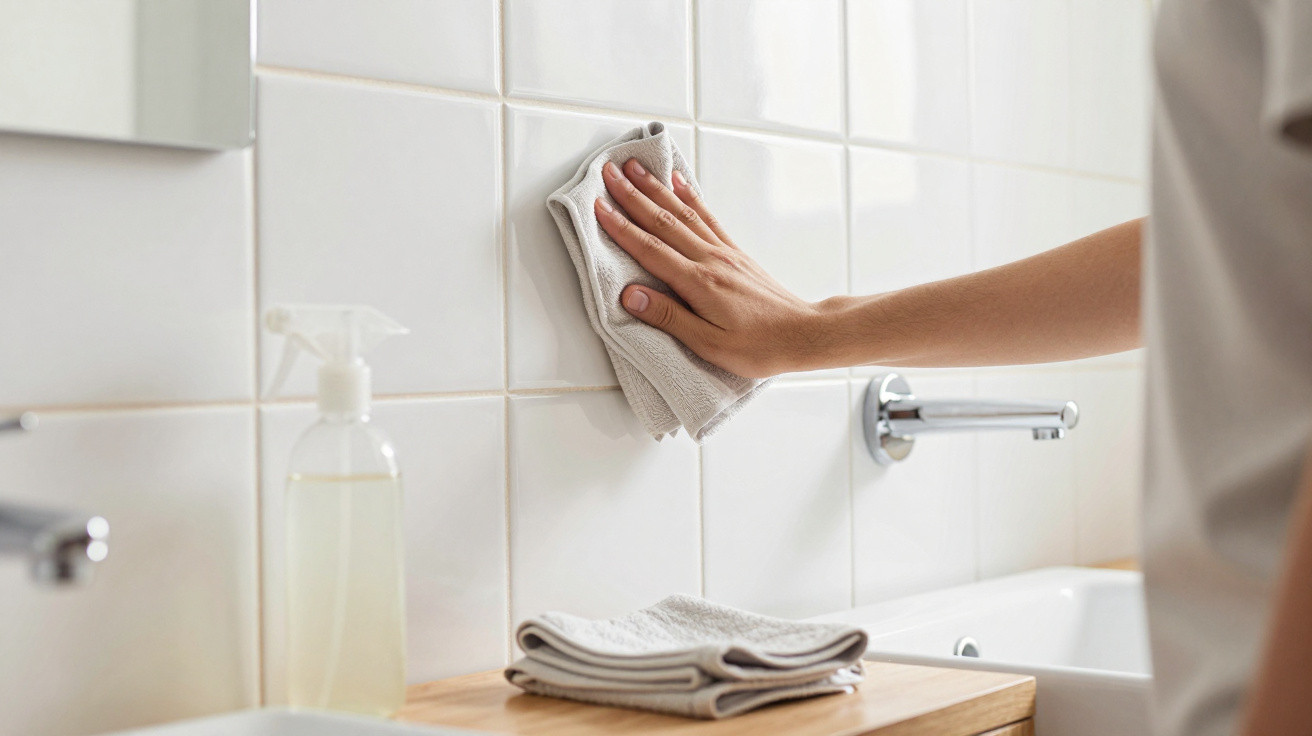
Start with preparation; otherwise, this hack will only do half the job. You will need an old credit or bank card, a mild cleaning product such as washing-up liquid or bathroom cleaner, warm water, a microfibre cloth and, if needed, an old towel to kneel on. Thoroughly wet the tiles and grout with warm water, then apply the cleaner directly to the grout lines. Leave it to work briefly – two to five minutes is often enough. Now use the card: hold it at a slight angle and draw it along the grout with gentle pressure, like a small windscreen wiper. You may be surprised by what gathers on it.
The first time, it is easy to be tempted to press too hard or work too quickly. This is a common mistake: people treat the grout like a dirty frying pan. The result can be small chips in the mortar, particularly in older bathrooms. Think more in terms of “rubbing off” than “scraping away”. Work slowly, section by section, and regularly wipe the card edge with the microfibre cloth. Once you notice the dirt film lifting, go over it a second time with slightly less pressure if necessary. This hack should make life easier, not create a need for renovation.
A professional cleaner told me:
“People spend a great deal of money on specialist brushes and miracle products, when the solution is essentially already in their wallet. An old card fits perfectly into the grout line – not too sharp, not too soft.”
A few simple principles will help the method deliver its full potential:
- Always use an old, invalid card – never one that is active and still needed.
- Work on small areas of 30–50 cm rather than tackling the whole bathroom at once.
- Rinse thoroughly with warm water after each round so that loosened dirt does not settle again.
- For stubborn spots, briefly apply a paste made from bicarbonate of soda and water, then go over them again with the card.
- Ventilate the bathroom well when using cleaners to avoid headaches and irritated eyes.
Why this small old credit card hack can transform a whole bathroom
Truthfully, bright white grout is about more than cleanliness alone. A bathroom with clean grout looks lighter, larger and somehow fresher, even if the basin has seen better days. Many people who try this credit card trick report exactly that: suddenly, the daily shower feels more like a spa than another chore. It is that quiet sense of “I have got this under control” that arrives when the grey lines disappear. And it does not require expensive specialist products or a complete makeover from a tiler.
| Key point | Detail | Reader benefit |
|---|---|---|
| Mechanical cleaning rather than chemicals alone | A credit card loosens stubborn layers directly from the grout | A more effective result using simple household items |
| Gentle on grout | Its flexible, smooth edge catches dirt without destroying the mortar | Longer-lasting grout and less need for renovation |
| Low cost and quick to do | An old card, a little cleaner and warm water are all that is required | An immediately usable hack, ideal for the next bathroom clean |



Comments
No comments yet. Be the first to comment!
Leave a Comment