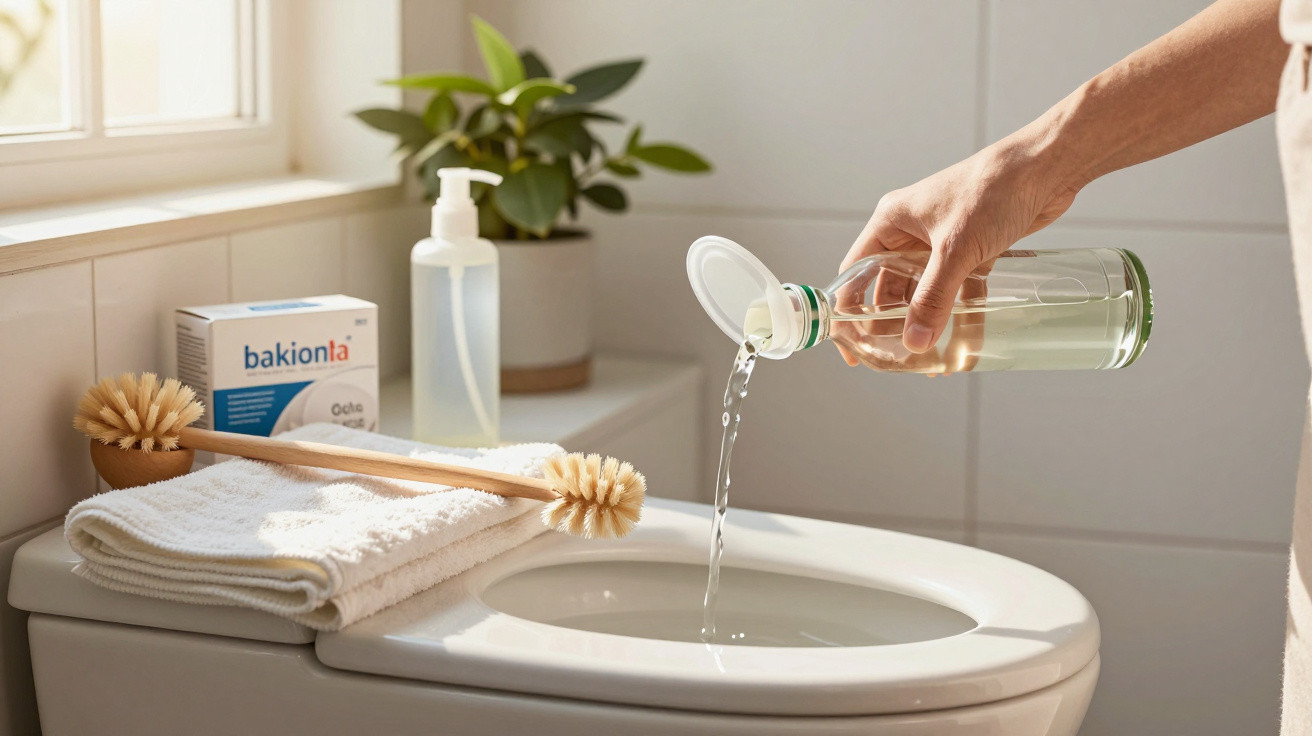
White vinegar is making a comeback in our bathrooms.
A toilet cistern collects limescale, bacteria and metal residues. Monthly maintenance helps prevent faults and keeps the water clear. White vinegar is a quick, inexpensive option that is kinder to the environment than conventional acidic cleaners.
Why the cistern matters today
Limescale hardens over time and can jam the mechanism. Hidden leaks increase water bills. Odours often come from biofilm clinging to the inner surfaces. Keeping the cistern clean prevents staining in the toilet bowl. Internal components also last longer when limescale does not build up around their seals.
“A quarter of a litre of white vinegar each month limits limescale, sanitises the water and protects the mechanism with no effort.”
How white vinegar works
White vinegar contains acetic acid, a mild acid that breaks down calcium carbonate. It also makes surfaces less rough, leaving fewer places for bacteria to attach. The liquid can neutralise certain alkaline odours as well. An 8% solution works more quickly than a 6% solution.
What this means for the household
With less limescale in the cistern, the flush valve closes more effectively. The float can move freely without friction. Water pressure remains steady, and flushing becomes more consistent. Weekly cleaning of the toilet bowl then takes less effort.
Monthly instructions for using white vinegar in the toilet cistern
- Flush the toilet to lower the water level.
- Turn off the water supply if the model refills too quickly.
- Pour 250 to 500 ml of white vinegar into the cistern.
- Leave it to work for 1 to 8 hours, depending on water hardness.
- If possible, gently brush any accessible inner surfaces.
- Turn the water supply back on, allow the cistern to refill, then flush.
“Never mix vinegar and bleach. This combination releases a dangerous irritating gas.”
Tips for very hard water
Extend the contact time, but do not leave it in place for longer than overnight. If limescale is old, repeat the process twice during the first month. Rinse thoroughly after every extended treatment.
How much it costs and what it can prevent
White vinegar is inexpensive. A litre often costs less than one euro. A monthly 250 ml dose costs only a few cents. Replacing a sticking flush mechanism is considerably more expensive. A slow leak can add several cubic metres a year to the meter reading.
| Solution | Estimated monthly cost | Effectiveness against limescale | Effect on seals | Environmental impact |
|---|---|---|---|---|
| White vinegar (250 ml, 8%) | €0.10 to €0.25 | Good for routine maintenance | Low risk if contact time is limited | Low, biodegradable |
| Acidic toilet gel (hydrochloric or sulphamic) | €0.60 to €1.20 | Very strong for remedial treatment | Risk with repeated use | Contains more irritating agents |
| Scented cistern tablets | €1.50 to €3.00 | Limited effect on limescale | May clog the mechanism | Persistent dyes and fragrances |
These ranges vary between brands. Routine care prevents the need for repeated chemical shock treatments. Maintenance costs fall when less limescale is allowed to settle.
What plumbers report
Technicians regularly find floats jammed by limescale. Flush valve seals wear quickly when deposits form a crust. Vinegar can help prevent these blockages. However, leaving it in contact for too long may harden some lower-quality rubber seals. Short, regular treatments are therefore preferable. Thorough rinsing also helps protect metal parts.
Simple precautions to follow
- Do not use very hot water in the cistern.
- Do not leave vinegar standing for more than one night.
- Rinse before using any chlorine-based products.
- Avoid tablets that remain continuously in the cistern.
Environmental impact: fewer persistent chemicals
Vinegar breaks down readily in water. Using it reduces the release of strong acids and surfactants. Wastewater contains fewer synthetic fragrances, making these loads easier for treatment plants to manage. This approach also helps reduce plastic packaging.
And septic tanks?
A small monthly dose does not disrupt the balance of a well-maintained septic tank. The amount is low compared with its overall volume. Using large quantities every day provides no additional benefit.
Particular situations
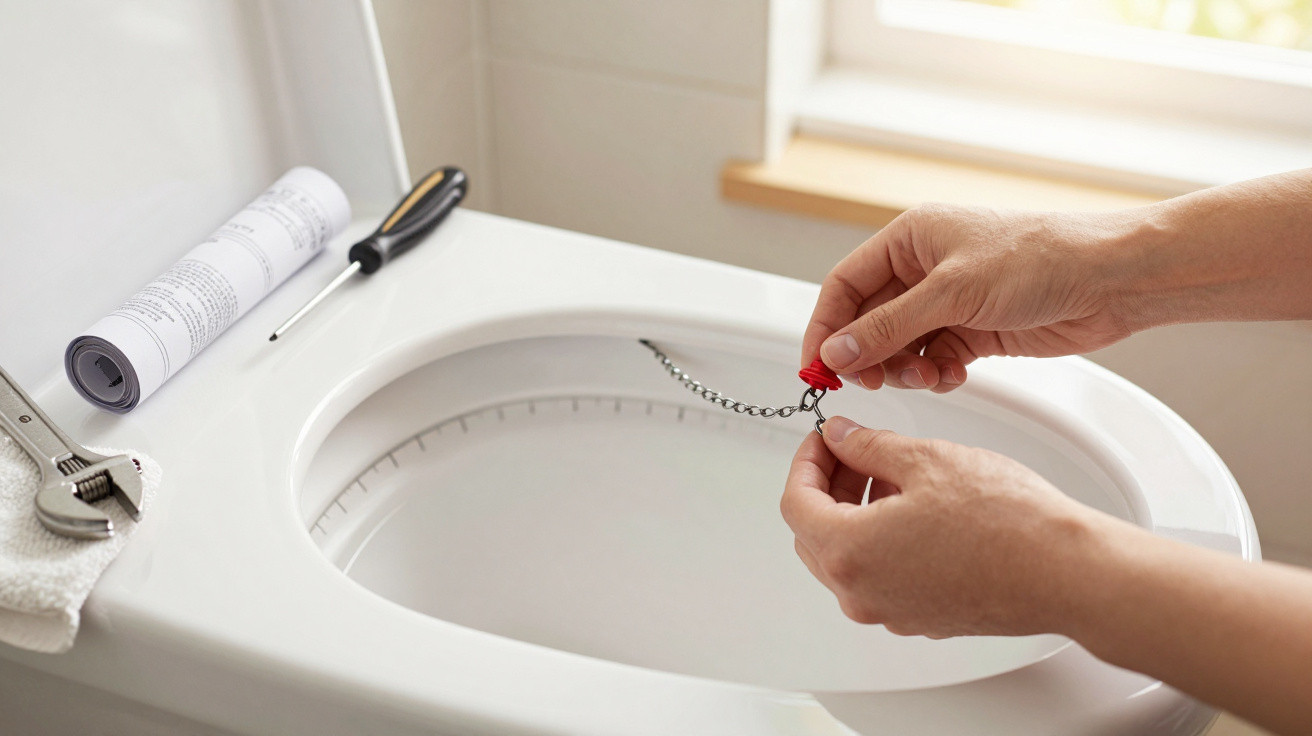
In very hard-water areas, use 500 ml for the first treatment. Inspect the flush valve seal, float and valve seat. Replace porous parts if limescale has worn into the surface. Acetic acid cannot repair cracked seals.
If limescale is already established
- Turn off the water supply and empty the cistern.
- Soak a cloth in vinegar and place it over the white deposits.
- Leave it for 30 to 60 minutes, then scrape gently with a plastic spatula.
- Rinse generously and brush the surfaces.
For the toilet bowl, pour a bowlful of vinegar over the sides. Add a handful of bicarbonate of soda to the bowl. Let it fizz, brush, then flush. This mechanical action improves the result.
Common practical questions
Which concentration should you choose?
White vinegar between 6 and 8% is suitable. The 8% version acts faster. The difference is mainly noticeable on thick deposits.
How often should it be used?
Once a month is enough in most homes. Increase this to every two weeks if the water exceeds 30 French degrees of hardness. Return to a monthly schedule once the deposits have reduced.
Which signs should raise concern?
- The water level constantly rises and falls.
- Water continues to run after flushing.
- White streaks are visible inside the cistern.
- The float sticks in the raised position.
Useful information for going further
A limescale-coated tap aerator in the kitchen often indicates that the cistern is also scaled up. Test the water with a hardness test strip, then adjust the dose and contact time accordingly. Also clean the flush button and the lid, as these areas can harbour biofilm.
A household can combine this routine with a few small adjustments. Alter the float height to reduce the flush volume. Check the toilet pan base seal if water marks appear on the floor. Set a monthly reminder on a smartphone. Consistency makes more difference than the quantity of product used.



Comments
No comments yet. Be the first to comment!
Leave a Comment