The water sitting in your shower tray tells the truth.
One day, it slips away without a fuss; the next, it lingers around your ankles, swirling like a shy puddle with no intention of going anywhere. You nudge the metal grille with your foot, blame the shampoo and mutter something about “the pipes”. Then, one weekend, you find yourself kneeling in rubber gloves and pulling out a clump of hair fit for its own horror film.
In reality, drains almost never block in a single night. They give you subtle clues: tiny pauses you overlook because you are busy and the bathroom is simply somewhere you move through. You flush, rinse and walk away.
Yet one very small, almost ridiculously easy routine can determine whether your drains remain clear for years or let you down halfway through a morning shower.
The slow-building problem beneath your feet
Watch somebody getting ready in the bathroom and the beginnings of a blockage are nearly visible. Steam clouds the mirror, hair comes loose during a quick shampoo, and soap, conditioner and dead skin run towards the drain in a milky stream. Most of it disappears from view. Not all of it does.
Each strand left behind and every trace of conditioner stuck to the metal serves the same purpose: it catches the next piece of debris. At first it is microscopic, then it turns into a sticky band inside the pipe, before becoming a thick, tangled mass that no amount of frustrated plunging can shift.
When water finally gathers around your ankles, the problem began weeks earlier.
Speak to any plumber about bathroom drains and they are likely to say the same thing: calls for supposedly “sudden” blockages are rare. Most call-outs tell a story of gradual build-up. A little hair, some soap scum, a blob of shaving foam that did not fully dissolve. Eventually, the shower becomes a shallow bath.
One UK plumbing survey indicated that hair and soap deposits cause most household drain blockages, with showers and bathroom basins at the top of the list. It is not grease or unexplained objects, but the ordinary things washed from your body every day.
People often reach for aggressive chemicals, trusting a bottle of fluorescent liquid to reverse months of neglect. Occasionally, it does. At other times, it damages ageing pipes and leaves behind a toxic odour in a space that should feel fresh.
The real process is dull but consistent. Hair does not simply disappear: it knots together. Soap does not merely wash away: it solidifies around the hair, creating a waxy coating on the pipe wall. Add body oils, skin flakes, pieces of cotton pad and stray toilet-paper fragments, and you have created the plumbing equivalent of a felted scarf inside the drain.
Water does not cope well with obstructions. As soon as the first catch develops, the flow slows. Slower-moving water allows heavier particles to settle rather than travel through. That leaves more material for the next clump to latch on to. Within weeks, the once-smooth interior of your pipe can resemble a tunnel coated in grey fur.
Ironically, much of the harm occurs in the minutes after the water is switched off. Warm, oily residue cools, sets and adheres to the surface. As you leave the bathroom, the blockage you will deal with later is quietly beginning to form.
The small habit that keeps bathroom drains flowing
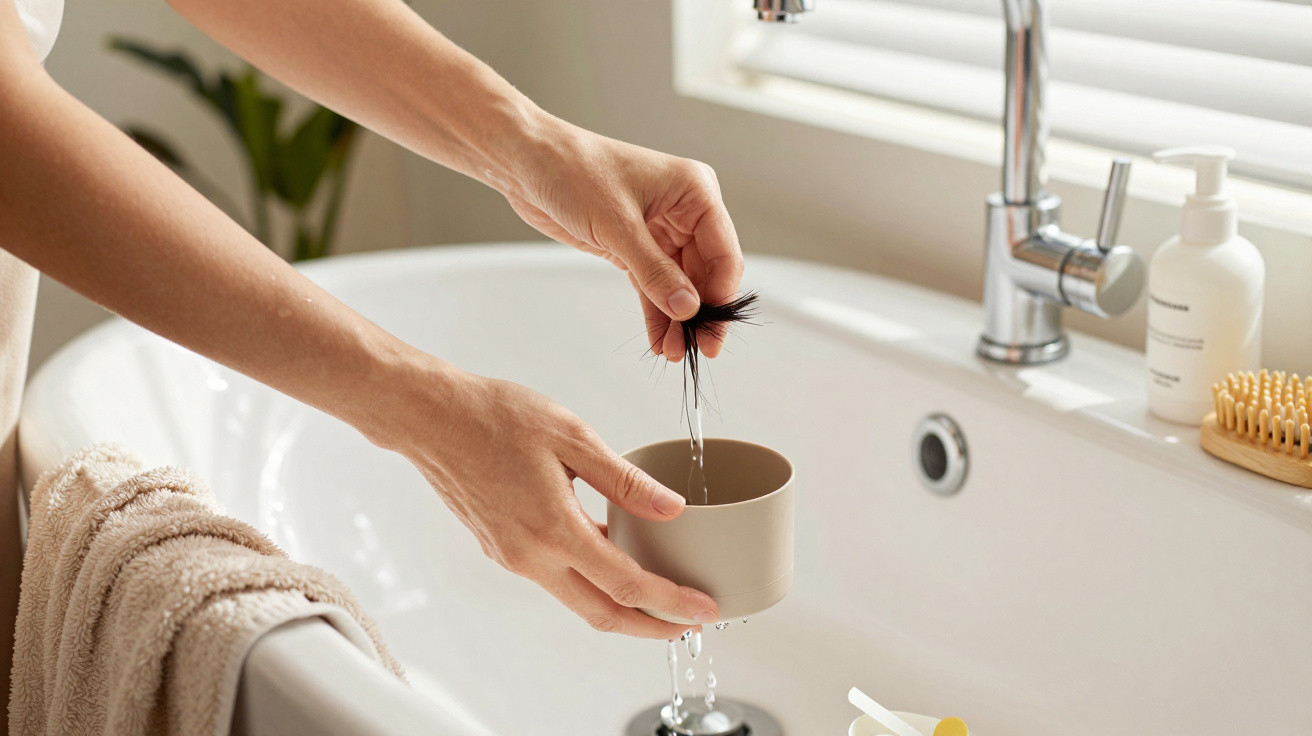
The routine that helps bathroom drains stay clear for longer is almost embarrassingly easy: rinse and wipe around the drain immediately after every use. This is not an intensive deep clean, just 15–30 seconds of attention while everything is still warm.
Once you have turned off the tap or shower, run a brief splash of hot water over the drain. Use your hand, some toilet paper or a small cloth kept for this purpose to collect any visible hair, foam or product residue around the grille, then put it in the bin. If the drain cover or hair catcher can be removed, lift it out, clear away what it has caught and rinse it quickly.
This brief ritual stops build-up before it has anything to attach itself to.
Its effectiveness is very straightforward: hair and soap are much easier to remove while they are fresh and floating than after they have settled and bonded together. Rinsing immediately prevents hair from catching and forming knots, while wiping gets rid of the sticky residue ring that behaves like Velcro inside the pipe.
Instead, many people depend on occasional “big cleans”, assuming a monthly blitz will make up for their everyday habits. Let’s be honest: nobody really does that every day. Life gets in the way, children call through the door, or the next meeting starts in five minutes. That is precisely why this small routine has such value.
Missing it once will not cause a disaster. Skipping it on most days, however, means quietly choosing future blockages for the sake of present convenience.
“Every hair you pull from the drain today is ten you don’t pay me to remove later,” joked one plumber I interviewed, standing over a shower he’d just rescued from a solid, rope-like blockage.
Some people avoid this routine because it seems slightly unpleasant. Others believe their drain cover provides sufficient protection. A standard metal grille is helpful, but it will not prevent fine hairs or dissolved products from collecting just beneath it. This is why physically wiping the area, rather than merely running water, makes the real difference.
- Do it while the water remains warm, when residue is softer and easier to lift.
- Use an inexpensive dedicated cloth or tissue that you can rinse out or discard.
- Link it to an existing habit, such as hanging up your towel, to make it stick.
- Fit a simple hair catcher if you have long hair or shed heavily.
- Avoid harsh chemicals for everyday maintenance; reserve them for infrequent emergencies.
Living with bathroom drains that simply work
On an ordinary Tuesday morning, when shower water disappears in one smooth swirl, this habit will probably not cross your mind. You will simply get dressed more quickly, drink your coffee while it is still hot and leave home without the low-level irritation that can put the day on the wrong footing.
On a Saturday with overnight guests and four showers used one after another, the difference is more noticeable. Nobody needs to wait for the tray to drain, stand in a lukewarm puddle or awkwardly ask whether there is “something wrong with the drain”. The bathroom just works as it ought to.
We have all experienced water rising while we are already running late, with the stress climbing alongside the water level. A blockage is seldom only a blockage; it becomes a small battle for control with your own home.
The appeal of this little routine lies in how quietly its benefits add up. A few seconds after every shower can save hours spent searching for DIY drain-unblocking tricks, looking for rubber gloves or waiting for a plumber’s van to appear in your street. It is not glamorous, and you will never boast about it over dinner. Still, it alters the background rhythm of daily life.
Rather than responding to emergencies, you are looking after something before it fails. That creates a different relationship with your home: gentler, more considerate and, yes, less expensive. A clear drain is a tiny form of peace you only notice when it’s gone.
Perhaps tonight, as you leave the shower and reach for your towel, your hand will stop for an additional second above the drain. Perhaps you will sweep away a few hairs and watch the final traces of foam disappear in a clean spiral. It is a small gesture that is almost invisible.
Then, in a few months’ time, when your neighbour complains about calling the plumber yet again, you may simply smile and keep your small secret.
| Key point | Detail | Benefit for the reader |
|---|---|---|
| Rinse and wipe after use | Spend 15–30 seconds removing hair and residue around the drain | Greatly reduces the risk of blockages without chemicals |
| Act while it is fresh | Take action while the water is warm and the foam is still soft | Minimal effort and maximum effectiveness against early deposits |
| Make it a routine | Connect this reflex to an established action, such as turning off the tap or hanging your towel | Turns a potential chore into a discreet, lasting automatic habit |




Comments
No comments yet. Be the first to comment!
Leave a Comment