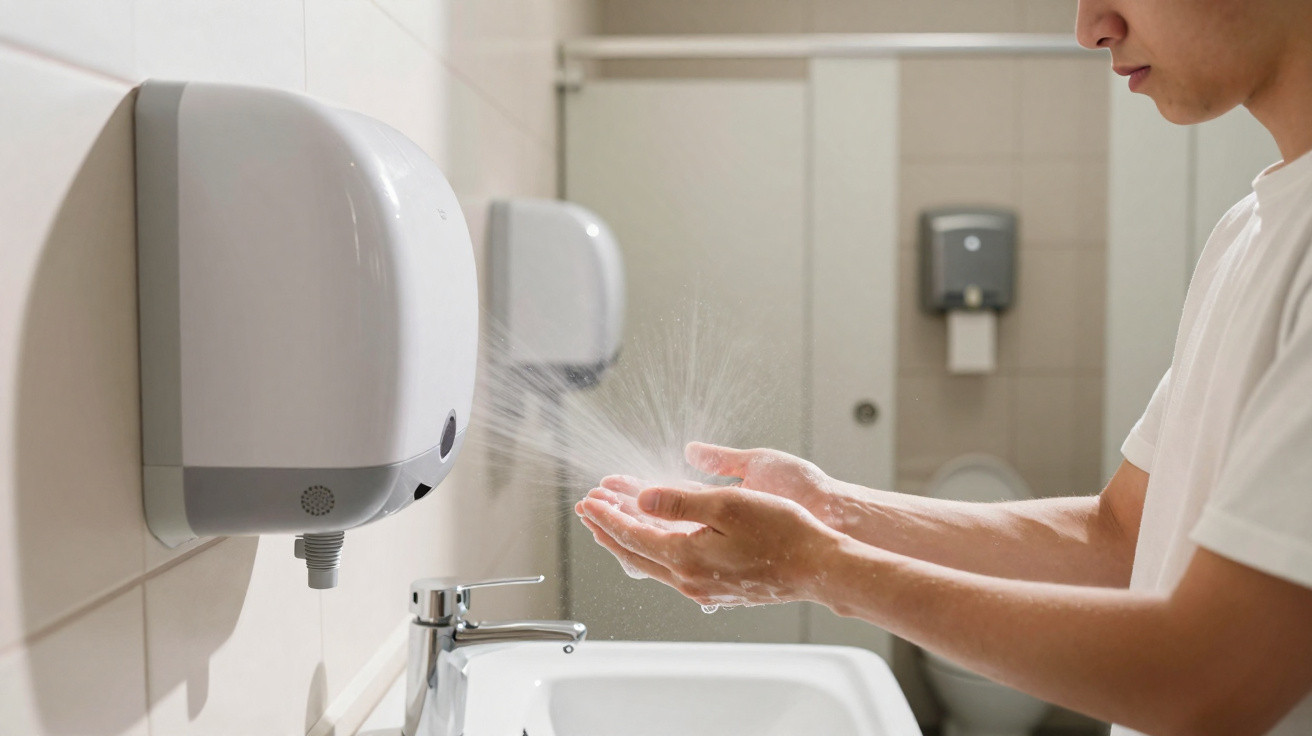
In many public toilets, hand dryers look modern and hygienic – yet new experiments reveal what may actually be blasted out of their nozzles.
Anyone washing their hands at a station, cinema or shopping centre will often face a choice: paper or a jet of air. Many choose the noisy hand dryer for convenience. But a simple laboratory experiment is now prompting intense debate, as it appears to show how many germs can be blown straight onto freshly washed hands.
A simple experiment that shocked millions
The scientist known online as “Devon Science” shared an experiment on TikTok that went viral. Her aim was to make visible the bacteria that can settle on skin when a hand dryer is used in a public toilet.
To do this, she placed two Petri dishes:
- One dish was held directly beneath a hand dryer in a toilet.
- A second dish remained in the laboratory, exposed only to the relatively clean air in that room.
The striking result came the following day. While the laboratory control dish was virtually empty, the dish from the toilet was covered in colonies: yellow, black and white spots packed closely together. Each spot represents millions of bacteria that developed from just a small number of germs into visible colonies.
The experiment suggests that hand dryers stir up germs from toilet air and propel them straight onto the skin.
Online, many viewers said the sight made them feel physically sick. Some wrote that they would now return to more old-fashioned methods in public toilets: shaking their hands dry, using paper, or, if necessary, wiping them on their trousers.
Which germs can travel in the air stream
The laboratory results made it possible to identify, in broad terms, which microorganisms were growing. These were not solely harmless organisms from the surrounding environment, but also familiar potentially harmful germs:
- Staphylococcus aureus: Although this germ is commonly found on the skin, it can cause pus-forming infections, abscesses or, in extreme cases, severe blood poisoning when it enters small wounds.
- Escherichia coli (E. coli): A typical gut bacterium found in faeces. In toilets, it is almost unavoidable in the surrounding air and on surfaces. If it reaches the mouth, it can cause diarrhoeal illness; certain strains may also trigger urinary tract infections.
- Fungal spores: The dark spots in the dish indicate fungal growth. Such spores can irritate the airways and may worsen symptoms in people with allergies or weakened immune systems.
Importantly, the experiment does not show how many people actually become ill. However, it does illustrate how concentrated the mixture of microorganisms in a hand dryer’s air stream can be – and how directly it reaches hands that should have just been cleaned.
Why hand dryers spread so many bacteria
Part of the issue lies in the design of modern units. They are built for speed and efficiency, while hygiene concerns were for a long time given less priority.
Extreme air speed throws everything upwards
Many high-performance hand dryers operate with immense air pressure. Some manufacturers state air speeds of several hundred kilometres per hour. This powerful flow can disturb anything present in the air, on the floor, on walls or on the appliance itself, including:
- fine water droplets containing faecal bacteria
- flakes of skin and dust particles
- microdroplets created when toilets are flushed
These particles are drawn into the intake slot, forced through the machine and deposited in a concentrated stream on users’ hands – as well as throughout the washroom.
Dirty interiors: what cannot be seen is blown back out through the nozzles
In a second stage of the experiment, Devon Science swabbed the inside of a hand dryer. The cotton swab immediately turned dark. This indicates that a layer of bacteria and dirt may build up inside these machines over time.
When the dryer is switched on, parts of this layer can break away and enter the airflow. Anyone using the dryer regularly may repeatedly blow this combination of old and new germs onto their palms.
Every hand dryer start button could act like a small “germ amplifier” in heavily used toilets.
High-tech solutions: HEPA filters and UV light – a remedy or window dressing?
Manufacturers are increasingly responding to the criticism. Some models use additional filtration technology or light sources intended to kill germs.
- HEPA filters: These air filters can largely remove particles as small as around 0.3 micrometres from the air. According to the standard, reputable HEPA systems achieve more than 99 per cent filtration efficiency. The problem is that they must be replaced regularly. If this does not happen, the filter itself can become a source of germs.
- UV irradiation: Some newer appliances expose the air drawn in to ultraviolet light inside the unit, damaging bacteria. In theory, this significantly reduces the germ count. In practice, much depends on the lamp’s strength, the exposure time and the cleanliness of the components.
Many older buildings still have units with neither filters nor UV technology. Even with modern appliances, an ordinary user has little way of knowing whether the machine has been serviced, whether the filter is new or whether the UV lamp is still working at all.
What hygiene experts say – and what it means in everyday life
Hospitals and clinics have been debating this issue for years. Some facilities in the UK and the US have removed hand dryers from hygiene-sensitive areas and returned to paper. Specialists argue that paper towels are more likely to remove germs from the skin than distribute them widely.
For everyday settings such as shopping centres, schools and restaurants, the position is less clear, but the trend points in a similar direction: those who do not want to take a risk are more likely to choose paper over air.
Practical rules of thumb for daily life:
- Where paper towels are available, choose them.
- If hand dryers are the only option, wash hands for long enough that soap and water pressure remove as many germs as possible, and keep drying time at the machine relatively brief.
- After drying, avoid touching your face immediately and do not eat snacks with your hands until you are home again or have used hand sanitiser.
Why thorough handwashing remains more important than the drying method
The strongest defence against germs from hand dryers starts before drying, at the sink. Anyone who merely rinses their hands quickly will still have plenty of bacteria on their skin before encountering the air stream. The blast of air then simply spreads them more widely.
Hygiene specialists have made similar recommendations for years:
- Wet hands with warm water.
- Work soap thoroughly over the hands, including between the fingers and across the backs of the hands.
- Rub for at least 20 seconds – singing “Happy Birthday” in your head is a useful timer.
- Rinse carefully so that the foam and loosened germs wash away.
Following this routine noticeably reduces the risk, regardless of how hands are dried afterwards. The choice of drying method becomes relevant when considering the next contamination: what ends up on the skin immediately after washing?
What many people do not realise: air, aerosols and toilet flushing
Another aspect worries specialists: the connection between toilet flushing and air quality in the washroom. Studies show that flushing without closing the lid can send tiny droplets up to head height. These aerosols contain germs from the flush water, including gut bacteria.
Hand dryers draw in precisely this air, increase the turbulence and then propel the particles around the room. This can create a kind of germ mist, particularly in small toilets with poor ventilation.
Those wishing to protect themselves can pay attention to small details:
- Close the toilet lid before flushing, where one is available.
- Do not stay in the room longer than necessary after washing.
- Where possible, avoid hand dryers in very cramped, heavily used washrooms, such as those on trains.
When hand dryers are genuinely problematic – and when they are less so
The most concerning locations are places where many people with infections may be present: hospitals, doctors’ surgeries, care homes, as well as airports and large events. In these settings, the likelihood of disease-causing germs being involved rises – rather than only harmless environmental bacteria.
In offices or smaller restaurants with a manageable number of visitors, the range of germs is generally less alarming, but a hand dryer will never operate entirely free of germs. People in higher-risk groups – including those with pre-existing conditions, weakened immune systems or open wounds on their hands – are generally safer using paper towels.
Over the long term, the debate is likely to force manufacturers and operators to look more closely: better filters, stricter servicing, clearer labelling and perhaps a wider return to paper. Until then, every sink presents a personal risk assessment: the quiet rustle from a dispenser, or the loud blast of air from a dryer.





Comments
No comments yet. Be the first to comment!
Leave a Comment