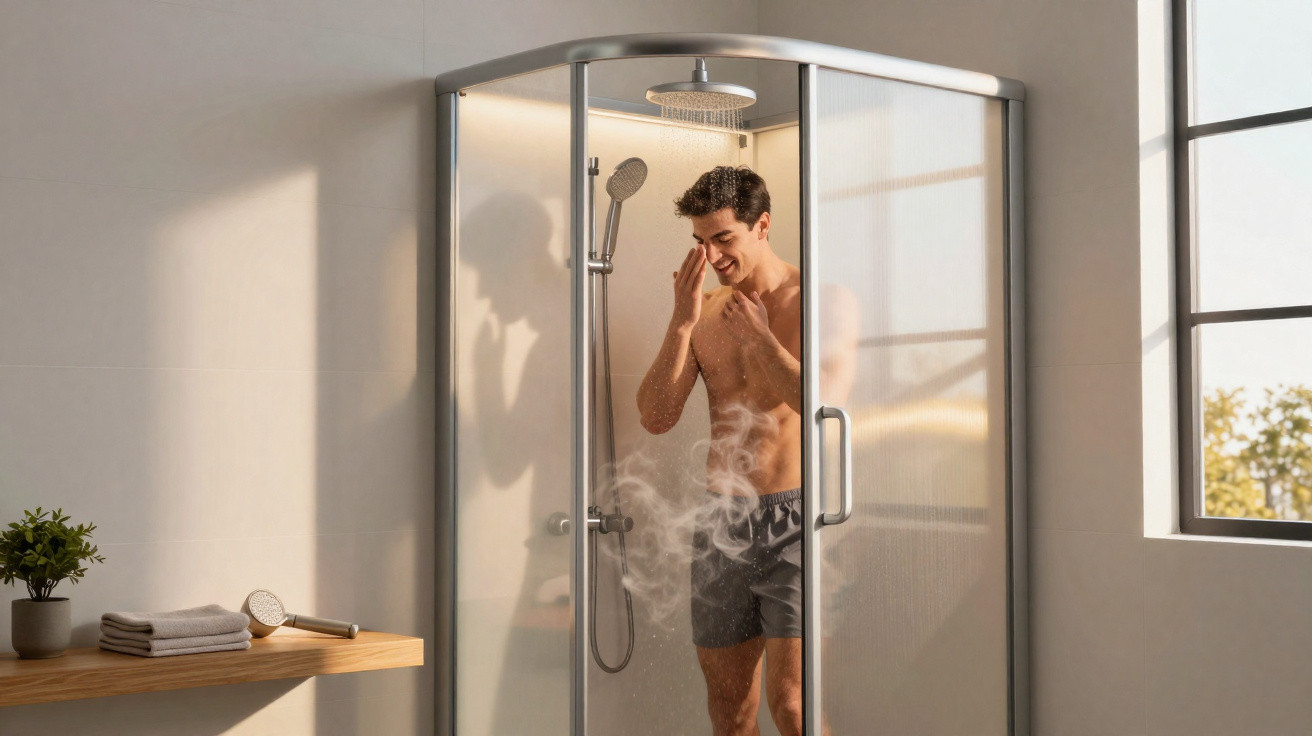
The shower switches off, steam fills the bathroom and you can feel that comforting warmth on your skin.
The towel is within reach and the routine is running on autopilot. You head straight to the mirror, ready to apply cream, sort out your hair or quickly check your face. Then comes the disappointment: the surface is entirely fogged up, covered by a stubborn haze clinging to the glass. Your palm leaves streaks, a face cloth spreads the moisture even further, and being in a hurry makes it all seem worse. Who has not stood there, slightly annoyed, trying to make out anything through smudges and droplets? It may seem like a minor detail, but it can affect your mood early in the morning or before a night out. This small domestic irritation says a lot about how we live - and about how there may be a much quicker solution than you expect.
Why does the mirror fog up so much after a shower?
Nearly everyone knows the scene: you step out of the shower with your body still warm, and the mirror has become a white wall. It is not an exaggeration; it is basic physics playing out in a few minutes. Warm steam from the water meets the cooler glass surface, condenses and creates the tiny droplets our eyes see as mist. It can look like magic, but it is simply two temperatures quietly competing in your bathroom. We only notice the end result: a milky layer hiding our own face precisely when we need to see it.
A quick bit of observation at home would reveal something interesting: in households with more than three people, the mirror is often fogged up several times a day. There is an early shower before work, children showering before school, and an evening shower to wash away the weight of the day. In small flats, particularly those with windowless bathrooms or poor ventilation, the problem can feel almost constant. Many people say that when they need to put on make-up or shave, they lose between two and five minutes simply trying to clear that haze from the glass. During a busy week, that becomes a small but quiet theft of time.
There is an uncompromising logic behind it. A mirror is not designed to cope with sudden changes in temperature and humidity on its own. Like any smooth surface, it responds by condensing the steam released by the shower. In an enclosed room, with no extractor fan and no open window, the process becomes stronger and lasts longer. Opening the door helps, but it requires planning, habit and a little preparation. Let us be honest: nobody does that every day. What we want are straightforward solutions, preferably immediate ones, that fit into the rush of an ordinary morning.
The bar soap solution many people overlook in the bathroom cupboard
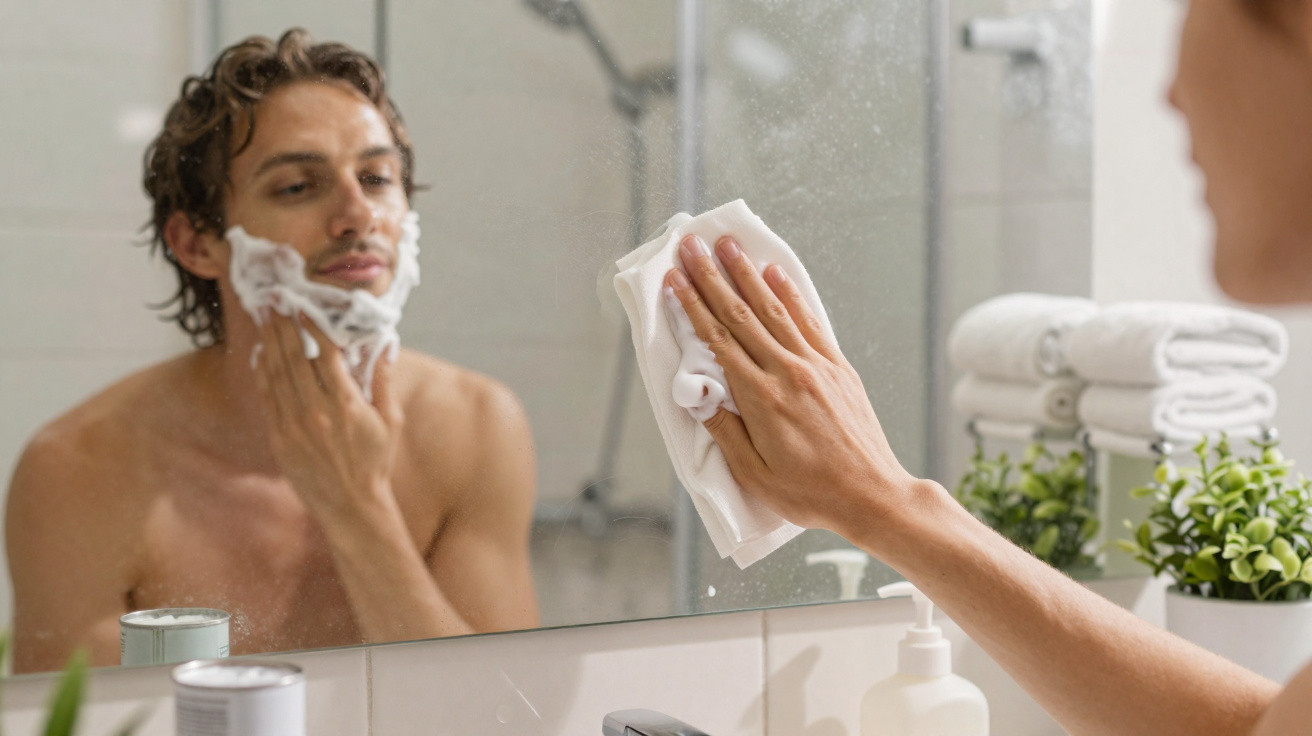
Among the many bathroom products, one is often forgotten in a corner and could be the hero of this story: an ordinary bar of soap. There is no need to fit the shower enclosure with expensive devices or futuristic films. The idea is almost deceptively simple. Before showering, use the dry mirror for an old trick employed by hairdressers, divers and even motorists on rainy days. With the glass completely dry, rub on a thin layer of bar soap, as though drawing invisible clouds across the surface. Then buff it with a soft cloth or kitchen roll until the mirror is clear again - but protected.
The result is subtle and does not alter how you normally use the mirror, yet it creates an almost unnoticeable film. Rather than collecting into droplets, the steam slides across that film. In practical terms, the mirror is far less likely to fog up after a shower, and sometimes it barely fogs at all. Many people apply the soap incorrectly, leaving thick marks or rubbing too hard, which causes smears and makes the glass look dirty. Another common mistake is trying it on damp glass, which halves its effectiveness and leads to frustration. It is not laziness; it is simply a lack of information. With a little patience the first time, the habit soon becomes effortless.
“It is curious how a homemade solution that fits in the palm of your hand can change the mood of an entire morning,” commented a resident of São Paulo, laughing at her own surprise when she saw the mirror clear after a hot shower. This kind of simple trick, almost too domestic to become a headline, tends to spread through chats in corridors, message groups and short social-media videos. When it works, it becomes a small shared secret.
- Essential step: The mirror must be completely dry before you apply the bar soap.
- Thin layer: Lightly mark the glass without using too much product, so that it does not leave streaks.
- Gentle polishing: Use a soft cloth or kitchen roll and buff until the whitish appearance disappears.
- Regular reapplication: Repeat the process every few days, depending on how often the bathroom is used.
- Test confidently: Start in one corner of the mirror, check the effect and adjust the amount.
Other ways to beat steam and rethink the shower routine
There is something curious about the way we treat bathrooms: they are among the most private rooms in a home, yet often the least carefully planned. Solving the fogged-mirror problem with a bar of soap inadvertently opens the door to other small changes. Leave a window slightly open, switch on an extractor fan a few minutes beforehand, keep the bath mat away from the drain, or close the shower enclosure only at the right moment. Each minor adjustment changes the way steam moves around the room. It does not remove the pleasant warmth of a shower; it simply makes what happens afterwards easier to manage. Strangely, that can change the mental atmosphere of the home as well.
Some people find that quickly drying part of the shower enclosure wall with a squeegee already reduces the overall humidity. Others notice that leaving the door ajar, even by just a hand's width, greatly eases the fogging. Some use dedicated anti-fog products, inspired by those for diving masks or motorcycle helmets, and find that this is their ideal option. Every bathroom becomes its own laboratory for condensation and improvisation. What connects all these attempts is a quiet wish: to leave the shower without going to war with the mirror, without having to compete with the mist for the right to see your own face.
Perhaps the real issue is not only “how to stop the mirror fogging up”, but what we do with these small daily frictions that seem too trivial to discuss. Sharing a quick tip from any bathroom cupboard becomes a form of practical kindness between strangers. It makes you wonder: what other secrets are hidden in everyday objects, waiting to make routine a little less abrasive? When a mirror stays clear after a hot shower, it is not only the glass that becomes sharper. We can also see more clearly how small, almost invisible solutions can reshape the beginning of an entire day.
| Key point | Detail | Value for the reader |
|---|---|---|
| Using bar soap | Apply a thin layer to a dry mirror and buff until transparent | Prevents fogging quickly and cheaply with an item already at home |
| Controlling humidity | Ventilate the bathroom, use an extractor fan, leave the door or window ajar | Reduces trapped steam and extends the anti-fog effect |
| Adjusting the routine | Reapply the method regularly and test small habit changes | Keeps the mirror cleaner, saves time and reduces daily stress |





Comments
No comments yet. Be the first to comment!
Leave a Comment