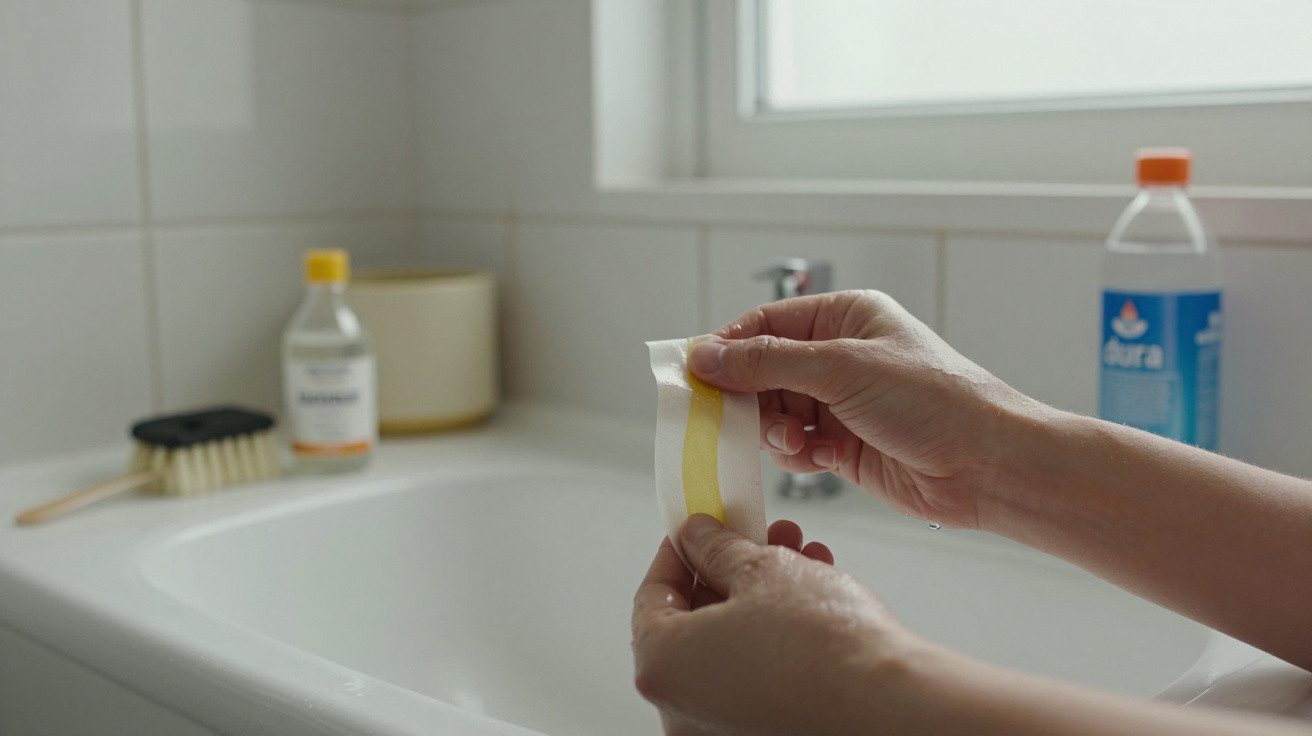
A pale yellow streak appears in almost every bathroom, but most people tackle it in the least effective way.
It can run around the toilet bowl, stick to the basin or bath, and gradually make grout lines appear permanently grimy. Many households accept it as an inevitable consequence of an ageing bathroom. Usually, however, it indicates a particular problem that is remarkably straightforward to resolve.
What that stubborn yellow streak really is
A yellowish line or band in a toilet bowl, near the waterline, or on tiles and fittings will generally come down to one of three causes:
- Limescale left by hard water
- Mineral deposits and rust marks from pipework or the cistern
- Urine residue that has adhered to limescale
Hard water contains calcium and magnesium. Once the water dries or evaporates, these minerals remain behind, creating a rough and mildly porous coating. Urine pigments, soap residue and everyday dirt can then attach themselves to this coating, leaving yellow, orange or brown marks.
In many bathrooms, the “mystery” yellow line is simply limescale acting like Velcro for dirt and pigments.
This is why repeated scrubbing with ordinary bathroom cleaner often achieves little. The discolouration is not merely sitting on top of the surface; it is held within the mineral build-up below.
The simple trick: break the scale, not your wrists
To remove the yellow streak quickly, deal with the mineral deposit before anything else. Harsh industrial products are unnecessary. What matters is using an acid, allowing enough time, and applying it strategically.
Step 1: Choose the appropriate acid
Gentle household acids can dissolve limescale safely on ceramic surfaces and many metals. Common choices include:
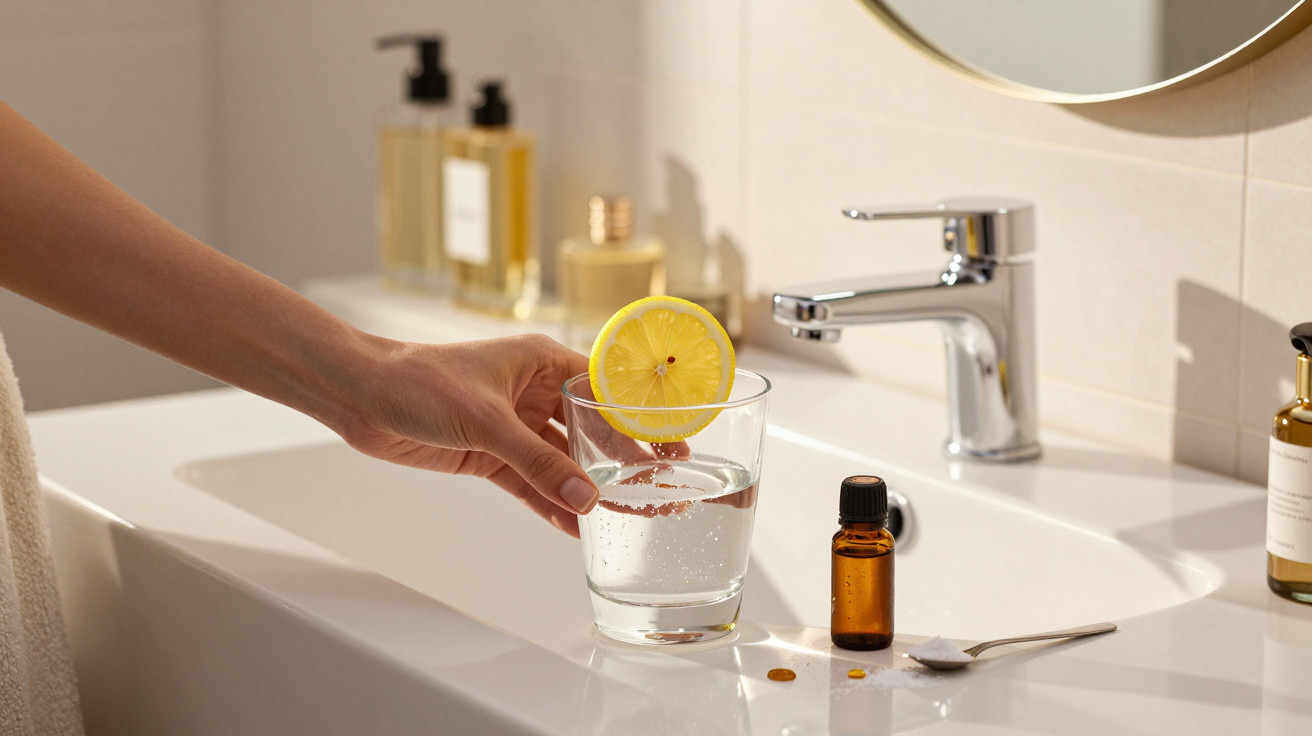
- White vinegar, such as clear spirit vinegar with approximately 5–10% acidity
- Citric acid powder mixed into warm water
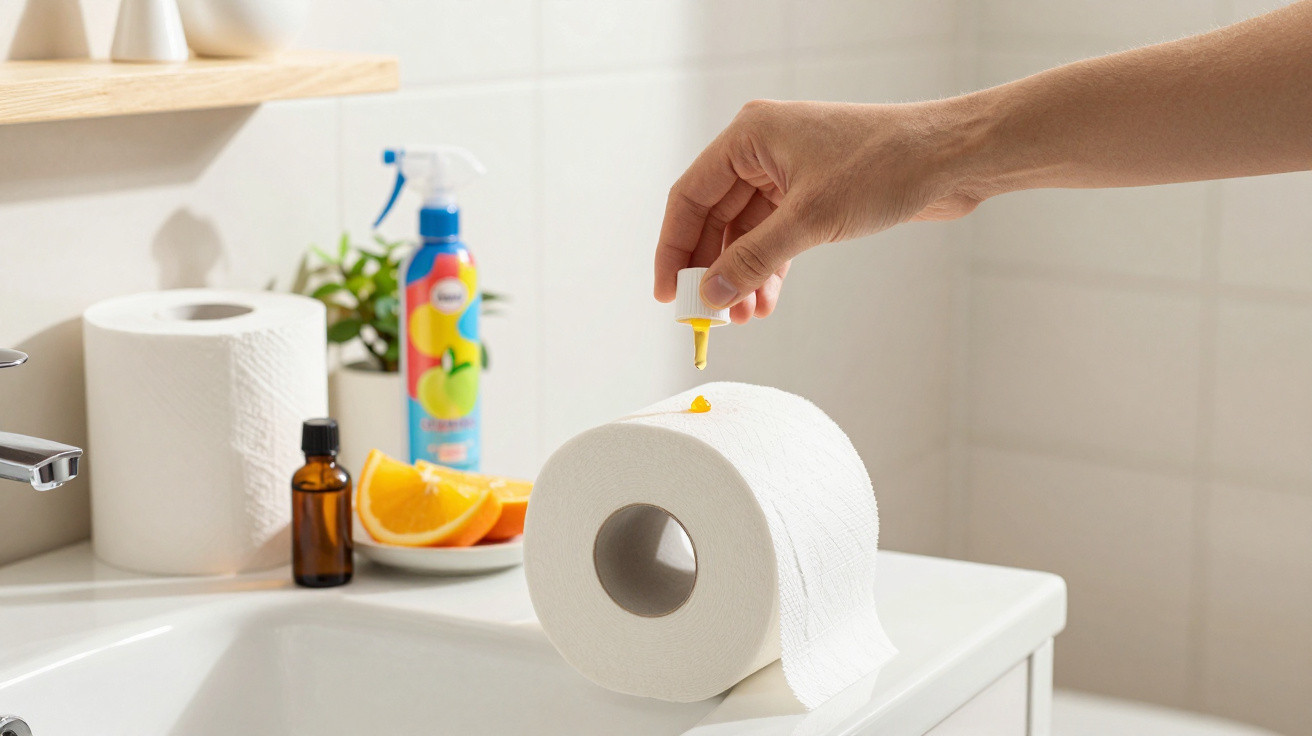
- Lemon juice, which is weaker but can work on small marks
The “trick” is not a miracle product, but how you let a weak acid sit where the scale actually lives.
Adding a little vinegar to the toilet and flushing it away two minutes later will make very little difference. The acid needs to remain in contact with the surface long enough to break down the mineral layer.
Step 2: Keep the acid on the affected area
This is simple on basins, taps and tiles: spray the area, soak it, or hold a saturated cloth against the mark. A toilet bowl is more difficult because the cleaner naturally runs downwards.
A useful approach, used by many cleaning professionals in their own homes, is as follows:
- Use a toilet brush to push most of the bowl water towards the drain opening.
- Pat the yellow line roughly dry with paper so that the acid is not immediately weakened.
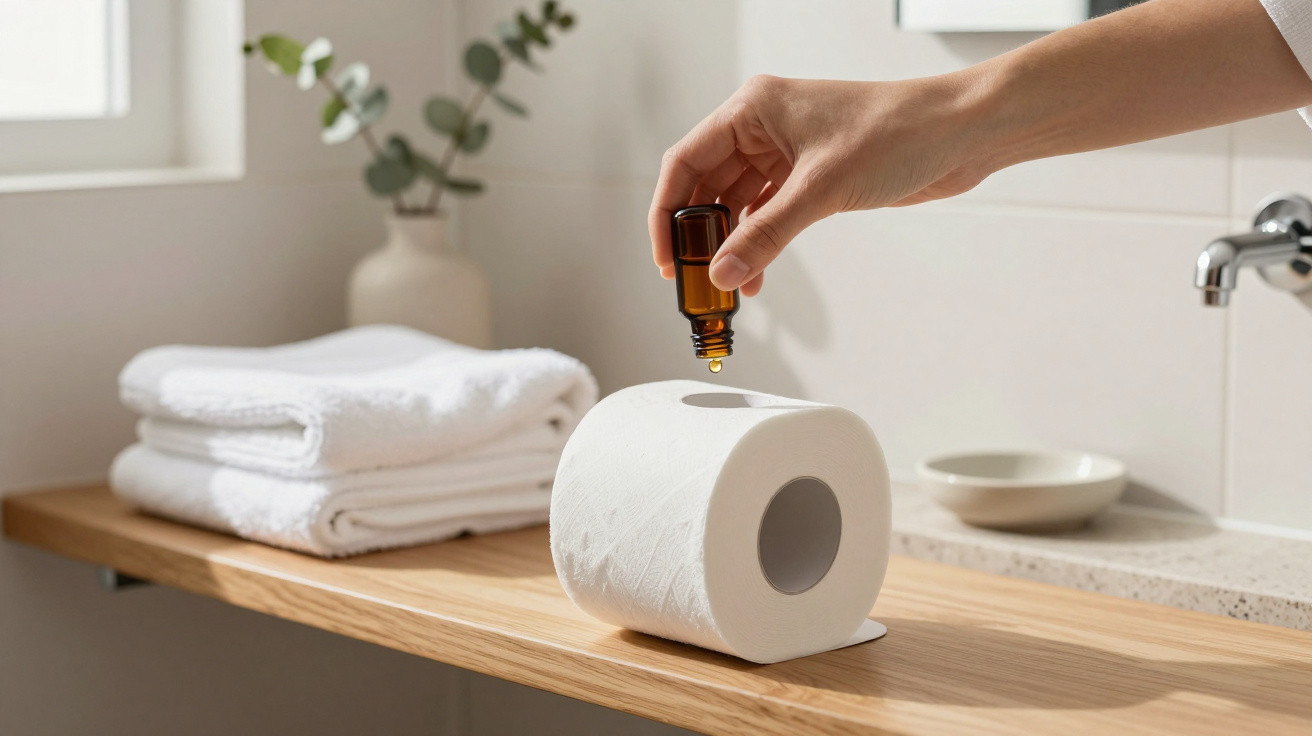
- Saturate strips of toilet paper or kitchen roll with vinegar or a citric acid solution.
- Place the damp strips directly over the yellow streak so they adhere to the ceramic.
- Leave them in place for at least one hour, or overnight if the mark is old.
The paper acts as a compress, keeping the acid against the mineral deposit rather than allowing it to run away.
Step 3: Scrub gently, then rinse
After the soaking period, the mineral crust should be softened. Remove it with a non-scratch cleaning tool:
- A normal toilet brush for the inside of the bowl
- A soft sponge or non-scratch bathroom pad for basins and tiles
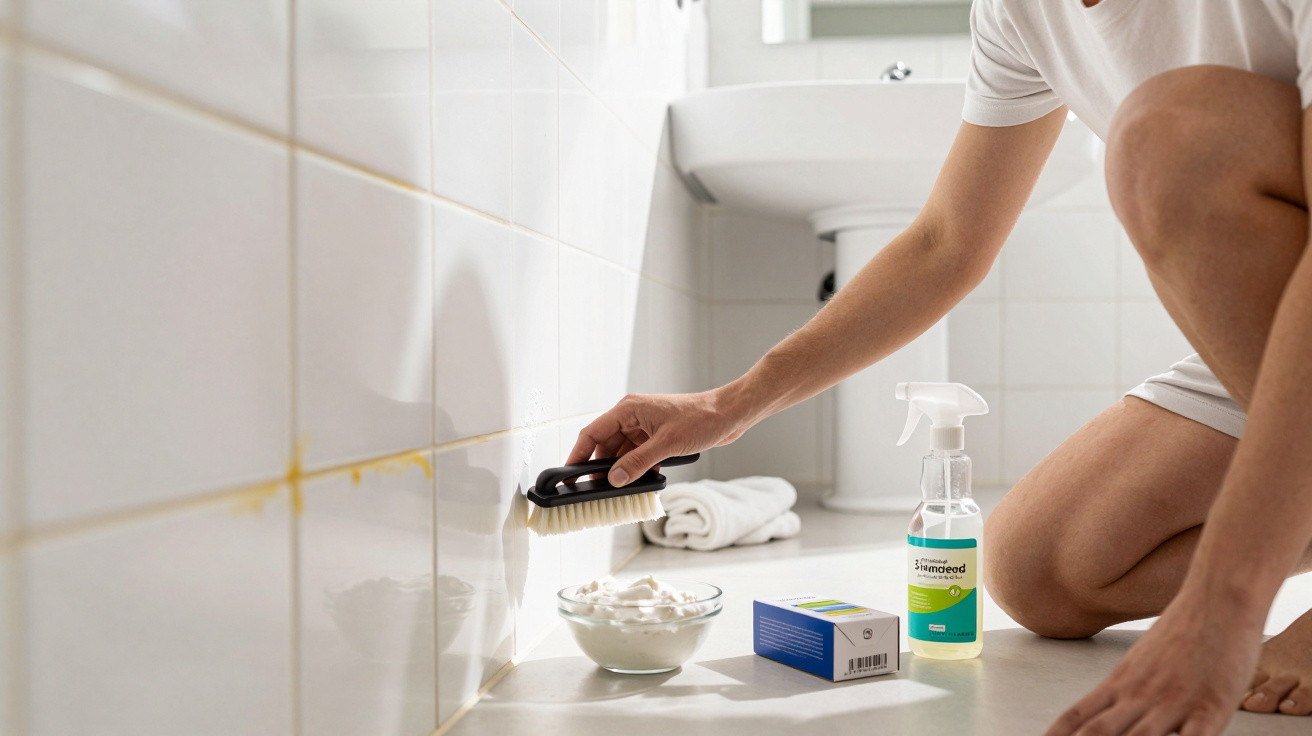
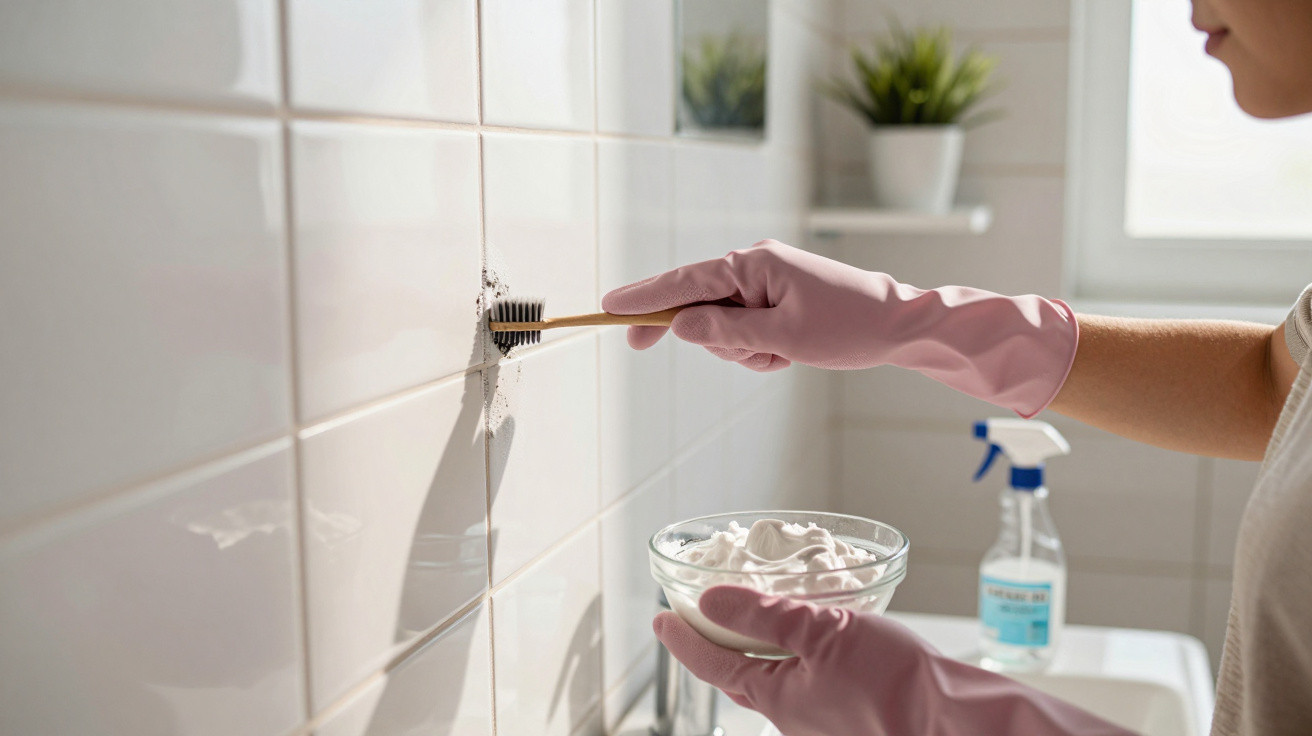
- An old toothbrush for grout, edges and the bases of taps
Metal scouring pads and sharp scraping tools can leave lasting scratches, which provide places for fresh dirt to build up more quickly. They may seem to make cleaning faster, but they create problems in the long run.
If the surface already feels rough to the touch, limescale has built a home for every new stain that comes along.
Once you have scrubbed the area, flush thoroughly or rinse it with plenty of water. Should some discolouration remain, repeat the soaking process. Older deposits can require two or three treatments, although every subsequent round is usually easier.
Why the yellow streak keeps returning
Cleaning away the mark once does not alter either the water quality or the way the toilet is used. Unless a small maintenance habit changes, the yellow line will usually reappear within weeks.
Hard water: the hidden driver
Bathrooms in hard-water areas are more likely to develop yellow and brown streaks. Your kettle or showerhead can provide a quick indication: if limescale forms on them rapidly, your toilet and tiles are dealing with the same conditions.
| Water hardness | Typical signs at home | Streak risk |
|---|---|---|
| Soft | Very little kettle scale, smooth taps | Low |
| Medium | A few white marks, occasional scale in the kettle | Medium |
| Hard | Heavy scale, a crusted showerhead, cloudy glass | High |
Where water is hard, wiping the toilet waterline and tap bases weekly with an acid solution can stop yellowing before it becomes visible.
Habits that quietly feed the stain
In addition to minerals, routine behaviour contributes to the streak:
- Leaving urine in the bowl for hours before flushing, particularly overnight
- Flushing with too little water
- Seldom cleaning beneath the rim, where deposits begin to form
- Overlooking small rust patches inside the cistern
Most toilets have two flush buttons: the smaller one is intended for liquids, while the larger one is for solids. Repeatedly choosing the smaller flush can reduce water use, but pigments can adhere more easily to existing limescale if the bowl sides are not properly rinsed.
Where else the “yellow streak” shows up
The same process occurs beyond the toilet, which is why similar marks are often mistaken for permanent surface damage.
Bathtub rings and yellow grout lines
In baths and showers, a yellowish band often develops just above the usual water level or along silicone seals. Here too, the mark is typically caused by a combination of limescale, soap and body oils.
A similar compress treatment can be used:
- Apply warm vinegar or citric acid solution with a spray bottle or brush.
- Cover the area with cling film or a soaked cloth to slow evaporation.
- Leave it for one hour, then scrub with a soft sponge.
Always consult the manufacturer’s guidance for acrylic baths and delicate stone, as even mild acids can damage some surfaces.
Kitchen sink streaks and appliance stains
Stainless-steel sinks can develop yellow or brown waterlines, especially near the drain and overflow. These surfaces need more cautious treatment.
Acid solves the mineral part, but prolonged contact on stainless steel or damaged enamel can lead to discolouration or dull patches.
Brief contact, followed by thorough rinsing and drying, is generally safe and effective. On white appliances with rubber seals, including washing-machine doors, never apply undiluted strong acids or bleach straight onto the rubber, as it may crack and become loose over time.
How to keep the streak away for good
After breaking down the yellow band, a straightforward care routine can prevent you from having to start again from scratch.
A five-minute weekly routine
Many professional cleaners rely on a brief but regular routine:
- Once a week, brush a vinegar solution beneath the toilet rim and around the waterline.
- Leave it to work while cleaning the basin and mirror.
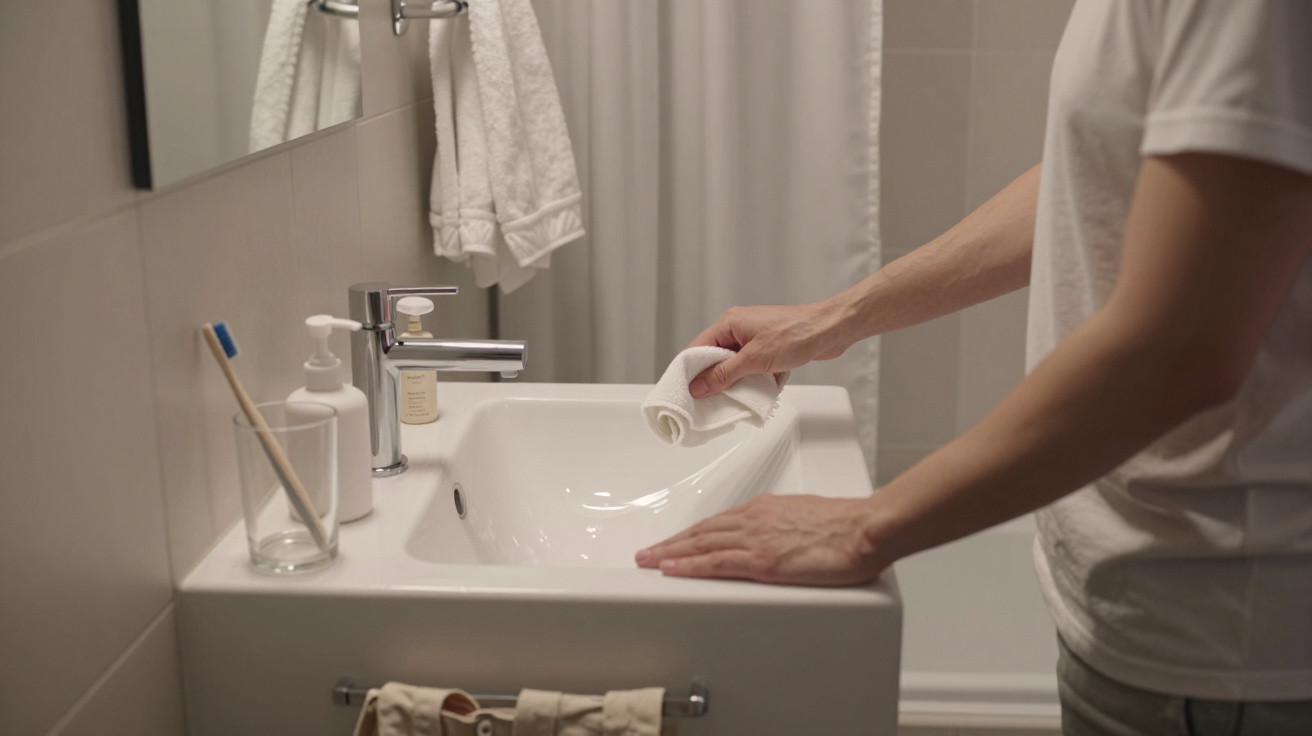
- Wipe taps and metal fittings using a microfibre cloth dampened with the same solution.
- Rinse all surfaces well before leaving the bathroom.
This light routine stops scale from becoming thick and prevents pigments from settling. It also means less need for powerful chemical cleaners, reducing both costs and the chemical load entering household wastewater.
When you might need extra help
Occasionally, a yellow or brown line can indicate a more serious technical issue. If it returns unusually fast, becomes darker, or comes with rusty flakes, possible causes include:
- Corroding components within the toilet cistern
- Very old iron pipes supplying the bathroom
- A high iron level in well water
In these situations, a plumber or local water specialist can assess whether a filter or partial replacement may help. Household cleaning methods can remove visible marks, but cannot repair corroded metal hidden inside a wall.
Extra tips: safer cleaning and health aspects
When faced with a stubborn toilet stain, people may be tempted to combine cleaning products. This poses genuine dangers. Bleach must never be mixed with acidic cleaners, as chlorine gas can be produced and may irritate the lungs and eyes even in small amounts.
Choosing gentler acids, such as vinegar and citric acid, lowers this risk. They still need to be used carefully: wear gloves if your skin is sensitive, keep the bathroom ventilated, and store powders out of reach of children and pets. National poison centres report many incidents each year caused by “home chemistry” mistakes rather than by straightforward single-product cleaning.
From a hygiene perspective, the yellow streak itself is rarely the greatest concern. Bacteria are more likely to gather on damp, rough surfaces generally than on the coloured line alone. Dissolving limescale regularly makes the surface smoother and leaves microbes with fewer places to cling, improving overall cleanliness without the need to focus obsessively on daily disinfection.
For homes where someone has allergies or breathing difficulties, this mild, mineral-focused method has another advantage: fewer harsh fumes and reduced dependence on chlorine-based products. The toilet will look cleaner, while the air remains cleaner too – and that may be the most overlooked benefit of dealing with that familiar yellow streak correctly.

Comments
No comments yet. Be the first to comment!
Leave a Comment