
Many city dwellers know the problem: you carefully prepare your balcony, add plants and furniture – only for the space to end up belonging to the pigeons again. Stubborn stains, unpleasant smells and constant cleaning follow. One woman had finally had enough and found a surprisingly simple answer, which can be expanded with a few extra measures into an almost pigeon-free area.
Why pigeons find balconies and terraces so appealing
Anyone wanting to keep pigeons away first needs to understand why the birds feel so at home there. If the conditions are right, they will keep returning, however often the floor is cleaned.
- Food within easy reach: Crumbs, leftover food and bird feed amount to an ideal all-inclusive buffet for pigeons.
- Comfortable landing spots: Window sills, railings and flat wall ledges provide perfect places to perch and sleep.
- Sheltered hiding places: Covered corners, roof overhangs and gaps protect them from wind, rain and predators.
“Making your balcony unattractive to pigeons means less scrubbing, without causing any problems with animal welfare.”
This is precisely where the woman, who had previously spent a great deal of effort cleaning her terrace every week, began. Rather than simply carrying on cleaning, she removed the sense of comfort the pigeons had found there – with a remarkable result.
The turning point: from constant cleaning to a clever deterrent
For a long time, her routine was always identical: wipe away fresh traces in the morning, then find new stains in the evening. Only when she noticed that the pigeons repeatedly targeted the same places did she look for a way to make the area unpleasant without using poison or violence.
Her solution combined scent and surface treatment. An ordinary household product played the leading role: standard white vinegar mixed with water and lightly applied to the birds’ preferred landing areas. She accompanied this with several targeted changes to the balcony.
Natural remedies: using scent and taste to deter pigeons
How vinegar and spices discourage pigeons
Pigeons are sensitive to certain smells. That is the basis of the method that turned a cleaning routine into an effective deterrent strategy.
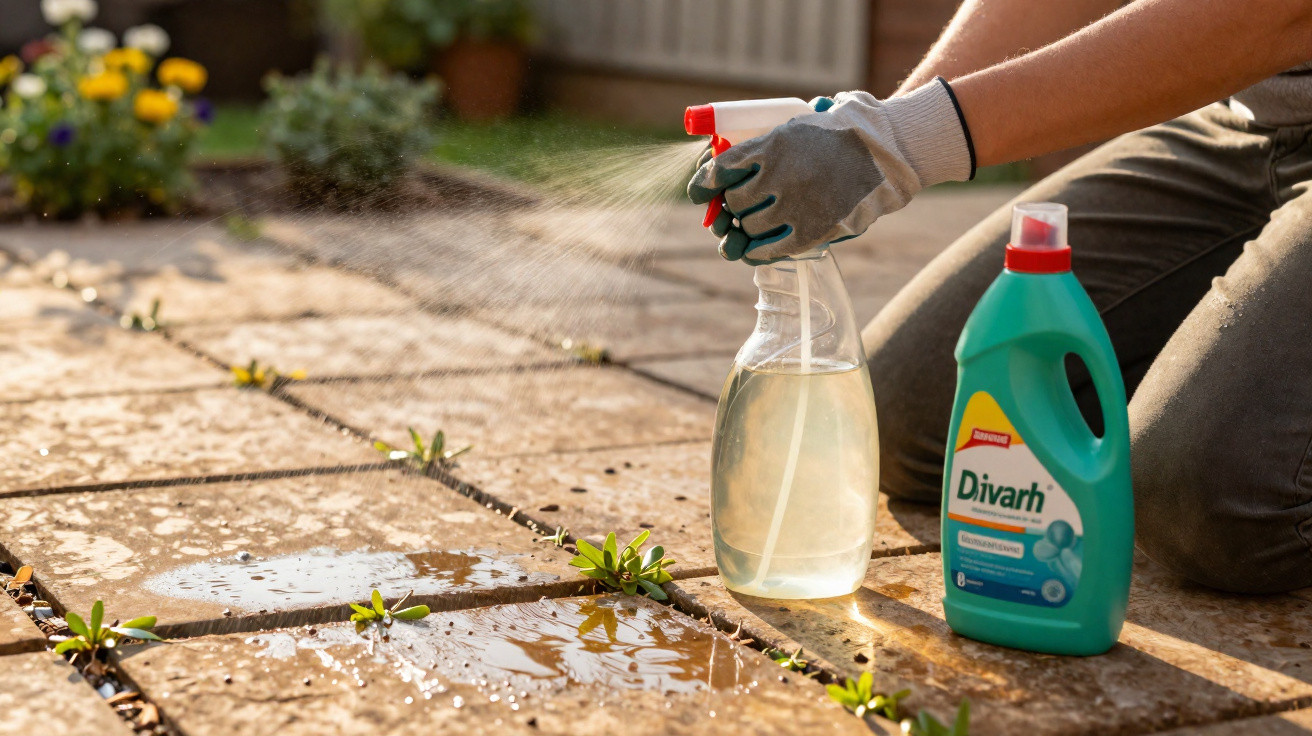
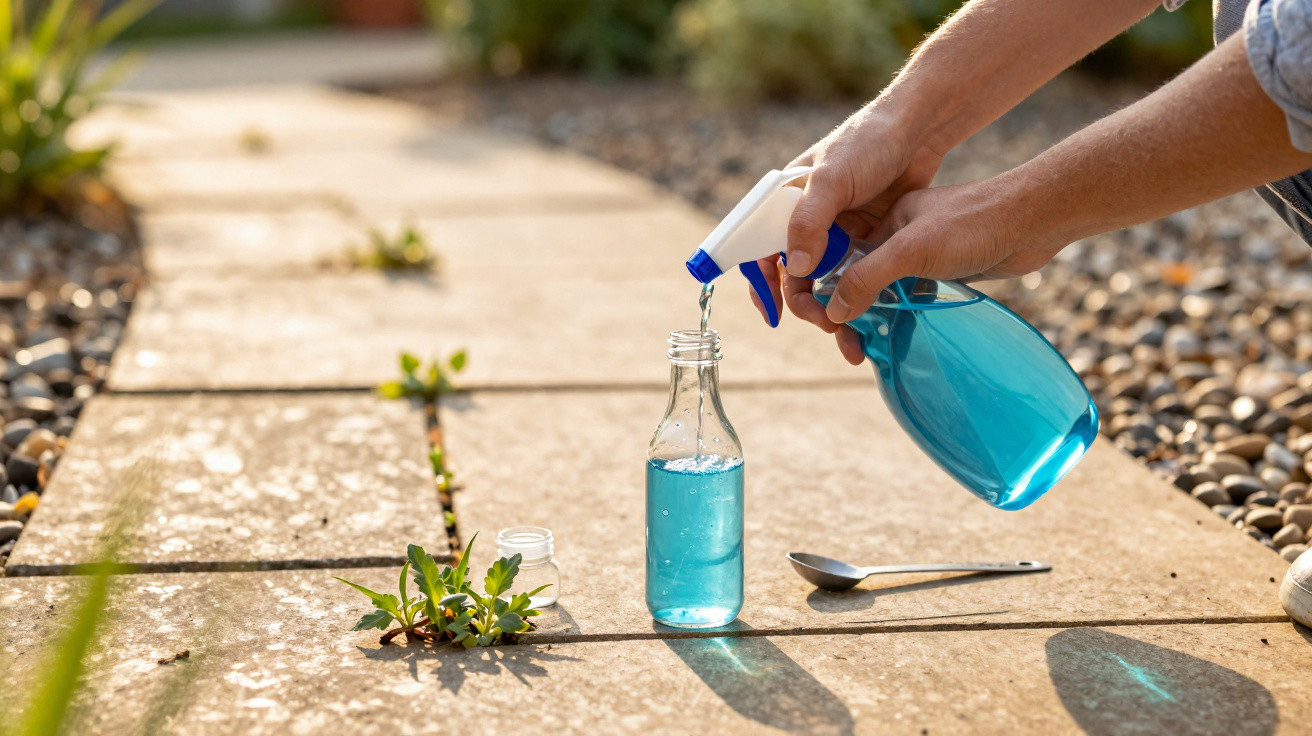
- Vinegar solution: Put an equal mixture of water and white vinegar into a spray bottle, then spray it onto railings, wall edges and favourite landing points. Many pigeons find the sharp smell off-putting.
- Spice barrier: A light layer of pepper, curry powder or cinnamon can be sprinkled onto window sills or into dry planters. The birds dislike both the smell and the tickling sensation on their feet.
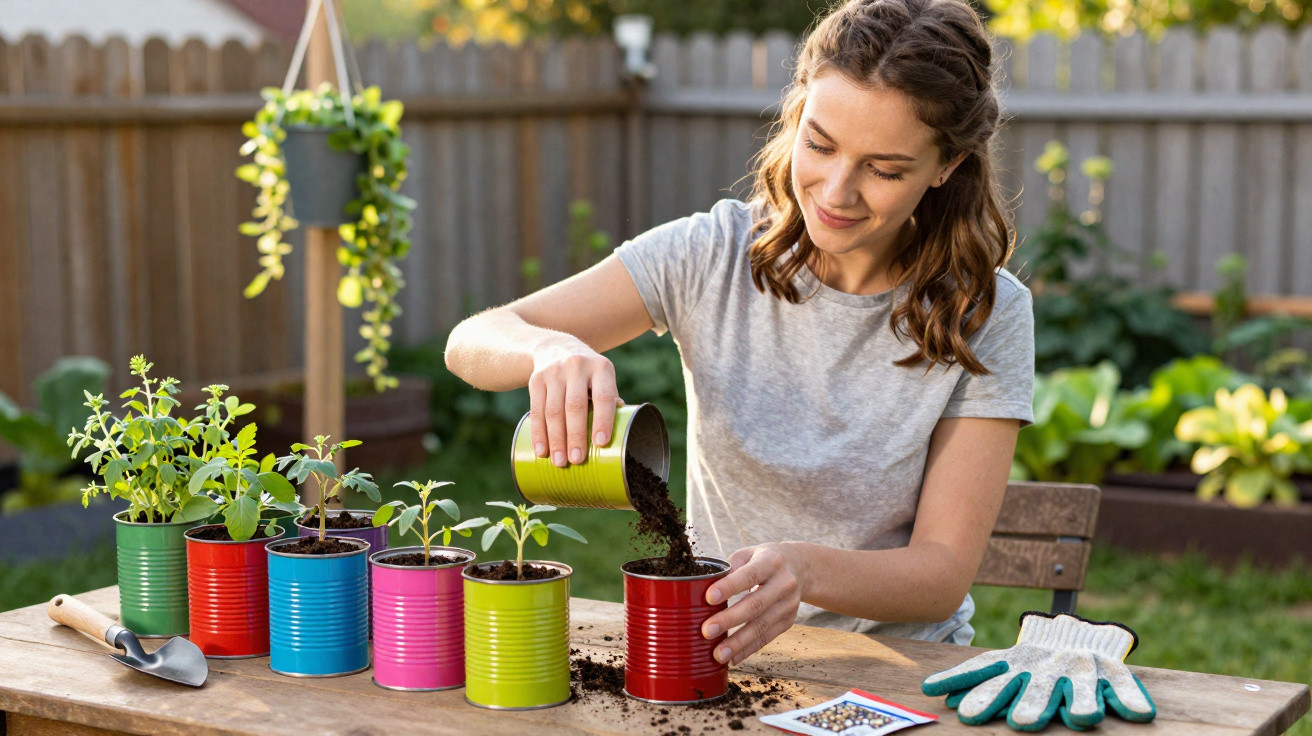
- Fragrant plants: Herbs such as rosemary and mint, or strongly scented geraniums, placed in containers directly along the balcony railing can also have a deterrent effect.
The woman in this example used vinegar spray on the terrace alongside herb planters positioned along the railing. Within a few days, the first birds stopped visiting, and after around two weeks they had moved entirely to other locations.
Flashes and movement: what unsettles pigeons
As well as scent, another approach works reliably: light reflections and sudden movement.
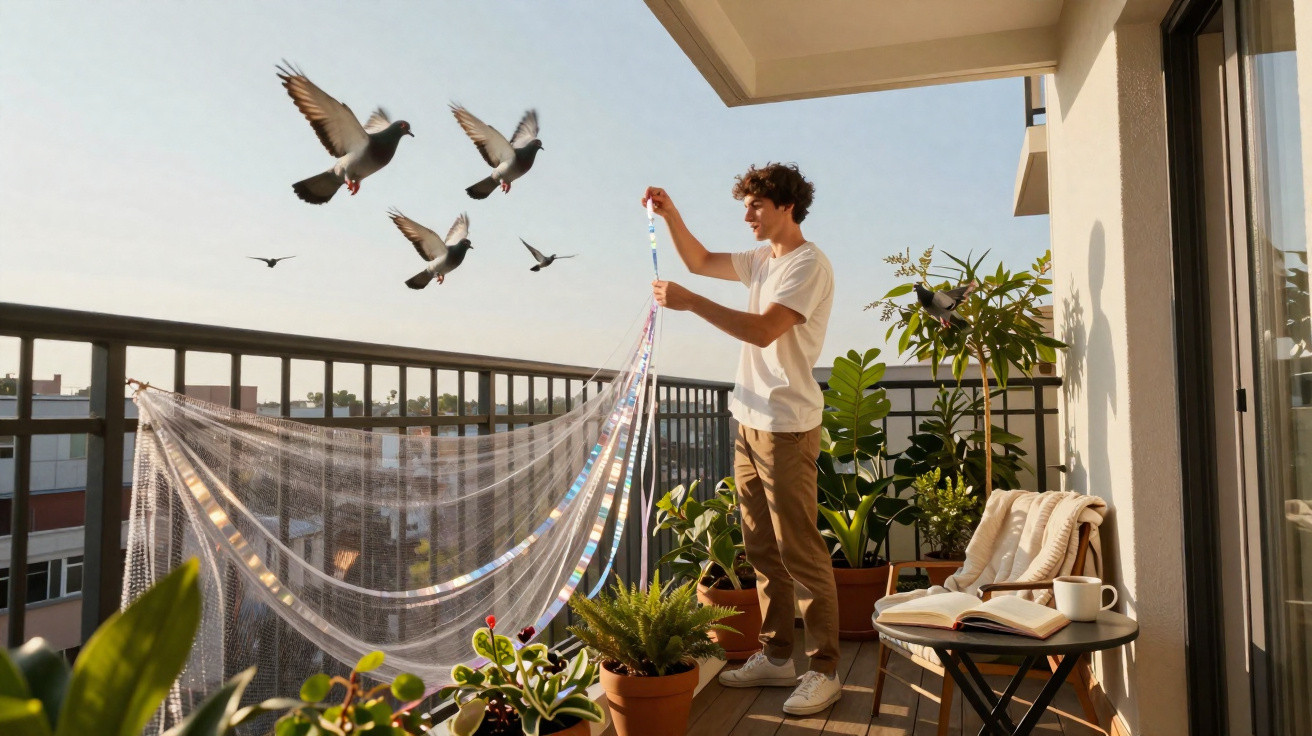
- Reflective objects: Old CDs, cut strips of aluminium foil or purpose-made reflective tape that moves in the wind create continuously changing flashes of light. Pigeons see this as a disturbance and avoid the area.
- Wind chimes and pinwheels: Small pinwheels or wind chimes that turn even in a light breeze make the birds’ perching places feel unsettled.
“Pigeons do not like surprises: if things wobble, flicker and smell unfamiliar, they would rather find a quieter place.”
Making surfaces uncomfortable: turning the balcony into a no-comfort zone
When perching and landing become difficult
Even the best vinegar solution achieves little if the balcony still feels like a perfect pigeon lounge. Lasting results only come when the landing areas themselves are made uncomfortable.
- Pigeon spikes: Narrow strips fitted with upward-facing plastic or metal spikes prevent birds from settling comfortably. When installed correctly, they do not injure the animals; they simply remove the available perching space.
- Tension wires on railings: Thin, slightly springy wires placed around five centimetres above a railing make landing unstable. Pigeons dislike standing on an insecure surface and will fly on.
- Smooth panels: Perspex or other highly smooth materials fitted to usual perching edges cause the birds to slip. They soon lose interest in landing there.
In this case, a combination of vinegar spray and a narrow strip of spikes on the most popular wall edge was enough to persuade the regular pigeons to relocate for good.
Technical and structural solutions for persistent cases
Electronic devices against pigeon noise and repeat visits
Those dealing with particularly contested balconies or roof areas sometimes turn to technology. Some devices emit sounds that are barely audible to people but unpleasant for pigeons. They are intended to irritate the birds enough over time that they avoid the area. Before buying one, it is worth checking other users’ experiences, as not every terrace responds in the same way.
Nets and decoys: when nothing else works
A particularly direct option is fine-mesh netting that blocks off entire areas. This prevents pigeons from reaching the balcony or façade in the first place. Its appearance is a matter of personal taste, but for badly affected courtyards or loggias it may be the only practical answer.
Some property managers also use decoy birds of prey or balloons with large “eyes”. These are designed to create the impression that a predator is present. To stop pigeons becoming accustomed to them, such decoys need to be moved or replaced regularly.
Legal limits and methods to avoid at all costs
However irritating pigeons may be, harming them is not acceptable. Many cities prohibit feeding pigeons. Anyone who regularly puts out bread despite this risks a fine and also encourages the problem.
- No poison or traps: Poisoned bait, glue traps and comparable methods often breach animal-welfare rules and may harm other animals as well.
- Secure access to nesting sites: Structural measures, such as sealing gaps beneath roofs or around guttering so that birds cannot nest there in the first place, are permitted.
“Keeping pigeons away without physically harming them is not heartless – it protects health, buildings and peace of mind.”
A practical plan: three steps towards a more relaxing balcony
Anyone who no longer wants to scrub the terrace every week can follow this straightforward approach:
- Cleanliness: Consistently remove crumbs, food remnants and rubbish bags left outside.
- Create discomfort: Introduce scent through vinegar, herbs or spices, as well as reflections and movement.
- Make perches unsuitable: Fit spikes, wires or smooth panels, and use netting where necessary.
The woman who had been cleaning her terrace weekly noticed a clear reduction in pigeon visits after only a few days. The key difference was that she was no longer merely cleaning up afterwards; she was systematically taking away the birds’ comfort.
Why consistent action pays off quickly
Pigeons are creatures of habit. When they find a place where they can feed, perch and nest undisturbed, they will reliably return. Once a balcony smells of vinegar, the railing wobbles and reflective or rustling objects are everywhere, however, the spot becomes less appealing. The birds then look for other areas that are more comfortable.
Those who maintain these measures instead of giving up after a few days stand a good chance of reclaiming their outdoor space for the long term. The effort then consists more of brief checks and occasional respraying than repeated deep-cleaning sessions with a scrubbing brush and bucket.
Tenants should speak to their landlord or property manager before drilling holes or putting up netting. There may already be rules in place or even support available, as façades and the building fabric also suffer from the aggressive droppings. A private irritation can therefore quickly become a shared concern – and the balcony can once again be somewhere to relax rather than scrub constantly.




Comments
No comments yet. Be the first to comment!
Leave a Comment