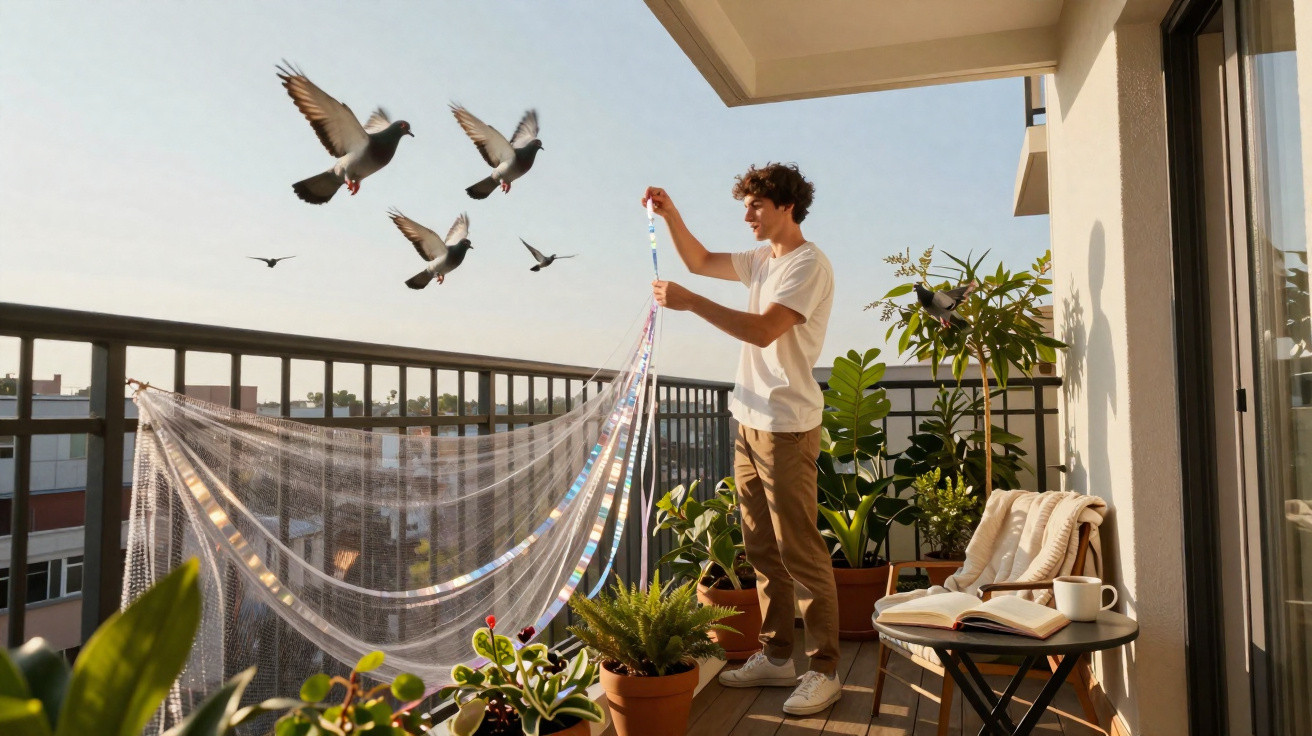
Anyone living in a town or city will recognise the issue: no sooner have you painstakingly cleaned the terrace or balcony than pigeons return, leaving droppings and feathers behind – and the whole cycle starts again. One reader said she used to clean her terrace every week until she discovered a straightforward but smart approach that made the birds go elsewhere of their own accord. Here is what lies behind it, along with proven ways to tackle a pigeon problem on balconies, roofs and terraces.
Why pigeons find your balcony so appealing
Before attempting to deter pigeons, it is worth understanding why they choose particular places in the first place. Addressing these causes directly means less cleaning in the long run.
- Food sources: Breadcrumbs, crisp leftovers, bird feed and pet food are effectively an all-you-can-eat buffet for pigeons.
- Convenient landing spots: Window ledges, railings, air-conditioning units and roof edges make ideal perches and nesting locations.
- Sheltered areas: Recesses, eaves, ledges and overhangs protect birds from rain, wind and predators.
“Anyone who makes their outdoor space unattractive to pigeons will need to clean it far less often – and can reclaim their favourite spot.”
The first rule: remove food instead of cleaning constantly
Many people respond by cleaning more and more thoroughly, then wonder why the issue persists. Cleanliness on its own is not enough if birds can still find food there.
Do not offer an everyday buffet
Anyone wanting to get rid of pigeons needs to be consistent:
- Do not leave food scraps on the balcony, windowsill or terrace.
- After eating outdoors, quickly wipe down or sweep the table and floor.
- Only put out bird food in protected feeders that larger birds can barely access.
- Seal rubbish bags securely and never store food or general waste uncovered.
Deliberately feeding pigeons is already prohibited in many towns and cities. Scattering bread or grain can lead to fines – and will inevitably attract more birds.
A terrace where pigeons do not want to land
The reader’s key tactic was to alter her outdoor surfaces so that pigeons simply no longer felt comfortable there. Rather than endlessly scrubbing, she made the area inconvenient for the birds.
Make pigeon landing spots uncomfortable
Pigeons favour stable, broad surfaces with good grip. If those are unavailable, they will voluntarily look for somewhere else. Useful options include:
- Bird spikes: Strips fitted with plastic or metal spikes stop pigeons settling on windowsills, walls and pipes. Reputable versions do not harm the animals; they merely make perching uncomfortable.
- Tension lines or thin wires: Positioned across railings or wall tops, these unsettle the birds’ balance. Pigeons usually avoid these areas after a short time.
- Smooth surfaces such as Perspex: Pigeons cannot get secure footing on smooth, gently sloping panels. A narrow Perspex board placed on a windowsill is often sufficient.
“Rather than reaching for the scrubbing brush every week, it is worth making a one-off alteration – the result will usually last for years.”
Natural scents pigeons dislike
Those who do not want to install visible deterrents can use smells instead. Pigeons find some scents particularly unpleasant.
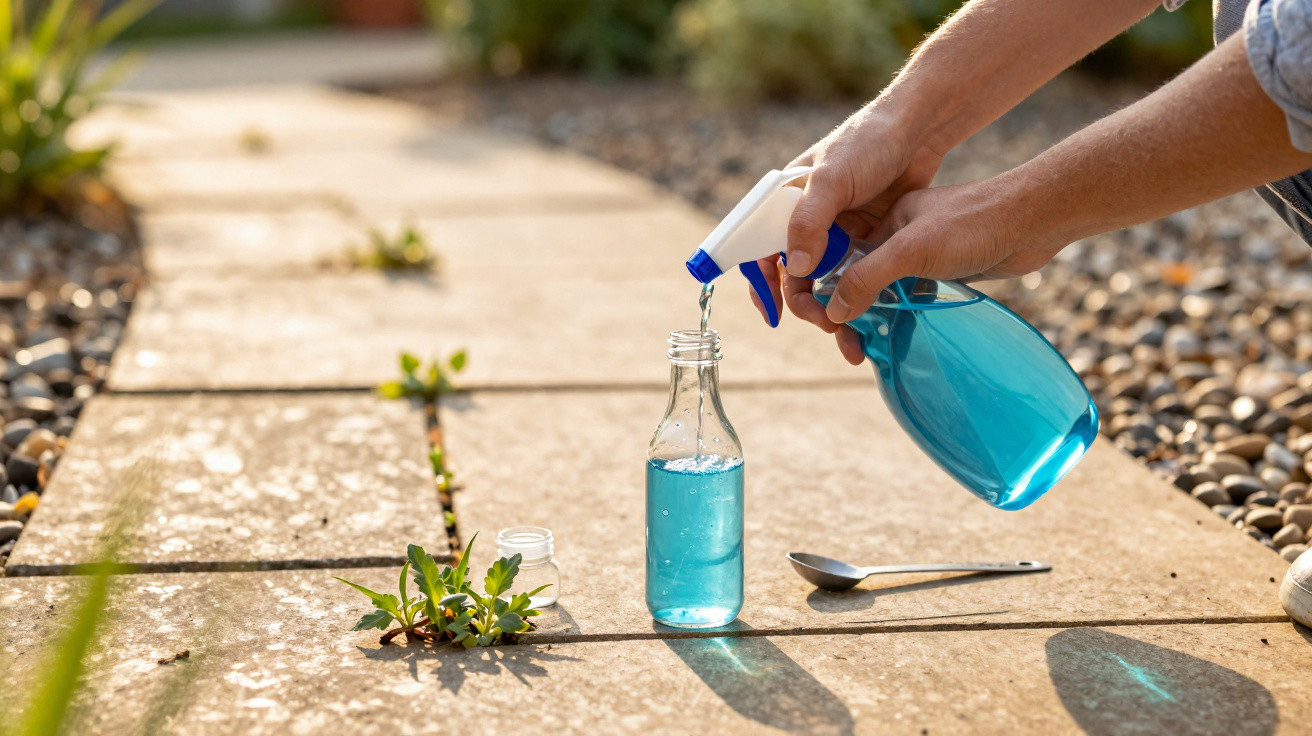
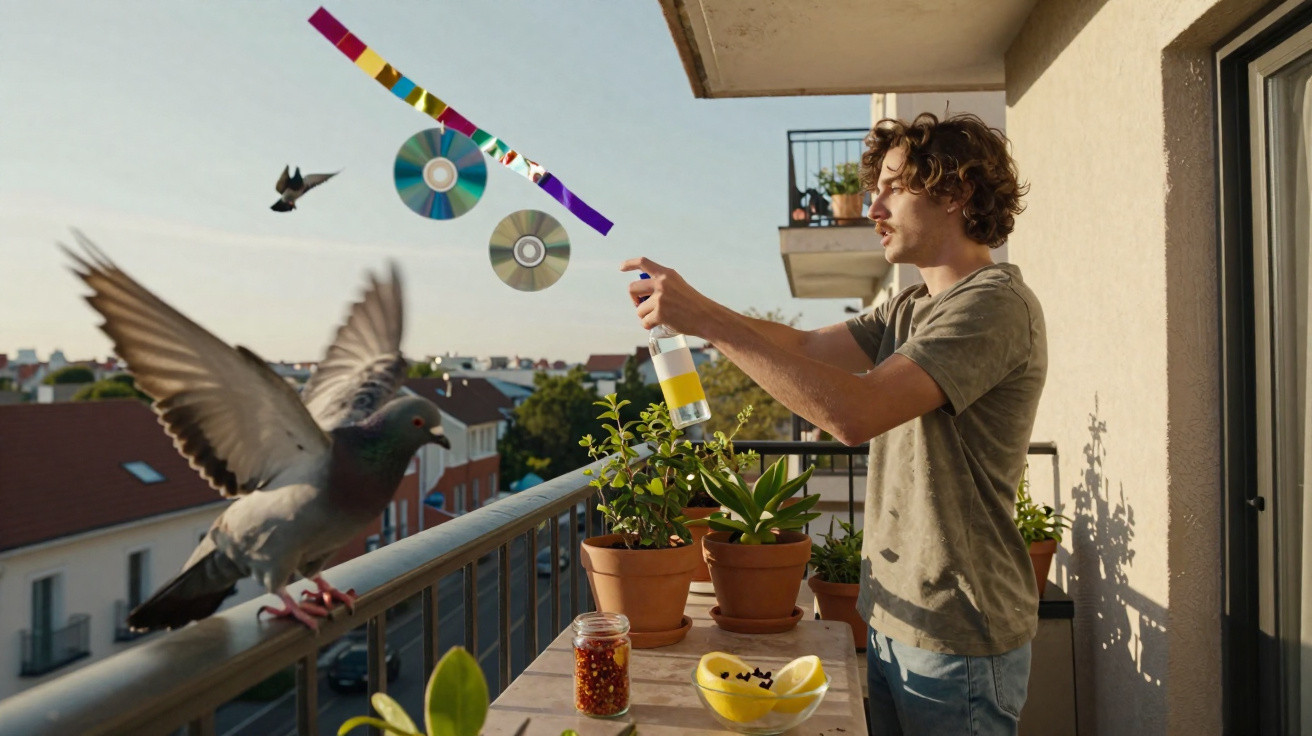
- Vinegar solution: Regularly spray the pigeons’ preferred spots with a 1:1 mixture of water and clear household vinegar in a spray bottle. While people stop noticing the smell quickly, it remains irritating to the birds for longer.
- Spices: Ground pepper, curry powder or cinnamon can be scattered along windowsills or in planter boxes. They need reapplying after rain.
- Strongly scented plants: Potted herbs such as rosemary and mint, or intensely fragrant geraniums, can discourage pigeons from landing on a balcony while also adding decorative interest.
Using movement and light reflections as deterrents
Pigeons are sensitive to sudden motion and bright flashes of light. When used properly, a few simple household items can be enough.
Reflective and moving features
Three approaches in particular have proved useful:
- Old CDs or shiny ribbons: Hung on string, they turn in the breeze. Their reflected light unsettles the birds.
- Wind spinners: Colourful wind spinners in plant pots combine colour with movement. Many pigeons avoid balconies where movement is constantly changing.
- Balloons with “eyes”: Special balloons or spheres with large eye patterns resemble predators to pigeons. They only work well if they are moved occasionally.
| Method | Effort | How it works |
|---|---|---|
| Spices & herbs | low | Scent keeps pigeons away |
| Spikes & wires | medium, one-off | Landing places become unusable |
| Reflectors & wind spinners | low to medium | Light and movement stimuli deter birds |
| Nets | high | Areas are completely sealed off |
Technology for pigeons: when devices are worthwhile
For severely affected locations, such as large roof terraces, many property owners turn to technical options.
Ultrasound and sound devices
Retailers sell devices that emit high-frequency sounds. People generally cannot hear them, while pigeons are meant to find them disruptive. In reality, their success varies because birds can become accustomed to repetitive sounds. Sensitive pets and other bird species may also react, so these devices should be used carefully.
Artificial pigeon “predators”
Models of birds of prey, including falcons and owls, can now be found on many roofs. They can genuinely help – but only if they are positioned convincingly and do not remain fixed in exactly the same location for months. Moving them regularly, or pairing them with gently moving features, increases their deterrent effect.
Structural measures for persistent pigeon problems
If pigeons have been nesting in one location for years, gentler approaches are often only partly effective. In such cases, permanently installed solutions come into play.
Nets and closed-off recesses
Fine-mesh netting around a balcony or across courtyards prevents pigeons from entering at all. It may not suit everyone aesthetically, but it is highly effective in practical terms. Entry points beneath roofs, around gutters or by chimneys should also be sealed. Special grilles or covers allow air to circulate while stopping birds from building nests there.
“Anyone who makes nesting places inaccessible tackles the problem at its root – the birds move on instead of returning every year.”
Legal limits and animal welfare
Although pigeons can be a nuisance, they are still protected animals. Killing or injuring them, or using methods that cause suffering, is not acceptable. In many local authorities, enforcement officers specifically check for prohibited measures such as glue traps. Anyone unsure can ask their local council or pest-control professionals about animal-friendly options.
How the weekly cleaning routine became unnecessary
Returning to the terrace owner mentioned at the beginning: her weekly routine involved scrubbing off droppings, cleaning furniture and disinfecting the floor. Things changed when she combined three measures:
- She removed every food source and made a point of never leaving even crumbs behind.
- She fitted narrow Perspex strips and a row of spikes to the birds’ favourite perches.
- She added several herb pots with strongly scented plants and hung up two reflective ribbons.
After several days, pigeons were visiting much less often. Within a few weeks, they stopped coming altogether because the terrace had simply lost its appeal. The weekly deep-clean became a quick wipe-down every few days.
Practical advice for balcony and terrace owners
Anyone facing a similar problem can take a gradual approach instead of changing everything at once. A trial period is sensible:
- Begin by removing food sources and using spices.
- After one to two weeks, check whether the pigeons’ behaviour has changed noticeably.
- If the infestation is heavy, make landing areas structurally unattractive.
- Add reflective or moving features if pigeons remain persistent.
It is important to remember that some measures take time to work because pigeons are creatures of habit. They return to places where they previously found food or shelter. If the approach does not succeed, it should be adjusted slightly – often a small change in the position or combination of deterrents is enough.
By planning an outdoor space that is comfortable for people but inconvenient for pigeons, you achieve two things at once: less mess and a better quality of life. The weekly terrace deep-clean can then finally become a thing of the past.

Comments
No comments yet. Be the first to comment!
Leave a Comment