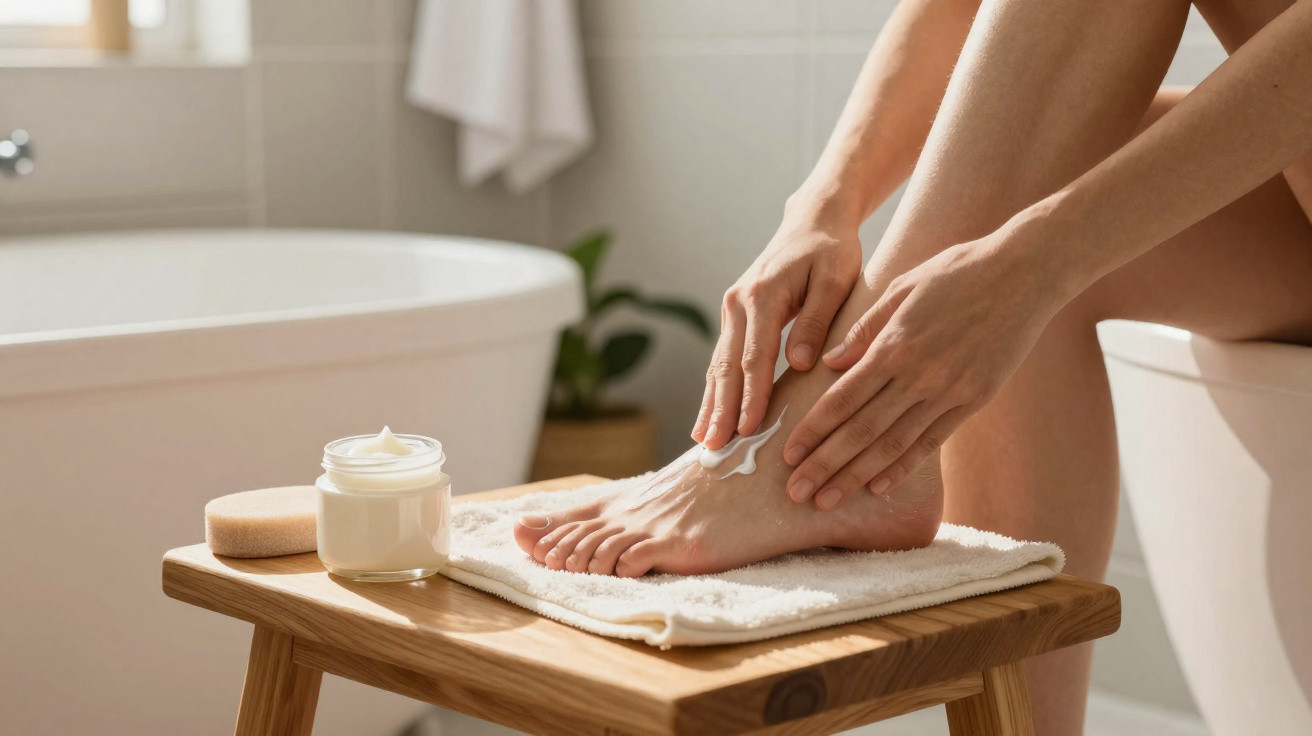
After spending the day in sandals, Helena noticed a change in her heels: the skin felt thicker and rougher, with small whitish patches. At first, she assumed filing the area would be enough, but she chose to adjust one part of her routine instead. After showering, she began applying moisturiser to her feet, focusing on the driest areas while the skin was still slightly damp.
Why do feet often become drier?
The skin on the feet is continually exposed to pressure and friction, particularly on the heels and soles. These areas naturally have a thicker layer of skin, which can make them feel rough when they are not sufficiently moisturised.
Very hot, lengthy showers may also dry out the skin, as can frequent use of soaps that strip away some of its natural oils. Dry weather and regularly walking barefoot can likewise affect how the feet look.
Why can applying moisturiser straight after a shower help?
Following a shower, the skin retains some water. Using a moisturiser at this point can help limit moisture loss, leaving the surface softer and more comfortable.
For particularly rough areas, foot products may contain ingredients such as urea at suitable concentrations, lactic acid, or other moisturising and emollient agents. The right choice will depend on the level of dryness and how sensitive the skin is.
How to care for thicker areas without damaging the skin
Helena also realised that rubbing or filing her heels too hard was not a good approach. Aggressively removing the top layer of skin may cause irritation and, in some cases, small injuries. The aim should be to soften the area gradually while maintaining a regular moisturising routine.
- After showering: gently dry your feet and apply moisturiser while the skin remains slightly damp.
- Heels: pay particular attention to areas that are naturally thicker and rougher.
- Exfoliation: avoid harsh methods or exfoliating too often.
- Footwear: choose comfortable styles that minimise excessive friction and pressure.
One important precaution is to avoid applying very oily products between the toes, especially if moisture tends to build up there. Keeping the spaces between the toes dry can help prevent issues linked to excess moisture.
When does dry skin on the feet need attention?
If the skin develops deep cracks, bleeding, pain, persistent itching, redness, or sores that do not improve, professional assessment may be needed. In these situations, it is not advisable to try to address the problem using exfoliants or home remedies alone.
For Helena, the adjustment was straightforward: rather than waiting until her heels became extremely rough before caring for them, she made moisturising part of her after-shower routine. With consistency and suitable products, this small habit can help keep the skin on the feet softer and more comfortable.













Comments
No comments yet. Be the first to comment!
Leave a Comment