There is a discreet bathroom trick that hotel housekeepers depend on but seldom mention. It costs pennies, can be found in the odds-and-ends drawer, and makes a disorderly bathroom feel calmer. It is such a subtle adjustment that you could overlook it while cleaning your teeth. But once you notice it, it is impossible to ignore.
I first spotted it in a midweek hotel room whose window looked onto a brick wall, with towels folded into origami-like birds. Halfway up the shower curtain was a wooden clothespin, fastening the clear liner to the outer fabric curtain like two fingers sharing a secret. I looked at it, dismissed it, then showered. There was no cold curtain sticking to me. No water sprayed through the gap beside the showerhead. The floor beyond the bath remained dry, which felt like a victory in an ordinary contest I had never chosen to enter. That clothespin was not there for drying laundry.
The tiny clip that quietens a noisy bathroom
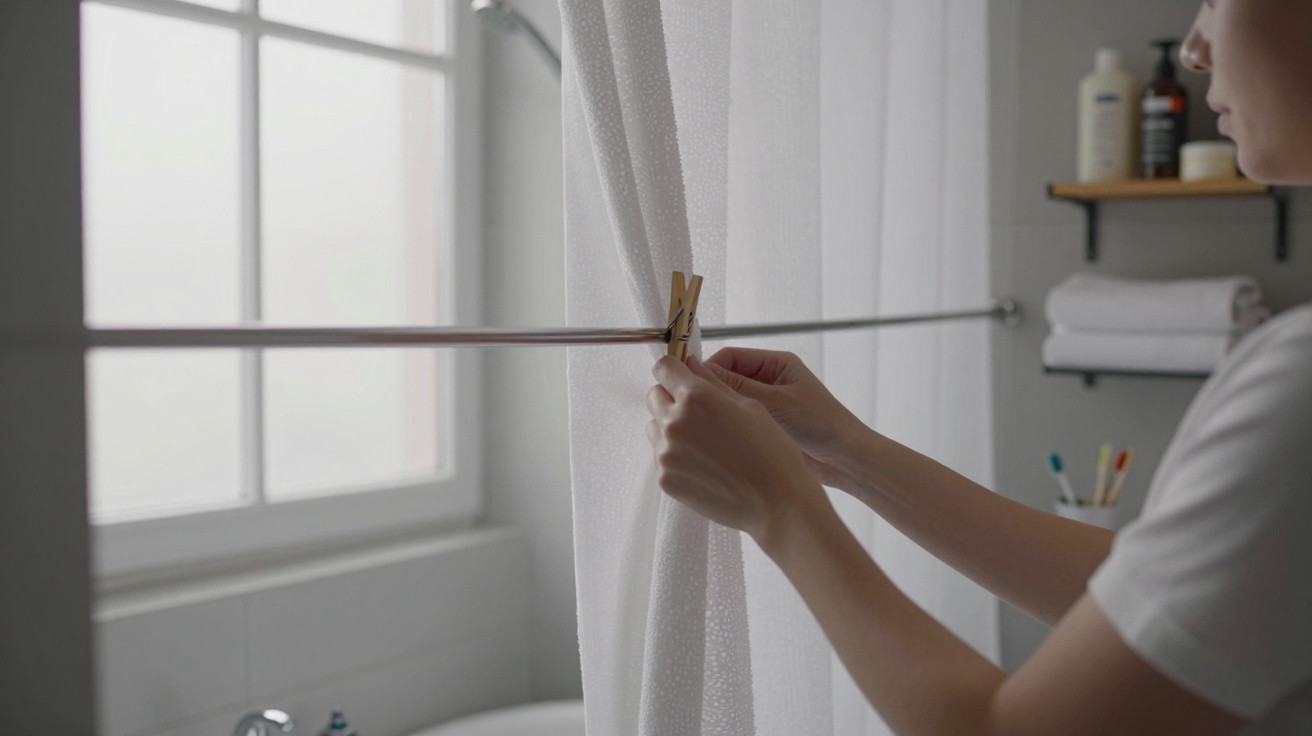
Attach one clothespin to a shower curtain and the entire room feels more settled. The clip keeps the liner where the water needs it and the fabric away from your body. It is rather like holding down a page that keeps turning in a draft. The professional secret is about positioning rather than pressure, so one inexpensive clip can provide zero curtain cling and neater edges without having to battle with the rail every morning.
I spoke to a housekeeper called Lina, who looks after twenty rooms a day on a busy midtown floor. In her apron pocket, she keeps three clothespins alongside a bleach pen and a smile that appears well earned. She fastens one just beyond the showerhead at chest level, adds another close to the bottom hem when the liner is especially flimsy, then carries on without another thought. She says the clips save her from more mopping than an additional bathmat ever would.
There is a straightforward explanation for why it helps. A hot shower draws air upwards; quicker-moving air along the curtain lowers the pressure and pulls the liner towards you. Securing one or two points disrupts that pull, sends spray back into the bath and keeps the liner where it belongs. Fasten the leading edge and you close the gap most likely to leak, where water bounces off your shoulder and attempts to escape. Less movement creates less mess.
The housekeeper’s method, step by step
Stand outside the bath facing the curtain. Locate the edge nearest the showerhead, where water is most likely to creep through. At roughly chest height, fasten the clear liner and fabric curtain together about 1 inch from the edge, allowing both panels to work as one sheet and fit closely against the wall tiles. If the liner is particularly prone to floating about, place a second clip on the bottom hem at the drain end to add a small amount of weight. It is unexpectedly pleasing, like bringing order to a chaotic morning with one snap.
Two simple precautions make the method trouble-free. Use a plastic clothespin or one made from sealed wood, because exposed metal springs may rust and leave stains. Avoid clipping right at the edge of thin vinyl, as it can stretch; leave that 1-inch margin and it should stay secure for months. We have all stepped out of the shower to find a little lake beside the bath, and this minor adjustment saves reaching for extra towels. Honestly, nobody wants to deal with that every day.
It is not magic; it is simply a practical worker’s habit that endures.
“A 50‑cent clip does what an extra ten minutes of wiping can’t,” Lina told me, tapping her apron. “It keeps the chaos inside the tub.”
More than a fix, it can become a mild prompt for a routine: clip it before turning on the water, then remove it afterwards so the curtain dries more quickly.
- Sealing the edge beside the showerhead means less splash outside.
- Securing the bottom hem keeps the curtain stable and reduces drafts.
- Joining liner and fabric creates tidier lines and no mildew smell.
- Removing the clip after showering enables quicker drying and fewer marks.
Why this small ritual lasts
Long-lasting habits are usually easy, tangible and just a little bit ingenious, and this one has all three qualities. The moment the clip touches the fabric, your hand knows the task, and the room immediately works better. A bathroom-sized micro-routine becomes a small favour to your future self, much like leaving tomorrow’s coffee spoon clean.
The clothespin changes the way air moves around the shower, too. Connecting the liner to the fabric forms a gentle baffle that steadies airflow and reduces the draft responsible for the cling. Removing it afterwards creates a deliberate opening that lets steam escape, allowing the curtain to dry rather than sit damply in a warm fold. That means fewer pink patches in the corners, fewer unexplained smells and a curtain that lasts longer before its next deep clean.
There are a few optional additions for those who want them. Wrapping a silicone band around the jaws makes the grip gentler on thin vinyl. A small spring clamp suits anyone who prefers a firmer hold, although a traditional clothespin is lighter and less harsh on fabric. Some people place a second peg on the rail as a prompt, rather like a bookmark during the morning rush. The tool is modest, but its impact is not.
It is amusing that something made for sunlit washing lines can become the hero of a tiled enclosure, but bathrooms are exactly where small ideas prove their worth. A clothespin is not glamorous, but it is straightforward. It makes the room immediately less chaotic, less splash-prone, less clingy and, oddly, more adult, even if the mirror is steamed up and you are late. You may test it tonight and forget all about it next week, or it could become the quiet click that starts your day, like fastening a seatbelt.
| Key point | Detail | Benefit for the reader |
|---|---|---|
| Clip at the showerhead edge | Fasten the liner to the fabric about 1 inch from the edge, at chest height | Prevents escaping spray and keeps water inside the bath |
| Secure the bottom hem | An optional second clip adds a little weight on the drain side | Reduces curtain billowing and drafts |
| Drying routine | Remove the clip after showering to create an air gap | Faster drying, fewer odours and a longer-lasting curtain |

Comments
No comments yet. Be the first to comment!
Leave a Comment