As Arctic air returns and forecasters predict severe overnight frosts, one modest step indoors could help households avoid substantial repair costs.
Specialists across the UK are advising people to adjust the way they heat and manage their homes as temperatures drop far below freezing. Some areas have already recorded lows of -12.5°C. The concern behind these warnings is a familiar winter hazard: pipes that freeze, develop cracks unnoticed, and then burst once the ice starts to thaw.
Why experts want cupboards left open
Heating engineers and bathroom fitters have issued an unusual but useful recommendation for this week’s cold snap: avoid sealing pipework away behind closed cupboard doors.
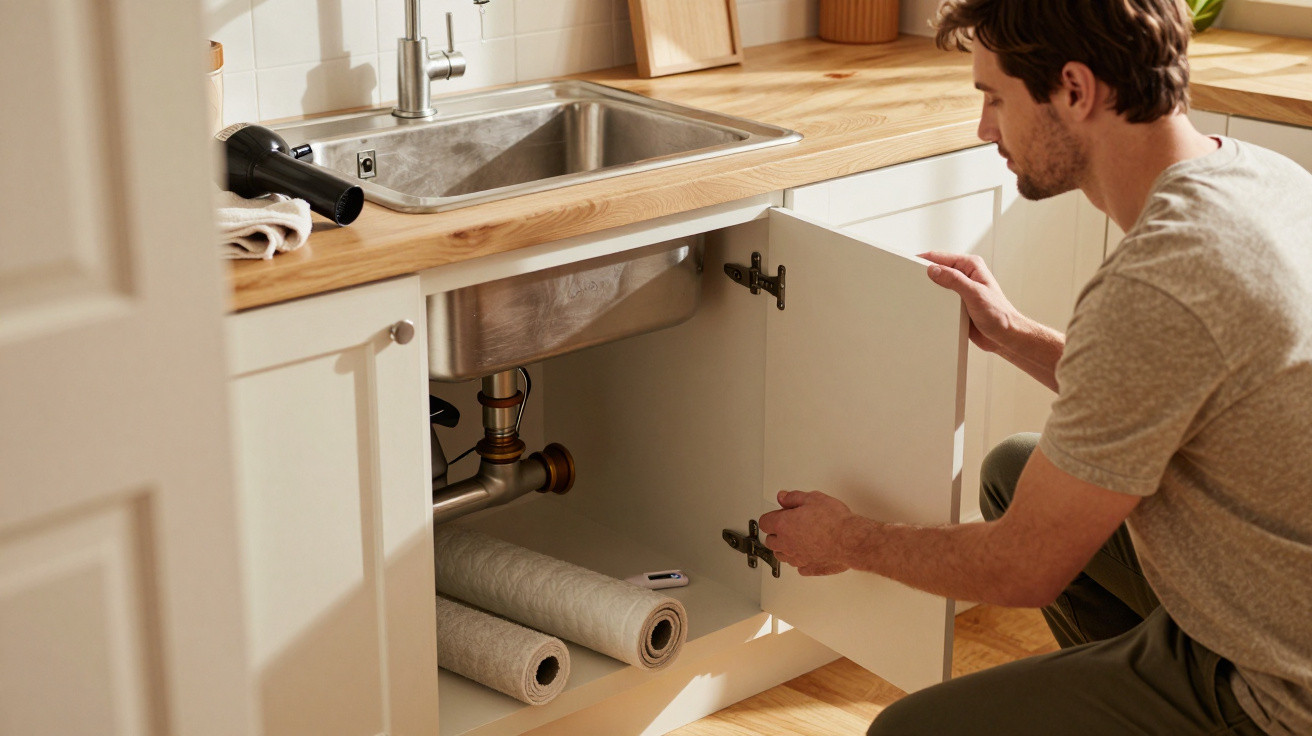
Leaving kitchen and bathroom cabinets standing open can keep hidden pipework just warm enough to avoid freezing and bursting.
Kitchen sink cabinets and bathroom vanity units are often positioned against outside walls, allowing outdoor cold to pass through brickwork and insufficiently insulated cavities. With the doors shut, warm air from the room cannot easily reach pipes hidden behind pans, cleaning supplies and toiletries.
This can form a particularly cold area overnight, when heating levels are lower. Should the air surrounding the pipes drop below 0°C, the water inside may freeze, expand and force pressure against bends and joints. A pipe may not immediately rupture completely, but a tiny crack can widen when temperatures recover and water pressure returns.
Leaving cupboard doors ajar in the evenings and throughout the coldest days lets central heating reach these exposed areas. Although it seems a small adjustment, plumbers say it could be the difference between an ordinary morning and a flooded kitchen.
How freezing temperatures damage pipes
Water expands by around 9% when it freezes in a confined area. Pipes, particularly older copper pipes or rigid plastic pipework, have little capacity to stretch, so this pressure must be released somewhere.
The areas most at risk commonly include:
- Lofts and attics with little or no insulation
- Unheated garages and utility rooms
- Cavities behind external walls and beneath suspended floors
- Outside taps and garden water supply pipes
Over an extended cold spell, these spaces can become several degrees colder than the rest of a property. People may not realise there is a problem until conditions improve and frozen blockages begin to thaw.
Frozen pipes rarely cause their worst damage during the freeze; the real trouble tends to start during the thaw, when water begins to flow again.
When a pipe ruptures, water may flow constantly beneath floorboards, behind plasterboard or within kitchen units. Costs can soon exceed the typical £200 plumbing bill, especially where ceilings fall down or electrical systems require replacement.
Key steps households are being urged to take
1. Keep kitchen and bathroom cabinets open
For the full duration of the cold snap, specialists recommend leaving sink-unit and vanity-cupboard doors open, especially where the units sit against an external wall.
If there are children or pets in the household, place bleach, detergents and sharp items on higher shelves or in sealed boxes. The aim is to maintain safety while allowing air to circulate. Even an opening of a few centimetres enables warm air to reach the pipes, particularly in compact rooms where radiators are working hard.
2. Maintain a low, consistent thermostat setting
To reduce energy costs, many households still turn their heating off completely overnight. However, this can cause indoor temperatures to fall sharply and leave pipework in colder parts of the property vulnerable.
Energy specialists now suggest keeping the thermostat at a modest, steady setting – often between 12°C and 15°C overnight – rather than letting the home swing from warm to near-freezing.
This may appear counter-intuitive for people carefully monitoring every pound spent on energy. However, boilers operate more efficiently when maintaining a basic level of warmth than when repeatedly warming a completely cold home. Gentle, ongoing heat also keeps temperatures steadier in cupboards and voids containing pipework.
3. Insulate exposed pipes correctly
Basic foam pipe lagging remains among the most affordable and effective protections against freezing. It fits around pipes in lofts, garages and along external walls, retaining a thin air layer that reduces heat loss.
Renters can often install straightforward insulation too, as it is generally considered a reversible alteration. For lengthy pipe runs in unheated areas, combining lagging with draught-proofing around gaps in walls and floorboards offers stronger protection.
| Pipe location | Risk level during cold snap | Suggested action |
|---|---|---|
| Under kitchen sink on exterior wall | High | Open cabinet doors, check insulation, avoid turning heating off |
| Loft feed pipes | High | Fit foam lagging, improve loft insulation around (not on) tank |
| Garage or utility room pipes | Medium to high | Add lagging, seal draughts, use background heater when very cold |
| Internal pipes in heated rooms | Lower | Keep rooms above 12°C, avoid closing vents entirely |
4. Allow taps to drip very slightly
Letting a cold tap drip may seem wasteful, particularly in places where residents closely monitor their water meter. However, a slow and continuous trickle keeps water moving, and moving water takes longer to freeze than water left still.
This measure is most useful for pipes that have frozen during previous winters or for runs passing through unheated spaces. The minor extra cost of water use will generally remain far below the expense of emergency plumbing work and repairs for water damage.
What to do if a pipe freezes anyway
Despite careful preparation, some properties may still experience difficulties during a severe cold spell. Warning signs include a weak trickle from taps, toilets that do not refill as they should, or radiators that remain cold in places.
If a pipe freezes:
- Turn off the stopcock to prevent sudden water surges should the pipe split.
- Open the affected taps to reduce pressure in the system.
- Apply mild heat to accessible pipe sections, using warm towels or a hairdryer on a low setting.
- Do not use naked flames or powerful heat guns, as these may distort pipes or start fires.
- Contact a qualified plumber if you think a pipe has burst or you cannot find the blockage.
Quick action can limit water damage, especially in flats where leaks may travel into neighbouring properties.
Cold-weather habits that protect the whole home
The latest advice is not limited to plumbing. Keeping internal doors open during the day allows warm air to move through the home, reducing pressure on heating systems and concealed pipes alike. Closing thick curtains overnight helps reduce heat loss through windows, while draught excluders around external doors make a stable background temperature easier to maintain.
Older homes with solid walls present additional difficulties, as they can lose heat more quickly once the heating is switched off. In these properties, leaving cabinet doors open alongside pipe lagging and routine boiler checks provides layered protection against winter damage.
Why this winter’s warning matters
Energy prices are still a major worry for many households, influencing decisions about heating the home. It may seem sensible to turn radiators off in rarely used rooms or keep doors shut to retain heat, but doing so can leave cold air trapped around pipework.
Insurers continue to receive significant claims each year for escape-of-water damage associated with frost. If ceilings collapse or wooden floors become warped, repairs can take weeks, forcing families to move out or restrict their use of the property.
In that context, the current advice to make simple behavioural changes, including leaving kitchen and bathroom cabinets open during the coldest periods, is intended to balance energy savings with protecting the home.
Planning ahead for the next cold snap
After this week’s freeze has ended, carrying out a brief check of the plumbing can be worthwhile before the next blast of cold weather. Identify the coldest parts of the home, note taps supplied by pipes along outside walls, and check where loft or garage pipework is still unprotected. A relatively small investment in insulation materials, together with clear advice for everyone in the household, can lower the risk each winter.
People renting their home can help avoid later disputes by discussing previous pipe problems with their landlord and requesting basic lagging or draught-proofing. Taking simple photographs of vulnerable pipes and making requests in writing creates a record that helps both parties recognise the risk.

Comments
No comments yet. Be the first to comment!
Leave a Comment