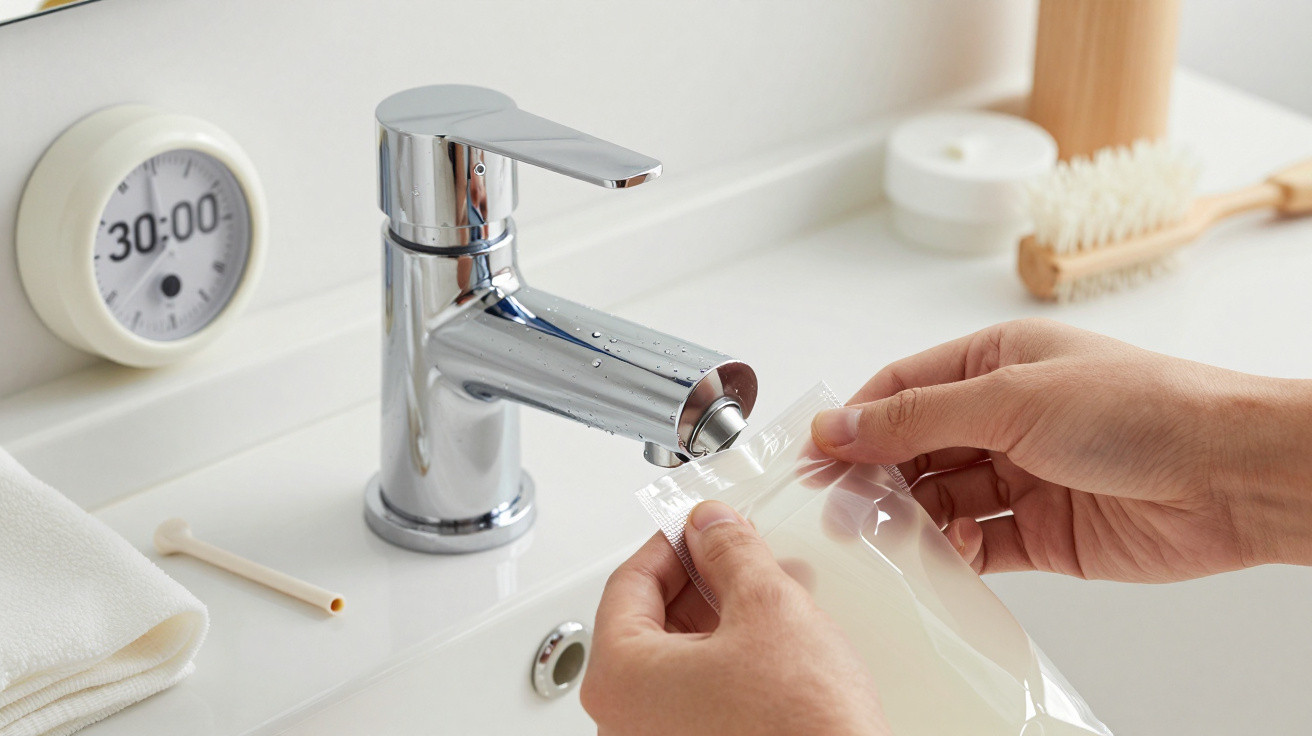
Take a close look at your showerhead and you may notice a chalky coating or jets spraying at odd angles. These seemingly minor clues often point to a straightforward issue that is easy to miss.
Why hard water quietly damages your shower
In many areas of the UK and the US, tap water contains dissolved minerals, chiefly calcium and magnesium. As this “hard” water runs through a showerhead, the minerals gradually become visible.
With every shower, a fine layer of water remains on the metal or plastic nozzle. Once it evaporates, it leaves a tiny mineral deposit behind. Over days, these layers accumulate and solidify into limescale. A light white residue can eventually become a hard crust that restricts, or completely blocks, the spray holes.
Hard water stains are not just cosmetic. They change the water flow, shorten the life of fixtures and can waste significant water.
In recently built flats, this can develop within a year. In older properties with ageing pipework, the scale can become far more severe, causing weak pressure, irregular spray, water jetting sideways around the bathroom, or a shower that simply feels “tired”.
The viral vinegar bag hack, properly explained
For an increasing number of tenants and homeowners, the solution is not a costly plumber’s visit but an everyday kitchen item: distilled white vinegar and a standard plastic bag. The approach has spread steadily through social media and DIY forums because it appears almost too simple - and, used correctly, it is effective.
How vinegar breaks down limescale
Vinegar is, in effect, a mild acetic acid solution. The acid reacts with alkaline mineral deposits and breaks them into compounds that rinse away readily. There is no need to scrub heavily or take apart any plumbing: the chemistry does the work.
The acetic acid in white vinegar dissolves calcium carbonate deposits, freeing clogged nozzles and restoring the spray pattern in minutes.
Compared with certain aggressive descalers, ordinary household vinegar is fairly kind to most chrome and stainless-steel finishes if its contact time is kept limited. It is inexpensive, easy to find and will not leave a chemical haze in a compact bathroom.
Step-by-step: 30-minute showerhead rescue
Many plumbers now discreetly suggest trying this technique before arranging a call-out. It needs roughly half an hour of soaking time and only a few minutes of hands-on effort.
What you need
- 1 strong plastic or reusable silicone bag, big enough to fit over the showerhead
- Distilled white vinegar (at least 5% acidity)
- An elastic band, cable tie or string to fasten the bag
- An old toothbrush or soft brush
- A microfibre cloth
- Optional: rubber gloves, a jug and a towel for the shower tray or floor
How to do it in 30 minutes
| Step | Action | Why it matters |
|---|---|---|
| 1 | Switch off the shower and allow the head to cool fully. | This avoids burns and prevents abrupt temperature changes affecting the fitting. |
| 2 | Fill the bag halfway with white vinegar. | It provides sufficient liquid to cover the nozzles without weighing the bag down too much. |
| 3 | Raise the bag over the showerhead until the face plate is completely submerged in vinegar. | This directs the treatment at the mineral deposits that obstruct the water flow. |
| 4 | Fasten the bag securely around the shower arm with an elastic band or tie. | It prevents spills and keeps the vinegar continuously against the deposits. |
| 5 | Leave it in place for around 30 minutes. | This allows the acid time to soften and dissolve the limescale. |
| 6 | Take off the bag, dispose of the liquid and lightly brush the nozzles. | This removes softened residue that remains attached to the surface. |
| 7 | Run hot water for a minute through the showerhead. | This flushes dissolved deposits from the internal passages and checks the spray pattern. |
| 8 | Clean the outside with a cloth to remove any streaking. | This produces a clean, bright finish and gets rid of any remaining smell. |
Most light to moderate hard water stains respond within 30 minutes. Very heavy build-up may need a second treatment or a longer soak.
When the vinegar bag method should not be used
An acidic soak is not suitable for every showerhead. Certain finishes and internal parts can react poorly if exposed to vinegar for too long.
Details to check before you begin
- Plated finishes: Brushed nickel, gold-tone and oil-rubbed bronze surfaces may stain or lose their sheen if they are soaked for too long.
- Nearby stone tiles: Natural stone, including marble and travertine, can etch very easily. Do not allow vinegar to come into contact with it.
- Rubber gaskets: Some older fittings contain rubber that can deteriorate more quickly when exposed to acidic solutions.
Manufacturers generally list appropriate cleaning products in the instructions or on their websites. Where they advise against acidic cleaners, do not use a vinegar soak; choose a gentler product approved by the manufacturer instead.
How often to clean according to your area
Water hardness differs significantly between regions. Parts of south-east England, the American Midwest and numerous coastal locations have especially mineral-heavy water, whereas some northern and highland areas have softer supplies.
As a broad guideline:
- Very hard water: perform a quick vinegar clean every 4–6 weeks.
- Moderately hard water: clean every 2–3 months.
- Softer water: two or three treatments each year will often be sufficient.
Regular, light descaling usually prevents the dramatic blockages that make a shower feel weak and uneven.
A spray pattern that starts to shift, or water shooting sideways, is commonly the first indication that cleaning has been delayed for too long.
Why it matters beyond comfort
Hard water stains can seem merely irritating, yet their effects go further. When nozzles are clogged, the system has to work harder to provide the same outcome. You may remain under the shower longer, turn up the temperature or, if fitted, increase the pump pressure.
Together, these small changes can lead to greater water and energy consumption. During a cost-of-living squeeze and periods of uneven drought on both sides of the Atlantic, more households now view this maintenance differently: not as cosmetic tidying, but as essential efficiency work.
A clear showerhead can reduce wasted water, shorten shower time and delay the need for costly replacement fixtures.
There is an additional consideration for tenants. Landlords generally expect fittings to be kept reasonably clean. A showerhead with heavy limescale at the end of a tenancy may appear as an item on a check-out report. Spending 30 minutes on a vinegar soak now can cost less than a later deduction.
When a straightforward soak is no longer sufficient
If you have carried out the vinegar treatment more than once and the spray remains poor, the issue could be deeper within the plumbing. Internal filters, flexible hoses and even the main mixer can hold persistent scale, particularly in older homes.
At this point, there are three principal options:
- Remove the showerhead completely, soak it overnight in vinegar, then rinse and refit it.
- Fit a new water-efficient showerhead designed for hard water.
- If severe problems repeatedly affect several taps, consult a professional about a whole-house softener or an in-line scale reducer.
A basic replacement showerhead can cost less than a takeaway meal. In places with persistent limescale, some households now regard them as consumables, replacing them every few years instead of battling extensive internal deposits.
Extra tips: keeping limescale away once it has gone
A few simple habits after a vinegar clean can help the results last longer.
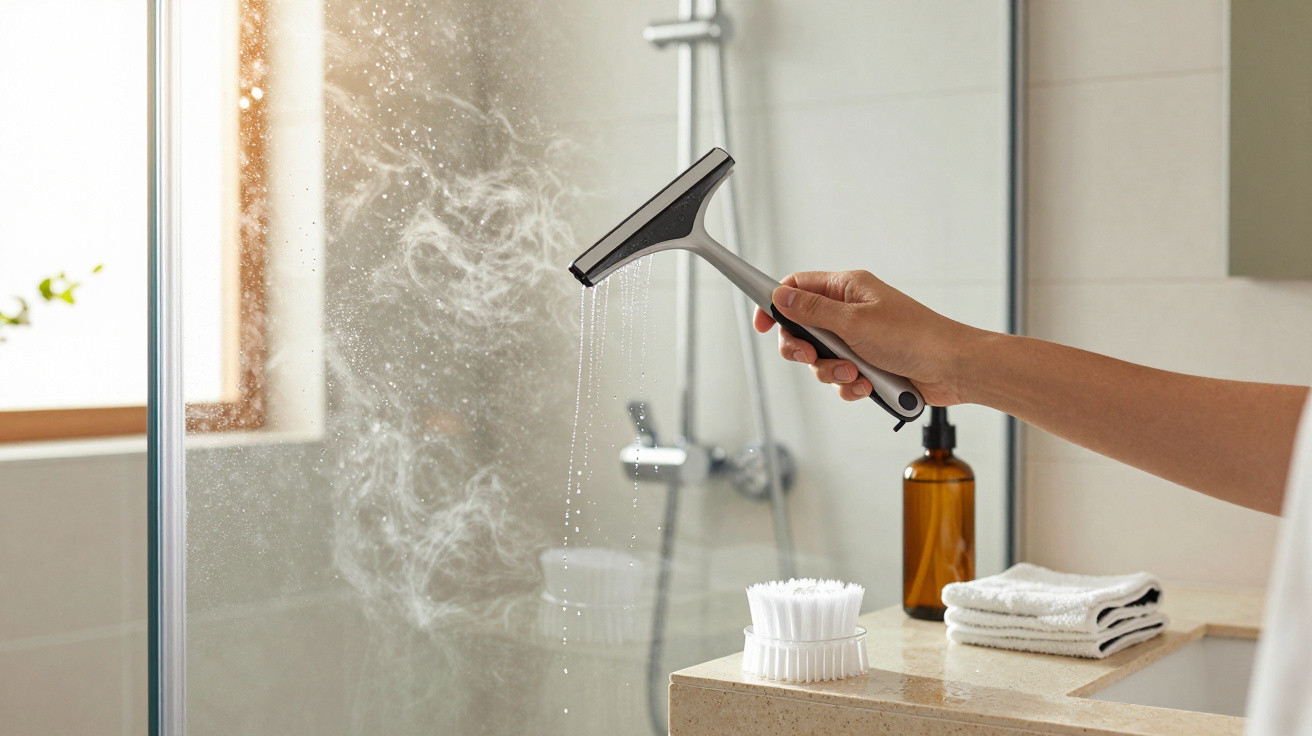
- Wipe after use: A quick wipe with a towel or squeegee removes mineral-rich drops before they dry.
- Use warm, rather than scalding, water: Higher temperatures accelerate scale formation.
- Rotate the head: If the model is adjustable, turn it each week to prevent minerals settling in a single pattern.
- Inspect other fixtures: Taps, glass screens and kettle elements can often reveal scale before the shower does.
For households with metered water, these routines do more than improve the appearance of the bathroom. By maintaining flow rates closer to those intended for the equipment, they may also help reduce bills.
Hard water as a household risk factor
Professionals carrying out home energy and safety inspections increasingly discuss hard water alongside draughty windows and inadequate insulation. Mineral deposits do not only collect in showerheads: they also coat boiler heat exchangers, dishwasher elements and washing-machine pipes, causing them to operate hotter and for longer.
Although a bag of vinegar will not restore a failing boiler, the underlying principle is the same: modest, repeated treatments generally cost less than complicated repair work. A vinegar routine in the bathroom can lead to wider household maintenance. When people see what comes off a showerhead in half an hour, they often begin to wonder what could be building up elsewhere in the system.




Comments
No comments yet. Be the first to comment!
Leave a Comment