
The towel appears clean, sits tidily folded on the rail and carries a faint scent of lavender detergent.
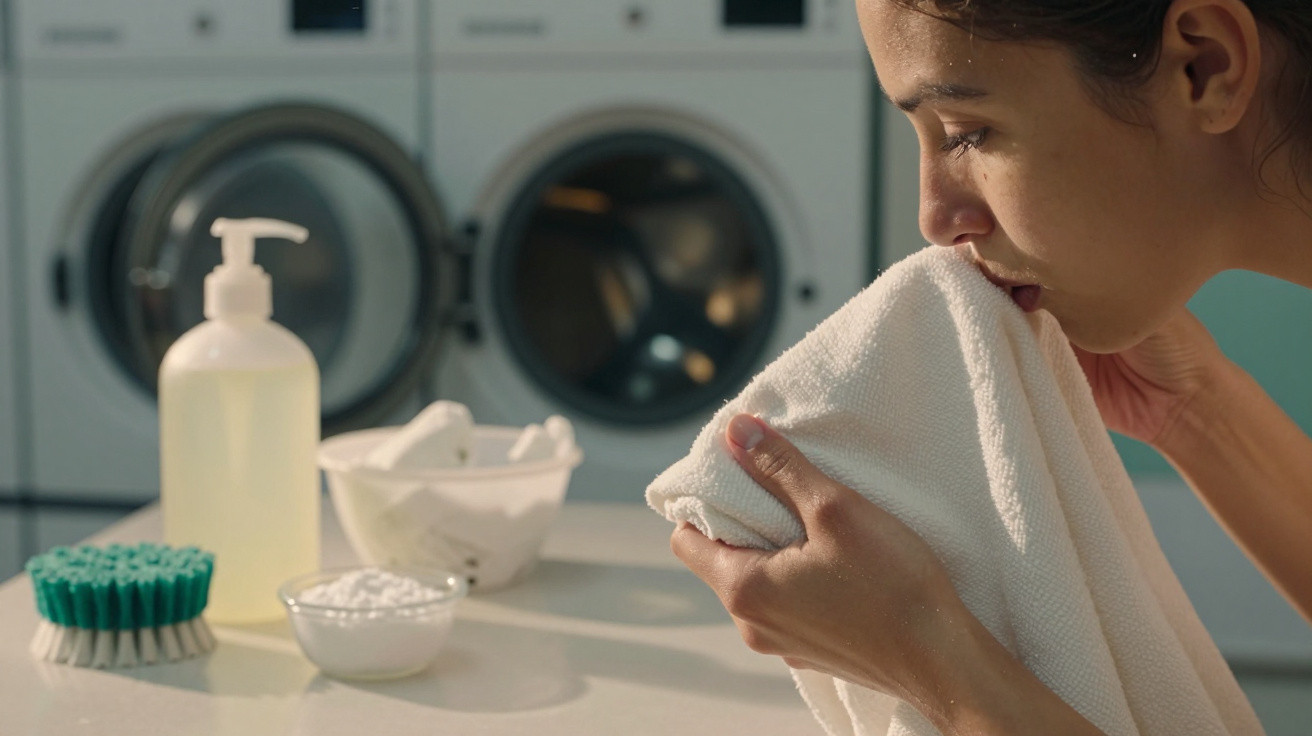
But the moment you hold it to your face, you notice it: a subtle sourness, like the smell of long-forgotten damp. With no fresh towels left, half dressed and reluctant, you use it anyway.
Later that night, you find yourself in a hotel bathroom smaller than the one at home. Still, its towels smell... of nothing. They are simply fresh and neutral, as though they have just been unwrapped. The cotton is the same and so is the job they do, but the experience is entirely different.
Something shifts between your washing machine and a hotel laundry room. It is not simply a matter of costly products or commercial-grade equipment.
It comes down to one small household habit that quietly spoils your towels.
The hidden habit that “cooks” unpleasant smells into your towels
Most hand towels with a sour smell have not come from an unclean bathroom. The cause is usually a delay: the short period between using the towel and getting it properly dry. You wash your hands, dry them quickly, and the towel remains scrunched up and partly damp, quietly beginning to ferment.
That is the damaging habit: keeping a damp towel folded, compressed or layered thickly enough that its centre never properly dries. Whether it is on a radiator, a hook or carefully arranged over a rail, the middle can remain wet for hours. Heat and moisture make an ideal party venue for bacteria.
Once you can detect that sour note, the problem is already established.
Think back to when you last picked up on the smell. The towel probably seemed perfectly harmless. There may have been no obvious marks or grey areas, and perhaps it had even been washed the previous evening. By the afternoon, though, it had acquired that changing-room tang. You may have sprayed it with fabric freshener or flipped it over to the supposedly clean side, hoping that would solve it.
One reader said she had dealt with this for years. She bought a new washing machine, premium detergent and expensive fabric conditioner, yet nothing made a difference. Then a plumber identified the true cause: her towel hook was positioned behind a door that was nearly always shut. Her hand towels never received proper airflow. They were effectively marinating.
After moving the hook beneath the window, the odour reduced by half within two days. The towels and soap were unchanged; only the drying routine was different.
The science behind it is both straightforward and irritating. Towel fibres hold on to moisture. Unless that dampness escapes quickly, odour-causing bacteria feed on skin cells, soap deposits and tiny amounts of dirt.
Warm, slightly damp cotton is their perfect holiday destination. Whenever a towel fails to dry completely, some of that bacterial population survives. You then run a quick wash, perhaps at a lower temperature, and a few of those resilient visitors may survive to cause trouble again.
Over several weeks, the smell becomes “cooked in”. This is why one towel can stink straight after laundering while another from the same wash smells fine. It is not chance; it is accumulated history.
The hotel drying trick for hand towels - and how to recreate it at home
Walk through the housekeeping area of a good hotel and one thing stands out: towels are seldom left in a heap. They leave large washing machines and go directly into powerful tumble dryers with intense airflow. They are then shaken out, folded and stored completely dry - not merely “almost dry”.
Speed is the key. Hotels operate a close sequence: used towel, laundry, high-heat tumble drying, immediate airing. Moisture is not given much opportunity to sit inside the fibres. At home, you can follow the same principle by creating a quick, effective drying routine for hand towels: lay them flat or open them fully across a rail, ideally where there is natural airflow.
A towel that becomes completely dry within a few hours will rarely have enough time to develop a sour smell.
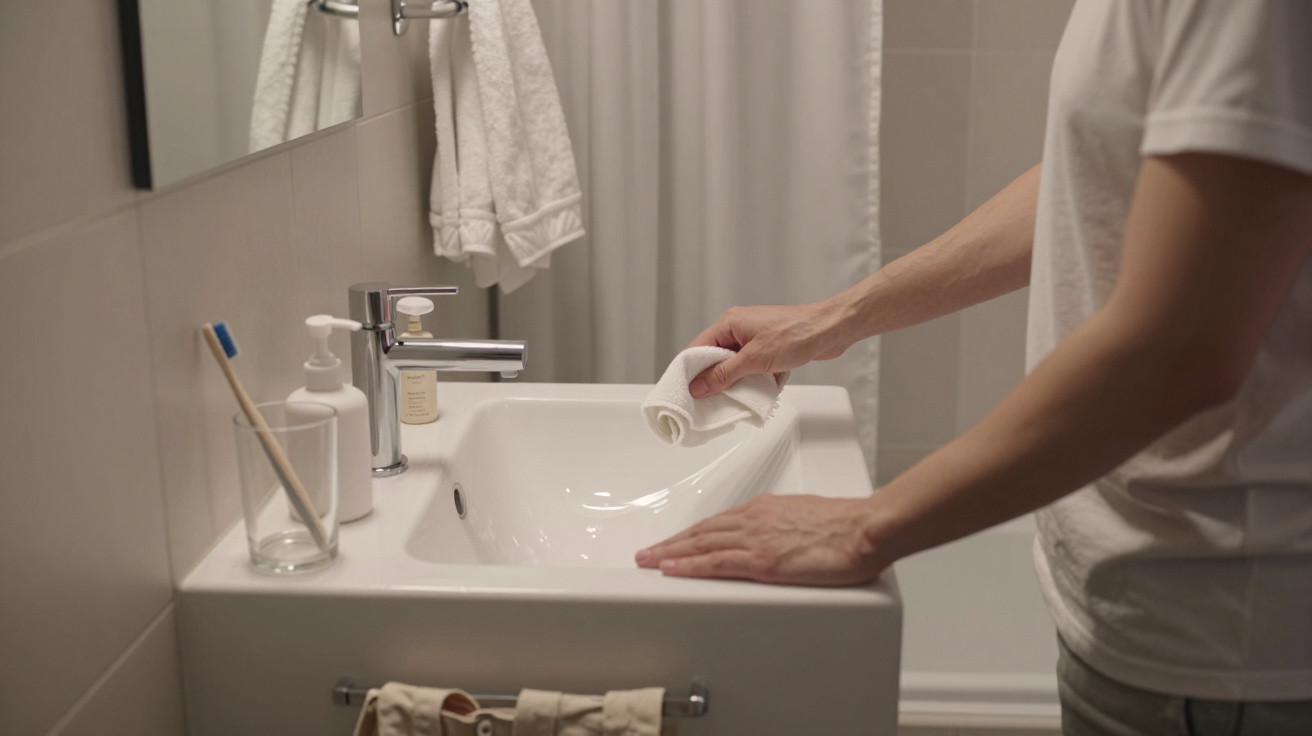
There is one modest, unglamorous habit that can make a major difference: handle your hand towel as you would fresh bread, rather than a dishcloth. After every use, give it one shake and hang it fully open instead of folding it in half against the wall. Allow the loops to breathe.
If you have a heated towel rail, place hand towels separately across the upper bars rather than piling them together in one mass. In a small, steamy bathroom, move towels into a drier room after showers. Let’s be honest: hardly anyone will do that every day, but even doing it two or three times a week dramatically reduces the chance of odour.
Hotels do not depend on miracle sprays; they depend on airflow and good timing.
Many people initially blame the washing machine, and that is understandable. You switch detergents, increase the temperature and try a “fresh linen” fabric conditioner that smells like a postcard from Santorini. But the same thing happens again: the towel is fine when it leaves the machine, then turns sour while hanging on the rail.
The interval between washing and becoming fully dry is the risk zone. On a humid day, a thick hand towel may remain slightly damp for 12 hours, particularly in a bathroom without a window. On a radiator, the side nearest the heat can become almost scorched while the inner layers stay wet. It feels warm when you touch it, which can make you think it is dry.
Hotels avoid this by producing an almost aggressive drying setting: serious heat combined with constant circulating air, until the core of the fabric reaches genuinely low moisture levels.
“We don’t have time for towels that half-dry and start to smell,” a UK hotel housekeeper told me. “They go from guest room to laundry to dryer, no hanging around in bags or on carts. That waiting time is where the odour starts.”
You are unlikely to have an industrial tumble dryer at home, but you can borrow part of the approach. Focus on three principles: quick wash turnaround, strong airflow, full dry before reuse. This could mean washing smaller towel loads so that they spin more effectively. It could also mean leaving the bathroom door open after showering, allowing steam to escape rather than turning the room into a miniature sauna for your hand towel.
- Run a hot 60°C cycle for smelly towels every few weeks to refresh them.
- Occasionally avoid heavy fabric conditioner, as it may hold residues in the fibres.
- If you have one, tumble-dry hand towels once a month to achieve a level of dryness closer to that in hotels.
Turning sour frustration into quiet luxury in your bathroom
The scent of a hand towel feels strangely personal. It is often the first thing guests notice after washing their hands, and the first fabric your children touch in the morning. When it smells wrong, it puts a small crack in the feeling of home.
You do not need a hotel-sized budget to put it right, only a change in focus. Alter where the towel is hung. Give it ventilation instead of pressure. Dispose of genuinely “cooked-in” towels without feeling guilty; some odours are too deeply embedded to rescue. Replace them with a couple of straightforward, good-quality cotton towels, and care for them as you would clothes you genuinely enjoy wearing.
On a rushed weekday morning, you may not have time to consider bacteria or airflow. Even so, the small act of opening a towel out fully or moving it below a window can transform the overall scent of your bathroom. On a calm Sunday, you may even notice the change and smile quietly to yourself.
| Key point | Detail | Benefit for the reader |
|---|---|---|
| Sneaky habit | Towels left folded or bunched up remain damp inside | Identifies the real reason for the sour smell |
| Hotel method | A rapid wash-to-dry routine using strong heat and airflow | Provides a clear approach to copy at home |
| Simple action | Shake, hang fully open and dry completely between uses | A practical step that works even in small bathrooms |









Comments
No comments yet. Be the first to comment!
Leave a Comment