One week, it is bright white and crisp; the following week, a grey waterline has appeared, along with pink specks that refuse to wash off properly. Wipe it down and they come back. Wash it, and they seem to return sooner.
Steam curled over the mirror while the radiator ticked as though warming its joints. I pulled the curtain across and grimaced: there was a light musty smell, a pale mark around the bottom edge and tiny coral-pink spots caught in the folds. Before the water had even heated, I could detect that faint, tile-like damp odour. We have all experienced the curtain touching a leg, prompting a recoil that is part disgust and part exhaustion at having to deal with it again. The extractor fan groaned, opening the window would have made the bathroom five degrees colder, and the day was already getting away from me. Fortunately, the answer is surprisingly straightforward.
Why winter makes a white shower curtain turn grey
Hot water indoors meeting cold air outside locks moisture around the shower curtain. Because it takes longer to dry, conditions are ideal for biofilm: the sticky coating formed when soap residue, skin cells and minerals collect on plastic or fabric. Mould and bacteria can cling to this layer, which explains why staining returns even after a thorough clean. The odour is the damp, faintly sour smell that remains in the folds and at the hem, where water lingers for longest.
At one flat in Manchester, Priya used bleach every Sunday from October through January, yet pink marks were visible again by Wednesday. After a shower, her bathroom sat at roughly 72% relative humidity and needed more than an hour to fall below 60%. She began to spot an orange line where the curtain touched the bath edge: typical “pink mould” - which is in fact a bacterium - feeding on leftover shampoo. A quick wipe gave her one clear day, while a machine wash gave her three. Winter kept outpacing her routine.
The science is simple. Mould spores are present everywhere, and they need moisture, food and a surface they can hold on to. Soap scum provides the feast. Vinyl and polyester retain static, so spray settles on them, dries unevenly and leaves a tacky coating behind. Chlorine bleach removes colour, but it can also make plastic rougher and cause yellowing over time, ironically giving fresh growth more to grip. Vinegar reduces pH, salt draws moisture from cells, and hydrogen peroxide oxidises the biofilm matrix. Use these methods appropriately and the surface changes from a buffet into a barren place.
The salt-cure, peroxide mist and a simple airflow pinch
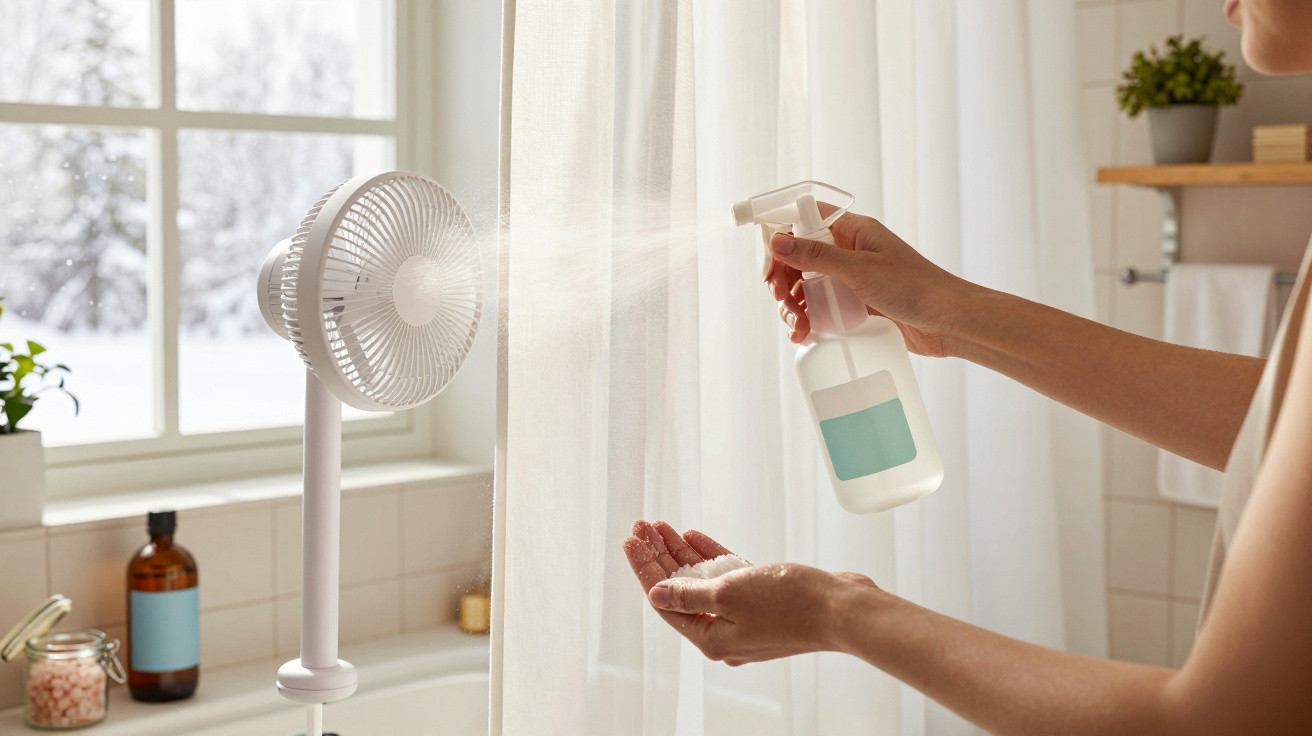
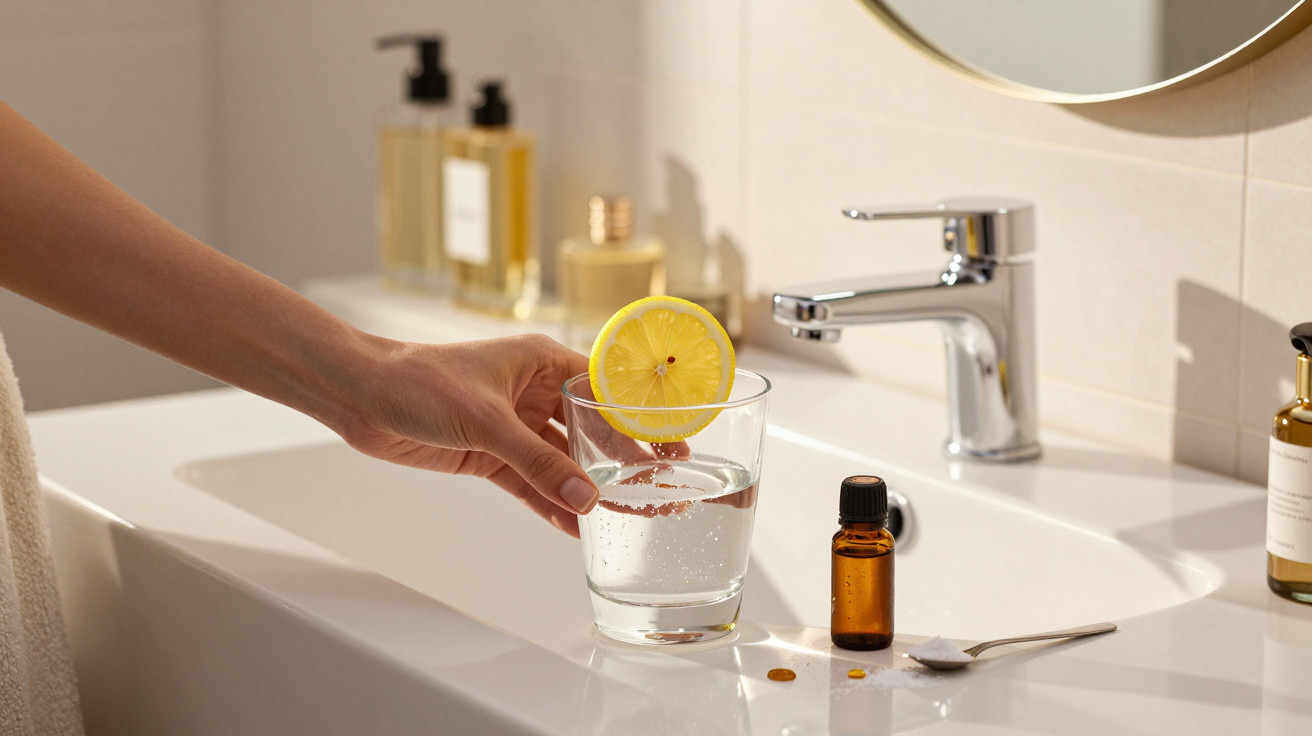
Start with one complete “reset”, then follow it with a small ongoing habit. The reset is a salt-cure: soak the cleaned curtain for 60 minutes in warm water containing 250 g of table salt and 250 ml of white vinegar, moving the hem around so it absorbs the solution properly. Rinse it thoroughly, rehang it and allow it to dry fully while closed, so the folds are spread out. Next, prepare your peroxide mist. In a 500 ml spray bottle, mix 250 ml of 3% hydrogen peroxide, 230 ml of cool water, 1 tsp of washing-up liquid and 5 drops of tea tree or clove. Label the bottle. Following each shower, apply six quick sprays along the hem and seams, draw the curtain closed smoothly, then attach a wooden peg to the lowest corner to create a drip point. This small airflow “pinch” tackles the wet edge where the problem begins.
The curtain should dry more quickly, lose its smell and stop developing pink speckles. Avoid a few common mistakes: leaving the curtain bunched open traps dampness in the folds; using bleach every week can thin and yellow vinyl; and neglecting the rings allows slime to build up there. Rinse the spray nozzle in warm water each month. On the same spray-and-peg day, wipe the rings too - it takes 30 seconds and needs no fuss. Realistically, hardly anyone will do this every day, so focus on the steamiest showers or laundry day and consider that enough.
There is one further point about the chemistry. Never mix vinegar and peroxide in one bottle, or apply one immediately after the other without rinsing first. Use the vinegar-and-salt bath for the reset, then use peroxide for ongoing maintenance, rinsing with clean water between different products when washing the curtain. This gives you vinegar’s brightening effect, salt’s osmotic “no thanks” and peroxide’s direct cleaning action without unwanted reactions.
“The peg trick changed everything,” said Jen, a hotel housekeeper I shadowed for a morning. “It sounds silly, but that drip point dries the hem. Dry hem, no slime.”
- Complete the reset once: soak with salt and vinegar, rinse well and dry fully.
- For a light daily step: apply six sprays of the peroxide mixture to the hem and seams.
- Create an airflow pinch: keep the curtain closed flat and put one peg on the lowest corner.
- Each week: wipe the rings and the bath edge where the hem sits.
- Every 6–8 weeks: repeat the salt-cure if winter is dragging on.
A winter routine you can genuinely maintain
There is something unexpectedly reassuring about a shower curtain staying white throughout February. It removes one small but persistent job from the mental list, which matters during the grim middle stretch of winter. This approach works because it accommodates the season: a one-off salt layer that makes the material less inviting, a very light peroxide routine that disrupts biofilm, and a small adjustment to the way the curtain hangs so air can do the remaining work. Test it in a guest bathroom or on the most neglected curtain you have, and see the pink growth stop advancing. Send a photo to the friend who relies on bleach, or use a magnetic clip instead of a peg if your bath edge slopes. The method can be adapted. The result - entering a bathroom that smells of nothing and looks freshly laundered - catches on faster than mould.
| Key point | Detail | Benefit for the reader |
|---|---|---|
| Salt-cure barrier | Soak for 60 minutes in warm water with 250 g salt + 250 ml white vinegar, then rinse and dry | Makes the surface less welcoming to mould and keeps whites bright |
| Peroxide mist | Mix 250 ml 3% hydrogen peroxide, 230 ml water, 1 tsp washing-up liquid, 5 drops tea tree | Gently oxidises biofilm without yellowing vinyl or producing choking fumes |
| Airflow pinch | Keep the curtain closed and attach a peg to the lowest hem corner to make a drip point | The hem dries faster, preventing the slime line where growth starts |



Comments
No comments yet. Be the first to comment!
Leave a Comment