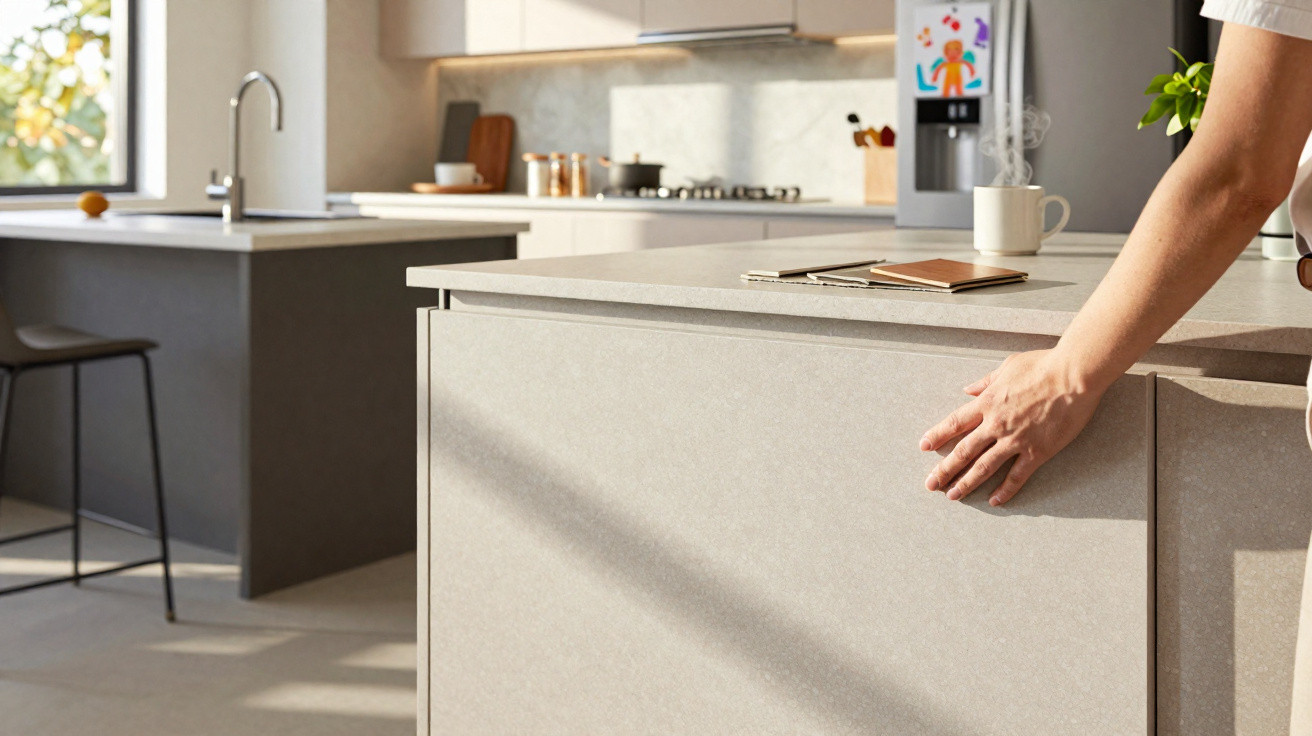
Many kitchens look sophisticated, yet are actually finished with cheap imitation wood.
From 2026, an unexpectedly durable material is set to push this look out of homes.
Anyone frustrated by scratched wood-effect worktops after only a few years is far from alone. A clear pattern is emerging in many homes: once highly popular “wood-look” worktops have passed their peak. A new material is now moving into focus. It can be up to twice as hard-wearing as older imitations, while remaining considerably less expensive than stone, ceramic or solid wood.
Why imitation wood is falling out of fashion in kitchens
Wood-effect worktops were for years the standard choice in kitchen showrooms. They looked reasonably warm, were inexpensive and could be squeezed into almost any kitchen design. However, an increasing number of people now dislike them, for several reasons:
- The grain often appears artificial, with visibly repeating patterns.
- Scratches can quickly expose an unattractive backing layer.
- The trend is clearly shifting towards more natural, “honest” materials.
- Their appearance is becoming less compatible with modern, minimalist kitchens.
This prominent wood décor is particularly irritating for anyone seeking a calm, clean interior. It can look dated, recalling the 2000s rather than contemporary design. Kitchen planners have long reported that many customers specifically ask for “no more imitation wood” - at least not as the dominant worktop surface.
The new kitchen look: stone, concrete and marble - at least in appearance
The trend is clearly moving towards mineral-inspired finishes. Exposed concrete, natural stone and delicate marble veining are the looks seen in interiors magazines and on Instagram. Genuine stone worktops and ceramic, however, are costly, heavy and often difficult to retrofit. This is precisely where the new material comes in: an advanced form of laminate, frequently marketed as “new-generation stratified laminate”.
“This modern laminate reproduces stone, concrete or marble so realistically that many guests cannot spot the difference at first glance.”
These surfaces are matt, gently textured and surprisingly authentic to the touch. The material therefore bridges the gap between a designer aesthetic and everyday living in rented homes, detached houses and compact city flats.
What is behind “new-generation stratified laminate”
Technically, it is a greatly improved version of traditional laminate. Earlier products often had a cheap shine and scratched easily, whereas the latest generation has advanced considerably.
Authentic texture instead of a plastic shine
Manufacturers use sophisticated printing and embossing methods to make the finish resemble real materials not only visually but also in texture. In practical terms, this means:
- Rougher sections reproduce natural stone or slate.
- Softly powdery finishes evoke exposed concrete.
- Fine, tactile veining makes marble look remarkably convincing.
The effect works so well because sight and touch correspond. Running a hand across the surface reveals small recesses, subtle edges and a depth that older smooth plastic worktops did not offer.
Twice the durability for everyday use
The new coating is considered substantially tougher than many older wood-effect worktops. Depending on the version, manufacturers’ internal tests show up to twice the resistance to wear, impacts and moisture. In day-to-day use, this means:
- Minor knocks from pots or plates are less likely to leave dents.
- Splashing around the sink is slower to penetrate the core material.
- Strongly coloured foods, such as turmeric or tomato sauce, are easier to remove.
“In many kitchens, a damp cloth with a little washing-up liquid is enough to restore order to the worktop, even after a cooking marathon.”
Even so, it remains a laminate worktop rather than a block of steel. Cutting directly on it with a sharp knife or exposing it to sustained heat from pans should be avoided - a chopping board and a trivet are still essential.
Price comparison: where the new material really excels
Cost is a major argument against stone, ceramic and solid wood. Spending several thousand pounds on worktops alone is simply not feasible for many households. This is where new-generation stratified laminate has a significant advantage.
| Material | Strengths | Typical position in the price range |
|---|---|---|
| Ceramic | Highly heat-resistant, refined appearance, exceptionally hard | Premium price range |
| Quartz composite | Modern, uniform surfaces, easy to maintain | Mid to premium price range |
| New-generation stratified laminate | Plenty of design for little money, lightweight, versatile | Affordable to mid-price range |
For those upgrading an existing kitchen, the new laminate often delivers the greatest visual impact for each pound spent. At best, the entire kitchen can look as though it belongs in a magazine, even if only the worktop and perhaps the splashback have been replaced.
Easy care for children, hobbies and everyday pressures
In a family kitchen, juice can easily spill across the worktop; in a one-person household, it may be red wine or coffee. Here, the sealed surface comes into its own. It is far less porous than natural stone and copes more easily with:
- Splashes of tomato sauce, oil or marinade
- Damp wooden chopping boards or water bottles
- Paint residue from an impromptu craft project at the kitchen table
Anyone who cooks regularly knows the issue: stains on porous stone can require laborious cleaning. The new laminate is much more forgiving - and that benefits more than just households that cook frequently.
How the new material works with existing kitchens
The material becomes especially interesting when the whole kitchen is not being replaced and only the worktop is due to change. This is exactly where its flexibility stands out.
Light cabinet fronts: concrete, stone or terrazzo for contrast
Those with white or cream cabinet fronts can immediately introduce more architectural character with a concrete-look finish. Grey worktops with fine flecks or a terrazzo effect appear contemporary without feeling cold. They add depth to the room, while making older cupboard fronts suddenly look far more current.
Dark kitchens: a light marble look for greater lightness
Black or dark green fronts work well with pale worktops, such as a marble effect with grey or beige veining. This opens up the space and removes some of the kitchen’s heaviness. The key is to keep the marble pattern understated, so the result looks elegant rather than fussy.
“A basic rule followed by many kitchen professionals: earth tones, concrete colours and stony shades are more timeless than bright décors. They age much more slowly - visually and stylistically.”
Anyone uncertain should take sample boards home and view them directly beside their own cabinet fronts, ideally in daylight and again under artificial evening lighting. Colours in a catalogue often look different from those in the home.
What buyers should know before 2026
Many manufacturers are currently expanding their ranges of these new laminates substantially. Kitchen showrooms are introducing fresh décors each month, from warm sand tones and dark slate looks to metal-effect finishes. For prospective buyers, that means more choice but also more to compare.
It is sensible to check the following points:
- The worktop thickness and construction (is it stable enough for wide spans?)
- Heat resistance according to the manufacturer’s specification
- Warranty terms, particularly for moisture damage
- Whether matching splashback panels are available in the same décor
Combining a worktop and splashback in the same material is particularly effective at creating a calm, high-quality overall impression - an effect otherwise more commonly associated with expensive stone or ceramic kitchens.
Anyone currently considering a renovation no longer has to choose between design and budget. Saying goodbye to old imitation wood is easier when its replacement is tougher, looks more contemporary and places far less strain on the bank balance than a solid stone option. In many kitchens, this new laminate is therefore likely to become the standard long before real marble or quartz worktops enter the picture.


Comments
No comments yet. Be the first to comment!
Leave a Comment