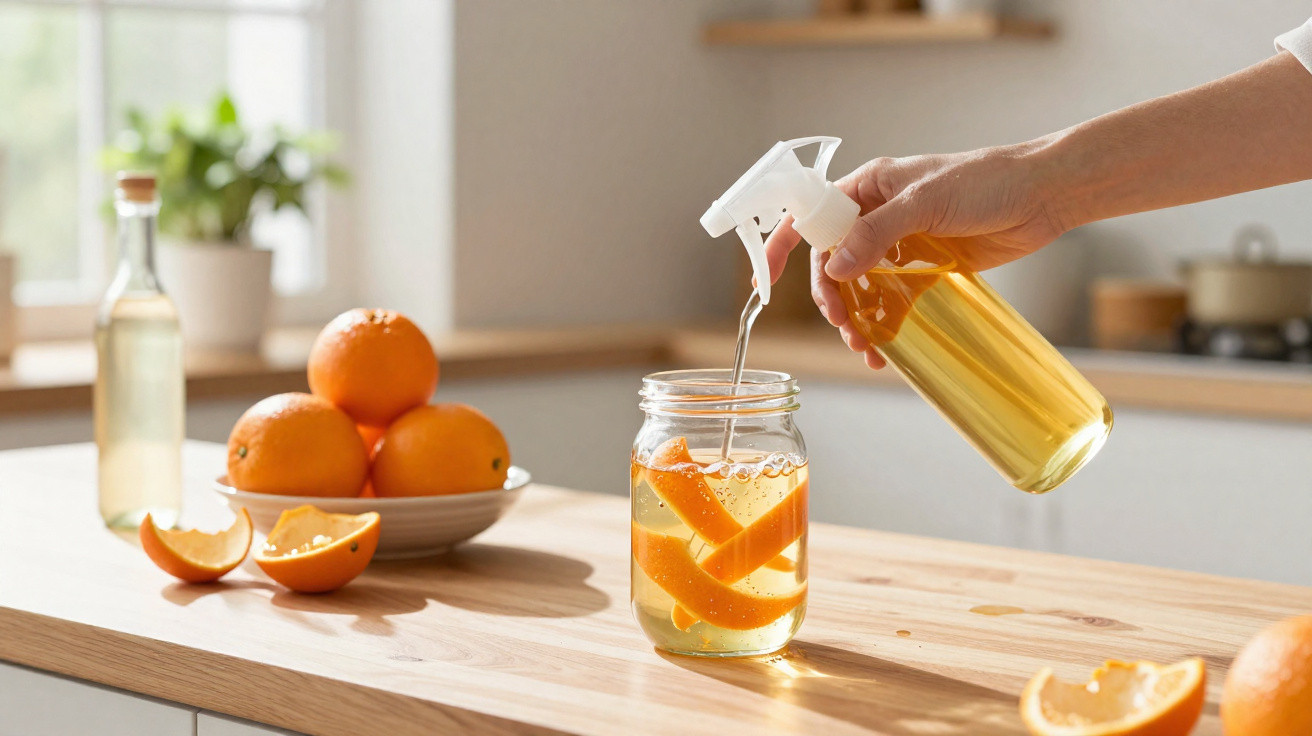
Mixing orange peel with vinegar creates a fragrant, affordable household cleaner that is useful for light grease, water marks, cooking odours and everyday grime. White vinegar works through its acidity, while the citrus peel releases natural oils that soften vinegar’s sharp smell and make cleaning more pleasant.
Why does orange peel with vinegar work for cleaning?
White vinegar contains acetic acid, which can loosen grease, mineral deposits and light dirt from suitable surfaces. Orange peel provides an aromatic boost, as its citrus oils scent the liquid while it infuses.
This mixture should not be regarded as a professional disinfectant. It is effective for washable worktops, glass, tiles and sinks, but it does not replace registered disinfecting products where there has been contact with raw meat, in heavily contaminated bathrooms or where a particular hygiene requirement applies.
How should you prepare the infusion?
Use a clean glass jar with a lid. Add orange peels with most of the excess white pith removed, cover them completely with white vinegar and leave the jar in a cool, dark place for at least 1 week. For a stronger fragrance, leave it for 2 to 4 weeks.
- Fill half the jar with fresh orange peels.
- Pour in white vinegar until the peels are fully submerged.
- Seal the jar and label it with the preparation date.
- Leave it to infuse for 7 to 28 days, away from direct sunlight.
- Strain the liquid and discard the peels before transferring it to a spray bottle.
What ratio should you use after straining?
Once strained, the infusion is concentrated. For general cleaning, combine 1 part orange-peel vinegar with 1 part water. For greasier dirt, add less water; for delicate surfaces, dilute it further and test it first on a small area.
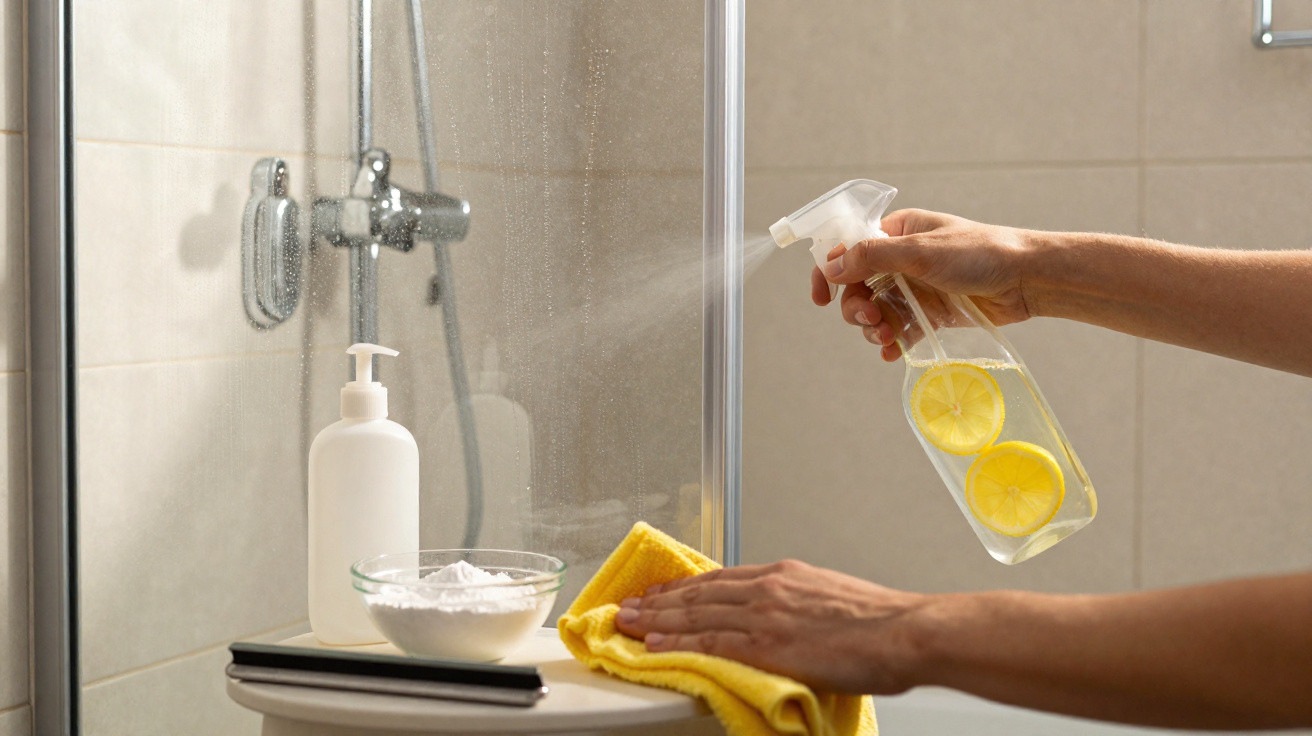
In the kitchen, the 1:1 solution is suitable for tiles, a cold hob, glass lids, the outside of appliances and a washable bin. In the bathroom, it may help remove soap marks and light water stains from metal fittings, provided these are rinsed and dried afterwards.
Where can you use, and where should you avoid, this mixture?
Vinegar is useful, but it is not compatible with every material. As it is acidic, it may damage natural stone, unsealed grout, waxed wood, electronic screens, sensitive rubber and certain metal surfaces if used frequently or undiluted.
- Use it on glass, tiles, ceramic, durable stainless steel, washable plastic and well-maintained laminate worktops.
- Avoid marble, granite, travertine, soapstone and quartz, as the acidity can stain or etch their finish.
- Do not mix it with bleach, as the combination may release dangerous gases.
- Do not leave it on metal for long; spray it on, wipe it away, rinse and dry.
- Test it in a hidden corner before applying it to a new surface.
A simple cleaner that makes better use of kitchen waste
Orange peel with vinegar has become popular because it turns an everyday kitchen leftover into a practical cleaner for routine maintenance. Preparing it cuts waste, reduces spending on fragranced products and deals with light grime without relying on expensive formulas.
The best results come from using it properly: strain the infusion thoroughly, choose the right dilution, use a clean cloth and consider the surface material. Used this way, the mixture provides a citrus scent, helps with light grease and keeps the home cleaner without making miracle claims or replacing disinfection when it is needed.




Comments
No comments yet. Be the first to comment!
Leave a Comment