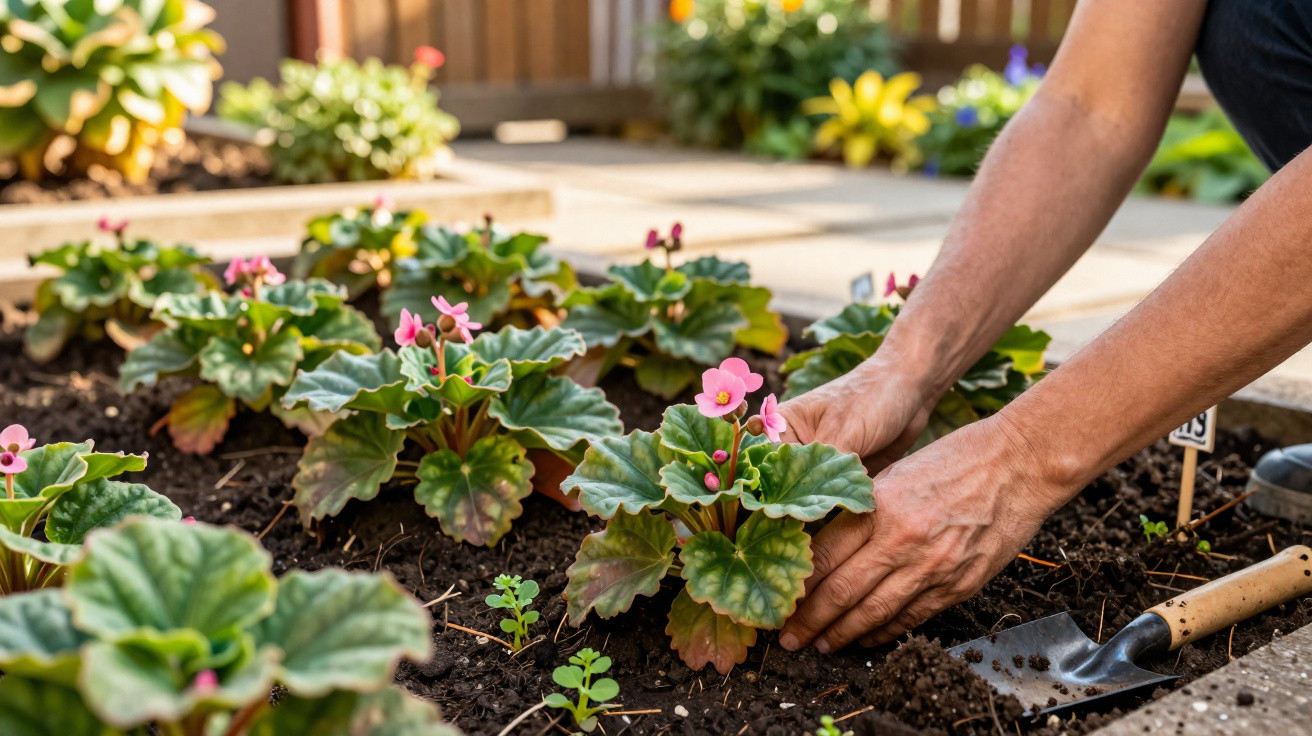
Gardens are changing rapidly: chemical weedkillers are no longer an option, beds are left exposed, and wild plants are sprouting everywhere. Many amateur gardeners are battling away with patio-joint scrapers, hoes and aching knees. This is where one particular plant can help: it covers the soil like a living carpet, giving most weeds virtually no opportunity to establish themselves.
Why one perennial can slow down weeds in the garden
The principle is straightforward: when soil is densely covered, very little else can grow there. Plants that perform this role are known as ground covers. They fill bare areas, block out light and compete for water and nutrients. As a result, many unwanted seedlings simply have no room to develop.
“A well-established ground cover can reduce weed growth in a flower bed by up to 70 to 90 per cent – entirely without chemicals.”
Rather than weeding repeatedly, it makes sense to plant strategically once. It is especially useful when the ground cover is also ornamental, long-lived and able to cope with challenging locations, such as shade beneath trees or dry slopes. The Bergenia ground cover offers exactly this combination.
Bergenia: the overlooked ground cover against weeds
At first glance, Bergenia (botanical name Bergenia, often called “elephant’s ear”) may seem rather unremarkable. It has large, thick leaves, compact clumps and pink to reddish flower spikes in spring – seemingly nothing more. Yet in everyday garden conditions, this plant is a real workhorse.
Its key characteristics at a glance:
- Evergreen: Its foliage remains throughout the year, protecting the soil during winter too.
- Exceptionally frost-hardy: Depending on the variety, it tolerates temperatures of roughly minus 20 to minus 30 degrees Celsius.
- Dense-growing: Over time, it forms a closed carpet of sturdy leaves.
- Early flowering: From spring onwards, pink to purple flower heads brighten the beds.
- Robust: It copes with a range of soil types, provided they are not waterlogged.
The leaves in particular are crucial to its weed-suppressing effect. They sit over the soil like shields, depriving seeds of light and preventing many seedlings from gaining a foothold at all. A few wild plants may still appear, but there will be far fewer of them and they are easier to pull out.
Where Bergenia shows its strengths in the garden
Professional planting guides regard Bergenia as an excellent ground cover against weeds. It performs well in places where other plants refuse to thrive or constantly struggle. Typical uses include:
- borders alongside paths and patios
- areas beneath deciduous trees and shrubs
- steep slopes or banks that are difficult to mow
- bright edges of groups of trees and shrubs
- rock gardens and mixed perennial beds
The plant tolerates sun, provided it is not relentlessly scorching and the soil does not dry out completely at the height of summer. It is happiest in light shade to partial shade, for example on the north or east side of the house, or beneath lightly canopied trees.
Plant now: the ideal time for Bergenia
In the United Kingdom, there are two suitable planting periods: spring and autumn. March and April are considered particularly suitable, as the soil is still cool and moist but no longer frozen. This allows the plants to root undisturbed before summer arrives.
“Anyone planting Bergenia in spring can often save a noticeable amount of time on weeding in the same year.”
Early autumn is also a good choice. Temperatures are moderate, the soil often retains warmth from summer, and the roots have sufficient time to establish before winter. Only avoid planting on frosty days or when the ground is completely saturated.
How to create a dense Bergenia carpet
A little preparation is worthwhile if this perennial is to deliver its full weed-suppressing effect. A plant roughly placed into compacted, weed-filled soil is likely to disappoint. A few simple measures can improve the outcome considerably.
Step-by-step planting guide
- Clear the area of weeds: Dig out larger perennial weeds, such as couch grass, ground elder or thistles, as thoroughly as possible.
- Loosen the soil: Work the ground to a depth of around 20 centimetres with a spade or garden fork, breaking up compacted layers.
- Add organic matter: In very poor or heavy soil, mix in some well-rotted compost to make it looser and richer in nutrients.
- Plan the planting distance: Leave approximately 35 to 40 centimetres between individual Bergenia plants.
- Dig planting holes: Make each hole slightly wider than the root ball and deep enough for the root collar to sit at soil level.












Comments
No comments yet. Be the first to comment!
Leave a Comment