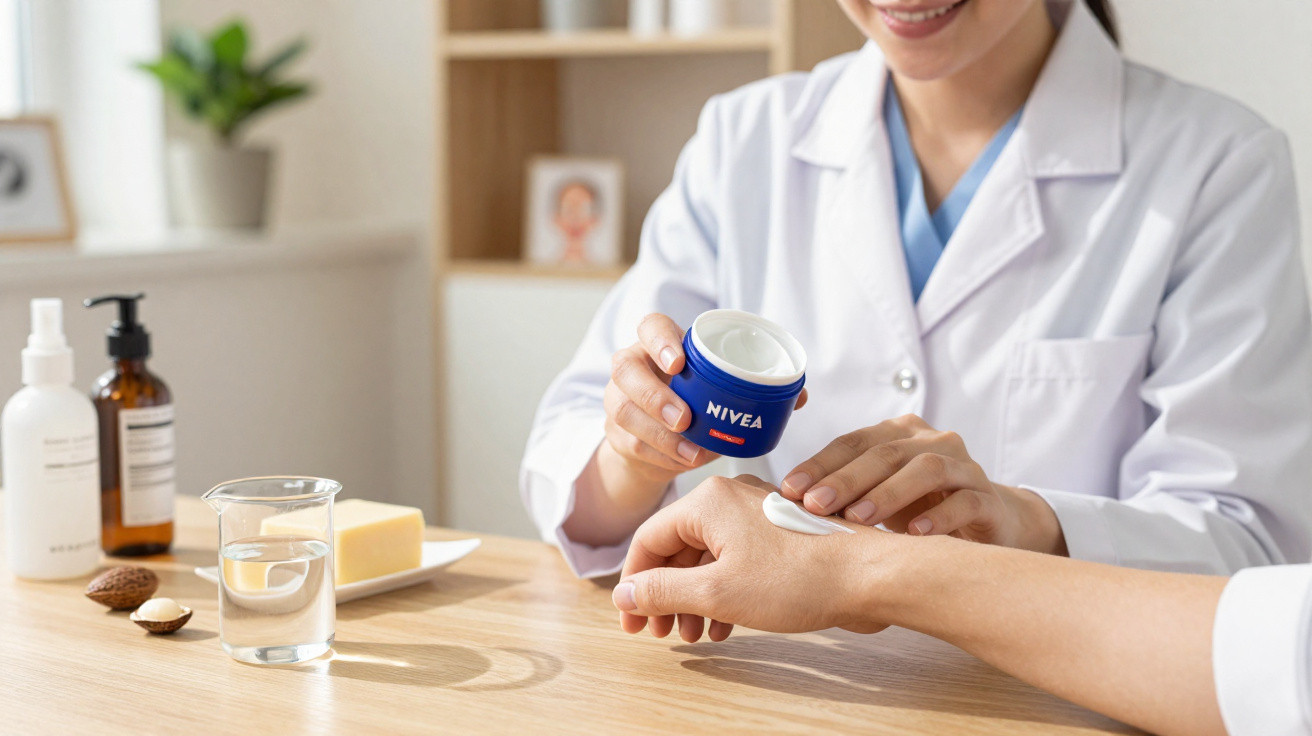
A plain metal tin, a thick white cream and a fragrance that many people associate with childhood: the blue Nivea Cream is a bathroom staple in Germany. A dermatologist has taken a closer look at the formula, outlining what this product can do – and where its limitations begin.
Why the blue Nivea Cream remains so popular
Classic Nivea Cream has been available since 1911. Although beauty trends constantly change, the blue tin continues to sell in its millions. In one year alone, more than three million tins were sold in a major Western European market. Globally, it remains one of the best-known skincare products of all.
Its lasting appeal is easy to understand:
- It is comparatively affordable.
- It is considered versatile, suitable for everything from hands and feet to the face and rough elbows.
- It is available almost everywhere, from chemists to supermarkets.
- Its familiar scent gives many people positive childhood associations.
However, emotional attachment and tradition do not reveal how well a product performs from a dermatological perspective. That is precisely where the dermatologist’s assessment begins.
Inside the tin: what Nivea Cream contains
The dermatologist focused primarily on the formulation. Its key ingredients are intended to provide intensive care and help the skin retain moisture.
Glycerin: a moisture magnet
Glycerin is one of the cream’s most important ingredients. It is a classic humectant that holds water in the upper layers of the skin.
“Glycerin helps the skin retain water more effectively, helping to prevent tightness and fine lines caused by dryness.”
Dermatologists generally view glycerin favourably because it has been extensively researched, rarely causes irritation and works for numerous skin types, from normal to dry.
Fats and waxes create a protective layer
As well as moisture, nourishing lipids provide support. The classic formula includes fatty ingredients and wax-like substances that form a fine film over the skin. The dermatologist describes this layer as a type of protective coating that:
- reduces water loss through the skin’s surface,
- smooths rough areas,
- is especially useful in cold and windy conditions.
This makes the cream suitable for dry areas on the body, cracked hands and rough shins. On particularly cold winter days, many people also use the tin to protect their face from the cold.
Shea butter for added care
Another benefit, in the expert’s view, is shea butter. This rich skincare ingredient is considered well tolerated and can soothe dry, sensitive skin. The dermatologist therefore rates the combination of humectants and nourishing fats positively overall.
“The formula provides a solid basic level of care, particularly for dry and rough areas of skin.”
What dermatologists appreciate about Nivea Cream
Among dermatologists, the blue cream has a down-to-earth yet respectable reputation. It is not regarded as a miracle treatment, but as a dependable everyday basic.
The main professional advantages are:
- Good tolerance: Many people, including those with sensitive skin, can use the cream provided they do not have an individual allergy.
- Simplicity: Rather than an overloaded list of fashionable active ingredients, it has a traditional, manageable formulation.
- Value for money: Its intensive nourishing effect per pound is difficult to beat.
- Availability: Anyone needing skincare at short notice can find the tin almost anywhere.
Many dermatologists recommend traditional moisturising creams containing fats, for example, for:
- dry hands caused by frequent washing or use of sanitiser,
- flaky shins during winter,
- cracked heels and rough elbows,
- use alongside medical treatments where rich skincare is needed.
Where the cult cream reaches its limits
Despite its strengths, the dermatologist warns against relying on the blue tin alone. The cream is excellent for basic hydration, but it cannot solve every skin concern.
Not an all-purpose solution for every skin type
For oily facial skin or skin prone to blemishes, the rich texture may be too heavy. It sits quite densely on the skin and can intensify the feeling of pores being “clogged up”. For adult skin prone to acne, many professionals instead advise lighter, non-comedogenic skincare products.
The cream also does not address concerns such as pigmentation marks, wrinkle reduction or pronounced redness. These require targeted ingredients, including niacinamide, retinol, azelaic acid or specialised medical products.
Why additional skincare steps make sense
The dermatologist stresses that anyone seeking healthy, balanced skin in the long term needs more than one tin of cream. At a minimum, a sensible routine includes:
- Gentle cleansing – to remove dirt, sebum and make-up.
- Targeted care – tailored to the skin type, such as anti-blemish products or anti-ageing serums.
- Moisture and protection – this is where Nivea Cream can have a role, especially for dry skin.
- Daily sun protection – the most important factor in preventing premature skin ageing and damage.
“The blue cream covers the ‘moisture and protection’ element well, but it does not replace a complete skincare routine.”
How dermatologists use the blue Nivea Cream selectively
Many dermatologists use or recommend the cream for very specific purposes, such as:
- as a rich overnight moisturiser for very dry body skin,
- as a hand mask: apply it generously, put cotton gloves over the top and leave it on overnight,
- as emergency care for heavily stressed areas, such as after gardening or housework,
- as winter cold protection, for instance for children who spend a lot of time outdoors.
The key is not to apply the cream indiscriminately to every skin problem, but to use it where a protective, lipid-rich film is genuinely useful.
What do “occlusive” and “hydrating” actually mean?
Two technical terms often arise in discussions about Nivea and similar products:
| Term | Meaning |
|---|---|
| Hydrating | Moisture is retained within the skin, for example through ingredients such as glycerin or hyaluronic acid. |
| Occlusive | A film on the skin reduces water loss, often through fats and waxes. |
The blue Nivea Cream provides both effects: it binds water while also placing a protective layer over the skin. This is ideal for dry, cracked areas, but less suitable for broad use across an oily face.
Risks, myths and useful combinations
Rumours regularly circulate that traditional moisturising creams “make the skin lazy” or are inherently harmful. From a dermatological viewpoint, that is exaggerated. Anyone who uses the cream appropriately for their skin type, and not excessively, does not need to fear damage.
It becomes genuinely problematic mainly when:
- a contact allergy to particular fragrances or preservatives already exists,
- severe acne is simply “covered over” rather than treated by a doctor,
- sunscreen is permanently neglected because someone relies on a basic moisturising cream.
Combining classic Nivea Cream with modern, lightweight serums can be very useful. For example, use a serum containing antioxidants in the morning followed by sunscreen; in the evening, apply a soothing serum and finish with the blue cream on particularly dry areas. This pairs the cult appeal of the tin with current dermatological knowledge.
The dermatologist’s message is therefore quite matter-of-fact: the blue cream is not a high-tech miracle product, but it is a solid, well-tolerated everyday helper. Those who understand their skin and take other essentials, such as cleansing and sunscreen, seriously can confidently include the cult tin in their routine – for what it is: a simple, reliable classic.













Comments
No comments yet. Be the first to comment!
Leave a Comment