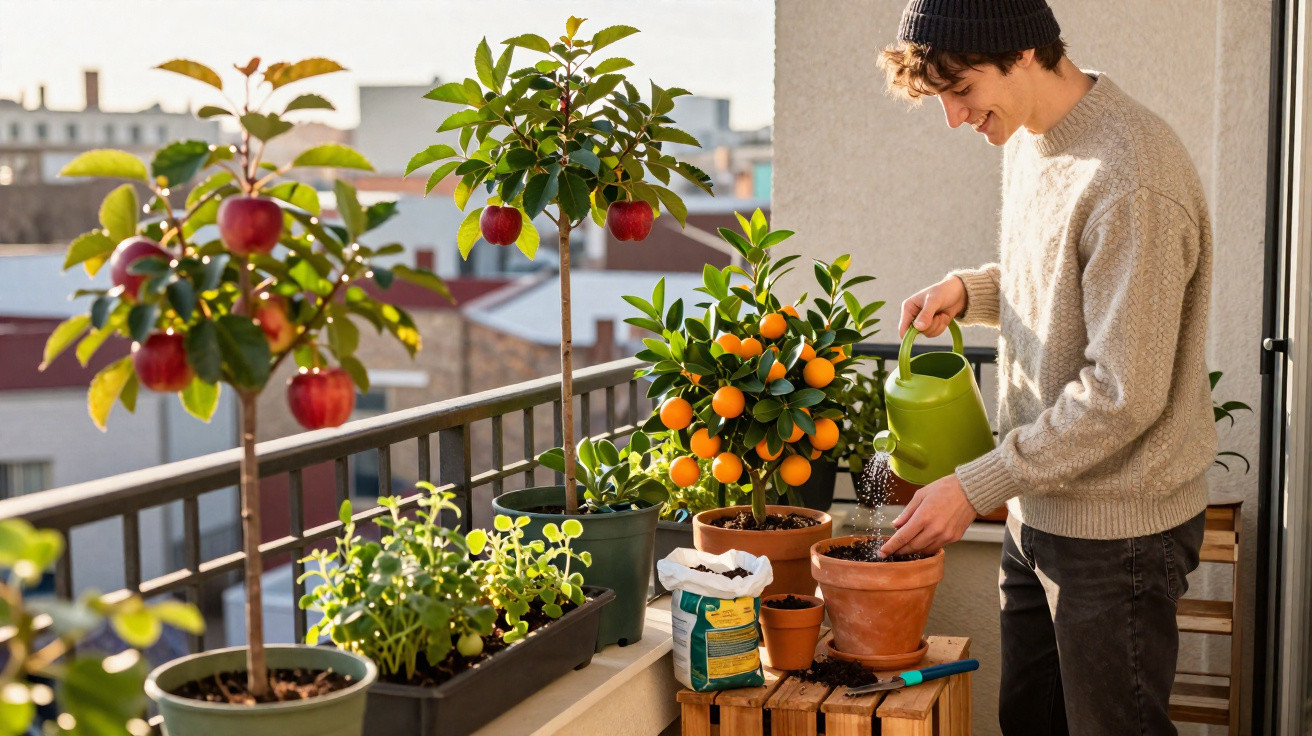
Even so, it is possible to achieve a surprisingly abundant fruit harvest here.
Anyone living on the fourth floor usually expects geraniums rather than home-grown apples, figs or apricots. Yet this can become reality when winter is used to make a deliberate choice for compact fruit trees in pots, even in the smallest space. Modern cultivars stay short, fruit early and thrive remarkably well in containers on balconies.
Why winter is the ideal time to start a mini fruit balcony
The quiet season may initially seem unsuitable for gardening: there are no leaves, little sunlight and frosty nights. However, it is an excellent time to plant fruit trees in containers.
“Planting now gives the roots months of head start – in spring, the little trees begin the season with greater vigour.”
During the dormant period, growth is focused below ground. While the canopy rests, the roots establish themselves gradually. This means young fruit trees cope with being moved into a container far better than if they were planted in April or May when they are already actively growing.
Garden centres and nurseries also offer a wide range of bare-root or newly potted dwarf varieties in winter. Choosing early gives you access to more interesting, sometimes early-fruiting cultivars before they sell out.
Mini balcony, maximum harvest: making the most of space with dwarf fruit
Success depends on specialist rootstocks and breeding. Rather than reaching 5 to 8 metres in height like conventional fruit trees, dwarf and columnar fruit varieties generally remain between 1 and 2 metres tall.
- Height: around 1 to 2 metres, easy to prune and harvest
- Pot size: 40 to 50 centimetres in diameter, with a capacity of roughly 25 litres or more
- First harvest: often as early as the second or third year after planting
Instead of putting their energy into thick trunks, these trees direct it towards flowers and fruit. Their side shoots usually stay short, making them ideal for narrow balconies. Several fruit varieties can even be positioned side by side along a railing.
Essential conditions: light, pot space and water
Anyone growing fruit in a limited area should follow a few straightforward rules:
- Light: at least four to five hours of direct sun each day; south- or west-facing balconies are ideal.
- Pot: choose one size larger where possible, with good drainage and drainage holes.
- Water: water regularly, but do not drown the plant in waterlogged compost; check it even in winter.
- Nutrients: apply an organic fertiliser in spring to support flowering and fruit formation.
Those with only a north-facing balcony are unlikely to have much success with fruit trees. Berry bushes or hardy herbs are a better option in that case. For everyone else, the rule is simple: the more sunshine the fruit receives, the sweeter and more aromatic it becomes.
The best potted fruit trees for very small balconies
Many varieties are now specifically suited to containers and compact spaces. They remain manageable, need little maintenance and can still provide a respectable harvest.
Compact apple trees: columnar and dwarf forms
So-called columnar apples grow in a narrow upright shape and need only around 30 centimetres of width. They can even fit between balcony furniture. In a 40- to 50-centimetre pot, they produce proper full-sized apples rather than merely ornamental fruit.
Dwarf apples with a broader canopy but a low mature height are a good choice where a little more room is available. A smart approach is to plant two different varieties together, improving pollination and extending the apple-picking season.
Figs on the fourth floor: Mediterranean character from a container
Full-sized fig trees rarely fit on a balcony. Dwarf figs, by contrast, stay compact while still producing sweet dark-purple or green fruit. A sheltered south-facing balcony, especially in a town or city, can offer a slight advantage thanks to retained warmth.
Figs grown in containers require free-draining, fairly mineral compost and are sensitive to frost. On very cold days, a layer of horticultural fleece or bubble wrap around the pot helps prevent the roots from freezing through.
Miniature apricots and productive dwarf raspberries
Many balcony owners dream of growing apricots but are limited by space and pollination requirements. Modern low-growing varieties reaching up to around 1.50 metres solve this issue. Some are self-fertile, meaning they can produce a good crop without a second tree.
They can be paired with compact raspberry varieties. Specially bred dwarf raspberries grow to barely more than 1 metre, yet still produce numerous canes and, after a few years, can yield up to 1.5 kg of berries per pot.
Citrus fragrance on the balcony: small oranges and more
A small citrus tree provides both Mediterranean atmosphere and fruit for snacking. Small-fruited types are particularly decorative, carrying flowers and colourful fruit at the same time for weeks. They have an intense fragrance and cope well with container growing.
Important: citrus plants are frost-sensitive. In mild regions, a sheltered position and light winter protection are often enough; in colder areas, they should be moved to a cool, bright room once prolonged frost is expected.
How to plant fruit trees in containers: step by step
With container planting, the pot set-up determines success or failure. The right mixture prevents waterlogging without allowing the roots to dry out.
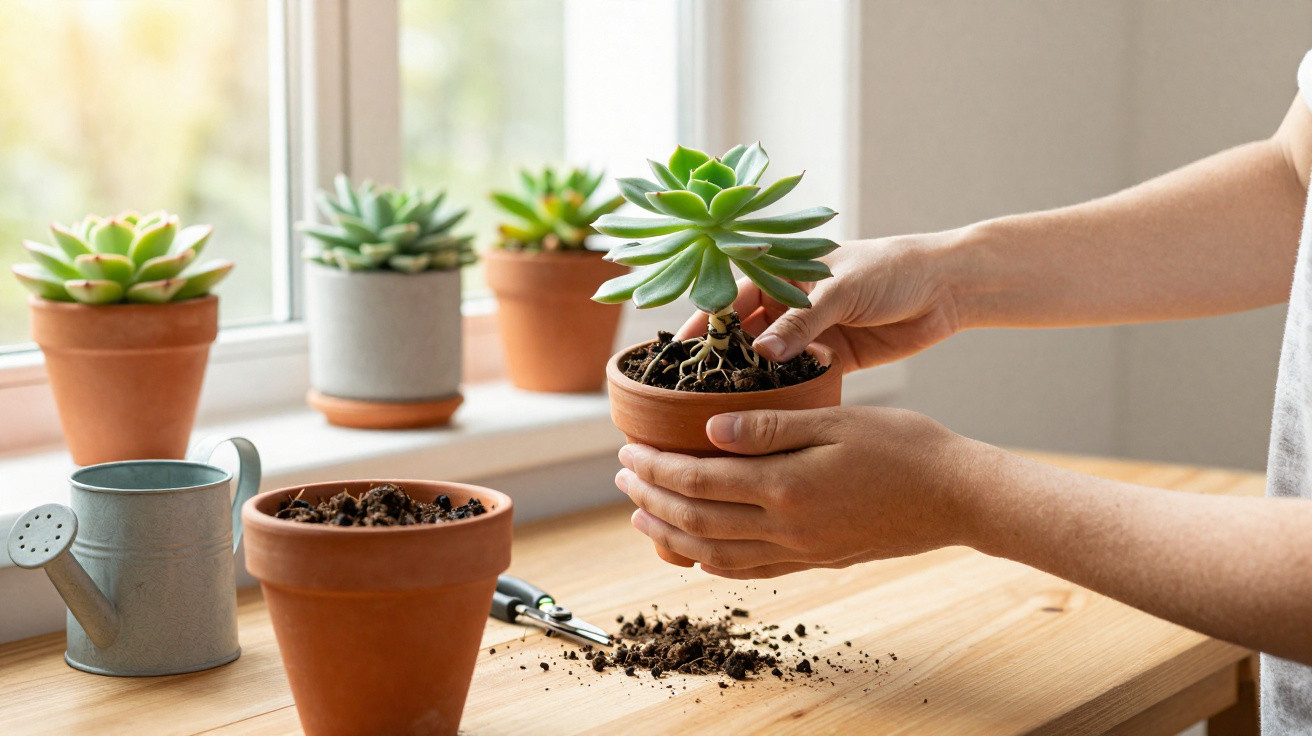
- Choose a large pot: at least 25 litres, preferably more, with drainage holes.
- Create a drainage layer: fill around one fifth of the pot’s height with expanded clay or coarse gravel.
- Mix the growing medium: combine quality potting compost with compost and some sand or perlite.
- Position the tree: keep the graft union just above the growing medium and fill in any gaps.
- Water it in: water thoroughly until water runs out at the base, then allow it to drain.
The drainage layer stops water from sitting in the container and causing root rot. An airy, structurally stable growing medium retains moisture without becoming saturated. Many inexpensive composts sink considerably after a few months, so it is worth making your own mix and topping up the surface with a little extra growing medium in spring.
Watering, feeding and protection: a care plan for fruit at the balcony railing
Fruit trees planted in the ground can draw water from deeper soil layers through their roots. This is not possible in pots. Here, everything depends on consistent watering, including outside the summer months.
“Container trees can dry out even in winter, despite the cold air. Dryness appears in the pot before it shows in the canopy.”
Watering in winter and summer
As soon as the potting ball feels dry in the top few centimetres and there is no frost forecast, the tree needs water. A surprising amount of moisture can be lost on sunny, windy winter days. Waterlogging remains a risk, however, so water less often but thoroughly, and allow excess water to drain away.
During summer, a thick mulch layer of bark pieces or dried grass clippings helps prevent rapid drying. Anyone away from home during the day can use large saucers or watering cones, but only if water is not left permanently standing in the saucer.
Nutrients and annual care
Dwarf fruit crops heavily, which takes energy. In spring, an organic specialist fertiliser for fruit trees supports flower formation. A further light application after flowering helps to stabilise the developing fruit.
A yearly ‘top-dressing’ is worthwhile: carefully remove the top layer of growing medium and replace it with fresh compost. This supplies nutrients to the root area without the need to repot immediately.
Gentle pest protection
Ripening fruit has a magnetic effect on insects. On a balcony, a combination of simple measures is usually sufficient:
- fine netting to protect against wasps and birds
- vinegar-solution traps for fruit flies
- pheromone traps for particular moths
- consistently collecting and disposing of fallen or damaged fruit
Acting early prevents a major infestation. Chemical treatments can be problematic in a confined balcony area with children or pets, so mechanical and biological methods are the better choice.
Structural loading, neighbours and microclimates: what many balcony gardeners overlook
Before bringing in several large containers, check the documents relating to the balcony’s load capacity or, if unsure, ask the landlord. Soil, water and pots can quickly weigh considerably more than expected.
The microclimate matters too: exterior walls retain warmth, while glass balustrades intensify the sun. Some varieties benefit from this, whereas others, including certain apples, can suffer sunscald on their skins in excessive heat. A little shade, such as that provided by an extended awning, can help.
Combining a fruit balcony with herbs and flowers
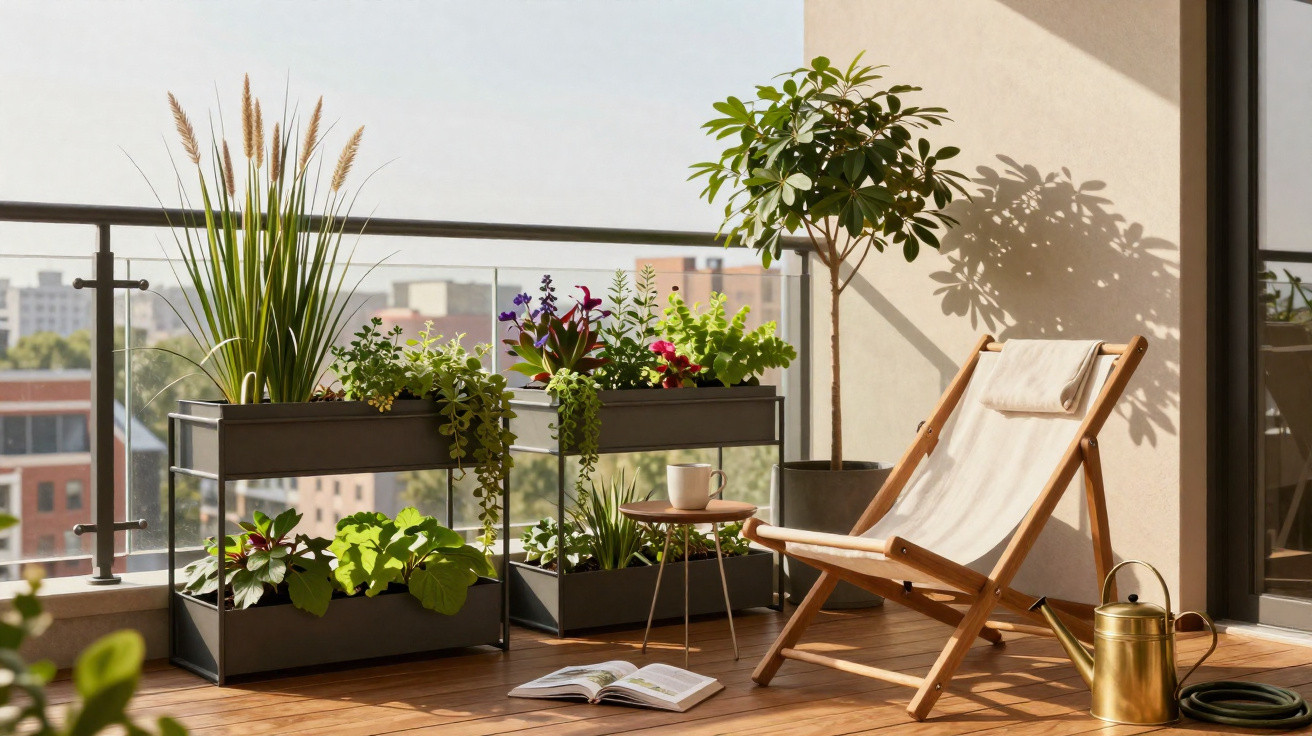
Dwarf fruit in containers looks attractive on its own. It becomes even more interesting when planted underneath and alongside companion plants. Shallow-rooted herbs such as thyme or oregano work well around the edges of larger pots. They keep the compost slightly cooler and attract pollinating insects.
Flowering companions such as lavender, marigolds or nasturtiums increase biodiversity and make the balcony visually livelier. Some also deter particular pests. In this way, just a few square metres can become a small, productive urban garden that brings harvests and enjoyment from spring through to autumn.







Comments
No comments yet. Be the first to comment!
Leave a Comment