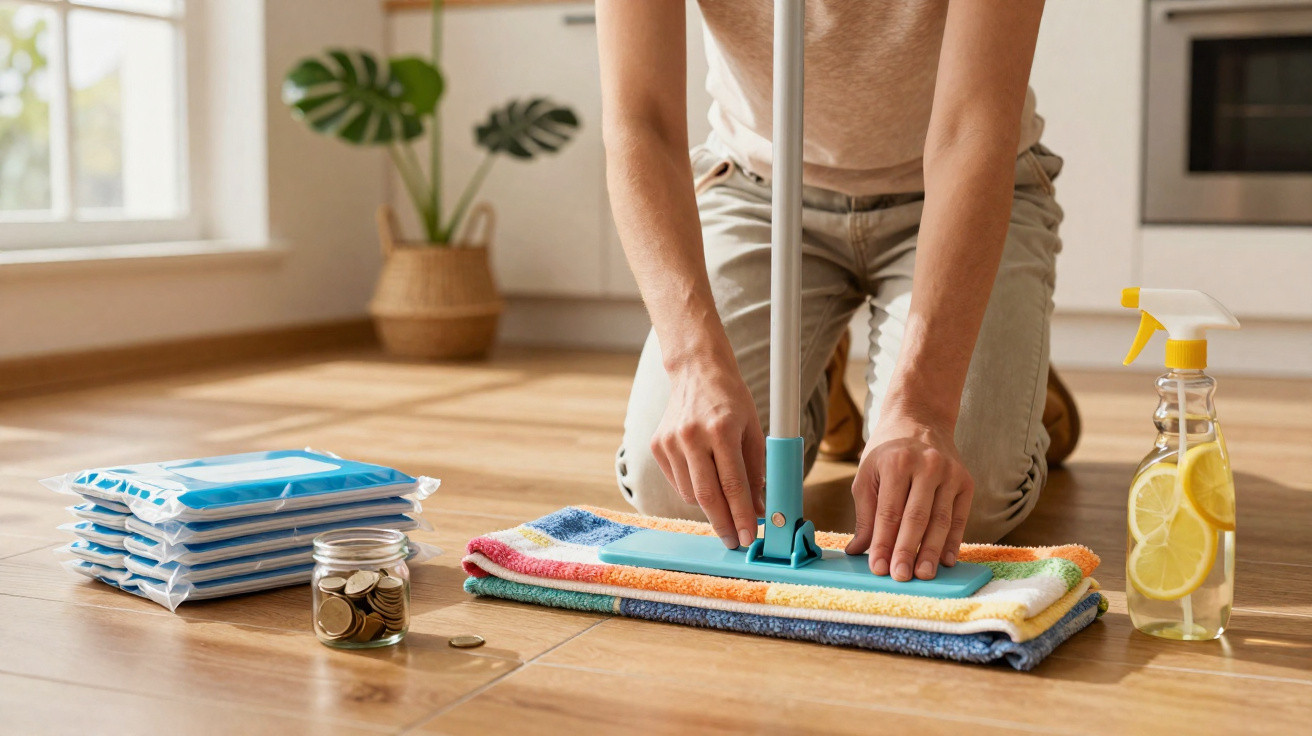
Many households throw away rough bath towels – yet they can become a surprisingly effective aid for cleaning floors, saving both money and waste.
Almost every cupboard contains a pile of old hand towels or bath towels that no one wants to use any longer: they are too stiff, stained or simply unattractive. Few people realise that these discarded textiles can be turned into a small cleaning marvel that replaces costly disposable floor wipes – without a sewing machine, complicated crafting or any strain on the household budget.
Why your old bath towel is far too useful for the bin
A worn terry towel may initially look like ordinary rubbish. Its fibres stick out, the fabric feels rough and its colour has faded. Yet these very features make it remarkably handy around the home, particularly when it comes to floors.
An old terry towel can be turned into a reusable cover for a flat mop in just a few minutes – replacing hundreds of disposable wipes.
The key to this method lies in the loops of terry fabric, which are generally made from cotton. Their structure works like countless tiny hooks, holding on to dust, crumbs and pet hair. Cotton also absorbs water very effectively, drawing moisture into the fibres.
What makes terry fabric so effective for cleaning
- Looped structure: The small loops catch dust and dirt particles, keeping them in place.
- High absorbency: Cotton quickly takes in substantial amounts of water.
- Durability: Old towels can withstand high wash temperatures and repeated laundering.
- Good glide: The fabric moves smoothly across tiles, laminate and PVC without smearing.
In effect, this follows a similar principle to professional cleaning methods. Many cleaning providers use reusable mops and textile mop pads that are restored through washing.
What disposable floor wipes really cost
Many homes now use flat floor mops with disposable wipes. They are convenient, but not necessarily inexpensive. A quick calculation shows just how much the ongoing costs can accumulate over the years.
Consider a household that mops its floors twice a week, using two fresh disposable floor wipes each time:
- 2 cleaning sessions per week
- 2 wipes per use
- = 4 wipes per week
- Equivalent to around 208 wipes per year
At typical prices of roughly €0.30 to €0.40 per wipe, the annual total soon reaches between €60 and €80 – for disposable floor wipes alone, excluding cleaner and water.
A single large bath towel can cover dozens of floor-cleaning sessions and save up to €80 year after year.
A large bath towel measuring around 70 x 140 centimetres can provide several covers, depending on how it is cut. They can be washed at 60°C, reused dozens of times and will eventually become textile waste – but until then, they will have replaced many plastic or non-woven wipes.
Step by step: turning a towel into a reusable floor-mop cover
You do not need sewing skills or a sewing machine for this conversion. The technique simply uses the retaining clips or rubber grips that normally secure disposable wipes to a flat mop.
Materials to gather
- 1 old terry hand towel or bath towel
- 1 flat mop with clip or rubber holders
- 1 sharp pair of household scissors
- 1 tape measure or folding rule
- A pen or tailor’s chalk for marking
Instructions in just a few minutes
- Lay the towel flat on the floor or a table.
- Place the flat mop head centrally on the fabric.
- Use the pen to mark a rectangle that extends about 5 to 7 centimetres beyond the mop head on every side.
- Cut out the rectangle neatly.
- Make small, straight cuts around 2 centimetres deep at each of the four corners.
- Position the mop head on the cut piece of fabric.
- Fold the edges over the mop head and secure them in the holders where the disposable wipes would normally be inserted.
The short corner cuts allow the thicker terry fabric to fit more neatly around the edges and be held securely. The cover stays firmly in place, but can be removed in one movement and put straight into the laundry basket.
How to use it properly: dry, damp and on different floors
The improvised cover works both dry and slightly damp. The important factor is how sensitive the particular floor surface is.
Dry cleaning for dust and pet hair
When dry, the terry towel attracts dust, traps hair and picks up crumbs – much like static disposable wipes, but without plastic or fragrances. This dry-cleaning method is especially suitable for:
- Living rooms and bedrooms
- Hallways
- Corners where dust bunnies collect
- Homes with a dog or cat
Damp cleaning for stains and kitchen floors
For more stubborn dirt, dampen the cover. How much water to use depends largely on the type of flooring:
- Tiles and ceramic: Dampen the cover thoroughly, then wring it out well.
- Laminate and vinyl: Use it only slightly damp, so that no puddles remain on the surface.
- Real wood parquet: Work with the cover barely damp, using as little water as possible.
In heavily used areas – such as the entrance, kitchen or around pet food bowls – a two-stage approach is worthwhile: wipe dry first to remove hair and crumbs, then make a second pass with a lightly damp cover to tackle stains.
Care, hygiene and a simple recipe for an extra-fresh finish
To keep the reusable cover hygienic, wash it regularly in the washing machine. Avoid fabric softener, as it coats the fibres like a film and noticeably reduces their absorbency.
There is also a practical tip for anyone who likes to clean “in advance”: several covers can be stored in a solution that improves both cleaning power and scent.
Simple mixture for prepared mop covers
- 1 part household vinegar
- 2 parts distilled water
- A few drops of lemon essential oil (optional)
Pour the mixture into a tightly sealed jar or container. Soak the cut towel covers in it, wring out any excess liquid thoroughly before use, and the quick fresh mop is ready. Once cleaning is finished, put the covers straight in with the rest of the household laundry and wash them at 60°C.
Benefits for the environment and everyday life: why the switch is worthwhile
This towel trick is more than just a money-saving gimmick. Fewer disposable products also mean less packaging, less transport and less microplastic in everyday life. Many disposable floor wipes are made from synthetic fibres or blended fabrics that can break down into tiny particles during use and disposal.
Anyone who continues using old towels around the home cuts waste at the source while saving real money year after year.
Keeping a supply of textile covers also makes spontaneous cleaning easier: once one cover is dirty, simply reach for the next. The covers can be sorted by colour – light ones for living areas, for example, and dark ones for the hallway and cellar – allowing them to be used for specific areas.
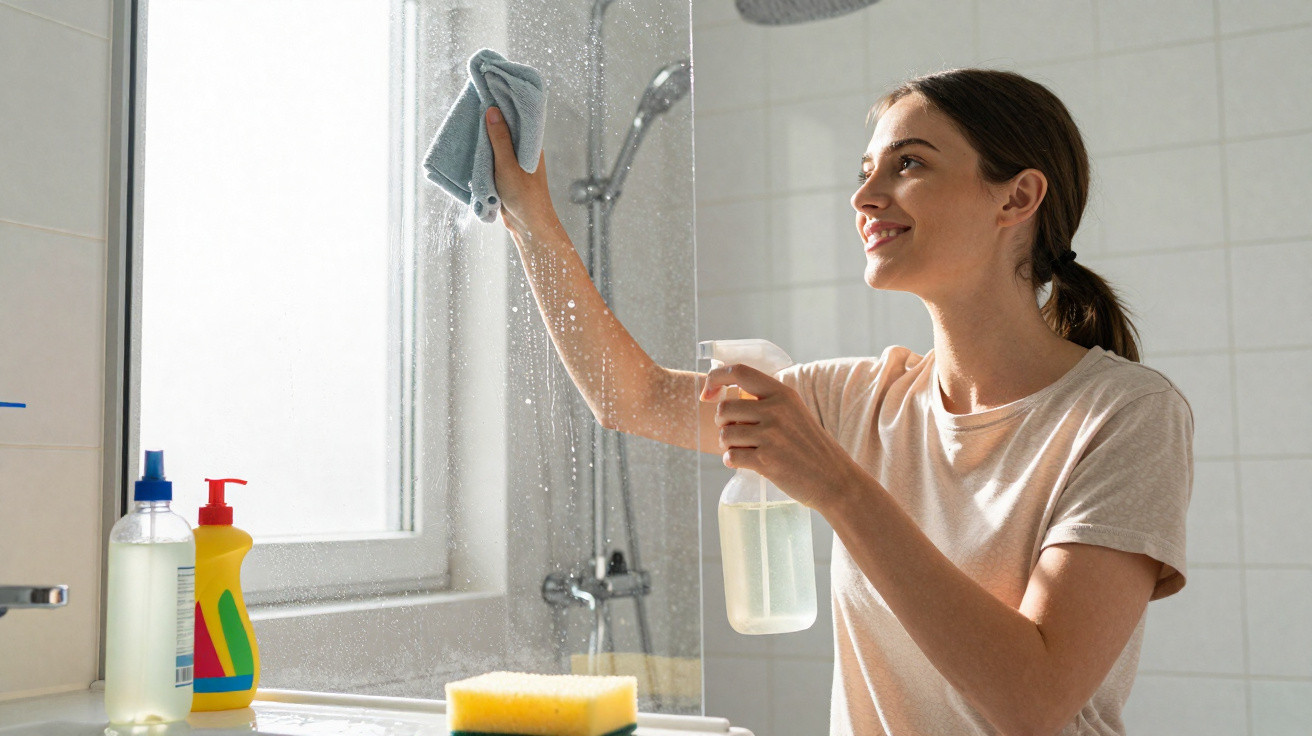
Anyone who likes this method can extend the principle to other jobs around the home. Small offcuts can become dusting cloths for shelves or reusable cloths for bathroom fittings. Even old guest towels with holes can serve one final purpose before they are finally discarded.
Ultimately, an unassuming bath towel shows just how much potential is already sitting at home: with a few cuts and a simple system, costs can be reduced, floors can be cleaned reliably and disposable products can gradually be replaced. It not only feels good; by the end of the year, the difference is visible on the bank statement – and in the bin bag.




Comments
No comments yet. Be the first to comment!
Leave a Comment