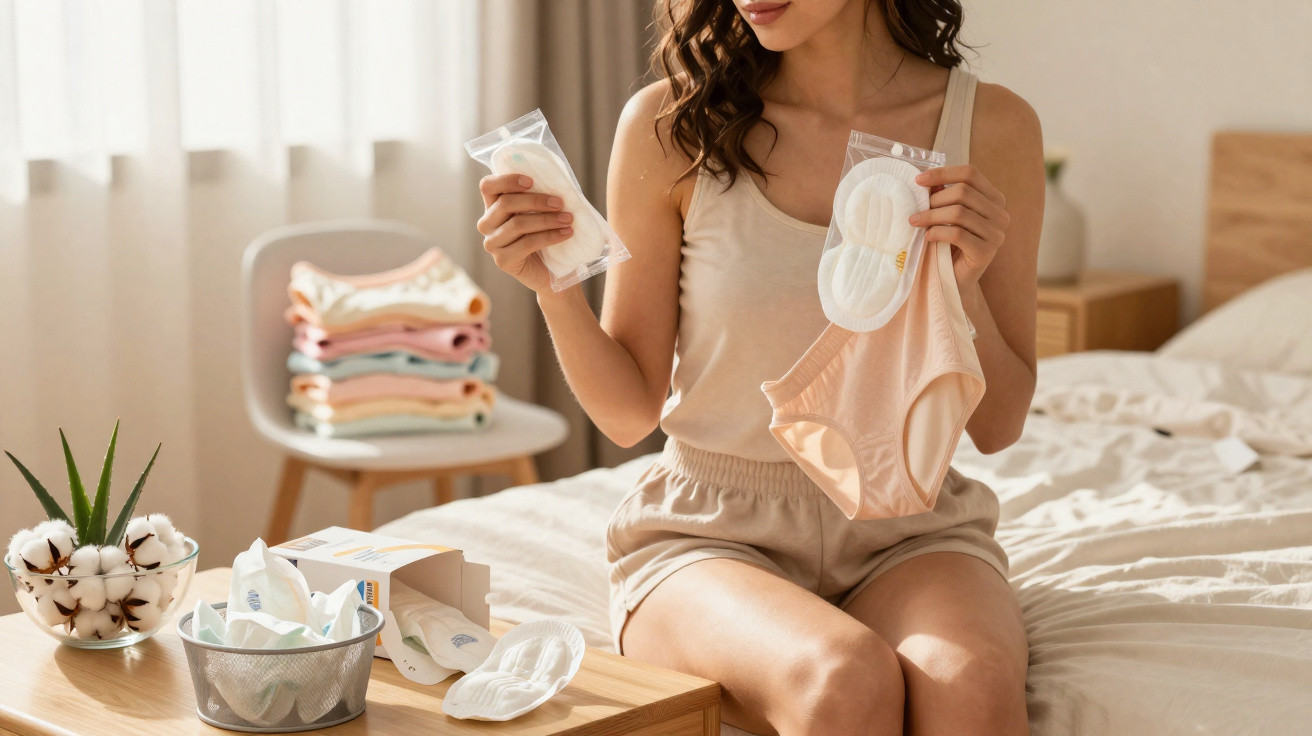
Gynaecologists caution that using panty liners every day may create more problems than it solves.
Anyone wanting to feel ‘fresher’ down below can quickly end up buying panty liners at the chemist. They seem clean, convenient and hygienic. Yet wearing them continually can disrupt the delicate vaginal area. Experts describe this as an avoidable risk to the mucous membranes, intimate flora and your budget alike.
Why discharge is a protective barrier, not something unpleasant
Many women use panty liners daily simply because they find vaginal discharge uncomfortable. In reality, it is part of an exceptionally clever protective system within the body.
- Discharge often starts before puberty and remains part of the menstrual cycle throughout life.
- It is cervical mucus, produced in the cervix.
- It contains countless lactic acid bacteria that establish the vaginal flora.
- This flora offers protection against fungi, viruses and bacteria.
“As long as discharge is clear to whitish, has a subtle smell and does not cause burning or itching, it is considered a sign of a healthy vagina.”
So, anyone who immediately ‘covers up’ every trace with a panty liner is trying to eliminate something that is actually protective. The natural environment is constantly wiped away, absorbed and replaced with foreign materials. Many women see completely dry underwear as ‘clean’, even though this sensation of dryness is not the normal state.
What many panty liners are actually made of
The wording on the pack often sounds harmless: ‘breathable’, ‘soft’ and ‘for a fresh feeling’. However, these marketing claims can conceal a mix of materials that not every type of skin tolerates.
Common components of panty liners include:
- plastics and synthetic fibres in the top layer and absorbent core
- adhesives that hold the liner in place in underwear
- in some cases, organohalogen compounds intended to prevent bleaching and yellowing
- perfumed layers that provide an artificial fragrance
Organohalogen compounds cover thousands of substances containing chlorine, bromine or iodine. They are intended to keep liners looking attractively white and improve their absorbency. Critics point to a possible allergy risk; some individual substances in this group are suspected of being carcinogenic in the long term.
“The intimate area is among the most sensitive areas of skin on the body – anything resting there for hours every day should be selected carefully and be as non-irritating as possible.”
There is another consideration, too: many chemicals and fragrances can disrupt the pH level of the vulva. The vagina itself normally has a mildly acidic pH. When this balance is disturbed, beneficial lactic acid bacteria become less effective and harmful germs can spread more easily.
Moisture, warmth and plastic: an ideal breeding ground for germs
Perhaps the biggest issue with wearing panty liners continuously is the microclimate inside underwear. Body heat, close-fitting clothing and a relatively dense liner can quickly create a greenhouse effect.
- Moisture from sweat and discharge collects within and beneath the liner.
- The plastic backing allows very little air to circulate.
- Temperature rises, making the skin more prone to becoming waterlogged.
Bacteria and fungi thrive particularly well in this warm, damp environment. Rather than delivering greater freshness, it can therefore cause the opposite: a higher risk of odour, itching and inflammation.
“Panty liners worn continuously can encourage vaginal infections, redness and skin rashes – particularly if they are also perfumed.”
Many women experience burning or small patches of eczema around the groin and labia. Often, the cause is simply irritation from ongoing friction or from fragrance and preservative ingredients.
Practical drawbacks: slipping, expense and substantial waste
Beyond the health concerns, panty liners are often less brilliant in daily life than advertising suggests.
| Problem | What often happens |
|---|---|
| Liner slips | It shifts in underwear, folds over and rubs against the skin |
| Insufficient absorbency | Completely unsuitable for heavier bleeding and can leak quickly |
| Waste produced | Several liners, plastic wrappers and outer packaging every day |
| Cost | Regular spending that adds up significantly over a year |
In addition, this waste generally goes into general rubbish, while plastics break down extremely slowly. Using one to two liners a day can easily generate several hundred items a year – for a product that often ends up in underwear purely out of habit.
When panty liners can be useful
Despite these criticisms, there are circumstances in which a thin liner can genuinely be practical. The key factor is how often it is used.
- during the final days of a period, when only minimal remnants remain
- when discharge is temporarily heavier, such as around ovulation
- while travelling, when changing underwear is less straightforward
- as a temporary measure for slight urine leakage caused by pelvic floor weakness
Even in these situations, experts advise changing the liner regularly and choosing fragrance-free versions. It should not become standard equipment from morning to night, every day.
“Using a liner occasionally as help in exceptional circumstances is considerably less problematic than giving it a permanent place in everyday underwear.”
Healthier alternatives for greater body confidence
Many women mainly rely on panty liners because they feel uncertain: they do not want their underwear to feel damp or smell of anything. There are gentler ways to address these concerns.
Breathable underwear instead of a plastic barrier
A straightforward but effective measure is to choose underwear made from cotton or bamboo fibres. These materials absorb moisture more effectively than synthetic fabrics and allow air to reach the skin.
- Cotton briefs can be washed at 60°C.
- A light gusset provides additional absorbency.
- Dark colours make small marks less visible.
Anyone who frequently has heavier discharge can consider specialist period briefs or underwear with an absorbent gusset. Many designs are suitable not only for menstrual blood but also for cervical mucus, and can be reused.
Intimate hygiene: less is often more
The desire to wear a panty liner every day often stems from feeling that you are never properly clean ‘down below’. Yet continual washing with soaps, intimate sprays and shower gels can irritate the mucous membranes.
- Lukewarm water is usually enough for the external intimate area.
- Anyone wishing to use a product should select an unperfumed, pH-neutral wash gel.
- The vagina cleans itself internally – soaps and shower heads do not belong there.
When women better understand their natural body odour instead of instantly masking it with fragrances, they often realise that the scent is nowhere near as strong as advertising implies.
When to seek medical advice
In some cases, discharge does indicate a genuine problem. A panty liner will not help then; an examination at a gynaecology clinic is needed.
Possible warning signs include:
- a strong, unpleasant smell, such as fishy or putrid odour
- yellowish, greenish or brownish colouring
- clumps, foam or very thick mucus
- itching, burning, or pain during sex or urination
These symptoms may indicate an infection, such as a fungal infection or bacterial imbalance. The sooner women seek help, the more quickly the issue can be treated – without discreetly ‘sticking a liner over it’.
Why using panty liners mindfully is worthwhile in several ways
Using panty liners deliberately rather than routinely offers benefits on several levels: skin can breathe, vaginal flora becomes more stable and infections occur less often. It also reduces waste and spending, as reusable alternatives or simply carrying an extra pair of briefs in a backpack can often work just as well.
Over time, there is a further effect: better knowledge of your own body builds trust in it, reducing the need for products that promise only a supposedly ‘perfect’ intimate area. Genuine wellbeing comes not from ever more liners, but from a healthy, relaxed relationship with your own intimate area.











Comments
No comments yet. Be the first to comment!
Leave a Comment