The shower is running, the water is icy, and you are left watching money – and litres – disappear down the drain.
During the colder months, the uncomfortable delay before hot water arrives quietly adds to water bills and frustrates anyone trying to live more sustainably.
Why that cold minute in the shower quietly costs you money
Most people switch on the shower, check the spray with a hand, grimace, and step away while it “gets ready”. It may seem like an insignificant routine, but 5 to 10 litres commonly flow straight down the drain before the water reaches a comfortable temperature.
Apply that figure to every person in a household, across weeks and then months, and it quickly becomes substantial. In areas affected by recurring droughts or water-use restrictions, allowing that cold water to run away can feel particularly out of touch.
For a family of four showering daily, the “warm-up phase” alone can squander up to 12,000 litres of water a year.
That water is not used for plants, toilets or cleaning buckets. Instead, it disappears because it is treated as an unavoidable cost of enjoying a hot shower. It does not have to be that way. One straightforward approach, using something found in almost every home, can turn this everyday waste into a useful supply.
The bucket reflex: a simple action with a big effect
The technique becoming popular with budget-conscious households and environmentally aware urban residents requires no smart device, plumbing alteration or subscription. All it needs is a bucket. When turning on the shower, place a bucket beneath the water stream and allow it to collect the water until it becomes warm. Move the bucket aside, then shower as normal.
The quantity of water does not change, but its purpose does. Rather than being “lost”, those 5 to 10 litres become water saved for another job. The wait feels more worthwhile, while a growing utility bill may feel slightly less painful.
A basic 10-litre bucket can fill in less than a minute under many modern showers, turning dead time into usable supply.
Its strength is how uncomplicated it is. There is no equipment to service, app to monitor or instructions to follow. Once the bucket has a place in the shower, the action can become almost instinctive: turn on the water, position the bucket, wait for heat, and use the collected water later that day.
Ways to use that “saved” water
Saving cold water before a shower is only worthwhile when it replaces water that would otherwise have come from the tap. Fortunately, this is easy to achieve. A home has many everyday jobs that do not need drinking-quality water.
Practical second uses for shower water around the home
- Watering houseplants: Central heating can dry out both foliage and compost. Several litres each morning can help indoor plants stay healthier.
- Flushing the toilet: Tip a bucket directly into the toilet bowl to trigger a flush without using the cistern.
- Cleaning floors: Add a little detergent to the collected water when mopping tiled or vinyl floors.
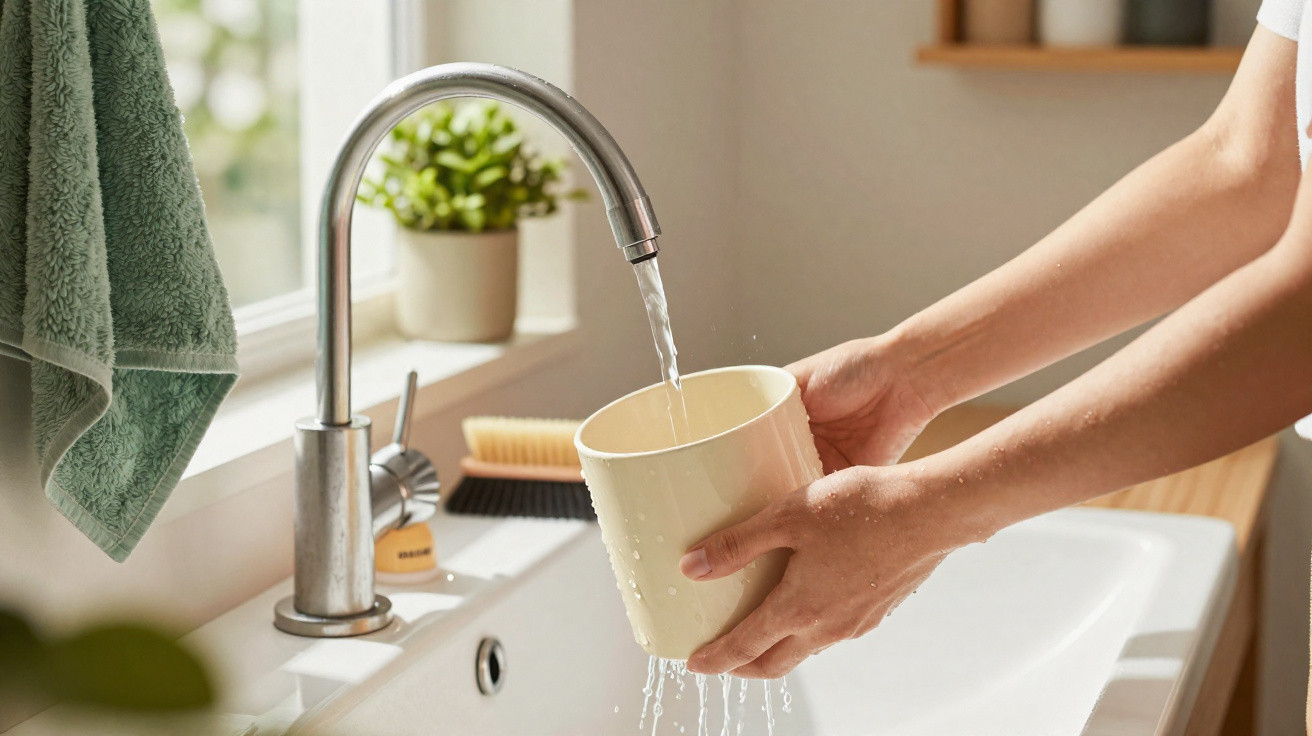
- Soaking dishes first: Use it to fill a sink or washing-up bowl, loosening baked-on or greasy residue before washing.
- Cleaning window sills and balconies: The bucket water is useful for quickly scrubbing outdoor steps, railings or patio slabs.
These purposes are suitable for water that has not come into contact with soap, shampoo or skin. It is simply water that travelled through the pipes before it was needed. Many households find they no longer need to run the tap for particular chores, as the “shower bucket” consistently supplies enough water.
| Use | Approx. water needed | How often it can replace tap water |
|---|---|---|
| Watering indoor plants | 2–5 L | Several times a week |
| One manual toilet flush | 6–9 L | Once per full bucket |
| Small floor area (bathroom/kitchen) | 5–8 L | Weekly or bi-weekly |
| Pre-soaking dirty pans | 2–3 L | Whenever needed |
How much could this actually save?
Water suppliers commonly bill customers by the cubic metre, with one cubic metre equal to 1,000 litres. Saving 5 litres per shower means one person showering once a day can collect roughly 1,825 litres annually. That amount rises rapidly in larger households or where the wait for warm water is longer.
In some cities, captured shower water can offset dozens of toilet flushes every month, easing both bills and pressure on local supply.
The amount saved financially depends on local water charges, but there is also a behavioural benefit. People who adopt the bucket reflex often become more mindful of tap use in other situations, including brushing their teeth, washing vegetables and doing laundry.
Making the shower bucket habit work without cluttering the bathroom
A bucket in the shower may sound sensible in theory, but it can feel less attractive in a compact flat where every item takes up valuable room. Choosing an appropriate container and creating an easy routine can make it feel natural rather than irritating.
Selecting suitable equipment
- Choose a bucket or watering can that sits comfortably beneath the showerhead without creating a trip hazard.
- Select one with a strong handle, allowing several litres to be carried easily from the bathroom to the kitchen or balcony.
- A neutral colour may help it blend into the tiles instead of looking like a “temporary hack”.
- Where storage is tight, a collapsible bucket can be hung from a hook between uses.
When the container stops feeling like unnecessary clutter, using it can become part of the morning routine, as automatic as picking up a towel.
Making it a household routine rather than a solo habit
In homes shared with others, the method delivers its greatest benefit when everyone takes part. Some families draw a line inside the bucket labelled “one flush” or “plant day”, making the value of the water easier to see. Others turn it into a relaxed challenge by counting how many buckets the household can save in a week.
Children may be particularly receptive to simple tasks, such as taking water to outdoor pots or refilling a dog's outdoor water bowl where suitable. The purpose is not to make showering into a rigid task, but to make the bucket a familiar feature of the bathroom.
Beyond the bucket: further ways to avoid wasting water while waiting for heat
The bucket reflex is effective because it needs almost no preparation. However, it can also encourage other improvements that address the same issue in different ways.
Upgrading the hardware gradually
- Low-flow showerheads lower the overall volume of water used, including during the warm-up phase.
- Thermostatic mixers can achieve a consistent temperature more quickly, reducing the period of cold water.
- Pipe insulation fitted around hot-water pipes limits heat loss, meaning less water needs to run before it warms up.
These options involve an initial expense, although they can work well alongside the bucket method. Even if the warm-up period becomes shorter, some reusable water will usually still be available – just a smaller amount.
Viewing household water in “layers”
Growing interest in shower-bucket routines points to a wider change in perspective: seeing water at home as a series of layers instead of one resource that is simply on or off. Drinking-quality tap water sits at the top. Beneath it is water clean enough for flushing and cleaning. At the bottom is water that is too contaminated to reuse and must go directly down the drain.
Water collected from the shower generally belongs in the middle layer. It may not be appropriate for cooking or making coffee, but it can be used for toilets, floors, plants and initial rinses. Once households begin to think in these layers, other possibilities emerge, such as collecting water from dehumidifiers, air-conditioning units or the first few seconds of water from a kitchen tap.
For households living with water restrictions, this layered mindset can help preserve everyday comfort while staying within set limits. A handful of buckets will not resolve wider water shortages, but they can make a home more efficient and build routines that combine environmental care with practical savings.




Comments
No comments yet. Be the first to comment!
Leave a Comment