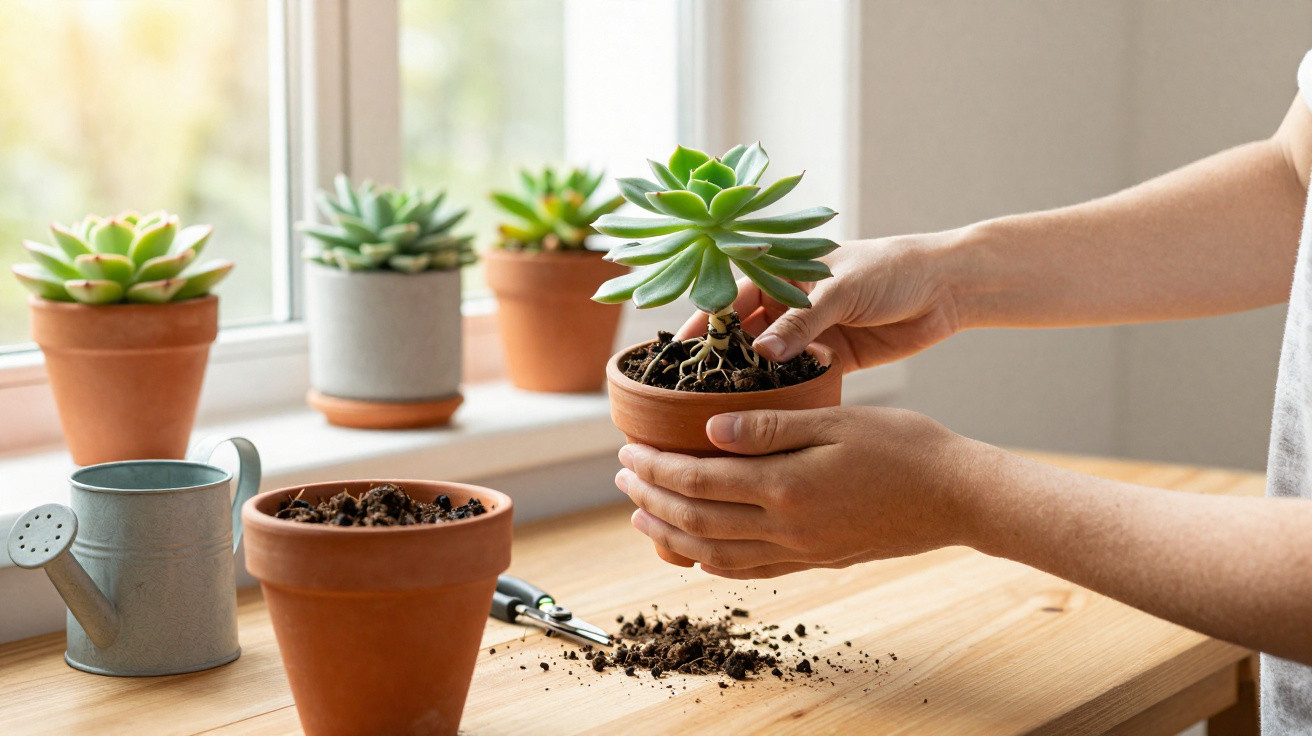
With a few targeted measures, however, you can usually still save it.
Many jade plants (Crassula ovata), commonly known as money trees, do not die of “old age” but because of care mistakes. Too much water, the wrong position, poor compost or pests can destabilise this otherwise resilient succulent. If you interpret the warning signs correctly and act promptly, there is a surprisingly good chance of nursing the plant back to health.
Warning signs: how your money tree calls for help
Start by checking the leaves and the compost. They will show what is currently troubling your jade plant.
- Soft, translucent leaves and mushy stems: a classic indication of overwatering and early root rot.
- Shrivelled, wrinkled leaves that fall off: a clear response to insufficient water.
- A musty smell or permanently wet compost: the pot is no longer drying out and the root system is suffocating.
- Very dry compost that has pulled away from the pot edges: the growing medium has dried out completely and can barely absorb water.
- White, cotton-wool-like deposits on leaves or stems: a typical sign of mealybugs or other pests.
Responding early to these signs can often prevent a complete restart and stop the money tree from rotting beyond recovery.
First aid: what to do straight away
Before reaching for the watering can or applying fertiliser indiscriminately, take the right first steps for the issue at hand.
In the case of waterlogging: act before everything rots
If the pot has been soaking wet for days, the leaves feel spongy or the compost smells stale, you need to intervene:
- Carefully remove the plant from its pot.
- Shake or gently brush off as much of the old wet compost as possible.
- Inspect the roots closely: remove anything black, brown and soft using a clean, disinfected knife or pair of scissors.
- Leave the trimmed plant to dry for 12 to 24 hours in a bright, airy but shaded place.
This “drying shock” may sound drastic, but it often saves the healthy parts of the root system that remain.
In the case of drought stress: rebuild moisture slowly rather than “drowning” it
If the plant looks wrinkled and the compost is dusty dry and detached from the pot, it needs water – but do not react in a panic:
- Do not pour a large volume of water over the top, as it will usually run straight through.
- Instead, fill a bucket or bowl with water and stand the pot in it for 30 to 60 minutes.
- Wait until air bubbles stop rising, then allow the pot to drain thoroughly.
This method using the saucer allows the compost to absorb water evenly without shocking the roots.
In the case of pests: isolate the jade plant and treat it consistently
Small white “cotton-wool flecks” in leaf axils or on stems usually mean that a colony of mealybugs has settled on the money tree.
- Separate the plant from other houseplants.
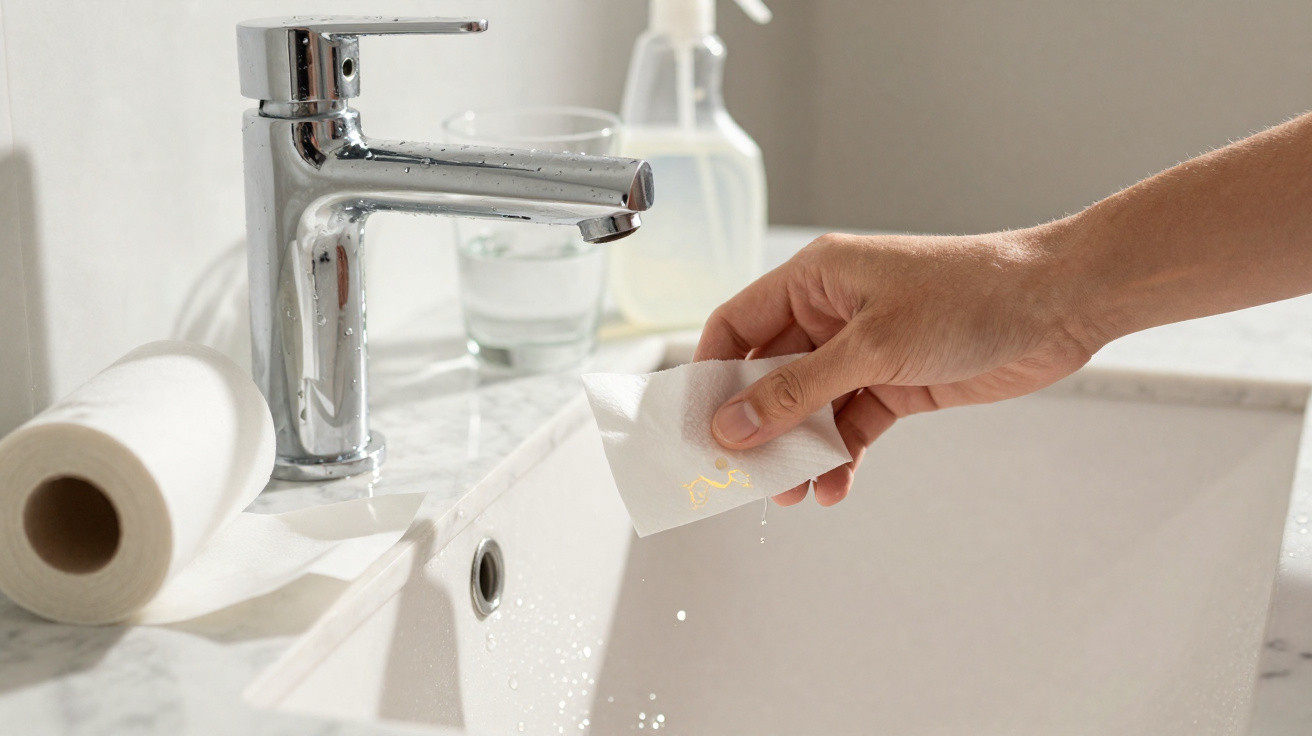
- Carefully wipe away visible clusters with a cotton pad and alcohol (around 70%).
- Repeat the treatment every 7 to 10 days until no fresh deposits appear.
- If the infestation is severe, a specialist houseplant pest spray may be necessary.
Pests take advantage of every stressful situation for the plant – dealing with them early makes the money tree’s recovery far easier.
Repotting correctly: a fresh start in suitable compost
Many issues arise because a jade plant is growing in dense, water-retentive potting compost. Fresh, airy growing medium can often work like a reset.
Step-by-step guide to rescue repotting
- Lift the plant out of its old pot and remove as much old growing medium as possible.
- Cut away all soft or discoloured root sections, disinfecting tools beforehand.
- Let the root ball dry in the air for 12 to 24 hours.
- Choose a pot with a drainage hole – clay or terracotta dries out faster than plastic.
- Add a 2 to 3 centimetre drainage layer, such as expanded clay or coarse gravel.
- Mix the growing medium: around 50% cactus compost or potting compost, 25% coarse sand, and 25% perlite or lava granules.
- Position the plant, firm the compost lightly and avoid creating waterlogging.
- Water sparingly only after 4 to 5 days, allowing cuts on the roots time to heal.
Using compost that is too heavy risks immediately recreating the old problem of permanently damp roots.
Watering correctly: less really is more
A money tree stores water in its leaves and stems. It therefore needs watering much less often than conventional houseplants.
The basic rule: water only once the upper half of the growing medium is completely dry.
Your finger is a simple testing tool: push it around two to three centimetres into the compost – if it still feels cool and slightly damp, wait.
Watering schedule by season
- Spring/summer: give one thorough watering every 10 to 15 days, then allow it to dry out properly.
- Autumn/winter: roughly every 3 to 4 weeks, or even less often in very cool locations.
Frequent small sips are unsuitable: the root zone stays constantly damp without excess water being able to drain away. It is better to water thoroughly but infrequently, then let the compost dry completely.
Light, position and fertiliser: keeping your jade plant happy
Without enough light, a money tree becomes elongated and weak, and can easily topple over. Insufficient light is another stress factor that encourages disease.
The ideal place indoors
- Put it in a bright spot by a south-facing or west-facing window, preferably with a few hours of sunshine.
- Avoid direct midday sun at the height of summer, as it can scorch the leaves.
- Keep it away from heating directly below it and cold draughts from windows or doors.
In winter, plant LEDs can help if your home is very dark. This allows the money tree to cope more calmly with short daylight hours.
Less fertiliser, more stability
Fertilising is worthwhile only once the plant has already regained strength. A weakened jade plant that is just forming fresh roots cannot tolerate a nutrient boost.
- Feed only from March to September.
- A specialist succulent fertiliser or cactus fertiliser is suitable.
- Always dilute the fertiliser solution more than recommended on the bottle.
- Fertilise only every 3 to 4 weeks, and stop completely in winter.
Too much fertiliser burns roots faster than new leaves can grow – particularly with succulents.
Preventing relapses: long-term care that really works
Once you have successfully rescued your money tree, you will not want to repeat the same rescue operation. A few basic rules provide lasting protection.
- Always use a pot with a drainage hole, never one without.
- Do not omit the drainage layer in the pot.
- Keep the growing medium loose and coarse; do not use pure potting compost.
- Check the plant regularly: inspect leaf undersides, stem forks and the compost surface.
- Adjust your watering schedule when the season or location changes.
New, small, glossy leaves are a positive sign: the plant is growing again. It can take several weeks, and sometimes two to three months, for the jade plant to recover visibly – patience pays off here.
Additional tips: pruning, propagation and assessing mistakes more accurately
Many owners are unsure when a money tree can still be saved and when only radical pruning will help. As a rule of thumb, a rescue attempt is worthwhile as long as firm, green sections remain on the trunk or branches.
Rescue through cuttings
When large parts of the plant have rotted or dried out, you can often still use healthy shoot tips:
- Cut several strong, healthy shoots with at least two pairs of leaves.
- Leave the cut surfaces to dry for one day, until a light skin has formed.
- Insert them into a very sandy, barely moist growing medium.
- Place them somewhere bright but out of direct sun, and water only minimally until new roots have developed.
This lets your money tree live on even if the old trunk can no longer be saved.
Common care misconceptions
| Mistake | Consequence |
|---|---|
| Watering daily, as you would spider plants or ferns | Root rot, soft leaves, trunk topples over |
| Positioning it directly above a radiator | Leaf drop, dried-out tips, pest infestation |
| A pot that is too large and filled with lots of wet compost | Growing medium barely dries out, roots suffocate |
| Fertilising a sick plant | Additional stress, slower recovery |
Knowing these pitfalls helps you spot early signs sooner and means you will need to resort to “emergency surgery” on your money tree less often. What seems to be a lost plant can then often become a healthy, old companion in the living room after all – with strong branches, plump leaves and a very long life ahead of it.






Comments
No comments yet. Be the first to comment!
Leave a Comment