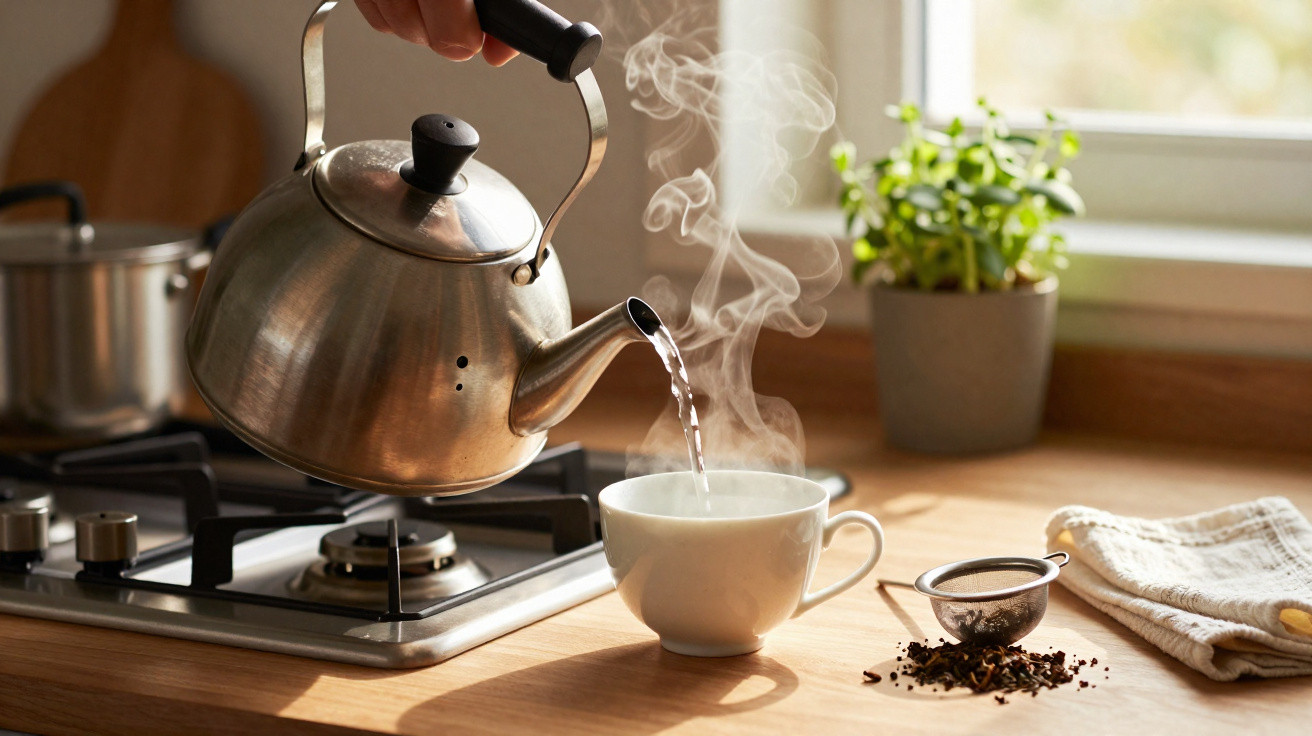
Many people use a kettle every day to boil water without paying attention to its structural details. The small hole at the top has an essential role in domestic safety, regulating the behaviour of the hot liquid inside during vigorous boiling.
Why does the kettle lid have a hole?
As water reaches high temperatures inside the utensil, it rapidly changes from a liquid to a gaseous state. Without a suitable route for it to escape, the large volume of accumulated steam would create enough pressure to force the lid open suddenly.
This small outlet works as a passive release valve. The opening lets trapped hot air leave gradually, keeping the pressure balanced and helping to prevent kitchen accidents involving splashes of boiling contents.
Do you know why a saucepan lid also has this small hole?
The opening found in metal and glass lids has an essential function in controlling steam while cooking… Read more
How does the hole make pouring easier?
When hot liquid is poured through the spout, the amount of water inside falls quickly. For the flow to remain even, outside air must enter the kettle and fill the space previously occupied by the drink.
If the item were completely sealed, liquid leaving it would create a partial vacuum inside, stopping the continuous stream. The vent provides constant ventilation, allowing water to run through the spout smoothly and in a controlled way.
Below is a video from Florian Gadsby's YouTube channel that explores the points discussed in this subject in greater depth:
Why is air circulation important during boiling?
While the kettle is heated over a flame or on an electric base, the air within it continually expands. The circulation of air supplied by the small hole prevents an excessive build-up of mechanical energy that could disturb the item's structure.
This ongoing exchange of gases stabilises the internal temperature without reducing heating speed. Such a straightforward design makes an ordinary utensil far more effective for safely preparing hot drinks in your everyday routine.
Benefits of the Kettle Vent
Essential functions of the hole
Here are the three main uses of this feature in the container:
- 1
Continuous release of excess accumulated water vapour; - 2
Thermal and atmospheric pressure balance inside; - 3
A smooth, continuous flow of water when serving the liquid.
How does the hole prevent water from spilling?
Without the controlled release of steam through the upper hole, boiling would push water bubbles directly towards the spout opening. This would cause the liquid to escape erratically, making the hob messy and creating potential risks of serious burns through direct contact.
By directing steam upwards, the hole relieves excess internal bubbling and allows the water to boil steadily. In this way, the kettle maintains the ideal heating flow without overflowing, ensuring practical everyday kitchen use.
Some important precautions when using the utensil include:
- Avoid covering the hole with tea towels while it is in use;
- Clean the opening regularly to prevent a build-up of dirt;
- Position the hole away from the handle to avoid burning your hand with steam.
What should you look for when choosing a good lid?
When buying a utensil for heating water, check that it has a properly sized vent positioned away from the handle. This simple precaution prevents hot steam from reaching your hand while you handle it, providing greater comfort and protection in daily use.
The engineering behind these small details demonstrates how applied physics improves everyday objects. Understanding how the vent works helps you use the utensil correctly, increasing its durability and providing greater peace of mind in the kitchen.









Comments
No comments yet. Be the first to comment!
Leave a Comment