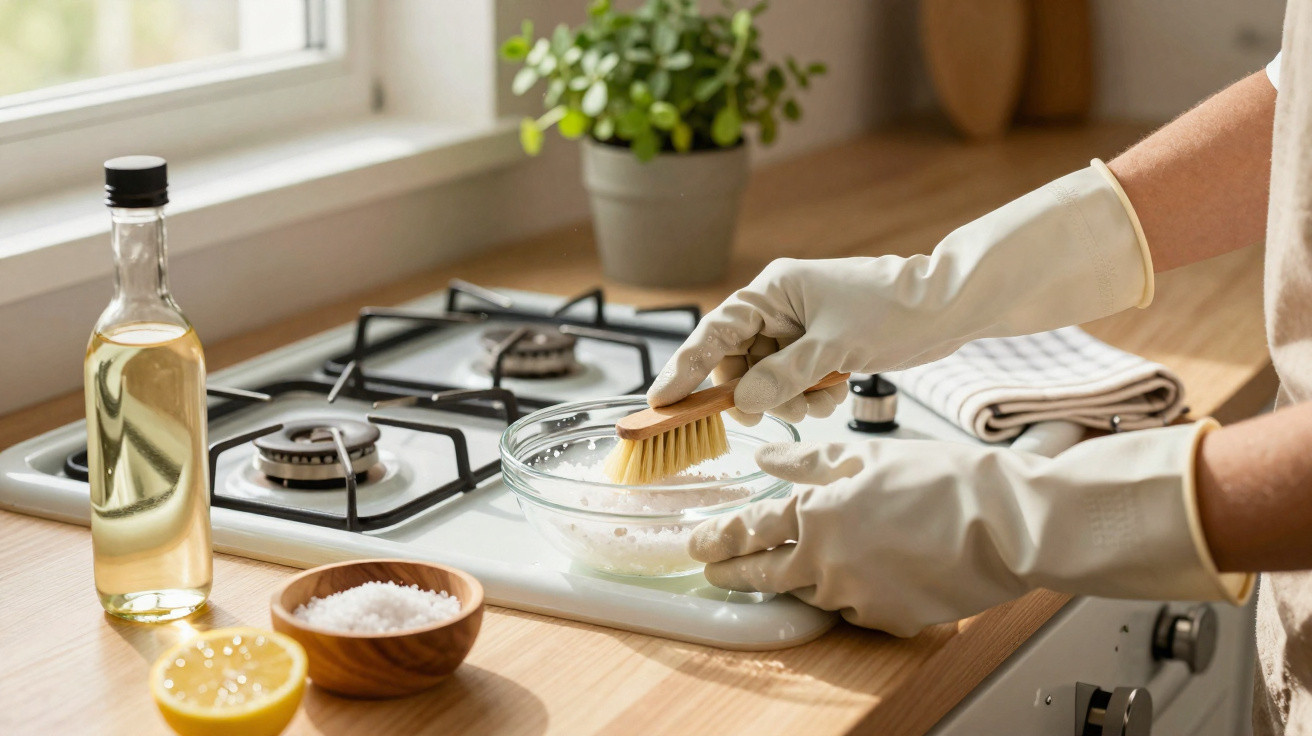
Keeping hob burners clean is often an ongoing concern in many homes, particularly where the kitchen is used every day. Food debris, oil splashes and burnt-on grease can quickly build up on the surface around the flames. As a result, cleaning methods that avoid harsh chemicals and use straightforward ingredients found in most kitchen cupboards have become increasingly popular.
How does cleaning hob burners with vinegar and salt work?
Using white vinegar and salt has become common in household cleaning routines because it is affordable and easy to use. The vinegar works as a natural degreaser due to its acidity, while salt provides mild abrasion, helping to lift more stubborn deposits without being overly harsh on the surface.
Together, these ingredients create a paste that can be applied straight to dirty areas, including older grease marks. Although this is a homemade solution, the hob material should be considered to prevent damage to enamelled parts, delicate burners or painted components.
How do you clean hob burners with vinegar and salt step by step?
To get the most from the vinegar-and-salt mixture, it is worth following a straightforward sequence of steps. This supports gas safety and delivers a more even clean, especially on hobs used regularly.
Prepare the hob
- Make sure every burner is switched off.
- Turn off the gas supply if extra safety is required.
- Remove the pan supports, burner caps and any other detachable parts to make the areas easier to reach.
Make the cleaning mixture
- Put equal quantities of white vinegar and fine salt into a container.
- Stir them together until they form a damp paste that spreads easily over the hob burners.
Apply it to the grease
- Use a cloth, sponge or kitchen brush to spread the mixture.
- Focus especially on areas where burnt-on grease has built up most heavily.
Leave it to work
- Wait a few minutes to allow the vinegar to act on the dirt.
- Do not scrub straight away, as the dried layer needs time to soften.
Scrub and rinse
- Gently rub the area with a soft sponge or damp cloth.
- Remove the residue with warm water, repeating the process where dirt remains ingrained.
Dry and reassemble
- Thoroughly dry the hob burners and removable pieces before putting them back.
- Turn the gas supply back on only after checking that every part is correctly positioned.
Which natural methods can also help clean hob burners?
As well as vinegar and salt, other everyday kitchen ingredients can help remove grease and light staining. The best choice generally depends on the type of dirt, how often the hob is used and how sensitive the surface material is.
- Lemon and coarse salt: citric acid helps break down grease, while coarse salt increases the abrasive action on more firmly stuck residue.
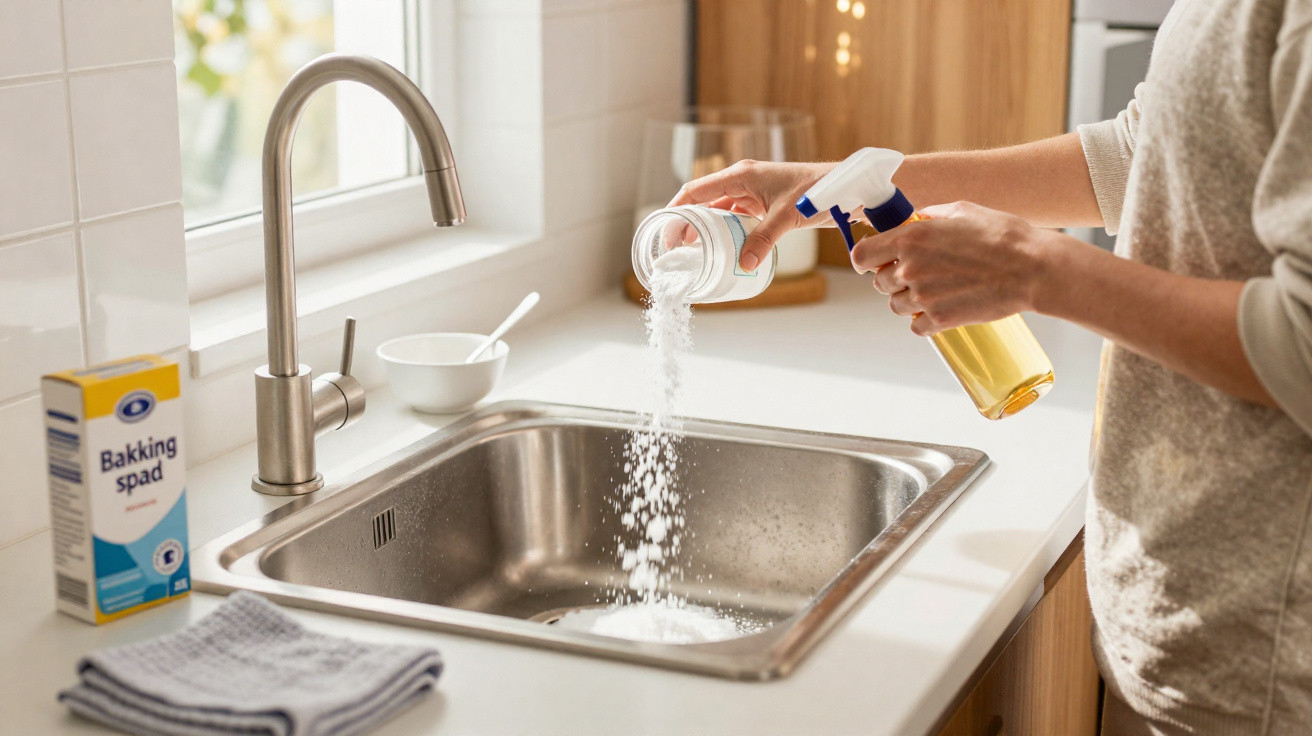
- Bicarbonate of soda and warm water: this makes a gentle paste suitable for yellowish marks and thin layers of dirt.
- Vinegar and bicarbonate of soda: the fizzing reaction can help loosen grease and burnt remnants, particularly in difficult corners.
In every case, it is advisable to test the method on a small area first to check for colour changes or wear, especially on enamelled surfaces, polished stainless steel or more delicate finishes.
Why do many households prefer natural products for cleaning hob burners?
The preference for ingredients such as vinegar, salt, lemon and bicarbonate of soda is linked to their low cost and convenience, as they are usually included in everyday shopping. Another consideration is the aim of reducing contact with highly aggressive formulations, particularly in an area where food is prepared.
Many people also regard these options as having less environmental impact because they leave behind fewer chemical residues after rinsing. The combination of reasonable effectiveness, easy availability and the feeling of caring for both the home and health therefore helps establish these natural methods as a practical alternative to conventional cleaners.












Comments
No comments yet. Be the first to comment!
Leave a Comment