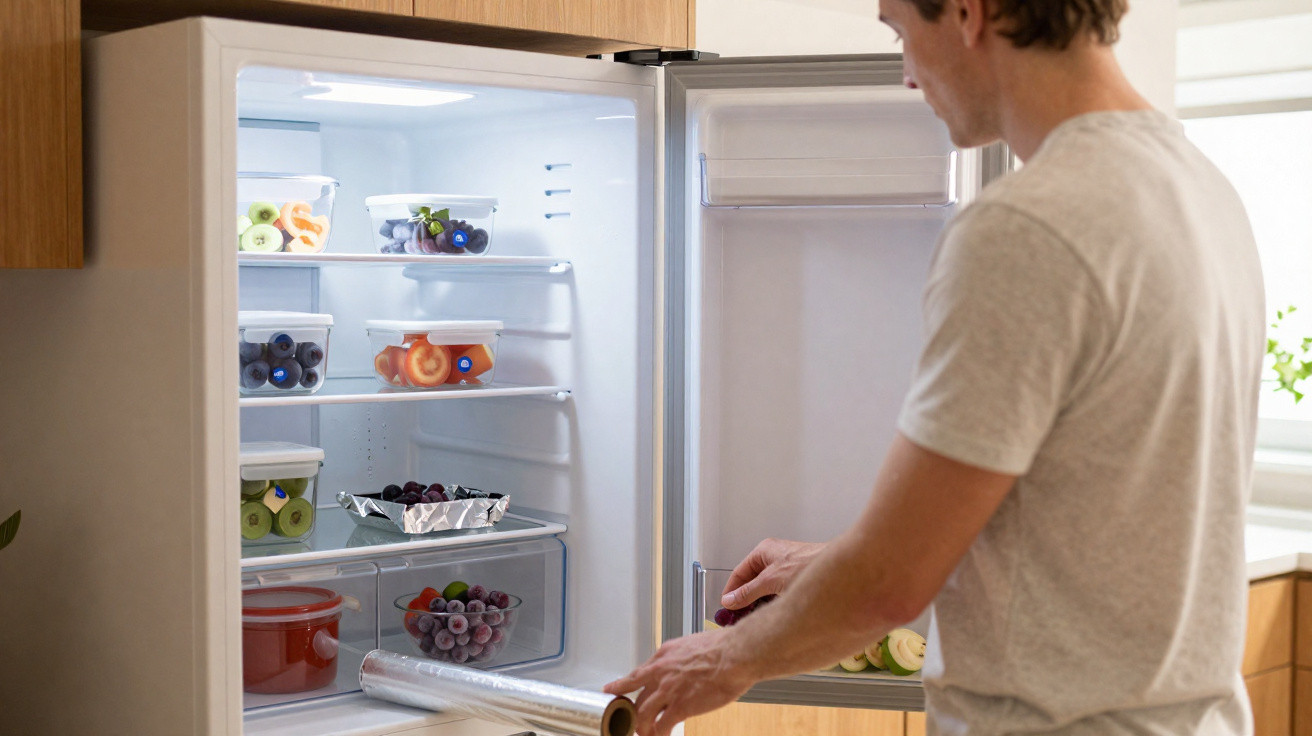
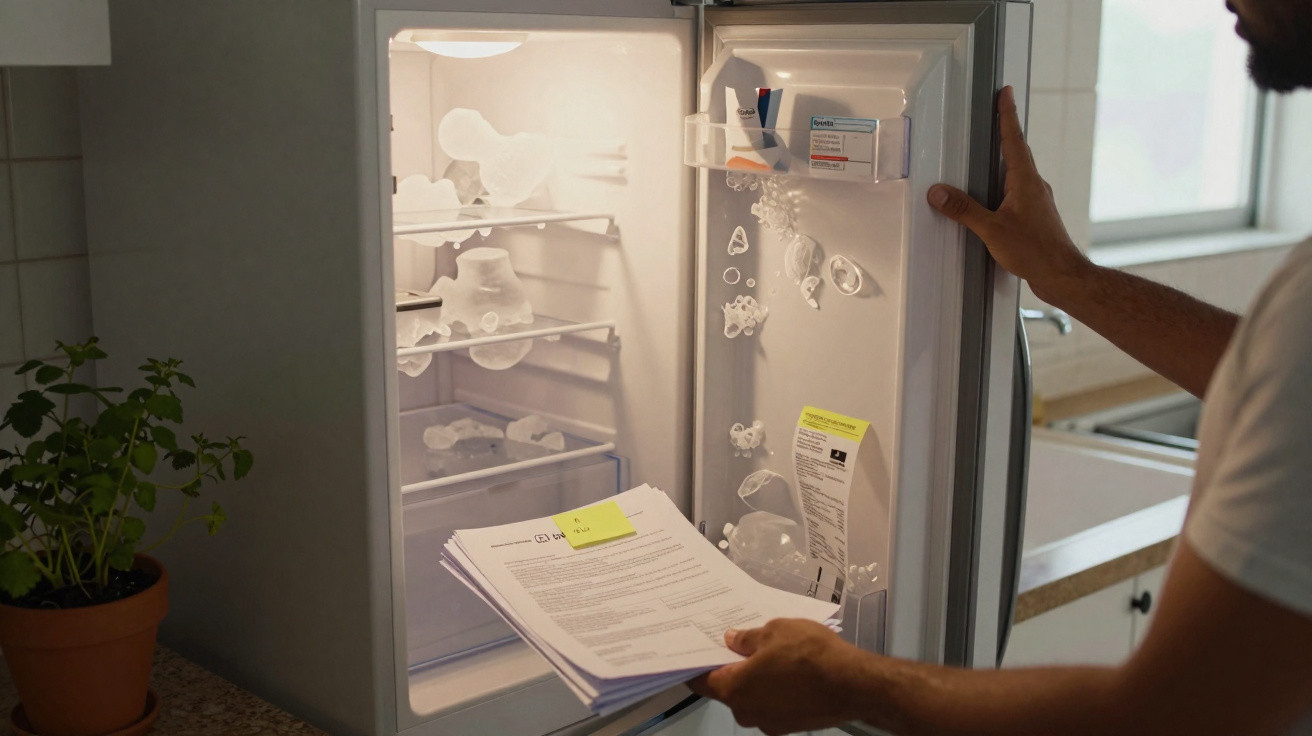
Drawers that are hard to open, packets stuck to the sides and less usable space: ice build-up is a common issue in many homes. One tip is to fit aluminium foil to certain internal surfaces to make cleaning less laborious. It does not remove the need for proper defrosting, but it may make maintenance easier between full defrosts.
Ice builds up whenever the door is opened
The process is fairly straightforward. Each time the door opens, warmer, humid air enters the appliance. When it meets the very cold surfaces, the moisture condenses and then freezes. Day after day, it creates a thin film that gradually turns into a crust.
Static-cooling appliances are especially prone to this. Air circulates less actively in them than in models with automatic defrosting. A door that does not shut properly, a worn seal or food that is still warm can also speed up the process.
An appliance designed to store frozen food should remain close to -18 °C. When its walls are covered in ice, it has to work harder to maintain that temperature.
This added demand puts strain on the motor and may increase electricity use. The actual impact varies according to the appliance's age, capacity and energy rating. A layer a few millimetres thick does not have the same effect as a deposit several centimetres thick, but allowing the problem to persist for months is never advisable.
Aluminium foil does not remove ice build-up
The method being shared involves placing clean, completely dry pieces of aluminium foil against selected internal walls. The aim is not to melt ice through any chemical effect. Metal does not heat up in a freezer, nor does it remove the moisture in the air.
Its main benefit is practical: ice may stick to the metal sheet, which can be taken away more easily than a crust frozen directly onto plastic. When cleaning, carefully remove the foil and replace it. In the best cases, this avoids having to scrape the walls with an unsuitable utensil.
This approach still needs to be kept in perspective. It is not a substitute for checking the door seal or for defrosting regularly. Nor has it been shown to prevent ice from forming entirely. It can simply make some maintenance more convenient when fitted carefully.
Areas that must remain clear
Aluminium foil must not cover every part of the appliance. Grilles, air outlets, sensors, ducts and ventilation components must be left unobstructed. Disrupted airflow can instead cause temperature variations and make food storage more difficult.
- Never cover a ventilation grille or air inlet.
- Avoid lining shelves and the bases of drawers.
- Do not press foil against a visible sensor or technical component.
- Keep food packaging separate from the metal lining.
- Check the manufacturer's instructions before making any long-term installation.
Recent models with an automatic defrosting system have little to gain from this practice. These appliances normally remove moisture on a regular basis. With this type of equipment, adding an improvised lining may be unnecessary, or even troublesome if it blocks a sensitive area.
The right defrosting routine without damaging the appliance
Once the white layer is visible and starts to reduce the available space, it is better to plan a full clean. Many households wait until drawers become jammed. By then, it is often too late: the task takes longer and keeping food safely frozen becomes more complicated.
For an appliance without automatic defrosting, maintenance every three to six months is often suitable. Naturally, this depends on use. A family opening the door several times a day will need to act more often than someone who rarely uses their appliance.
- Put food into insulated bags or leave it with a relative while the work is carried out.
- Unplug the appliance and leave its door open.
- Lay out towels and position a shallow container to collect the water.
- Gently speed up the process by placing a bowl of hot water inside, with the door shut for a few minutes.
- Dry every surface before switching the appliance back on.
Knives, screwdrivers and sharp objects should be avoided. One careless movement can puncture a wall or damage a circuit. Repairs will then cost considerably more than taking a few hours of care. Hairdryers, fan heaters and other intense heat sources should also be kept away from water and electrical components.
Everyday steps that genuinely reduce electricity use
Aluminium foil may help with localised cleaning, but daily habits have a greater effect on bills. The appliance performs better when positioned away from an oven, radiator or large window exposed to strong sunlight. It also needs a few centimetres of space around its outer walls to release the heat generated by the motor.
Food should be allowed to cool before it is stored. Putting in a dish that is still hot raises the internal temperature and introduces considerable moisture. It is also preferable to use airtight containers or properly sealed bags: the less humid air circulates around food, the less ice builds up on the walls.
Take care with acidic and salty foods
Aluminium foil should not be used as direct wrapping for very acidic or salty preparations, such as tomato sauce, marinated citrus fruit or fish in brine. These foods can encourage the migration of metal particles. Airtight glass containers or plastic containers suitable for freezing provide a safer option.
The door seal also deserves a quick check. A sheet of paper trapped in the closed door can be used as a simple test: if it slides out without resistance once the door is shut, the seal may not be tight enough. Cleaning the seal with soapy water and ensuring no packaging obstructs the closure can sometimes prevent rapid ice formation.
The white deposit is therefore not merely a visual nuisance. It often indicates excess moisture, a door opened too frequently or postponed maintenance. A correctly positioned metal sheet can make removing ice less tiresome, provided ventilation is never compromised and regular defrosting remains part of the routine.



Comments
No comments yet. Be the first to comment!
Leave a Comment